Your favourites are only temporarily saved. To find them back, create your account on GFM Painting!
Already have account ?
No gift cards in your cart.
February 04, 2026


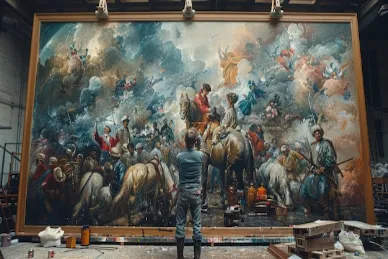
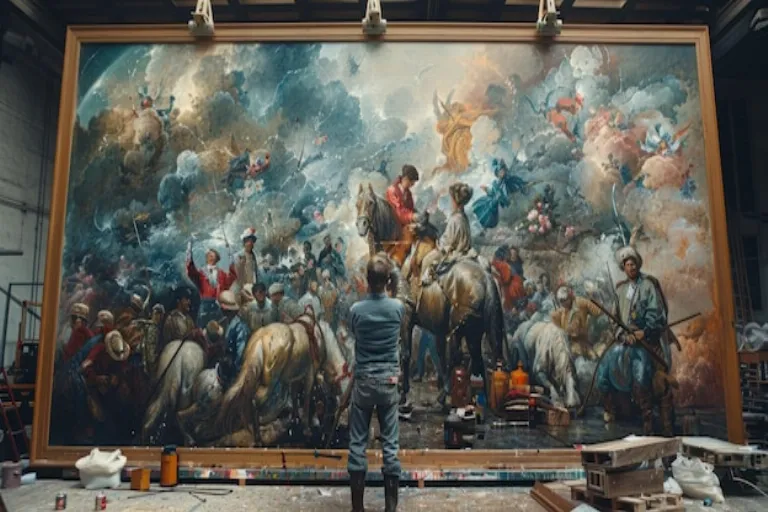
The distinctive allure of European Symbolist painting lies in its dreamlike imagery, poetic symbolism, and focus on the inner world of emotion and spirituality. Unlike other movements, it prioritises suggestion over direct representation, inviting viewers to interpret enigmatic scenes and immerse themselves in layers of hidden meaning.
The distinctive allure of European Symbolist painting inspired modern artists to explore psychological depth and abstraction. By emphasising mood, myth, and personal vision, Symbolist painters paved the way for Surrealism and Expressionism, encouraging future generations to move beyond realism and embrace the evocative power of imagination.
Gustave Moreau, Odilon Redon, and Fernand Khnopff are prominent figures who capture the distinctive allure of European Symbolist painting. Their works employ intricate symbolism and ethereal atmospheres, offering a mesmerising glimpse into the movement’s fascination with mysticism, dreams, and the unexplored realms of the human psyche.
While Impressionism often dominates the story of nineteenth-century European painting, Symbolism stands as a compelling counterpoint. Emerging in the 1880s, Symbolist artists rejected the fleeting effects of light and everyday modern life favoured by their Impressionist peers. Instead, they turned inward, exploring the realms of dreams, myth, and the subconscious. Symbolist painting is a journey into the psyche, a visual poetry that continues to inspire collectors, curators, and a new generation of art lovers on social media.
On platforms like Instagram and Pinterest, hashtags such as #SymbolistArt and #DreamlikeArt are surging, with posts featuring works by Gustav Klimt, Odilon Redon, and Evelyn De Morgan generating thousands of likes, shares, and heartfelt comments. This growing engagement signals a renewed fascination with mystical and enigmatic art, particularly as seasonal mood boards and curated feeds embrace Symbolism’s moody palettes and evocative themes.
This article invites you to step into the world of European Symbolist painting—unravelling its origins, celebrating its key figures, and offering guidance for those drawn to collect these captivating works. Whether you are a seasoned collector or a curious newcomer, Symbolism offers a universe of discovery beyond the well-trodden paths of Impressionism.
Symbolism emerged as a loosely connected movement across Europe in the late nineteenth century, developing in dialogue with, and often in opposition to, the Impressionist and Realist schools. While Impressionists were preoccupied with the play of light and the depiction of contemporary life, Symbolists sought to convey inner truths and universal mysteries, often through allegory, myth, and visionary imagery.
For a comprehensive overview of Symbolist art and its European variations, visit our Symbolism Movement Hub.
European Symbolism is not a monolith but a constellation of individual visions. Its leading artists brought unique perspectives shaped by their national and personal contexts. While some, like Gustav Klimt and Odilon Redon, have become iconic, others—especially from Britain and regional Europe—remain under-recognised despite their profound contributions.
These artists, among others, shaped a movement that continues to influence contemporary art and culture, as reflected in the vibrant online communities sharing and discussing Symbolist works today.
Unlike Impressionism, with its focus on capturing the external world’s fleeting light, Symbolism is resolutely inward-looking. Its paintings are portals to realms of fantasy, myth, and psychological depth. The subject matter often defies rational explanation, instead inviting viewers into an emotional dialogue with the unknown.
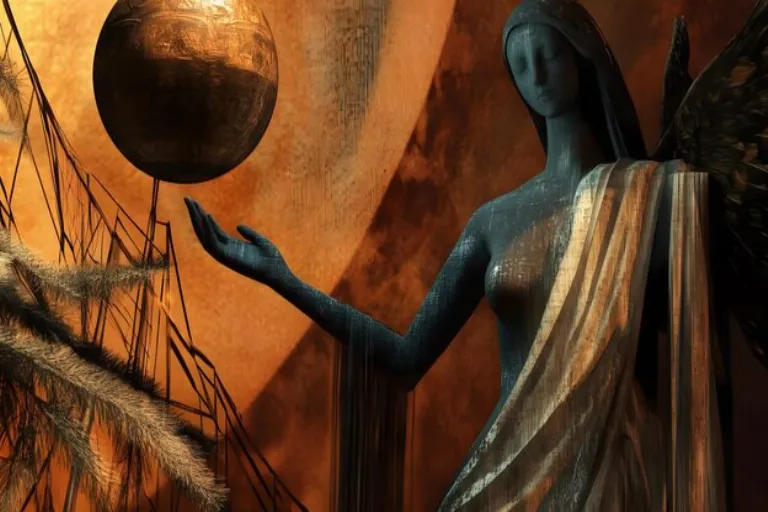
Symbolist painters employed a rich array of motifs—femme fatales, angels, death, rebirth, and nature as metaphor—to probe existential questions and spiritual longing. Their use of colour, texture, and composition aimed not at realism but at evoking mood and mystery. Decorative elements, gold leaf, and intricate patterns often heighten the sense of the uncanny or the sacred.
For example, Klimt’s “The Tree of Life” weaves together myth and ornament, while Redon’s pastel “Ophelia” conjures a dreamlike melancholy. British Symbolists, such as Watts and De Morgan, frequently drew on Arthurian legend and allegory, situating their works in a uniquely British spiritual landscape. The visual language of Symbolism thus becomes a bridge between personal vision and collective myth.
Symbolist painting is uniquely positioned to evoke powerful emotional responses, making it highly shareable and engaging on social channels. Its timeless appeal lies in its ability to tap into universal feelings and seasonal moods, resonating with audiences seeking depth and connection.
Seasonally, Symbolist art finds particular favour in autumn and winter, when audiences are drawn to introspective, atmospheric works. Hashtags such as #AutumnArt and #WinterVisions trend as viewers seek art that captures the moodiness of shorter days and contemplative nights. Collectors and curators note increased engagement with Symbolist works during these months, as emotional resonance and visual allure intersect.
Collecting Symbolist art offers unique rewards and challenges. As the movement gains renewed visibility, especially through online auctions and digital galleries, both novice and seasoned collectors are seeking advice on how best to navigate this evocative field. The following steps provide a practical guide for those considering Symbolist acquisitions.
As more collectors share their Symbolist finds on platforms like Instagram and Twitter, the movement’s presence continues to grow, creating a dynamic, global community of enthusiasts and experts.
European Symbolist painting offers a profound alternative to the familiar narratives of Impressionism, inviting us into a world of myth, emotion, and imagination. Its artists, both celebrated and unsung, have shaped a movement that continues to captivate audiences across continents and generations. Whether you are drawn to Symbolism’s mysteries as a viewer or collector, now is the perfect moment to delve deeper—online, in galleries, and in your own journey of discovery.
European painting is often dominated by the narrative of Impressionism, yet other powerful movements shaped the continent’s artistic soul.
Symbolist art, emerging in the late 19th century, offers a visionary alternative to Impressionist explorations of light and modernity.
Driven by dreams, myth, and the subconscious, Symbolist painters crafted images that transcend the visible world.
Today, Symbolism resonates deeply on social media, where hashtags like #SymbolistArt and #MysticPainting inspire new audiences.
This article delves into the rich tapestry of European Symbolist painting, spotlighting its unique stories, artists, and collector appeal.
Frequently Asked Questions
European Symbolist painting is defined by its focus on dreams, myths, and the inner world, using evocative imagery and symbolism to explore emotions, spirituality, and the unseen, rather than depicting external reality or fleeting light.
While Impressionism seeks to capture fleeting moments of light and modern life, Symbolism delves into the imagination and subconscious, employing allegory, myth, and personal visions rather than direct observation.
Notable European Symbolists include Gustav Klimt, Odilon Redon, Fernand Khnopff, Arnold Böcklin, and the British artists George Frederic Watts and Evelyn De Morgan.
Yes, Symbolist art enjoys renewed interest among collectors for its enigmatic themes, emotional resonance, and the prestige of its leading artists, often trending in auctions and online galleries.
Common motifs include dreams, mythological figures, femme fatales, death and rebirth, nature as metaphor, and spiritual or mystical themes.
Symbolism paved the way for Surrealism, Expressionism, and even Abstract art, inspiring artists to explore inner worlds and psychological depth beyond the visible surface.
Yes, British Symbolists include George Frederic Watts, Evelyn De Morgan, and John Duncan, whose works blend myth, allegory, and a distinct British sensibility.
Symbolist art often evokes wonder, melancholy, mystery, spiritual yearning, and a sense of the uncanny, inviting viewers into imaginative and emotional experiences.
Begin by researching artists and movements, consulting reputable galleries, attending auctions, and seeking expert advice to ensure authenticity and long-term value.
Trending hashtags include #SymbolistArt, #MysticPainting, #ArtForCollectors, #DreamlikeArt, and seasonally, #AutumnArt or #WinterVisions for atmospheric works.

GFM Designer Ltd
Maultway Court
67-69 Ruxley Lane
Epsom, Surrey
KT19 0JG. UK
E-MAIL : info@gfmpainting.co.uk
PHONE : +44 (0) 203 592 3482
MOBILE : +44(0) 7834 393 396