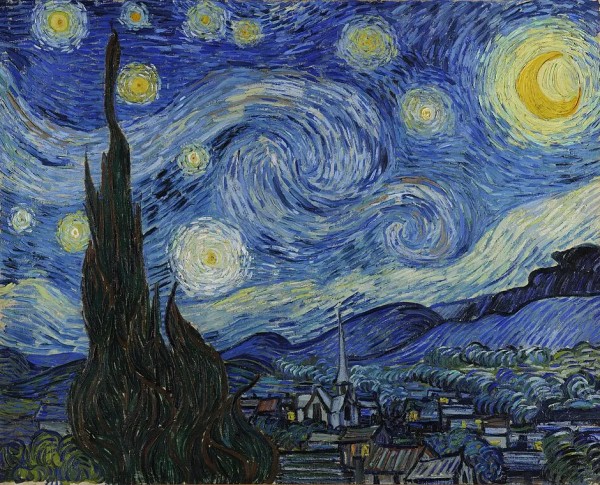
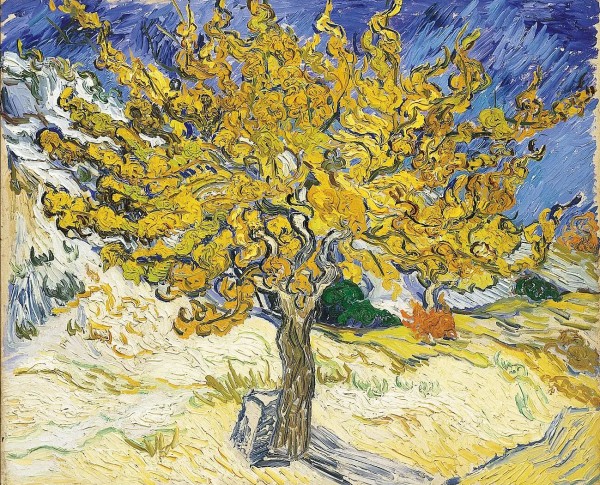
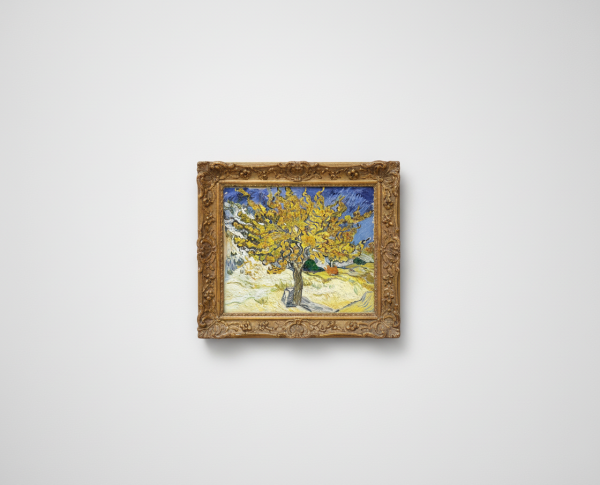
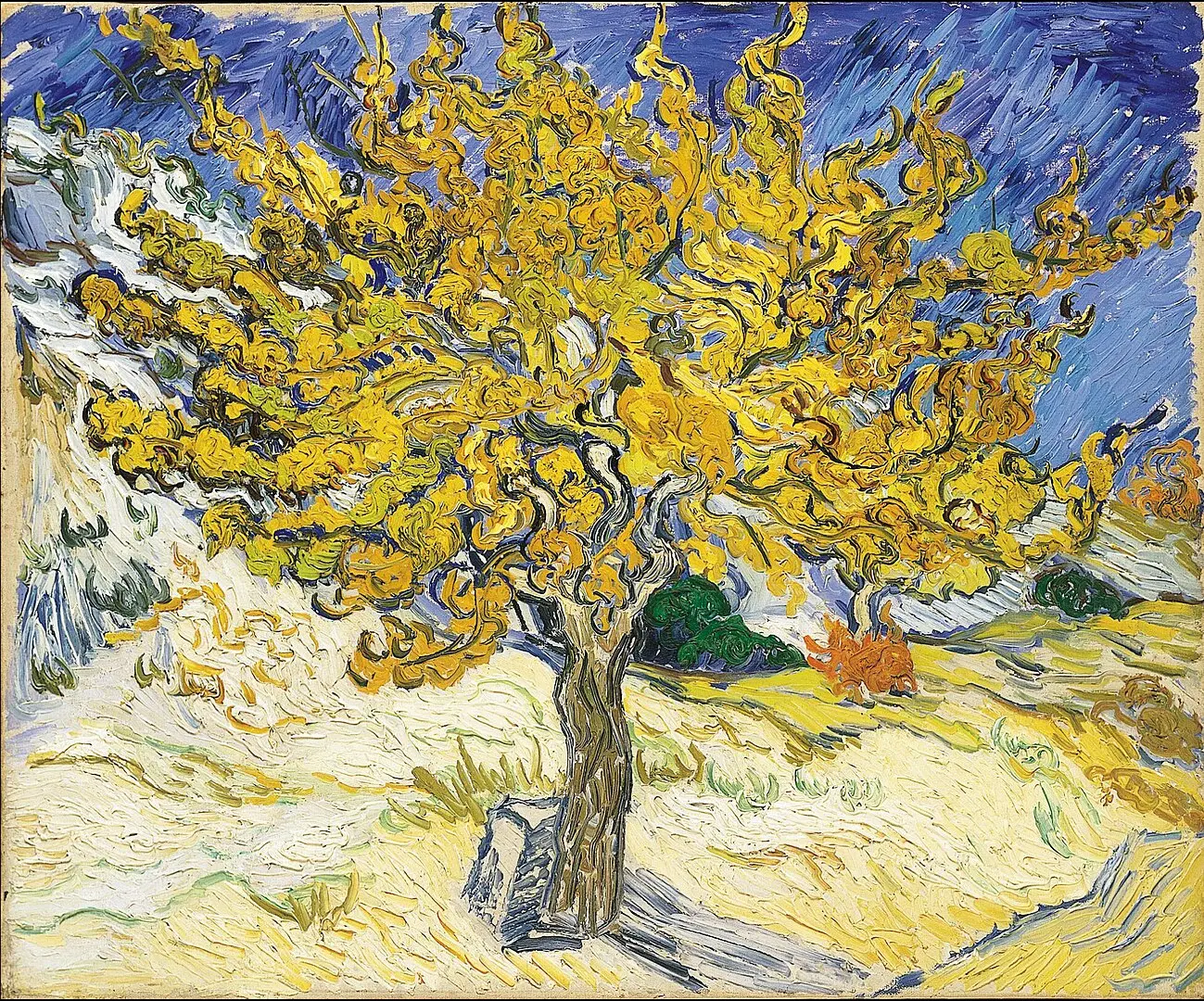
Vincent Van Gogh’s "Mulberry Tree" is a testament to his skill in oil on canvas. The painting’s dynamic swirls and bold palette capture the essence of the natural world, reflecting Van Gogh’s unique vision within the Post-Impressionism movement. This technique can also be found in related masterpieces like "Olive Trees With Yellow Sky And Sun" and "Starry Night," both revered for their vibrant energy and depth in oil on canvas.
Within "Mulberry Tree," Van Gogh weaves deep symbolism and personal narrative, hallmarks of his fine art painting for sale. The tree, resilient and vivid, represents strength and renewal, themes often explored in Post-Impressionism. Art lovers who appreciate these stories might also be drawn to "Wheatfield with Cypress I" and "Bowl With Peonies And Roses," both echoing similar symbolic richness and emotional depth in fine art painting for sale.
Owning a hand-painted oil painting like Van Gogh’s "Mulberry Tree" is a privilege for any collector. Its celebrated status in the Post-Impressionism movement makes it highly sought after. Those searching for a unique addition to their gallery should also consider related products such as "Wheat Field Under Clouded Sky" or "Vase With Twelve Sunflowers II," both representing the enduring allure of Van Gogh’s artistic legacy in hand-painted oil painting.
When Art Meets History
"Mulberry Tree" by Vincent Van Gogh stands as a testament to the Post-Impressionism movement, created in 1889 during his prolific stay at the Saint-Rémy asylum. This hand-painted oil painting captures the spirit of a transformative era in art, where artists sought to evoke emotion and personal vision. Van Gogh’s "Mulberry Tree" shares historical significance with related masterpieces like "A Sunday Afternoon on the Island of La Grande Jatte" and "Two Tahitian Women," each shaping art’s future.
Techniques That Speak
Vincent Van Gogh’s signature technique shines in "Mulberry Tree," employing dynamic brushstrokes and vivid color contrasts to bring the subject to life. Utilizing oil on canvas, he layered thick impasto and swirling strokes, a hallmark of Post-Impressionism. The painting’s texture and energy echo techniques seen in "One Of The Family" and "Two Tahitian Women," making it a remarkable study for those passionate about the evolution of oil on canvas artistry in fine art history.
Emotions on Display
"Mulberry Tree" radiates intense emotion, with Van Gogh’s expressive style revealing his inner turmoil and fascination with nature’s beauty. This fine art painting for sale is celebrated for its vibrant yellows and powerful composition, inviting viewers into a world of both chaos and harmony. Like his contemporaries in the Post-Impressionism movement, Van Gogh uses color and form to communicate feelings, much as seen in "A Sunday Afternoon on the Island of La Grande Jatte."
Coveted by Collectors
Today, "Mulberry Tree" is highly sought after by collectors who appreciate the significance of a hand-painted oil painting from a master like Vincent Van Gogh. Its connection to the Post-Impressionism movement and its kinship with works such as "One Of The Family" make it a prized possession. Art lovers and historians alike value this painting, not only for its artistry but for its enduring legacy in the world of fine art painting for sale.
Related Post-Impressionism Hand-Painted Oil Paintings by Other Artists
Other Famous Post-Impressionism Artists:
Frequently Asked Questions About Mulberry Tree
What is the historical context of Vincent Van Gogh's "Mulberry Tree"?
"Mulberry Tree" was painted in 1889 during Van Gogh's stay at the Saint-Paul-de-Mausole asylum in Saint-Rémy-de-Provence, France. This period was marked by intense personal struggles and a profound exploration of nature through art.
What artistic techniques did Van Gogh use in "Mulberry Tree"?
Van Gogh employed his signature impasto technique, where paint is applied thickly to create texture. The swirling brushstrokes and vibrant colors exemplify his emotional response to the landscape, capturing movement and life.
What is the significance of the mulberry tree in this painting?
The mulberry tree symbolizes resilience and endurance, reflecting Van Gogh's own struggles with mental health. It serves as a representation of nature's beauty and its ability to thrive despite adversity.
How does "Mulberry Tree" fit into Van Gogh's body of work?
This painting is part of Van Gogh's exploration of the natural world, showcasing his fascination with trees and landscapes. It reflects his transition towards a more expressive and emotive style that characterized his later works.
What colors dominate the "Mulberry Tree," and what do they represent?
The painting features rich greens, deep blues, and vibrant yellows. These colors evoke feelings of vitality and emotional intensity, representing Van Gogh's passionate connection to nature and his inner turmoil.
How does "Mulberry Tree" reflect Van Gogh's emotional state?
The dynamic brushwork and vivid colors in "Mulberry Tree" convey a sense of urgency and emotional depth, mirroring Van Gogh's struggles with mental illness and his desire to find solace in the natural world.
What influences can be seen in "Mulberry Tree" from other artists?
Van Gogh was influenced by Impressionism and Post-Impressionism, particularly the works of artists like Claude Monet and Paul Gauguin. The focus on light, color, and emotional expression in "Mulberry Tree" reflects these influences.
Where can "Mulberry Tree" be viewed today?
"Mulberry Tree" is part of the collection at the Kröller-Müller Museum in the Netherlands, where it is displayed alongside other significant works by Van Gogh and his contemporaries.
What impact did "Mulberry Tree" have on later artists?
The emotive style and bold use of color in "Mulberry Tree" have inspired countless artists in the 20th century and beyond, influencing movements such as Expressionism and Abstract art, which sought to convey emotional experiences through visual means.
What is the legacy of "Mulberry Tree" in the art world?
"Mulberry Tree" remains a significant work in Van Gogh's oeuvre, illustrating his innovative approach to color and form. It continues to be studied and admired for its emotional depth and technical prowess, solidifying Van Gogh's status as a master of modern art.






















_GFM_Painting_(1).webp)


 100% Hand-Painted: Finished in 3-6 Weeks

.png)
















_(1).webp)