February 07, 2026

GFM Painting Logo
Symbolism and the Soul: Exploring European Symbolist Painting – GFM Painting UK

What defines the movement of Symbolism and the Soul: Exploring European Symbolist Painting?

Symbolism and the Soul: Exploring European Symbolist Painting is characterised by its emphasis on dreams, mythology, and the inner world. Artists sought to evoke emotion and spirituality, often using enigmatic imagery and rich symbolism to explore the mysteries of the human soul and the subconscious mind.

How did Symbolism and the Soul: Exploring European Symbolist Painting influence later art movements?

Symbolism and the Soul: Exploring European Symbolist Painting laid the groundwork for movements such as Surrealism and Expressionism. Its focus on psychological depth and the exploration of inner realities inspired artists to move beyond realism, paving the way for more abstract and emotive forms of artistic expression.

Which artists are central to Symbolism and the Soul: Exploring European Symbolist Painting?

Key figures in Symbolism and the Soul: Exploring European Symbolist Painting include Gustave Moreau, Odilon Redon, and Fernand Khnopff. Their works are celebrated for their mystical themes, intricate allegories, and the profound exploration of the soul, making them pivotal within this influential artistic movement.

Introduction

Symbolism in European painting is a movement that continues to captivate collectors, scholars, and art lovers alike. Born as a reaction against the materialism and scientific rationalism of the late 19th century, Symbolism offered a gateway to the soul, the subconscious, and the mysterious. With hashtags such as #SymbolismArt and #ArtOfTheSoul trending across Instagram and Pinterest, there is a renewed fascination with these enigmatic images that speak to universal longings and fears. For today’s collector or enthusiast, understanding Symbolism is not only a journey into art history, but also a path to self-discovery and poetic reflection. Unlike Impressionism, which focused on the fleeting effects of light and the bustle of modern life, Symbolism asks us to look within. Let us explore the movement’s origins, leading figures, and why its visual poetry continues to resonate in our digital age.

Movement Context: The Origins and Essence of European Symbolism

European Symbolism emerged in the closing decades of the nineteenth century, a time of rapid industrialisation, scientific progress, and social change. Artists across the continent sensed a growing disconnect between the external world and the deeper realities of the human psyche. Drawing inspiration from Romantic poetry, mysticism, and ancient myths, Symbolist painters rebelled against the prevailing trends of Realism and Impressionism. Instead of depicting the world as it appeared, they sought to render its invisible dimensions—dreams, fears, passions, and spiritual revelations.

Key Ideas and Artists of Symbolism

  • Gustave Moreau: The French master of mythological allegory, famed for his ornate, jewel-like canvases.
  • Odilon Redon: Creator of dreamlike, otherworldly scenes, often exploring the subconscious and the supernatural.
  • Arnold Böcklin: Swiss painter whose works evoke classical myth, melancholy, and the unknown.
  • Fernand Khnopff: Belgian artist known for psychological depth and enigmatic female figures.
  • George Frederic Watts: British Symbolist whose paintings explore fate, hope, and the soul’s journey.
  • Focus on inner life: Symbolists prioritised emotion, imagination, and subjective experience.
  • Use of allegory and metaphor: Images often carry layered meanings, inviting multiple interpretations.
  • Dreamlike, mystical atmosphere: The visual language is poetic, ambiguous, and rich in symbolism.
  • Interest in mythology, spirituality, and the unconscious: Themes reflect humanity’s deepest questions.

The Rise of Symbolism: A Historical Timeline

  1. 1860s–1870s: Poetic forerunners such as Charles Baudelaire inspire artists to look beyond realism.
  2. 1880s: French and Belgian painters like Moreau and Khnopff begin to exhibit Symbolist works.
  3. 1891: The Salon de la Rose+Croix in Paris showcases Symbolist art, cementing its identity as a movement.
  4. 1890s: Symbolism spreads across Europe, influencing British, Russian, and Nordic artists.
  5. Early 20th century: Symbolism’s legacy paves the way for Surrealism and abstraction in modern art.

Artist Focus: Masters and Mavericks of Symbolist Painting

No single artist defines Symbolism; rather, the movement is marked by a constellation of distinct yet interconnected visions. Each painter brought their own sensibility to the shared quest for meaning beyond the visible.

Gustave Moreau (1826–1898) stands at the movement’s heart. His intricate, richly coloured canvases draw on myth and Bible, inviting viewers into a world where every detail is charged with allegory. Moreau’s “Oedipus and the Sphinx” (1864) exemplifies his approach: enigmatic, lush, and psychologically charged. Moreau also inspired a generation of younger artists, including Henri Matisse, to embrace the imaginative and the poetic.

Odilon Redon (1840–1916) transformed the movement with his ethereal pastels, lithographs, and paintings. Redon’s work, such as “The Cyclops” (c. 1914), explores the dreamscape—populated by floating eyes, flowers, and mythic beings. His art is often described as visionary, bridging the gap between the seen and the unseen, and laying the groundwork for Surrealism.

Arnold Böcklin (1827–1901), hailing from Switzerland, is best known for “Isle of the Dead” (1880), a haunting meditation on mortality and the afterlife. Böcklin’s art is saturated with melancholy and myth, often set in imaginary landscapes that evoke both longing and dread.

Fernand Khnopff (1858–1921) brought Symbolism to Belgium with works like “I Lock My Door Upon Myself” (1891). His portraits, often of mysterious women, are imbued with stillness and psychological complexity, reflecting the movement’s fascination with the enigmatic feminine.

George Frederic Watts (1817–1904), a towering figure in British art, infused his canvases with a philosophical and spiritual quest. Paintings such as “Hope” (1886) and “Love and Life” (1884) blend allegory with a uniquely British sensibility, exploring universal themes through a lens of moral and emotional intensity.

Painting & Visual Themes: The Language of Symbolist Art

Symbolist painting is immediately recognisable by its evocative use of colour, form, and iconography. Unlike Impressionist works, which sought to capture the fleeting effects of light and atmosphere, Symbolist artists deployed visual elements to conjure emotion, mystery, and meaning. The brushwork is often deliberate and layered, creating an aura of timelessness.

Subjects are drawn from mythology, literature, religion, and personal vision. Serpents, swans, muses, angels, and mythic heroes populate Symbolist canvases, their meanings open to interpretation. The settings are often ambiguous—neither wholly real nor entirely imaginary—inviting viewers to enter a liminal space between waking and dreaming.

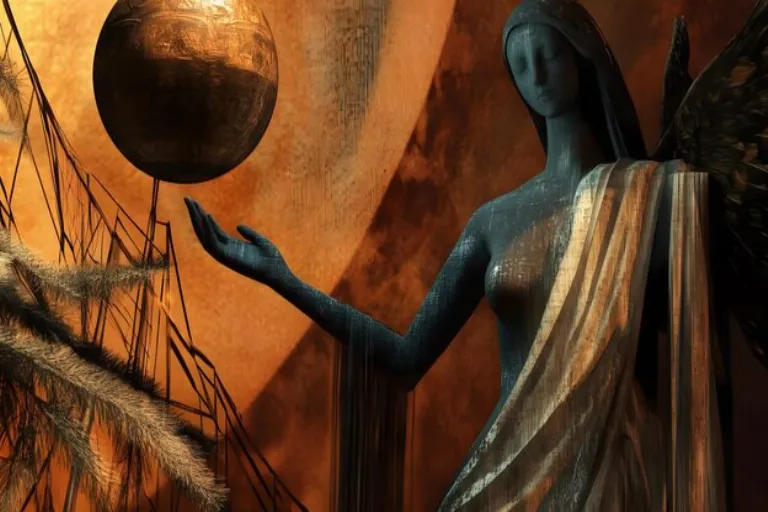
Colour is used not for its optical truth, but for its emotional resonance. Deep blues, radiant golds, and velvety blacks evoke longing, fear, or transcendence. The human figure, often elongated or idealised, becomes a vessel for abstract ideas: hope, despair, innocence, temptation, or enlightenment.

In British Symbolism, such as the work of Watts or Edward Burne-Jones, the Pre-Raphaelite legacy blends with a new focus on psychological and spiritual depth. These artists use medieval and mythic motifs to explore contemporary anxieties and aspirations, making their art both timeless and timely.

Emotional and Seasonal Interpretation

Symbolist paintings are as much about mood as they are about narrative. The emotional charge of these works often transcends their subject matter, speaking directly to the viewer’s subconscious. The movement’s affinity for dreams and myth makes its art particularly resonant in times of uncertainty or transformation—such as the turn of the seasons or moments of personal transition.

Common Emotional Motifs in Symbolist Art

  • Melancholy: A pervasive sense of longing and loss, often depicted through autumnal colours or fading light.
  • Ecstasy: Moments of spiritual or emotional rapture, suggested by luminous colour and dynamic form.
  • Mystery: The unknown or unknowable, conveyed by shadowy settings and enigmatic figures.
  • Yearning: The desire for transcendence or meaning, symbolised by upward gazes, ladders, or ethereal landscapes.
  • Rebirth: Cycles of death and renewal, frequently associated with spring or dawn, and symbolised by flowers or mythic creatures.

Buyer & Collector Insights: Navigating the World of Symbolist Painting

Collecting Symbolist art offers a rare opportunity to acquire works that are both visually captivating and intellectually profound. These paintings occupy a unique place in the art market, appealing to those who value imagination, emotion, and layered meaning. Recent years have seen an uptick in interest, as collectors seek out works by under-appreciated Symbolists and regional artists beyond the French and Belgian core.

Step-by-Step Guide to Collecting Symbolist Art

  1. Research the movement: Familiarise yourself with key artists, motifs, and historical context. Refer to gallery movement hubs or reputable publications.
  2. Assess provenance: Verify the artwork’s history and authenticity, seeking expert advice if needed.
  3. Evaluate condition: Examine the painting’s conservation status, particularly with older works prone to pigment fading or craquelure.
  4. Understand symbolism: Engage with the visual language—what do the motifs and colours suggest? Does the work resonate emotionally or intellectually?
  5. Connect with dealers: Build relationships with galleries or specialists who understand the nuances of Symbolist art.
  6. Consider regional diversity: Explore British, Swiss, or Eastern European Symbolists for rare and distinctive pieces.
  7. Stay updated: Follow #SymbolismArt on social media for new discoveries, exhibition news, and collector trends.

Collector Takeaways

  • Symbolist paintings are prized for their depth, rarity, and poetic allure.
  • Works by lesser-known artists can offer unique value and investment potential.
  • Understanding the symbolism enhances appreciation and market confidence.
  • Emotional resonance is as important as historical significance.

Soft Discovery Closing: An Invitation to the Soul of Symbolism

European Symbolist painting remains one of the most evocative and enduring chapters in art history. Each canvas is an invitation—to wonder, to reflect, to dream. Whether you are a seasoned collector or new to the movement, the world of Symbolism offers a journey into the heart of mystery and meaning. Explore our gallery’s curated selection of Symbolist works and let your imagination be your guide.

A Journey through the Mystical and Metaphysical in Non-Impressionist Art

European Symbolist painting stands apart for its mysterious allure and spiritual depth.

This movement, flourishing from the late 19th century, offered an antidote to realism and Impressionism’s focus on the visible world.

Symbolist artists delved into dreams, myth, and the inner life, forging a visual language of metaphor and enigma.

Today, #SymbolismArt is trending on social media, with collectors and enthusiasts sharing ethereal masterpieces and poetic interpretations.

Uncover the enduring fascination of Symbolism, from its origins to its influence on modern creativity and art collecting.

FAQ

Frequently Asked Questions

What defines Symbolist painting in Europe?

Symbolist painting in Europe is defined by its focus on dreams, myths, and metaphysical ideas. Artists used visual symbols to express emotions, spirituality, and the subconscious, often favouring mysterious, poetic imagery over direct representation.

Who are some major European Symbolist painters?

Major Symbolist painters include Gustave Moreau (France), Odilon Redon (France), Fernand Khnopff (Belgium), Arnold Böcklin (Switzerland), and George Frederic Watts (Britain), each contributing unique visions to the movement.

How does Symbolism differ from Impressionism?

Unlike Impressionism, which captures fleeting light and everyday scenes, Symbolism focuses on inner worlds, dreams, and allegory. Symbolists use imagination and metaphor to explore psychological and mystical themes, rather than external reality.

What themes are common in Symbolist art?

Common themes in Symbolist art include mythology, dreams, death, love, spirituality, the unconscious, and the search for meaning beyond material existence. These works often evoke mood and mystery.

Why did Symbolist painting emerge in Europe?

Symbolist painting emerged as a reaction against materialism and the scientific rationalism of the 19th century. Artists sought to evoke the unseen and spiritual, offering viewers a gateway to inner contemplation.

Which British artists are associated with Symbolism?

British Symbolist artists include George Frederic Watts, Edward Burne-Jones, and Charles Ricketts. Their works blend mythic narrative and psychological intensity within a uniquely British context.

How can collectors identify Symbolist works?

Collectors can identify Symbolist works by their use of allegory, dreamlike imagery, and layered symbolism. Look for emotionally charged subjects, mythological references, and a focus on the metaphysical.

What is the legacy of Symbolist painting?

Symbolist painting influenced Surrealism, Modernism, and later explorations of the psyche in art. Its focus on the inner world and symbolism remains relevant to contemporary artists and collectors.

Are Symbolist paintings popular on social media?

Yes, Symbolist paintings are experiencing renewed popularity on platforms like Instagram and Pinterest, where hashtags such as #SymbolismArt and #DreamlikeArt attract wide engagement.

What should buyers consider when collecting Symbolist art?

Buyers should consider provenance, authenticity, and the emotional resonance of a piece. Understanding the artist’s intent and the work’s symbolic meaning enhances both appreciation and value.

Can't Find What You Are Looking For

Contact Us

Sign up to receive the latest news from GFM Painting via email, including exclusive offers and updates...

PORTRAIT & REPRODUCTION
| | | |
PORTRAIT & REPRODUCTION
Show prices in

GFM Designer Ltd
Maultway Court
67-69 Ruxley Lane
Epsom, Surrey
KT19 0JG. UK
E-MAIL : info@gfmpainting.co.uk
PHONE : +44 (0) 203 592 3482
MOBILE : +44(0) 7834 393 396

  • Copyright GFM Designer 2026
  • Company Registration : 07286936
| | | |
GFM Painting top
GFM Painting