February 05, 2026

GFM Painting Logo
Symbolism in European Painting: Mysticism, Dreams, and the Subconscious – GFM Painting UK

How did Symbolism in European Painting: Mysticism, Dreams, and the Subconscious influence artistic movements in the late 19th century?

Symbolism in European Painting: Mysticism, Dreams, and the Subconscious profoundly impacted late 19th-century art by encouraging artists to explore inner worlds and spiritual themes. This movement inspired painters to prioritise imagination over realism, paving the way for Expressionism and Surrealism, and urging viewers to interpret hidden meanings within the artwork.

Which artists are renowned for exploring Symbolism in European Painting: Mysticism, Dreams, and the Subconscious?

Gustave Moreau, Odilon Redon, and Gustav Klimt are celebrated for their mastery of Symbolism in European Painting: Mysticism, Dreams, and the Subconscious. Their works often feature enigmatic iconography, ethereal figures, and dreamlike landscapes, inviting audiences to delve into the mysterious realms of the mind and spirit.

Why does Symbolism in European Painting: Mysticism, Dreams, and the Subconscious continue to resonate with contemporary audiences?

Symbolism in European Painting: Mysticism, Dreams, and the Subconscious remains relevant today as it addresses universal human experiences—mystery, emotion, and the unknown. Contemporary viewers are captivated by the movement’s ability to evoke personal reflection and emotional depth, bridging the gap between past and present artistic expression.

Symbolism in European painting is a late 19th-century movement that emphasises mystical, dreamlike, and allegorical imagery. Unlike Impressionism, Symbolism explores the subconscious, myth, and psychological states through evocative, metaphorical visuals—inviting viewers to interpret hidden meanings and experience profound emotional resonance.

Introduction: The Allure of Symbolism in European Painting

Symbolism in European painting emerged as a compelling alternative to the empiricism of Realism and the fleeting impressions of Impressionism. Instead of depicting the visible world, Symbolist artists sought to express the invisible—the world of dreams, myths, and the subconscious. Today, this haunting, introspective movement is enjoying renewed popularity, with hashtags like #SymbolistArt and #DreamlikePainting driving engagement on social media platforms. Collectors and art lovers are drawn to the narrative depth and emotional resonance that Symbolist works offer, making this movement both historically significant and strikingly contemporary.

As major galleries and museums feature Symbolist exhibitions, the movement’s mystical and psychological qualities are captivating a new generation. This article explores the origins, defining features, major artists, and enduring appeal of Symbolist painting, offering insights for both collectors and enthusiasts eager to discover art that challenges the boundaries of reality.

Movement Context: The Origins and Rise of Symbolism

Developing in the late 19th century, Symbolism began as a literary movement in France and Belgium before extending into the visual arts. The Symbolists reacted against the materialism of their age, turning inward to explore spiritual, psychological, and imaginative realms. Their art often references myth, legend, dreams, and allegory—expressed through enigmatic and often haunting imagery.

Unlike Impressionism, which focused on capturing the fleeting effects of light and modern life, Symbolism was introspective and metaphysical. Symbolist painters rejected the notion that art should simply imitate nature or record daily experience. Instead, they believed the true purpose of art was to evoke moods, ideas, and universal truths through symbols and metaphors.

Key Characteristics and Motifs of European Symbolism

  • Emphasis on dreams, visions, and the subconscious mind
  • Allegorical and mythological subject matter
  • Use of symbolic figures such as femme fatales, angels, or death
  • Atmospheric, often otherworldly colour palettes
  • Evocative, sometimes ambiguous narratives
  • Interest in spirituality, mysticism, and the occult
  • Focus on personal emotion and psychological depth

For a deeper dive into Symbolist painting and its influences, visit our Symbolism Movement Hub.

Chronological Development of Symbolism

  1. Late 1860s: Literary Symbolism begins in France and Belgium, influencing poets like Baudelaire and Mallarmé.
  2. 1870s–1880s: Visual artists in France, Belgium, and Switzerland adopt Symbolist themes, moving away from Realism and Impressionism.
  3. 1890s: Symbolism spreads across Europe, influencing painters in Britain, Russia, and Central Europe.
  4. Early 20th century: Symbolism evolves, intersecting with Art Nouveau, Expressionism, and Surrealism.
  5. Contemporary era: Symbolist motifs re-emerge in modern and digital art, inspiring new generations.

Artist Focus: Masters and Regional Voices of Symbolism

While French artists such as Gustave Moreau and Odilon Redon are often cited as central to Symbolism, the movement’s reach was truly pan-European, with significant contributions from Belgium, Switzerland, Britain, and beyond. Each regional iteration brought unique perspectives and visual languages.

Gustave Moreau, a Parisian painter, is renowned for his mystical, jewel-toned canvases depicting biblical and mythological scenes. His works shimmer with allegory and esoteric symbolism. Odilon Redon, another French Symbolist, turned inward to the world of dreams, producing enigmatic pastels and charcoal drawings populated by floating eyes, spectral flowers, and visionary figures.

Belgium produced some of Symbolism’s most distinctive voices. Fernand Khnopff’s ethereal, melancholic portraits and landscapes evoke a sense of longing and introspection. Félicien Rops, with his provocative and sometimes macabre imagery, explored themes of eroticism, death, and the occult.

In Switzerland, Arnold Böcklin’s haunting paintings—most famously “Isle of the Dead”—became icons of European Symbolism, blending myth, fantasy, and existential reflection. Russian Symbolists such as Mikhail Vrubel and Viktor Borisov-Musatov contributed a mystical, Slavic sensibility, while in Britain, George Frederic Watts, Evelyn De Morgan, and John Roddam Spencer Stanhope added a Pre-Raphaelite-inflected, spiritual dimension to the movement.

These artists, though united by a symbolic approach, each channelled their own cultural and psychological concerns, creating a diverse and richly layered movement.

Painting & Visual Themes: Symbolist Imagery and Technique

Symbolist painters employed a vast range of techniques and visual strategies to achieve their effects. Unlike the rapid, visible brushwork and outdoor scenes of Impressionism, Symbolist works often feature carefully composed, studio-based imagery, with a deliberate, sometimes even decorative, approach to colour and form. The aim is not to record the fleeting play of light, but to conjure an atmosphere of mystery, reverie, or spiritual tension.

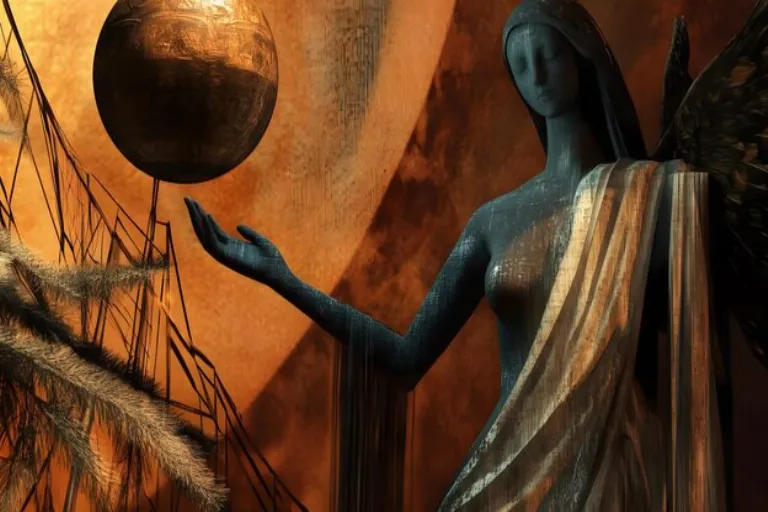
Recurring motifs include mythological and biblical figures, dreamlike landscapes, and the femme fatale—a mysterious, often dangerous woman embodying both desire and doom. Many Symbolist paintings are populated by angels, spirits, or allegorical personifications of concepts such as death, melancholy, or love.

Colour plays a critical role: muted, twilight tones or jewel-like hues heighten the sense of unreality and emotional intensity. Composition is often centralised or symmetrical, lending a sense of stasis or ritual. The surface may be smoothed to a near-enamel finish, or rendered in soft, pastel-like textures, further distancing the image from mundane reality.

Symbolist painters also experimented with mixed media, including pastel, gold leaf, and tempera, to enhance the otherworldly quality of their work. The result is an art that feels timeless, suspended between dream and waking, reality and vision.

Emotional and Seasonal Interpretation: The Inner Life of Symbolist Art

One of Symbolism’s greatest strengths is its ability to evoke powerful emotional states and timeless psychological questions. Whether depicting the icy stillness of winter, the languor of a summer dusk, or the existential anxieties of modern life, Symbolist paintings invite viewers into a deeply personal, often ambiguous space.

Common Emotional and Psychological Motifs in Symbolist Painting

  • Melancholy and longing
  • Mystical awe and spiritual yearning
  • Fear, anxiety, and the uncanny
  • Desire, seduction, and forbidden love
  • Nostalgia and the passage of time
  • Transcendence and transformation
  • Mortality and the afterlife

Seasonal cues are often used symbolically—autumnal decay representing mortality, spring blossoms hinting at rebirth, or the soft twilight suggesting the border between worlds. The result is a body of work that resonates with viewers’ deepest hopes, fears, and dreams.

Buyer & Collector Insights: Navigating the Symbolist Market

For collectors, Symbolist paintings offer both aesthetic pleasure and intellectual intrigue. The movement’s relative rarity, especially outside France and Belgium, ensures that high-quality works are prized in both museum and private collections. Recent years have seen increased interest at auction and online, with social media amplifying demand for works that combine beauty with psychological complexity.

Step-by-Step Guide to Collecting Symbolist Art

  1. Research key Symbolist artists and regional schools—consider both well-known names and overlooked figures from Britain, Belgium, and Central Europe.
  2. Assess the artwork’s provenance, exhibition history, and condition. Symbolist works are often delicate; seek expert advice on restoration or conservation as needed.
  3. Evaluate the narrative and emotional resonance of the piece. Does it offer a compelling vision or unique interpretation of Symbolist themes?
  4. Engage with reputable galleries and auction houses specialising in 19th- and early 20th-century European art.
  5. Consider the work’s long-term value—not only as an investment, but as a source of inspiration and dialogue within your collection or living space.

Key Takeaways for Collectors and Art Lovers

  • Symbolist art is highly collectible due to its narrative, emotional, and historical significance.
  • Look beyond French Symbolists—British, Belgian, and other European artists offer unique perspectives and opportunities.
  • Condition and provenance are critical; consult with specialists for authentication and care.
  • Engagement on social media platforms like Instagram and Twitter can help you discover emerging trends and connect with a global community of Symbolist enthusiasts.

Soft Discovery Closing: The Timeless Appeal of Symbolism

Symbolism in European painting remains a wellspring of inspiration for artists, collectors, and dreamers alike. Its exploration of the unseen—of myth, emotion, and the subconscious—offers a powerful counterpoint to the surface realities of modern life. Whether you are seeking to expand your collection or simply to experience art on a deeper, more personal level, the world of Symbolist painting invites you to journey beyond the visible and embrace the mysteries within. Discover more Symbolist masterpieces and stories in our gallery today.

Beyond Reality: Exploring the Depths of European Symbolist Art

Symbolism in European painting offers a journey beyond the visible, delving into dreams, myth, and the hidden recesses of the mind.

Unlike Impressionism, Symbolism is less about fleeting light and more about inner vision, revealing spiritual and psychological truths.

Art lovers and collectors are rediscovering Symbolist works, with hashtags like #SymbolistArt and #MysticPainting trending across Instagram and Twitter.

Major museums and galleries are spotlighting Symbolist masterpieces, while emotional resonance and narrative depth appeal to a new generation of buyers.

This article unpacks the history, artists, and visual language of Symbolism, inviting you to see art—and yourself—in a new light.

FAQ

Frequently Asked Questions

What defines Symbolism in European painting?

Symbolism is defined by its focus on inner experience, dreams, mythology, and the subconscious. Symbolist artists used evocative imagery and metaphor to express emotional, spiritual, or psychological truths, moving beyond literal representation.

How does Symbolism differ from Impressionism?

While Impressionism captures fleeting moments, light, and modern life, Symbolism is introspective, emphasising imagination, myth, and the unseen. Symbolists sought to evoke moods and ideas rather than depict external reality.

Who are key Symbolist artists in Europe?

Major Symbolist artists include Gustave Moreau (France), Odilon Redon (France), Fernand Khnopff (Belgium), Arnold Böcklin (Switzerland), and George Frederic Watts (Britain).

What are common themes in Symbolist painting?

Symbolist paintings often feature dreams, mysticism, mythology, allegory, the femme fatale, mortality, and the subconscious, expressed through imaginative and sometimes enigmatic imagery.

Is Symbolism still relevant in today’s art world?

Yes, Symbolism’s exploration of inner worlds and psychological themes resonates with contemporary audiences. Many modern artists draw inspiration from Symbolist motifs and methods.

How can I identify a Symbolist painting?

Look for mysterious, dreamlike imagery, mythological or allegorical figures, and a focus on mood or spiritual content rather than realistic depiction or everyday scenes.

What should collectors consider when buying Symbolist art?

Collectors should research provenance, artist reputation, visual quality, and emotional resonance. Engage with reputable galleries and consider the artwork’s narrative and condition.

Are there British Symbolist painters?

Yes, British Symbolists include George Frederic Watts, Evelyn De Morgan, and John Roddam Spencer Stanhope, who contributed unique interpretations to the movement.

How is Symbolism trending on social media?

#SymbolistArt, #DreamlikePainting, and #MythicArt are popular tags on Instagram and Twitter, with posts often highlighting mystical visuals and introspective themes.

What makes Symbolism a good choice for collectors?

Symbolist artworks offer rich narrative depth, timeless emotional appeal, and distinctive visual qualities, making them compelling additions to both private and public collections.

Can't Find What You Are Looking For

Contact Us

Sign up to receive the latest news from GFM Painting via email, including exclusive offers and updates...

PORTRAIT & REPRODUCTION
| | | |
PORTRAIT & REPRODUCTION
Show prices in

GFM Designer Ltd
Maultway Court
67-69 Ruxley Lane
Epsom, Surrey
KT19 0JG. UK
E-MAIL : info@gfmpainting.co.uk
PHONE : +44 (0) 203 592 3482
MOBILE : +44(0) 7834 393 396

  • Copyright GFM Designer 2026
  • Company Registration : 07286936
| | | |
GFM Painting top
GFM Painting