Your favourites are only temporarily saved. To find them back, create your account on GFM Painting!
Already have account ?
No gift cards in your cart.
February 05, 2026


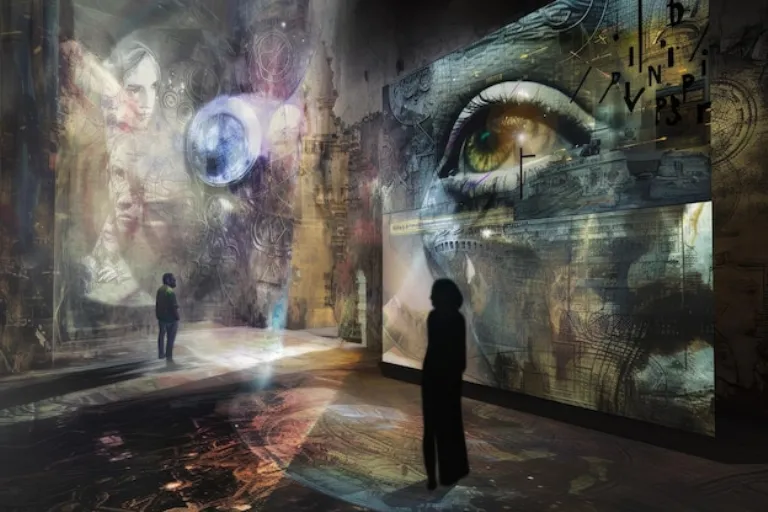
The Mystique of Symbolism: European Art Beyond Impressionism is characterised by its focus on imagination, dreams, and myth rather than direct observation of the natural world. Unlike Impressionism’s fleeting glimpses of reality, Symbolist artists sought to evoke emotion and explore deeper psychological and spiritual themes through enigmatic imagery.
The Mystique of Symbolism: European Art Beyond Impressionism profoundly impacted later movements such as Surrealism and Expressionism. By prioritising inner experience and symbolic meaning over literal representation, Symbolist artists paved the way for more experimental approaches, inspiring future generations to delve into the subconscious and abstract realms.
Prominent artists linked to The Mystique of Symbolism: European Art Beyond Impressionism include Gustave Moreau, Odilon Redon, and Fernand Khnopff. Their works exemplify the movement’s fascination with myth, allegory, and the mysterious, offering viewers a glimpse into the enigmatic worlds beyond surface appearances.
Symbolism emerged in late 19th-century Europe as a movement seeking to capture the unseen, the mystical, and the psychological depths of the human experience. In contrast to the sunlit immediacy of Impressionism, Symbolist painters turned inward, exploring realms of myth, legend, and dream. Today, the #SymbolistArt hashtag is a rising trend across Instagram and Pinterest, inspiring a new generation of collectors and enthusiasts who find resonance in this art’s enigmatic stories and emotive power. Leading galleries and influencers highlight the movement’s timeless appeal, with posts often garnering thousands of likes and comments from those seeking art that stirs the soul. The renewed interest in Symbolism reflects a broader desire for deeper meaning and narrative in contemporary art appreciation, making this movement more relevant than ever for buyers and admirers alike.
Symbolism took root in the 1880s and 1890s, primarily in France and Belgium, as a reaction against both academic realism and the sensory focus of Impressionism. Symbolist painters believed that art should express ideas, emotions, and spiritual truths, rather than simply depict the visible world. Their works often drew on literature, poetry, and philosophy, seeking to evoke rather than describe. This pursuit of the inner life resonated across Europe, influencing artists from Russia to Britain and beyond.
Unlike Impressionism—which captured fleeting moments using dappled light and vibrant colour—Symbolism was preoccupied with the eternal, the mysterious, and the otherworldly. Its paintings are often imbued with a sense of longing, melancholy, or transcendence, rendered through meticulous technique and a rich palette of symbolic motifs. The movement’s international character fostered striking regional variations, from the mystical visions of the French Symbolists to the mythic allegories of the British school.
For a deeper dive into Symbolism’s connections and contrasts with other movements, visit our European Art Movements Hub (link).
At the heart of Symbolism are artists who transformed personal visions into universal myths. Gustave Moreau, often called the “high priest” of Symbolism, created opulent, enigmatic canvases teeming with legendary figures and arcane symbols. His “Oedipus and the Sphinx” (1864) exemplifies the movement’s fascination with riddle, fate, and psychological tension. Odilon Redon, another French pioneer, conjured dreamlike worlds populated by floating eyes, fantastical flora, and ethereal beings, using pastel and charcoal to evoke the intangible.
Across the Channel, British Symbolism flourished with artists such as George Frederic Watts, whose allegorical works address themes of hope, love, and mortality. Evelyn De Morgan, a key female Symbolist, wove Pre-Raphaelite technique with spiritual allegory, as seen in her luminous painting “The Soul’s Prison House.” Sidney Sime, meanwhile, became known for his imaginative illustrations and eerie, fantastical landscapes—precursors to 20th-century fantasy art.
In Belgium, Fernand Khnopff and Jean Delville explored the psychological and mystical, crafting haunting images of androgynous figures and enigmatic settings. Swiss artist Arnold Böcklin’s “Isle of the Dead” (1880) remains an iconic meditation on mortality, its sombre mood and spectral light captivating viewers across generations.
These artists, along with lesser-known talents such as Aleksandr Nikolaevich Benois in Russia and Jan Toorop in the Netherlands, demonstrate Symbolism’s remarkable breadth and enduring power.
Symbolist painters developed a visual vocabulary distinct from their Impressionist contemporaries. Instead of capturing the play of sunlight on water, they conjured moonlit landscapes, spectral apparitions, and mythological tableaux. Their approach was not to depict the world as seen, but as felt, remembered, or imagined.
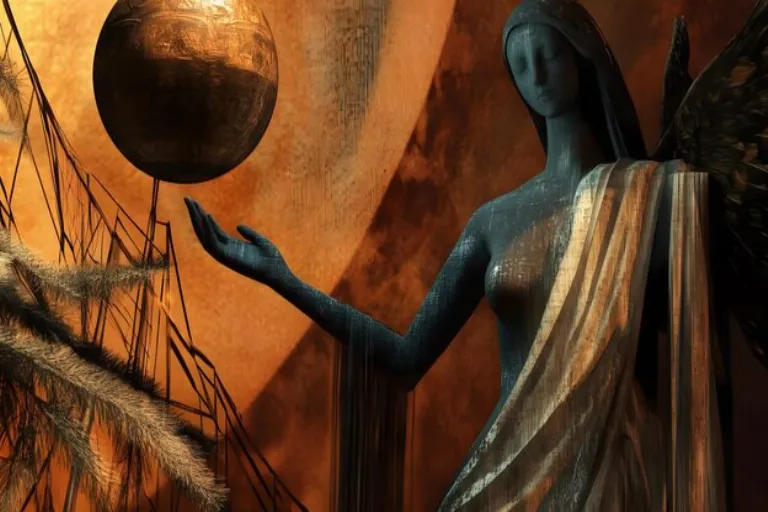
Common motifs include the femme fatale—an alluring, often dangerous woman representing desire or doom—alongside angels, muses, and hybrid creatures. Landscapes are frequently dreamlike, with misty forests, mirrored lakes, or desolate isles providing a stage for spiritual or existential drama. Colour, too, is symbolic: deep blues and purples evoke melancholy or mystery, while gold and white suggest transcendence or revelation.
Symbolist art’s visual power lies in suggestion and ambiguity. A single flower, a mask, or a shadow may carry layers of meaning, inviting viewers to interpret according to their own experiences and subconscious associations. This openness to interpretation is central to the movement’s enduring appeal; each painting becomes a mirror for the viewer’s inner life.
Importantly, while light and atmosphere are present in Symbolist works, they serve to heighten mood and meaning rather than to record transient effects. This crucially differentiates Symbolism from French Impressionism, where the focus is on direct sensory perception and the fleeting nature of reality.
Symbolist paintings are designed to evoke powerful, often complex emotions. Their dreamlike settings and allegorical figures invite contemplation, nostalgia, and even unease. Many works are imbued with a sense of autumnal melancholy or spiritual longing, making them especially resonant during transitional seasons.
These emotional cues make Symbolist paintings especially popular on social media during autumn and winter, when audiences seek art that reflects introspection and depth. Posts featuring moody Symbolist landscapes or enigmatic portraits frequently attract high engagement, with comments expressing personal connection, wonder, or inspiration.
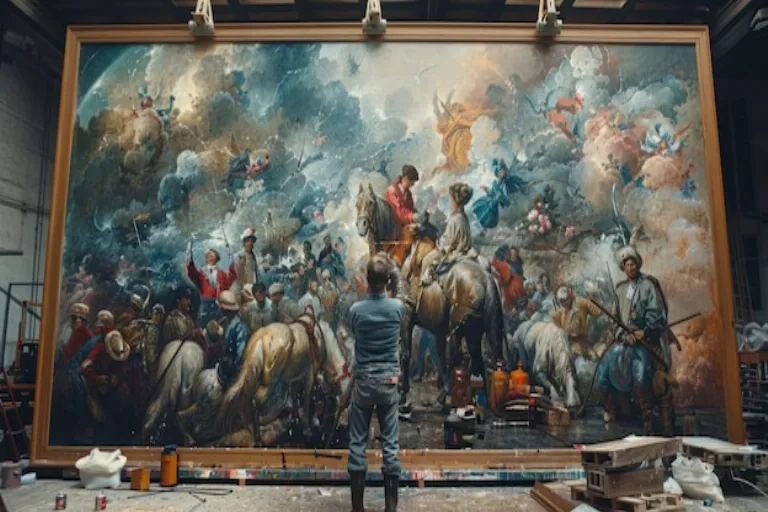
Collecting Symbolist art offers a unique opportunity to own works that combine technical mastery with profound psychological impact. As interest in narrative and mystical art grows—reflected in gallery sales and social media trends—Symbolist pieces are gaining recognition and value. Whether you are a seasoned collector or a newcomer, understanding what to look for can enhance both your enjoyment and your investment.
Symbolism remains one of the most evocative and rewarding movements in European painting, offering a gateway to both the mysteries of the past and the dreams of the present. Whether you are captivated by legendary figures, mystical landscapes, or the secrets of the subconscious, Symbolist art invites you to embark on a journey of discovery. Explore our curated collection and let these lyrical paintings inspire your imagination and enrich your collection.
Symbolism in European painting invites us to look beyond the visible, into realms of myth, dream, and the subconscious.
Unlike Impressionism’s fleeting moments, Symbolism explores timeless mysteries and inner visions.
This movement has seen a resurgence on social media, with hashtags like #SymbolistArt and #MysticalPainting trending among art lovers.
Collectors and galleries now rediscover the allure of enigmatic imagery and poetic storytelling in these works.
If you are drawn to art that whispers secrets and stirs emotions, Symbolism offers a fascinating world to explore.
Frequently Asked Questions
Symbolism was a late 19th-century European art movement that emphasised ideas, dreams, and emotions over direct representation, often using mythological or fantastical imagery to express the inner world.
While Impressionism focused on capturing fleeting light and modern life, Symbolism explored inner realities, the subconscious, and universal archetypes, using evocative symbols rather than direct observation.
Notable Symbolist painters include Gustave Moreau, Odilon Redon, Fernand Khnopff, Arnold Böcklin, and British artists such as George Frederic Watts and Evelyn De Morgan.
Symbolist art often features dreams, mythology, spirituality, death, love, and the supernatural, using allegorical or enigmatic imagery to evoke emotions and philosophical ideas.
Yes, Symbolist works are increasingly valued for their depth and psychological resonance, appealing to collectors seeking art with narrative, mystery, and emotional impact.
Look for mystical subjects, metaphorical figures, dreamlike settings, and a focus on mood or symbolism rather than literal depiction of reality.
Absolutely. Symbolism paved the way for Art Nouveau, Surrealism, and Expressionism, inspiring artists to explore psychological and imaginative themes.
Yes, artists like George Frederic Watts, Evelyn De Morgan, and Sidney Sime contributed to British Symbolism, often blending myth, allegory, and social commentary.
Symbolists often used luminous colour, fine detail, and layered glazes to create ethereal effects, enhancing the mysterious and dreamlike qualities of their work.
Begin by researching artists, visiting reputable galleries, and consulting experts to ensure authenticity and provenance. Focus on works that resonate with you emotionally.

GFM Designer Ltd
Maultway Court
67-69 Ruxley Lane
Epsom, Surrey
KT19 0JG. UK
E-MAIL : info@gfmpainting.co.uk
PHONE : +44 (0) 203 592 3482
MOBILE : +44(0) 7834 393 396