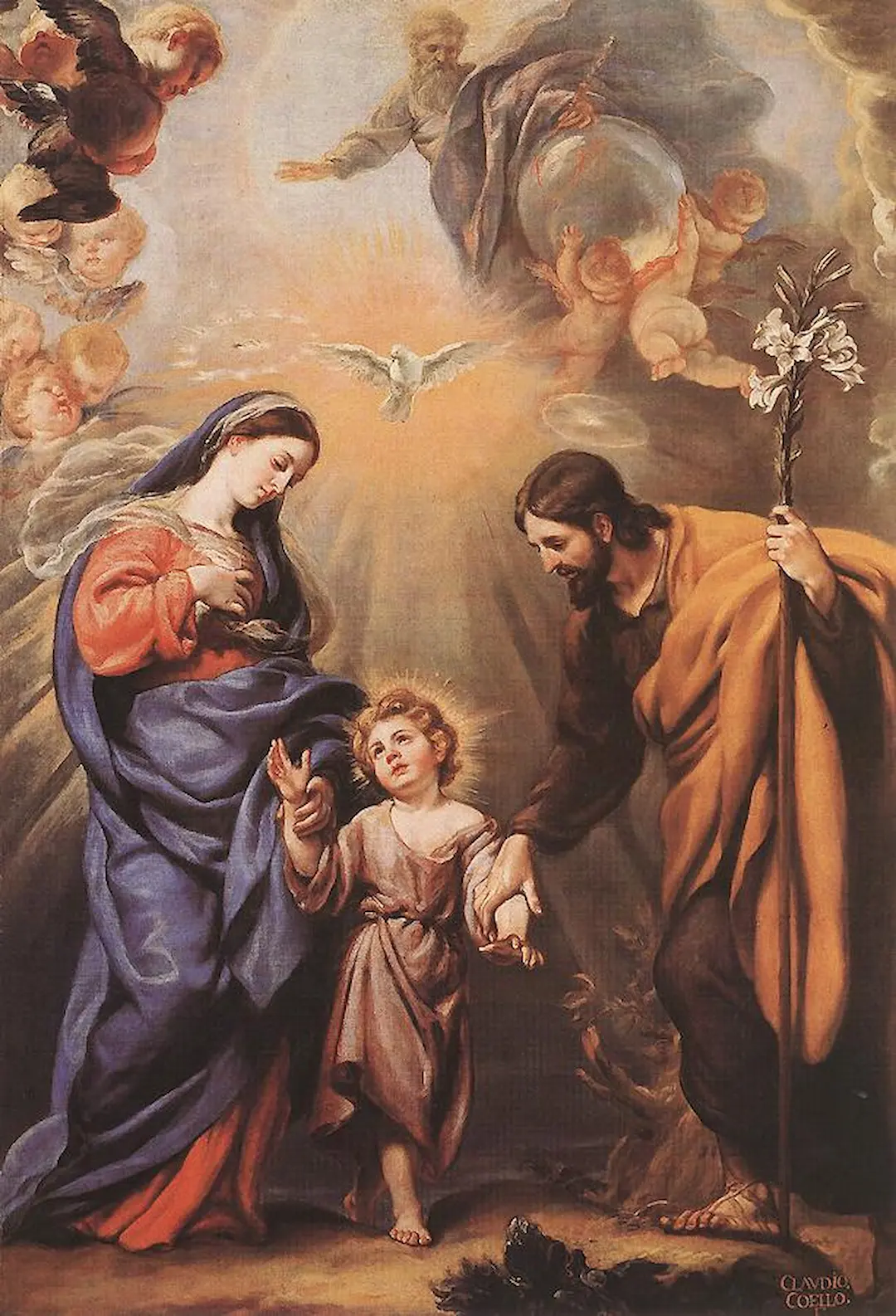
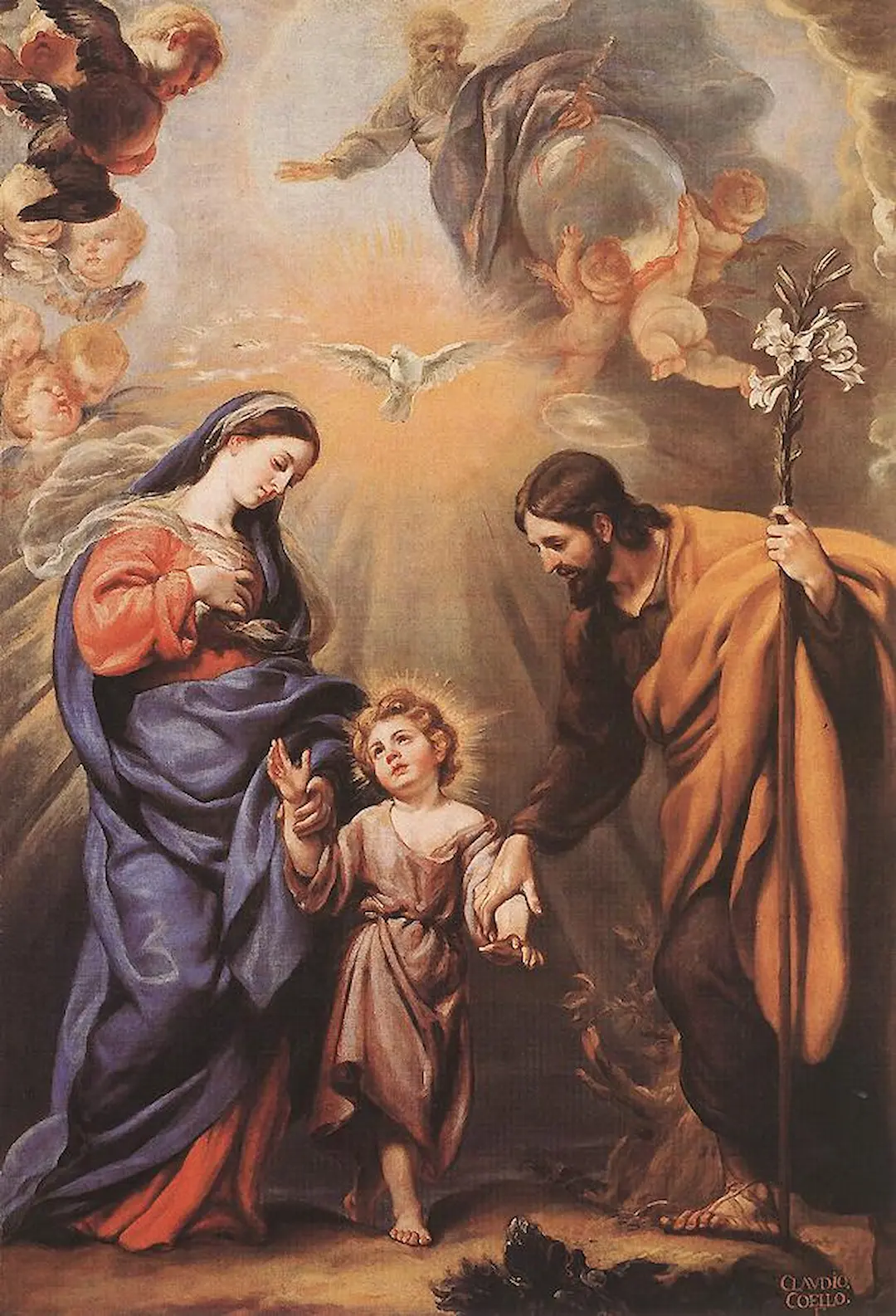
Every detail in Claudio Coello’s “Holy Family” reflects the impeccable technique that defines Baroque art. Utilizing oil on canvas, Coello achieved luminous textures and dramatic contrasts, bringing the sacred scene to life. His mastery is evident in the delicate rendering of fabrics and expressive faces. As a prized oil on canvas, this painting demonstrates the technical brilliance that collectors desire, making it a centerpiece for those who appreciate historical Baroque masterpieces.
In “Holy Family,” Claudio Coello weaves a narrative rich in symbolism, drawing viewers into the spiritual heart of the Baroque movement. The composition’s gestures and subtle details speak volumes, inviting interpretation and admiration. This hand-painted oil painting communicates themes of love, faith, and unity, resonating through the centuries. Collectors looking for a meaningful fine art painting for sale will find Coello’s work a profound addition to any collection.
For discerning collectors, “Holy Family” by Claudio Coello is more than a Baroque masterpiece—it is a prized acquisition. The painting’s status as a hand-painted oil painting ensures its uniqueness and value. Its historical significance and artistic excellence place it among the most sought-after fine art painting for sale. Owning this piece connects you to the rich tradition of Baroque art and the enduring legacy of Claudio Coello’s creative genius.
When Art Meets History
Claudio Coello’s "Holy Family" stands as a testament to the grandeur of the Baroque movement, merging spiritual themes with historical depth. This hand-painted oil painting captures a moment of divine intimacy, echoing the era’s fascination with drama and emotion. Coello, a celebrated Spanish artist, often explored religious subjects, as seen in related works like "The Calling of Saint Matthew" and "Doubting Thomas." His "Holy Family" beautifully bridges sacred tradition and artistic innovation.
Techniques That Speak
Employing masterful oil on canvas techniques, Claudio Coello brings to life the vivid textures and rich colors characteristic of Baroque art. The artist’s brushwork in "Holy Family" demonstrates his skill in layering glazes and manipulating light, much like in his "Mountain landscape with lightning." The interplay of shadows and highlights enhances the realism, inviting viewers to appreciate the meticulous detail that defines this celebrated oil on canvas masterpiece.
Emotions on Display
In "Holy Family," Claudio Coello conveys profound emotion through expressive faces and dynamic poses, hallmarks of the Baroque movement. The figures radiate warmth and tenderness, drawing the viewer into their sacred world. Like in "Doubting Thomas," Coello’s fine art painting for sale demonstrates his ability to evoke empathy and spiritual awe, making each viewer feel connected to the scene’s emotional intensity and timeless message.
Coveted by Collectors
As a fine art painting for sale, Claudio Coello’s "Holy Family" is highly sought after by collectors and enthusiasts of the Baroque movement. Its hand-painted oil painting technique and historical significance make it a prized addition to any collection. Art lovers who appreciate works like "The Calling of Saint Matthew" and "Mountain landscape with lightning" will find this masterpiece a compelling representation of Baroque artistry and spiritual devotion.
Related Baroque Hand-Painted Oil Paintings by Other Artists
Other Famous Baroque Artists:
Frequently Asked Questions About Holy Family
What is the historical context of "Holy Family" by Claudio Coello?
"Holy Family" was created during the Spanish Golden Age, a period marked by significant artistic and cultural achievements. Claudio Coello, a prominent painter of this era, was influenced by both the Counter-Reformation and the Catholic Church's emphasis on the family unit as a symbol of faith and virtue.
What artistic techniques did Claudio Coello employ in "Holy Family"?
Coello is known for his mastery of light and shadow, which is evident in "Holy Family." He utilized chiaroscuro to create depth and dimension, enhancing the emotional impact of the figures. The painting also showcases his skill in rendering textures, particularly in the drapery of the garments.
What is the significance of the figures depicted in "Holy Family"?
The painting features the Holy Family—Mary, Joseph, and the infant Jesus—symbolizing the ideal Christian family. Their poses and expressions convey tenderness and protection, reflecting the values of love, faith, and devotion central to Christian teachings.
How does "Holy Family" reflect the religious sentiments of its time?
"Holy Family" embodies the Counter-Reformation's focus on personal piety and the importance of family in religious life. The intimate portrayal of the Holy Family serves to inspire viewers to reflect on their own familial relationships and spiritual commitments.
What symbolism can be found in the composition of "Holy Family"?
The arrangement of the figures in "Holy Family" is rich with symbolism. Mary and Joseph are often depicted in protective postures around Jesus, emphasizing their roles as guardians of faith. The presence of light surrounding Jesus signifies divinity and the sacred nature of his mission.
In what ways does "Holy Family" showcase Coello's influence from other artists?
Coello was influenced by the works of Italian Baroque painters, particularly Caravaggio and Raphael. His use of dramatic lighting and emotional expressions in "Holy Family" reflects this influence, while still maintaining a distinct Spanish style that emphasizes realism and spirituality.
What materials were used in the creation of "Holy Family"?
Claudio Coello typically worked with oil on canvas, a medium that allowed for rich color saturation and detailed brushwork. This technique contributed to the lifelike quality of the figures and the overall vibrancy of the composition in "Holy Family."
How has "Holy Family" been received by art critics and historians?
"Holy Family" has been praised for its emotional depth and technical proficiency. Art critics often highlight Coello's ability to convey complex themes of faith and family, positioning the work as a significant contribution to the canon of Baroque art in Spain.
What role does "Holy Family" play in the larger narrative of Claudio Coello's body of work?
"Holy Family" is a quintessential example of Coello's religious paintings, showcasing his ability to blend narrative and emotion. It represents a pivotal moment in his career, reflecting his maturation as an artist and his commitment to exploring themes of spirituality and devotion.
Are there any notable exhibitions featuring "Holy Family"?
"Holy Family" has been featured in various exhibitions focusing on Baroque art and the Spanish Golden Age. These exhibitions often highlight Coello's contributions to religious art and provide context for understanding the cultural and historical significance of the painting.






















_GFM_Painting_(1).webp)


 100% Hand-Painted: Finished in 3-6 Weeks

.png)















_(1).webp)