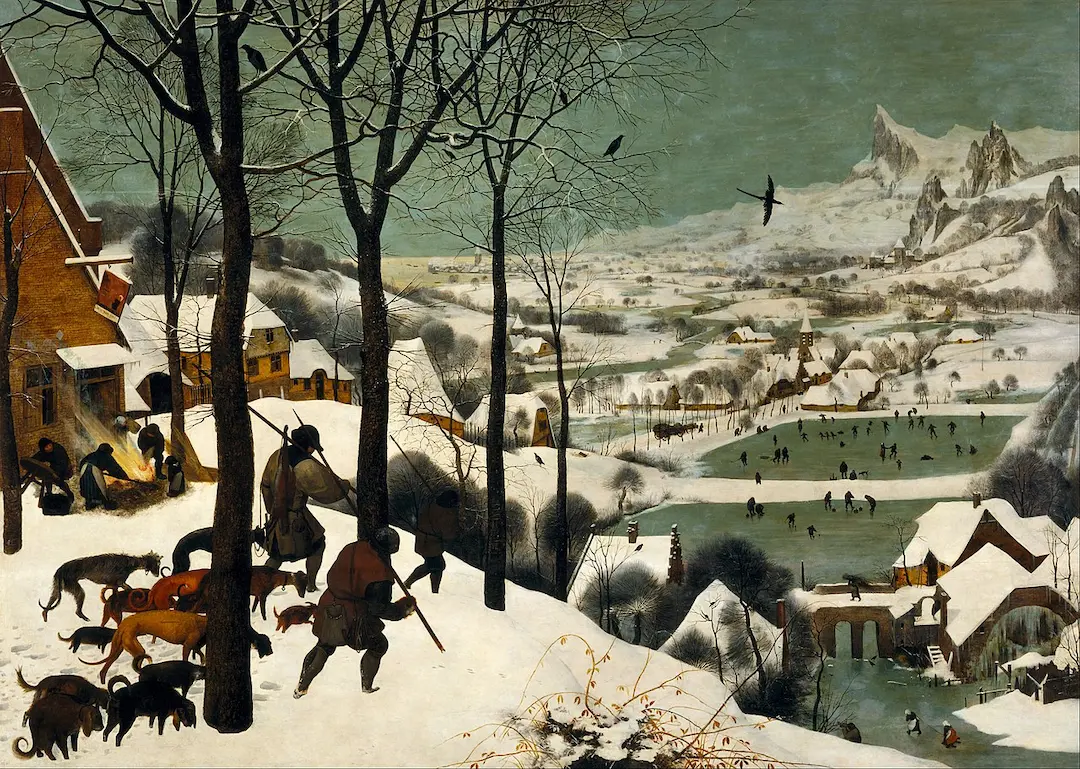
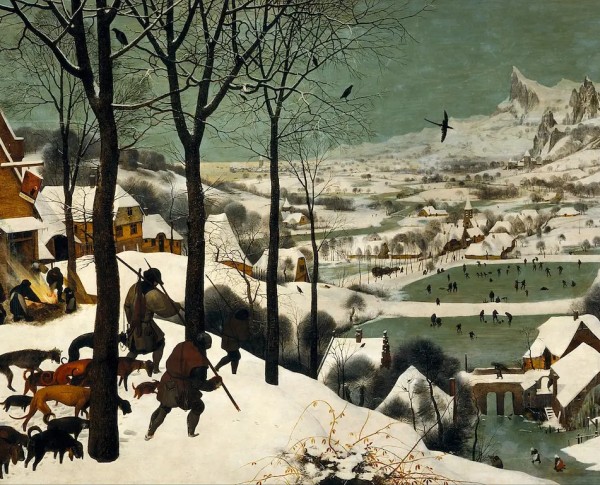
Bruegel’s technique in "The Hunters in the Snow (Winter) 1565" demonstrates his mastery of oil on canvas. Each brushstroke brings to life the chilly landscape and the figures’ quiet determination, showcasing the artist’s keen observation and technical prowess. This painting not only exemplifies the hallmark style of the Northern Renaissance but also serves as an enduring example of how oil on canvas can evoke powerful narratives and emotions within a single scene.
"The Hunters in the Snow (Winter) 1565" by Pieter the Elder Bruegel is rich in stories and symbols. The painting subtly weaves together themes of community, survival, and the passage of time, hallmarks of the Northern Renaissance movement. Every detail, from the hunters’ weary posture to the bustling village, invites viewers to discover deeper meanings. This fine art painting for sale offers more than visual pleasure—it opens a window into 16th-century life and allegory.
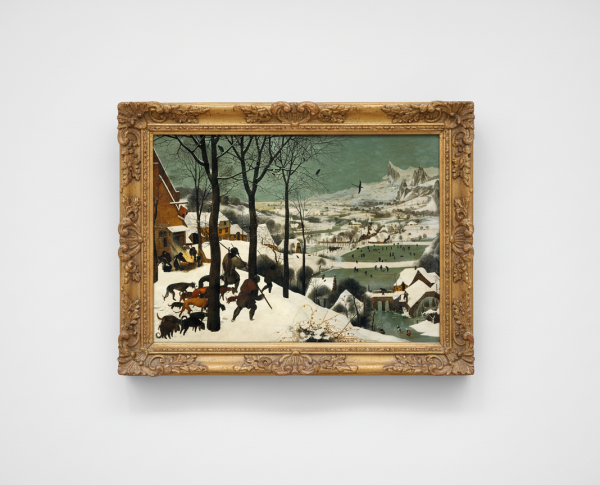
Owning a hand-painted oil painting like "The Hunters in the Snow (Winter) 1565" is a privilege for any serious collector. Pieter the Elder Bruegel’s celebrated work remains a cornerstone of Northern Renaissance art, admired for its technical brilliance and storytelling. As a fine art painting for sale, it represents both historical significance and artistic excellence, making it an exceptional addition to any collection seeking to showcase the very best of European masterworks.
When Art Meets History
"The Hunters in the Snow (Winter) 1565" by Pieter the Elder Bruegel stands as a remarkable testament to the Northern Renaissance movement. This hand-painted oil painting captures a wintry landscape, reflecting the hardships and communal life of 16th-century Europe. Bruegel’s attention to everyday life and seasonal change situates this masterpiece within a pivotal era, bridging medieval traditions and Renaissance innovations. The work’s historical context enhances its value as both a cultural icon and a fine art painting for sale.
Techniques That Speak
Pieter the Elder Bruegel’s mastery is evident in his use of oil on canvas, a hallmark of the Northern Renaissance. His meticulous brushwork and keen eye for detail bring depth and realism to "The Hunters in the Snow (Winter) 1565." Bruegel’s innovative techniques, such as layering translucent glazes and capturing atmospheric perspective, create a sense of cold, quiet beauty. Like his related paintings, this work showcases his ability to blend narrative and naturalism seamlessly.
Emotions on Display
In "The Hunters in the Snow (Winter) 1565," Pieter the Elder Bruegel conveys a profound sense of communal endurance and quiet struggle. The figures, trudging through a snow-laden landscape, evoke empathy and reflection. This fine art painting for sale resonates with viewers, inviting them to experience the emotional atmosphere of a harsh winter. Bruegel’s artistry captures both the challenges and simple joys of rural life, a signature trait of the Northern Renaissance movement.
Coveted by Collectors
Collectors of fine art are continually drawn to the timeless appeal of "The Hunters in the Snow (Winter) 1565" by Pieter the Elder Bruegel. This hand-painted oil painting is celebrated for its historical significance and artistic mastery, making it a prized possession among Northern Renaissance enthusiasts. Whether displayed in private collections or prestigious museums, Bruegel’s iconic winter scene remains a sought-after treasure, often compared to his other renowned oil on canvas works from the same period.
Frequently Asked Questions About The Hunters in the Snow (Winter) 1565
What is the historical context of The Hunters in the Snow?
The Hunters in the Snow was painted during the Northern Renaissance, a period characterized by a focus on realism and the depiction of everyday life. Created in 1565, this work reflects the socio-economic conditions of the time, particularly the harsh winters experienced in Northern Europe.
What artistic techniques did Pieter Bruegel the Elder use in this painting?
Bruegel employed a detailed and naturalistic style, utilizing oil on wood to create rich textures and vibrant colors. His use of perspective and composition draws the viewer's eye across the landscape, effectively capturing the vastness of the winter scene.
What themes are explored in The Hunters in the Snow?
The painting explores themes of survival, community, and the relationship between humans and nature. It illustrates the struggle of the hunters against the harsh winter, while also showcasing the communal activities of the villagers engaged in winter leisure.
What symbolic elements are present in the painting?
The hunters symbolize the human struggle against nature, while the winter landscape represents both beauty and hardship. The presence of the village in the background suggests a sense of community, contrasting with the isolation of the hunters.
How does Bruegel depict the season of winter in this artwork?
Bruegel captures the essence of winter through the use of a muted color palette dominated by whites and grays, evoking a sense of coldness. The snow-covered landscape, frozen lake, and bare trees effectively convey the starkness of the season.
What role does the composition play in the painting?
The composition is carefully structured, with the hunters positioned in the foreground and the village receding into the background. This arrangement creates a sense of depth and invites the viewer to explore the various activities occurring throughout the scene.
How does The Hunters in the Snow reflect Bruegel's interest in peasant life?
Bruegel often depicted peasant life with empathy and realism. In this painting, he illustrates the daily struggles and joys of rural existence, emphasizing the importance of community and the resilience of people in the face of adversity.
What influence did The Hunters in the Snow have on later artists?
The painting has influenced numerous artists with its innovative composition and thematic depth. It paved the way for future landscape painting and inspired artists to explore the relationship between humanity and nature in their works.
What can we learn about 16th-century society from this painting?
The Hunters in the Snow provides insight into the social dynamics of 16th-century Europe, highlighting the importance of community, the struggles of rural life, and the seasonal challenges faced by the populace during harsh winters.
Why is The Hunters in the Snow considered a masterpiece?
This painting is regarded as a masterpiece due to its intricate detail, innovative composition, and profound thematic exploration. Bruegel's ability to blend realism with symbolism creates a timeless work that resonates with viewers across generations.






















_GFM_Painting_(1).webp)

_1565.webp)

 100% Hand-Painted: Finished in 3-6 Weeks
_1565.webp)

.png)















_(1).webp)