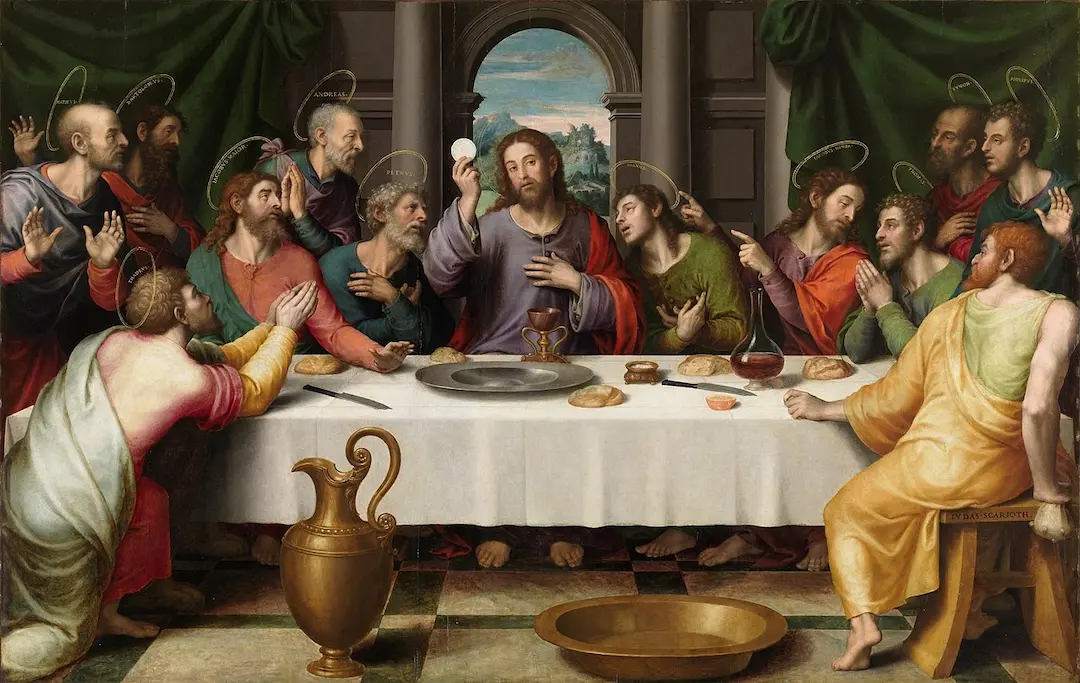
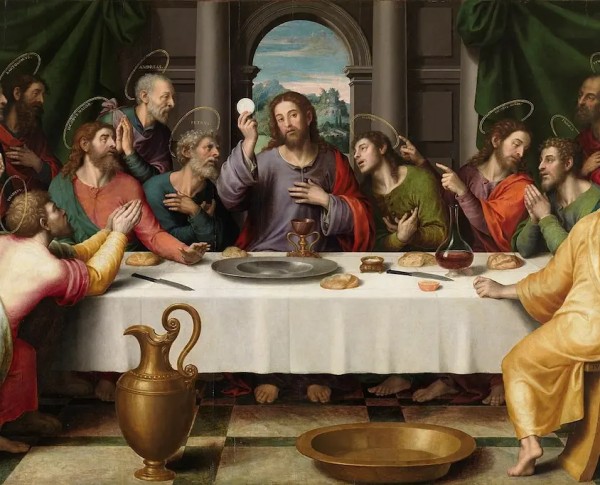
"The Last Supper (2) 1560s" by Vicente Juan Juan de Juanes, also known as Masip (Macip), stands as a testament to the Spanish Renaissance movement. This hand-painted oil painting reflects the era’s deep religious devotion and artistic innovation. Juanes’s interpretation of the iconic biblical scene brought new life to traditional themes, making it a sought-after fine art painting for sale among collectors and enthusiasts of Spanish Renaissance masterpieces.
Vicente Juan Juan de Juanes’s remarkable technique is evident in every detail of "The Last Supper (2) 1560s." Utilizing oil on canvas, the artist achieved vibrant color and subtle shading that highlight the emotional depth of the scene. His mastery of brushwork and composition epitomizes the Spanish Renaissance style, making this oil on canvas work a prime example of the movement’s dedication to realism and spiritual storytelling.
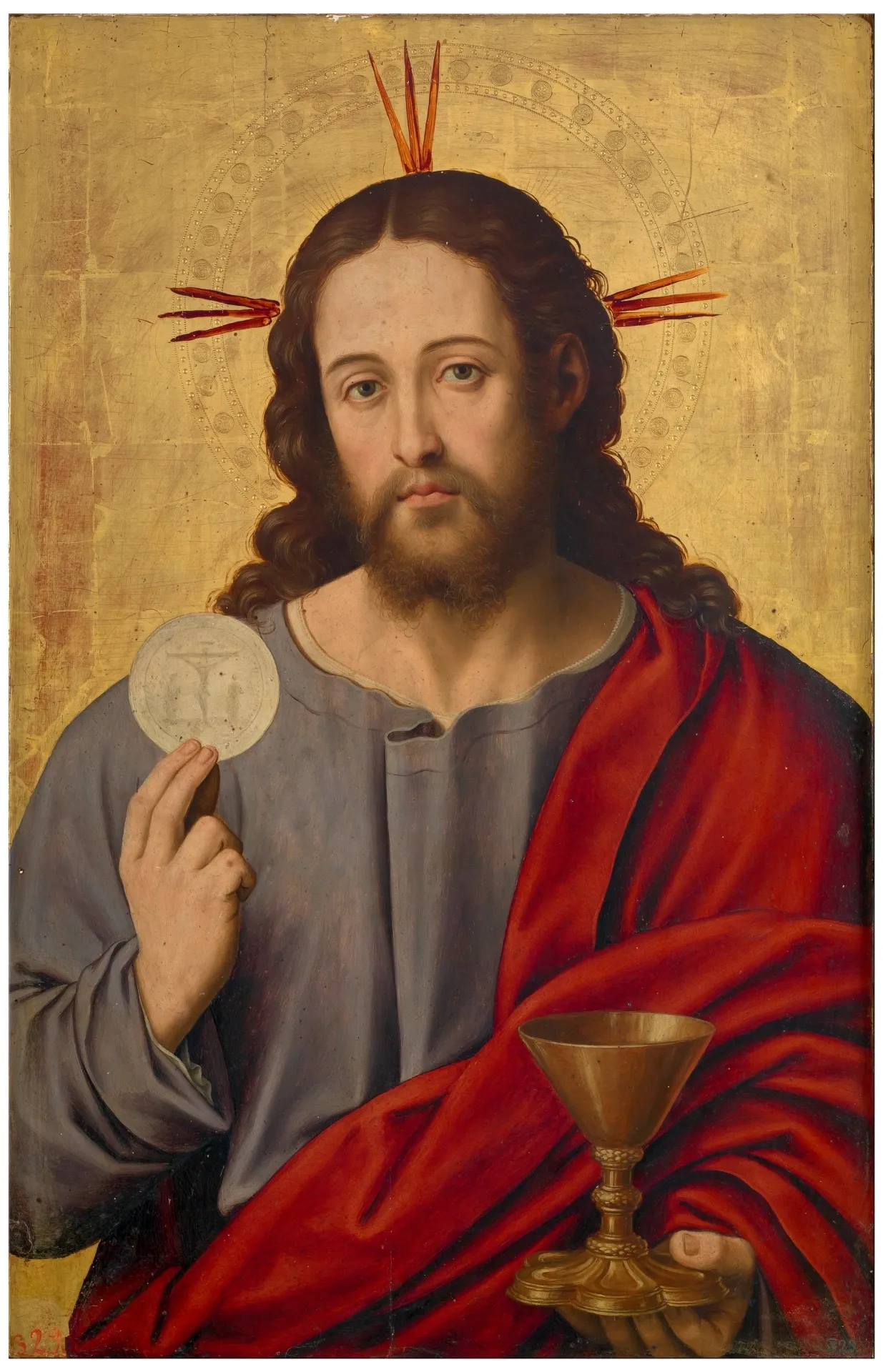
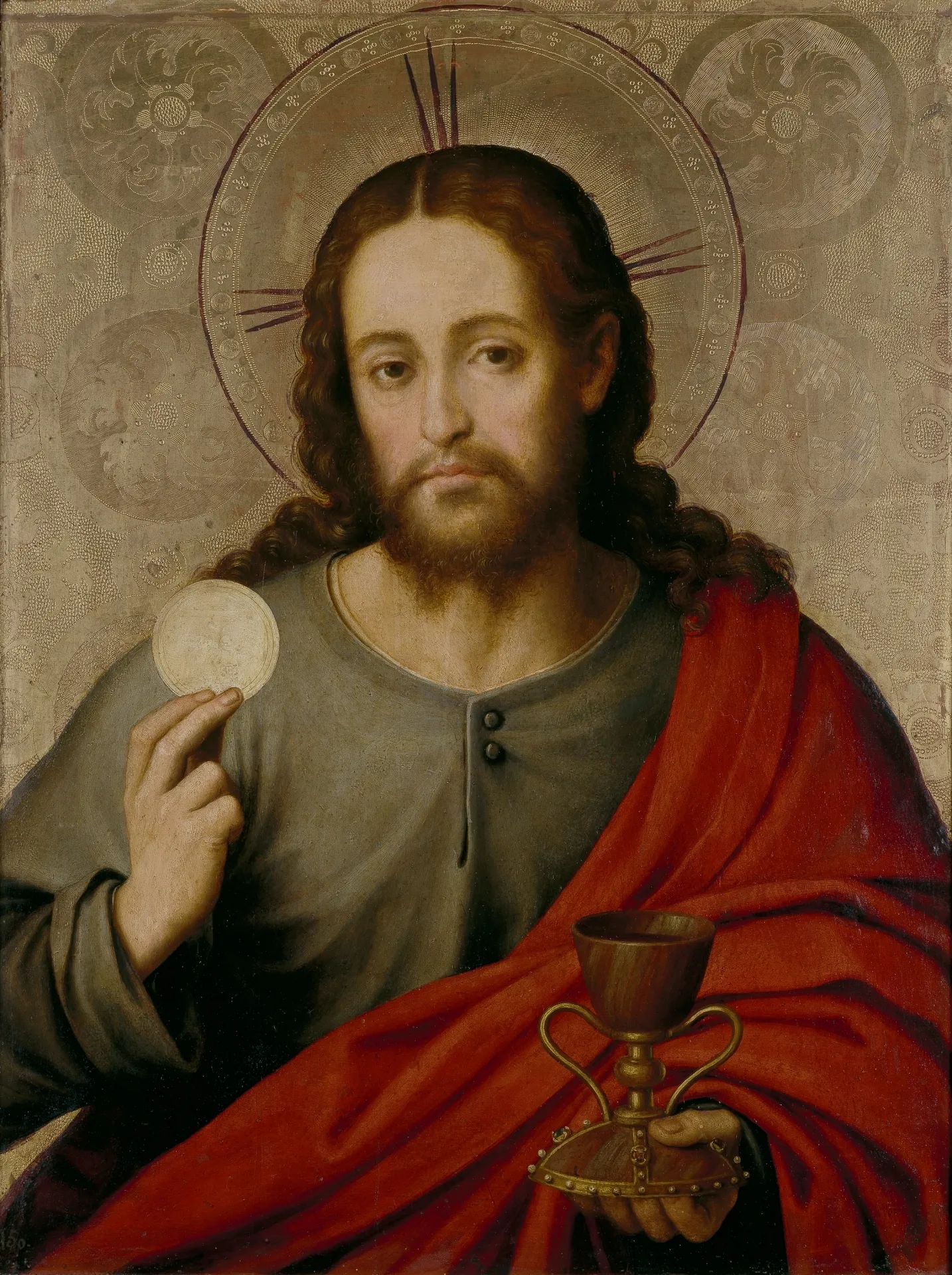
Every figure and gesture in "The Last Supper (2) 1560s" by Vicente Juan Juan de Juanes is rich with meaning. The painting, a distinguished hand-painted oil painting from the Spanish Renaissance, is filled with symbolic elements that reveal the artist’s intent. The careful placement of the apostles, the chalice, and the bread serve to engage viewers in the narrative, making this masterpiece a profound study in religious storytelling and artistic symbolism.
For art collectors and admirers of the Spanish Renaissance, "The Last Supper (2) 1560s" by Vicente Juan Juan de Juanes is a fine art painting for sale that embodies historical significance and exceptional artistry. Its enduring appeal lies in its masterful execution and the powerful story it tells. Acquiring such a piece is not only an investment in oil on canvas art but also in the rich legacy of Spanish Renaissance painting.
When Art Meets History
"The Last Supper (2) 1560s" by Vicente Juan Juan de Juanes, also known as Masip (Macip), stands as a testament to the Spanish Renaissance's deep engagement with religious themes. This hand-painted oil painting captures a pivotal biblical moment, reflecting the era's devotion and artistic innovation. Juanes, celebrated for his iconic depictions of sacred subjects, infuses historical significance into every brushstroke, making this masterpiece a prime example of Renaissance artistry and a key reference among Spanish fine art painting for sale.
Techniques That Speak
Vicente Juan Juan de Juanes employed meticulous techniques in "The Last Supper (2) 1560s," characteristic of Spanish Renaissance masters. The artist's use of oil on canvas allows for rich layering and luminous color transitions, enhancing both depth and realism. His careful attention to detail, particularly in the figures’ expressions and garments, showcases the painter's technical prowess. This oil on canvas work stands among the finest religious interpretations, echoing the skill found in other masterpieces by Juanes and his contemporaries.
Emotions on Display
In "The Last Supper (2) 1560s," Masip (Macip) masterfully conveys the emotional gravity of Christ’s final meal with his disciples. The hand-painted oil painting vividly captures a range of expressions—devotion, betrayal, and sorrow—creating an intense narrative. Through subtle gestures and evocative color choices, the artist immerses viewers in the scene’s drama. This emotional depth has helped secure the work’s reputation as a fine art painting for sale that resonates deeply with collectors and admirers of Spanish Renaissance art.
Coveted by Collectors
Collectors highly prize "The Last Supper (2) 1560s" by Vicente Juan Juan de Juanes for its historical importance and technical excellence. As a standout oil on canvas from the Spanish Renaissance, it embodies the movement’s spiritual and artistic ideals. The painting’s provenance and connection to Masip’s celebrated body of work make it a sought-after treasure in the world of fine art painting for sale, appealing to those who value both religious heritage and masterful artistry.
Frequently Asked Questions About The Last Supper (2) 1560s
What is the historical context of "The Last Supper (2) 1560s"?
This painting was created during the 1560s, a period marked by the Counter-Reformation in Spain, which sought to reaffirm Catholic doctrine and values in response to the Protestant Reformation. Vicente Juan Juanes, also known as Masip, was influenced by this cultural climate, which is reflected in the religious themes of his work.
Who was Vicente Juan Juanes and what is his significance in art history?
Vicente Juan Juanes, also known as Masip, was a prominent Spanish painter of the Renaissance period. He is celebrated for his religious works and his ability to convey deep emotional resonance through his art. His contributions to the Spanish Renaissance are significant, particularly in the context of religious painting.
What artistic techniques are employed in "The Last Supper (2) 1560s"?
The painting showcases Juanes' mastery of chiaroscuro, a technique that uses strong contrasts between light and dark to create a sense of volume and depth. Additionally, the composition is carefully arranged to guide the viewer's eye towards the central figure of Christ, enhancing the narrative focus of the scene.
What symbols are present in "The Last Supper (2) 1560s"?
The painting is rich in symbolism, particularly in the depiction of food and drink, which represents the Eucharist and the Last Supper's significance in Christian theology. The presence of specific items, such as bread and wine, underscores the themes of sacrifice and communion.
How does "The Last Supper (2) 1560s" compare to other interpretations of the Last Supper theme?
Unlike earlier interpretations that often emphasized dramatic action, Juanes' version is characterized by a serene and contemplative atmosphere. His focus on the emotional expressions of the apostles and Christ invites viewers to reflect on the spiritual significance of the moment.
What influences can be seen in the style of "The Last Supper (2) 1560s"?
The painting reflects influences from both Italian Renaissance art and the emerging Spanish Baroque style. Juanes' attention to detail and use of color demonstrate a blend of these artistic traditions, showcasing the transition in Spanish art during this period.
What is the significance of the composition in "The Last Supper (2) 1560s"?
The composition is meticulously structured, with Christ positioned at the center, symbolizing his role as the focal point of the Christian faith. The arrangement of the apostles around him creates a dynamic interaction, emphasizing their individual reactions to the moment of revelation.
How does the use of color in "The Last Supper (2) 1560s" enhance its meaning?
Juanes employs a vibrant color palette that not only captures the viewer's attention but also conveys the emotional weight of the scene. The use of warm tones for Christ and cooler tones for the apostles creates a visual hierarchy, highlighting the importance of the central figure.
What role does "The Last Supper (2) 1560s" play in the context of Spanish religious art?
This painting serves as a quintessential example of Spanish religious art during the Renaissance, reflecting the era's emphasis on spirituality and devotion. It illustrates how artists like Juanes contributed to the visual language of Catholicism, reinforcing religious narratives through art.
What messages or themes are conveyed through "The Last Supper (2) 1560s"?
The painting conveys themes of betrayal, sacrifice, and communion. By capturing the moment of Christ's announcement of betrayal, Juanes invites viewers to contemplate the complexities of human relationships and the profound significance of the Last Supper in Christian faith.






















_GFM_Painting_(1).webp)

_1560s.webp)

 100% Hand-Painted: Finished in 3-6 Weeks
_1560s.webp)

.png)















_(1).webp)