Your favourites are only temporarily saved. To find them back, create your account on GFM Painting!
Already have account ?
No gift cards in your cart.
November 19, 2026


Composition is one of the most important artistic decisions when creating a hand-painted oil portrait from a photograph. It determines how the subject is positioned, how different elements relate to one another and where the viewer's attention is directed. A carefully considered composition can transform an ordinary photograph into a balanced, expressive and visually engaging work of art.
Whether you are commissioning an individual portrait, a couple's portrait or a family painting, the arrangement of the subjects, background, surrounding space and other visual elements can significantly influence the finished result. Understanding these choices helps you select a composition that reflects the personality of the subject while creating a painting that is both attractive and meaningful.
Composition determines how the subject and other visual elements are arranged within an oil portrait. It influences balance, proportion, visual focus and the overall atmosphere of the painting. A well-planned composition draws attention to the most important features while ensuring that the subject, background and surrounding details work together harmoniously.
The best composition depends on the subject, the number of people, the intended canvas dimensions and the desired style. A centred head-and-shoulders arrangement creates a traditional presentation, while an asymmetrical composition can introduce movement and a more contemporary feel. The most suitable choice is one that complements the subject and maintains a natural visual balance.
Yes. An artist can adapt the arrangement of elements from a reference photograph to create a stronger composition for a painting. This may involve adjusting subject placement, changing the amount of background space, repositioning visual elements or combining suitable details from different reference photographs, while maintaining a natural and recognisable appearance.
Composition refers to the arrangement of everything within the boundaries of a painting. In portraiture, this includes the subject's position, posture, direction of gaze, clothing, background, lighting and the relationship between different elements.
A photograph may capture a beautiful expression or an important moment, but its original arrangement may not translate perfectly into a painted portrait. The proportions of the photograph, the available background space and the position of the subject all need to be considered when planning the artwork.
Good composition creates a visual structure that helps the viewer understand and appreciate the subject. It also gives the painting a sense of intention, rather than making it appear as though the elements have simply been placed within a frame.
A central composition positions the main subject near the middle of the canvas. This is one of the most recognisable arrangements in traditional portrait painting and is particularly effective when the face and expression are the main focus.
Central positioning creates a sense of stability, formality and balance. It is often suitable for individual portraits, formal family paintings and commemorative artwork.
However, placing a subject precisely in the centre is not always necessary. Small adjustments to the position of the head, shoulders or body can make the composition feel more natural and visually interesting.
An asymmetrical composition places the subject away from the exact centre of the canvas. The remaining space can be used to introduce background details, decorative elements or a sense of environment.
This arrangement can make a portrait feel more relaxed and contemporary. It is particularly effective when the subject is looking to one side, sitting at an angle or interacting with another person or an object.
Asymmetrical compositions require careful attention to visual balance. If the subject occupies one side of the painting, the background and surrounding elements should support the arrangement without distracting from the main figure.
The rule of thirds is a compositional guideline that divides an image into nine equal sections using two horizontal and two vertical lines. Important elements are positioned along these lines or near their intersections.
In portraiture, this approach can help determine where the subject's face, eyes or body should be placed. Rather than automatically positioning the subject in the centre, the composition can use the available space to create a more engaging arrangement.
The rule of thirds is a useful guide rather than a strict requirement. Traditional portraits often use centred arrangements, while more informal or environmental portraits may benefit from positioning the subject off-centre.
The direction in which a person looks can have a significant influence on the composition of an oil portrait. A subject looking directly towards the viewer creates a sense of connection and presence. A subject looking to one side can introduce a more thoughtful, relaxed or contemplative atmosphere.
When a person looks towards one side of the canvas, allowing some additional space in that direction can create a natural visual flow. If the subject is positioned too close to the edge, the composition may feel restricted.
The direction of the gaze should therefore be considered alongside the subject's position, head angle and available background space.
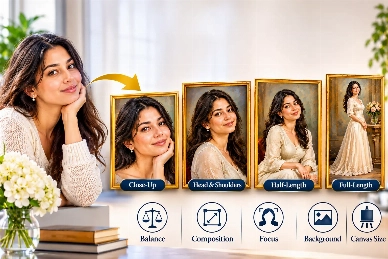
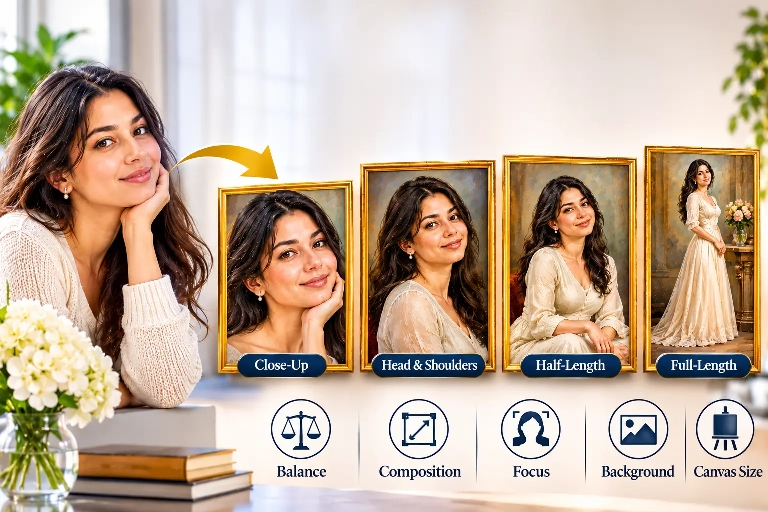
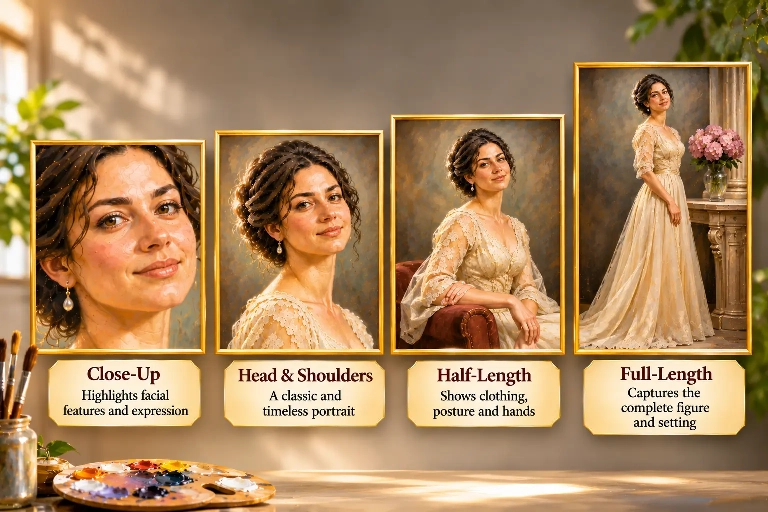
Head-and-shoulders compositions are particularly popular for traditional individual portraits. They provide enough space to show the face, neck and upper body while keeping attention firmly on the subject.
The position of the head and shoulders can change the overall character of the painting. A straight-on pose may appear formal and confident, while a slight turn of the shoulders can introduce depth and a more natural appearance.
Careful spacing around the head is also important. Too little space above the hair can make the portrait feel cramped, while excessive empty space may weaken the visual connection with the subject.
Half-length and full-length compositions introduce additional elements into the painting. These may include clothing, hands, posture, furniture and the surrounding environment.
A half-length portrait can communicate more about the subject's personality through their posture, clothing and gestures. It also provides an opportunity to include meaningful details without allowing the background to dominate the artwork.
Full-length portraits require a broader compositional approach. The complete figure must be arranged within the canvas, with sufficient space around the head, feet and body. The relationship between the figure and the background becomes particularly important.
For these compositions, canvas dimensions should be considered early to ensure that the figure is presented naturally and without awkward cropping.
Couple portraits require careful consideration of the relationship between two subjects. Their positions, body angles, expressions and distance from one another help communicate connection and personality.
A side-by-side arrangement can create a balanced and formal composition. A closer arrangement, with the subjects slightly turned towards one another, can create a more intimate and affectionate presentation.
Differences in height, posture and positioning should be considered so that both people receive appropriate visual attention. The composition should also allow enough space around each subject to avoid making the painting feel crowded.
Family portraits introduce additional compositional challenges because several people must be arranged within a single canvas. The artist needs to consider the number of family members, their relative heights, their positions and the relationships between them.
A traditional family composition may arrange adults behind seated children, creating a structured and balanced presentation. A more informal arrangement may show family members sitting or standing close together, reflecting a natural family moment.
For larger family portraits, the arrangement should avoid placing faces too close together or creating large areas of unused space. Each person should remain clearly visible, with a natural relationship to the other members of the group.
The background is not simply an area behind the subject. It contributes to the overall structure of an oil portrait and can influence its atmosphere, depth and visual balance.
A simple background can keep attention on the face and expression. A more detailed setting may communicate something about the subject's interests, personality or surroundings.
Background space can also help balance an asymmetrical composition. For example, if a subject is positioned towards one side of the canvas, a subtle background feature on the opposite side may help create visual harmony.
However, background details should support the subject rather than compete with it. Too many decorative elements can make a portrait feel busy and reduce the impact of the main figure.
A successful portrait composition depends on the relationship between the different elements within the painting. The size of the subject, the amount of surrounding space and the position of important features all contribute to visual balance.
For example, a large head-and-shoulders portrait may require a relatively simple background to maintain focus. A full-length portrait may benefit from additional environmental details to create a sense of scale and context.
Balance does not necessarily mean that both sides of a painting must look identical. It means that the visual weight of the elements feels considered and harmonious.
Composition can influence how a portrait is perceived emotionally. A symmetrical, centrally positioned subject may communicate formality, dignity and confidence. A more relaxed arrangement can create a sense of warmth and intimacy.
Close positioning between family members or couples can emphasise affection and connection. Greater space around an individual may create a more reflective or formal atmosphere.
The relationship between the subject, background and surrounding space should therefore support the feeling that the painting is intended to communicate.
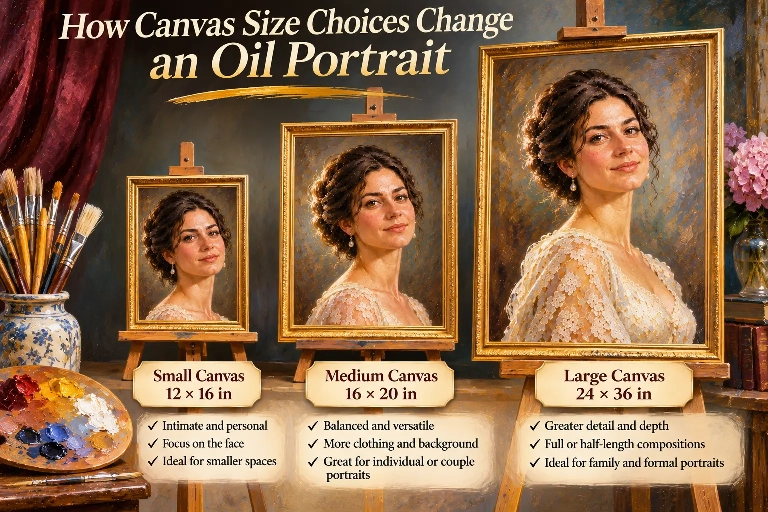
The composition and canvas dimensions should be considered together rather than treated as separate decisions. The shape and size of the canvas determine how much space is available for the subject and the surrounding elements.
A portrait intended for a tall, narrow canvas may require a different arrangement from one planned for a wide landscape canvas. A family group may need additional horizontal space, while a full-length individual portrait may be better suited to a vertical format.
Choosing the canvas dimensions before finalising the composition helps prevent awkward positioning, unnecessary cropping or insufficient space around the subject.
Choosing the right composition begins with understanding what you want the painting to communicate. Consider whether you prefer a formal, traditional portrait or a more relaxed and natural arrangement.
Think about how much of the subject should be included, whether the background should be simple or detailed and whether additional people or meaningful objects should appear in the painting.
The quality and proportions of the reference photograph are also important. A photograph may need to be adapted to suit the intended canvas dimensions or to improve the positioning of the subject.
When commissioning an oil portrait from GFM Painting, consider the following factors:
These decisions help establish a clear artistic direction and provide a stronger foundation for a well-balanced commissioned portrait.
Composition plays a central role in the appearance and character of a hand-painted oil portrait. The position of the subject, direction of the gaze, arrangement of people, background space and canvas proportions all influence how the finished painting is experienced.
Whether you prefer a traditional centred portrait, an expressive asymmetrical arrangement or a detailed family composition, the most successful approach is one that brings every element together naturally.
At GFM Painting, thoughtful composition is an important consideration when transforming photographs into hand-painted portraits. By considering the subject, intended presentation and canvas dimensions, a photograph can become the foundation for a balanced and lasting work of art.
Websites Built to Grow Your Business
Professional Web Design • Development • SEO • Digital Marketing
Read More
Discover a different perspective on wealth, stewardship, purpose and leadership.
Read MoreComposition determines how a subject is positioned and presented within a hand-painted oil portrait, shaping its balance and visual impact.
Traditional centred arrangements create elegance and formality, while asymmetrical compositions introduce movement and contemporary character.
The direction of the subject's gaze, posture and relationship with the background all contribute to the personality of the painting.
For couple and family portraits, thoughtful positioning ensures that every subject is clearly represented within a harmonious composition.
Discover how carefully considered composition can transform a photograph into a beautifully balanced and meaningful oil portrait.
Frequently Asked Questions
A head-and-shoulders composition is a popular choice because it focuses attention on the subject's face and expression. However, close-up, half-length and full-length arrangements can also create beautiful results depending on the desired presentation.
Composition influences the positioning of the subject, visual balance, background space and overall atmosphere. A carefully planned arrangement helps direct attention towards important features and creates a harmonious painting.
Yes. An artist can adapt the positioning of the subject, adjust the background or combine elements from different reference photographs to create a more balanced composition while maintaining a natural appearance.
A centred composition positions the subject near the middle of the canvas, creating a traditional and formal appearance. An asymmetrical composition places the subject away from the centre, introducing movement, visual interest and additional background space.
Yes. Canvas dimensions influence how much space is available for the subject and surrounding details. The composition and canvas size should be planned together to ensure natural proportions, suitable positioning and a balanced finished painting.

GFM Designer Ltd
Maultway Court
67-69 Ruxley Lane
Epsom, Surrey
KT19 0JG. UK

E-MAIL : info@gfmpainting.co.uk
PHONE : +44 (0) 203 592 3482
MOBILE : +44(0) 7834 393 396