Your favourites are only temporarily saved. To find them back, create your account on GFM Painting!
Already have account ?
No gift cards in your cart.
November 19, 2026


Skin tone is one of the most important artistic considerations when creating a hand-painted oil portrait. The way an artist mixes and applies colour to represent the subject's complexion influences the realism, warmth, depth and overall character of the finished painting. Skin is rarely a single, uniform colour. It contains subtle variations in tone, highlights, shadows and undertones that help communicate the natural appearance of a person's face and body.
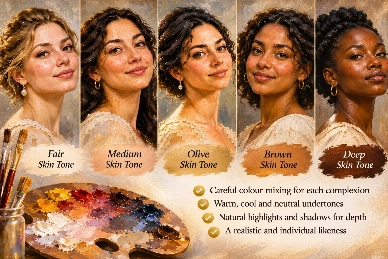
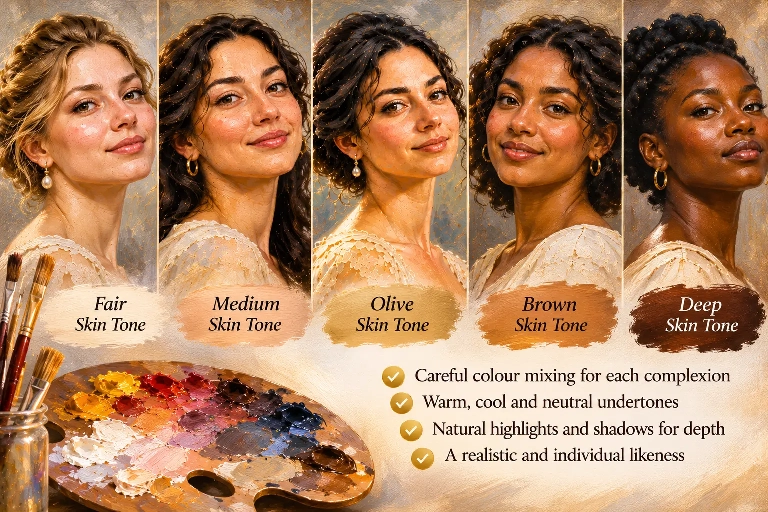
When commissioning an oil portrait from a photograph, choosing the right approach to skin tones helps ensure that the finished artwork captures the subject's individuality. From fair and light complexions to medium, olive, brown and deep skin tones, each requires careful colour mixing and an understanding of how light interacts with the skin.
Skin tones influence the realism, warmth, depth and visual character of an oil portrait. Accurate colour mixing helps an artist represent the subject's natural complexion, while subtle variations in highlights, shadows and undertones create dimension and a lifelike appearance.
Artists combine colours such as yellow ochre, burnt sienna, raw sienna, red, white and umber to create a wide range of skin tones. The exact mixture depends on the subject's complexion, undertones, lighting and the desired artistic effect. No single colour can accurately represent the complexity of human skin.
Yes. A photograph provides a visual reference for the subject's complexion, but the artist must also interpret its lighting, colour balance and shadows. Careful observation and colour mixing help reproduce the natural appearance of the subject while maintaining the painterly qualities of an oil portrait.
Painting skin is a complex process because human complexions contain many subtle colours. Even an area that appears to be a single shade in a photograph may contain warmer, cooler, lighter and darker variations.
Traditional portrait artists study the relationship between light, shadow and the underlying colours of the skin. They use carefully mixed pigments to create transitions between different areas of the face, including the forehead, cheeks, nose, chin and neck.
These variations help create the appearance of three-dimensional form. Without them, a painted face can appear flat or artificially uniform.
Fair and light complexions often contain delicate variations of pink, peach, beige, cream and warm or cool undertones. Although these skin tones may appear relatively pale, they are not simply created by adding white to a basic skin-coloured mixture.
Artists may use combinations of white, yellow ochre, red and small quantities of earth colours to establish the underlying complexion. Subtle pink and peach variations can be introduced around the cheeks, nose, lips and ears.
Shadows are equally important. Cooler or slightly deeper mixtures help define the contours of the face, while carefully controlled highlights bring out the forehead, cheekbones and other areas that catch the light.
The challenge is to retain the natural delicacy of the complexion without making the skin appear washed out or excessively pink.
Medium skin tones can include a wide range of beige, golden, peach, tan and neutral complexions. Their appearance changes considerably depending on the lighting and the natural undertones of the individual.
Artists may use yellow ochre, burnt sienna, red and white in different proportions to develop the main skin colour. Additional mixtures are then used to create highlights and shadows.
Careful transitions between these colours are particularly important around the forehead, cheeks and jawline. The aim is to create a natural sense of depth while preserving the individual characteristics of the subject.
Olive complexions can contain a distinctive combination of golden, beige, brown and subtle green or neutral undertones. These variations make accurate colour interpretation particularly important.
An artist may use yellow ochre, earth pigments, red and carefully adjusted neutral mixtures to achieve the desired effect. The balance must be controlled so that the complexion does not become excessively yellow, orange or green.
Light falling across olive skin can create warm golden highlights, while shaded areas may appear cooler or more muted. These differences help produce a convincing and natural-looking portrait.
Brown complexions range from lighter caramel and honey tones to deeper chestnut and rich brown shades. They often contain complex combinations of red, golden, neutral and earthy undertones.
Artists may work with burnt sienna, raw sienna, yellow ochre, red and umber to develop the main complexion. The proportions vary according to the subject and the lighting in the reference photograph.
Highlights should not simply be created by adding large amounts of white. This can make brown skin appear chalky or unnatural. Instead, carefully selected lighter mixtures can introduce warmth and reflect the way light falls across the face.
Shadows also require attention. Richer earth colours and carefully balanced darker mixtures help define the cheeks, jawline, neck and other areas where light is reduced.
Deep skin tones contain a wide range of colours and undertones, including warm red, golden, neutral and cool variations. A successful portrait should preserve the richness of the complexion rather than reducing it to a single dark brown shade.
Artists may use combinations of burnt umber, burnt sienna, red, yellow ochre and other earth pigments to develop the underlying colour. The exact mixture depends on the individual complexion and the lighting conditions.
Highlights are particularly important for creating dimension. Depending on the light source, these may contain warmer golden, reddish or more neutral colours. They help reveal the structure of the face without making the skin appear artificially lightened.
Dark areas should also retain subtle colour variation. Introducing carefully controlled changes in temperature and tone creates depth and helps the portrait maintain a natural appearance.
Skin tone describes the overall lightness or darkness of a complexion, while undertone refers to the subtle colour characteristics beneath its surface. Understanding both is important when mixing paint for a realistic portrait.
Warm undertones may contain golden, peach, yellow or reddish qualities. Artists can introduce these characteristics through carefully balanced warm pigments, particularly in areas affected by direct or reflected light.
Cool undertones may contain pink, reddish or slightly bluish qualities. These can be represented through controlled mixtures that introduce cooler colour variations without making the complexion appear grey or lifeless.
Neutral undertones combine warm and cool characteristics. They require a balanced approach to colour mixing, ensuring that neither warm nor cool pigments dominate the overall complexion.
Undertones should be considered alongside the reference photograph because lighting can significantly change how a complexion appears.
Lighting has a major influence on the colours visible in a portrait. The same person can appear to have different skin tones when photographed in natural daylight, warm indoor lighting or shaded surroundings.
Natural daylight often reveals a broad range of colour variations. Warm indoor lighting may introduce golden or orange qualities, while cooler lighting can make some areas appear more neutral or subdued.
Artists need to interpret these lighting conditions rather than simply copying every colour visible in the photograph. The objective is to preserve the subject's recognisable complexion while creating a convincing representation of light and shadow.
Highlights and shadows give a portrait its sense of form and dimension. They help define facial structure and create the impression that the subject exists within a three-dimensional space.
Highlights commonly appear on areas such as the forehead, bridge of the nose, cheekbones, chin and other surfaces facing the light source. Their colour depends on the complexion and the surrounding light.
Shadows appear beneath the cheekbones, around the sides of the nose, below the chin and along the contours of the face. These areas should not automatically be painted using black or grey. Carefully mixed darker colours usually produce a more natural result.
The transition between light and shadow is just as important as the colours themselves. Smooth or carefully varied transitions help maintain the natural appearance of skin.
Skin tone influences how facial features are perceived. The colours around the eyes, lips, nose and cheeks contribute to the subject's expression and individuality.
For example, subtle colour variations around the cheeks can create a sense of natural warmth. The area around the eyes may contain cooler or darker tones, while the lips require their own combination of colour and shading.
Accurate skin colour also helps maintain the subject's likeness. Even when the facial proportions are correct, an unsuitable complexion can make a portrait appear noticeably different from the person in the reference photograph.
The approach to skin colour can vary according to the type of portrait being created.
Individual portraits place particular emphasis on the face, expression and natural complexion. Accurate skin tones help preserve the subject's identity and character.
Couple portraits may include people with different complexions. Each person's skin tone should be represented individually rather than using one general colour mixture for both subjects. The lighting should remain consistent so that the finished painting feels harmonious.
Family portraits may include several generations with different complexions and subtle variations in skin tone. Careful colour mixing helps represent each person accurately while maintaining a consistent lighting approach throughout the painting.
Children's portraits often benefit from careful attention to delicate colour transitions and natural facial characteristics. The artist should avoid excessive contrast or overly strong colour application that could alter the subject's appearance.
When commissioning an oil portrait from a photograph, the most important starting point is an accurate reference image. A photograph with clear facial details and reasonably balanced lighting helps the artist understand the subject's complexion and its natural variations.
It is also useful to consider the overall style and atmosphere you want the painting to communicate. A traditional realistic portrait may require close attention to natural skin colours, while a more expressive artistic approach may introduce subtle changes in colour and tonal contrast.
Before commissioning your portrait, consider the following:
These considerations help establish the artistic direction and support a more accurate and meaningful finished portrait.
Skin tone is much more than a choice of colour. It is an essential part of capturing a person's identity, expression and natural appearance in a hand-painted oil portrait.
From fair and light complexions to olive, brown and deep skin tones, every complexion requires careful observation and thoughtful colour mixing. Undertones, highlights, shadows and lighting all contribute to the final result.
At GFM Painting, the interpretation of skin tone is an important consideration when transforming photographs into hand-painted portraits. A carefully balanced approach to colour helps preserve the individuality of the subject while creating a portrait with warmth, depth and lasting visual appeal.
Websites Built to Grow Your Business
Professional Web Design • Development • SEO • Digital Marketing
Read More
Discover a different perspective on wealth, stewardship, purpose and leadership.
Read MoreSkin tone is essential to capturing the natural appearance, individuality and character of a person in a hand-painted oil portrait.
Fair, medium, olive, brown and deep complexions each require careful colour mixing to reproduce their distinctive tones and undertones.
Warm and cool colours, subtle highlights and carefully blended shadows create depth, dimension and realistic facial features.
Accurate skin tones help preserve the subject's natural complexion while ensuring that lighting, clothing and background colours work harmoniously together.
Discover how thoughtful colour choices and traditional oil painting techniques transform a photograph into a beautifully lifelike portrait.
Frequently Asked Questions
Artists combine colours such as yellow ochre, burnt sienna, raw sienna, red, white and umber to create natural-looking complexions. Subtle variations in highlights, shadows and undertones help produce realistic depth and dimension.
Yes. A clear reference photograph helps the artist understand your natural complexion, undertones and facial colour variations. Careful colour mixing and interpretation of lighting help preserve your recognisable appearance.
Warm undertones contain golden, peach or yellow qualities. Cool undertones may have pink or reddish qualities, while neutral undertones combine warm and cool characteristics. Understanding these differences helps artists select appropriate colour mixtures.
Artists use different combinations of earth pigments, reds, yellows and other colours to represent individual complexions. Brown and deep skin tones require particular attention to preserving rich colour, natural undertones and luminous highlights without making the skin appear flat or chalky.
Yes. Natural daylight, warm indoor lighting and shaded environments can all change how skin colours appear in photographs. Artists interpret these lighting conditions carefully to create realistic highlights, shadows and natural-looking complexions.

GFM Designer Ltd
Maultway Court
67-69 Ruxley Lane
Epsom, Surrey
KT19 0JG. UK

E-MAIL : info@gfmpainting.co.uk
PHONE : +44 (0) 203 592 3482
MOBILE : +44(0) 7834 393 396