Your favourites are only temporarily saved. To find them back, create your account on GFM Painting!
Already have account ?
No gift cards in your cart.
November 19, 2026


Choosing the right frame is an important part of presenting a hand-painted oil portrait. A frame does more than surround the artwork: it influences its overall appearance, complements the colours and composition, and helps establish how the painting relates to its surroundings.
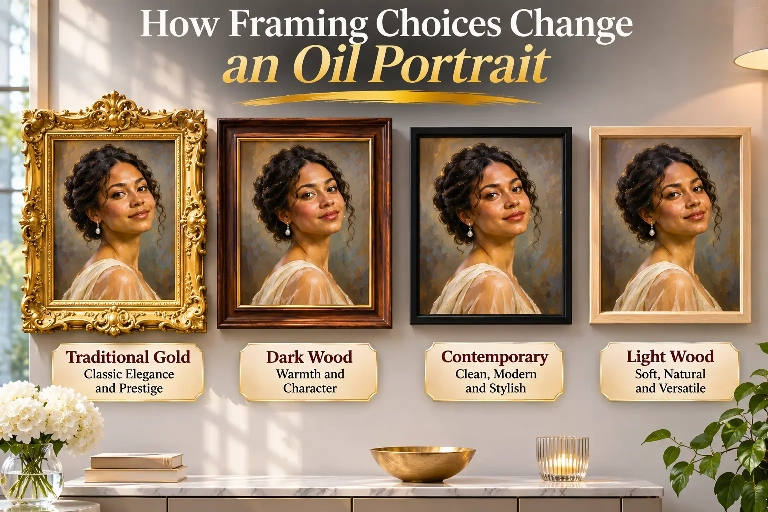
A traditional gold frame can give a portrait a classical and prestigious appearance, while a simple contemporary frame can create a more understated presentation. Dark wooden frames introduce warmth and character, whereas lighter finishes can produce a softer, more modern effect.
The right frame should complement the painting without competing with the subject. Understanding the different framing options will help you select a finish that enhances your commissioned oil portrait and suits the space where it will be displayed.
Framing changes the overall presentation of an oil portrait by influencing its style, visual balance and relationship with the surrounding interior. An ornate gold frame can create a traditional appearance, while a minimal frame gives the painting a contemporary feel. The frame's colour, material, width and decorative details can all affect how the artwork is perceived.
A traditional oil portrait often looks particularly effective in a classic wooden or gilded frame. Gold and antique-gold finishes can complement traditional portraiture, while dark wood creates a warm and distinguished appearance. The best choice depends on the painting's colours, composition, style and intended display location.
Yes. You can choose a frame that reflects your preferred style and complements the finished painting. Consider the artwork's colour palette, canvas dimensions, surrounding décor and whether you prefer a traditional, contemporary or understated presentation. It is also important to check that the frame is suitable for the canvas construction.
A frame creates a visual boundary between a painting and its surroundings. It can draw attention towards the subject, provide a sense of structure and help the artwork feel complete.
In traditional portraiture, framing has historically played an important role in the presentation of paintings. Elaborate gilded frames were often used for formal portraits, while simpler wooden frames offered a more restrained appearance.
Today, framing choices are much broader. A hand-painted oil portrait can be presented in a traditional decorative frame, a contemporary design or a minimalist finish.
The most suitable option depends on the character of the artwork and the impression you want it to create.
Gold frames are among the most recognisable choices for traditional oil portraiture. Their decorative appearance can give a painting a sense of elegance, heritage and distinction.
They are particularly suitable for:
Gold frames are available in a range of finishes, including bright gold, antique gold, muted gold and distressed gold.
A bright gold finish creates a more decorative and prominent border. Antique gold offers a softer, aged appearance, while muted gold can complement a painting without drawing too much attention away from the subject.
The frame should be selected carefully so that its decorative details enhance the artwork rather than overpower it.
Dark wooden frames provide a warm and distinguished appearance that works particularly well with traditional portraiture.
Materials and finishes such as walnut, mahogany, dark oak and ebony can complement paintings featuring rich colours, formal clothing and darker backgrounds.
Dark wooden frames are particularly suitable for:
A dark frame can create a strong boundary around the painting, helping the subject stand out against the surrounding wall.
The natural grain and texture of wood can also introduce additional character without requiring elaborate decoration.
Contemporary frames offer a simpler alternative to traditional decorative designs.
They often feature clean lines, restrained detailing and finishes such as black, white, natural wood or brushed metallic tones.
A contemporary frame may be suitable when:
Black frames can create a defined outline around the painting, while natural wood finishes provide a softer and more organic appearance.
Minimalist framing can also work particularly well for modern family portraits, couple portraits and individual commissions.
Ornate frames feature decorative elements such as carved leaves, floral patterns, scrollwork and raised detailing.
They are often associated with traditional European portraiture and historical painting styles.
An ornate frame can add a strong decorative presence to a portrait, particularly when the artwork is intended to become a focal point in a formal room.
However, elaborate framing needs careful consideration. If the painting already contains detailed clothing, a complex background or strong colours, an excessively decorative frame may compete with the artwork.
The objective is to create a harmonious relationship between the painting and its frame.
The colour of a frame can influence how the painting is perceived and how successfully it integrates with the surrounding interior.
Different finishes create different effects.
When selecting a frame colour, consider both the dominant colours in the painting and the wall on which it will be displayed.
A frame that contrasts slightly with the surrounding wall can help the portrait stand out, while a complementary finish can create a more integrated appearance.
The width and profile of a frame can significantly affect the balance of a portrait.
A wide frame creates a stronger decorative border and may suit a large traditional painting. A narrow frame produces a more understated appearance and can be appropriate for contemporary portraits.
Consider the following:
The frame should be proportionate to the canvas. A very wide frame around a small portrait may overwhelm the artwork, while an extremely narrow frame around a large traditional painting may appear understated.
Different portrait subjects may benefit from different framing approaches.
Traditional gold, dark wood and simple black frames can all work well. The choice depends on whether you want a classical or contemporary presentation.
A medium-width wooden or gold frame can provide a balanced finish, particularly when the composition contains several people.
Gold, champagne and muted wooden finishes can complement the romantic character of these paintings.
Lighter wooden finishes and simple frames can create a softer appearance, although traditional frames may also be suitable for formal compositions.
Antique gold and dark carved wood can complement the historical character of these commissions.
The frame can reflect the personality of the subject and the style of the painting. Natural wood, black and traditional gold are all possible choices.
The important consideration is ensuring that the frame complements the artwork rather than treating every portrait in the same way.
Not every oil portrait needs a conventional frame. Some canvases can be displayed without an additional decorative border, depending on how they have been constructed and finished.
An unframed canvas can create a clean and contemporary appearance. This is particularly suitable when the painted image extends around the edges of the canvas, although the suitability depends on the canvas construction and the artist's finishing approach.
A framed canvas can provide a more traditional presentation and create a defined boundary around the artwork.
When considering an unframed presentation, think about:
The decision should be made with the artist or framer to ensure the finished presentation is appropriate for the particular painting.
It is useful to understand the differences between common framing options.
These surround the canvas with a visible decorative border. They are available in many materials, widths and finishes, including gold, dark wood and contemporary designs.
A floating frame is designed to leave a small visible gap between the canvas and the frame. This creates the impression that the painting is suspended within the surrounding border.
Floating frames are often used for contemporary canvas paintings because they provide a defined presentation without covering the painted edges.
The canvas is displayed without an additional outer frame. This can create a simple appearance, particularly when the canvas edges have been finished appropriately.
The most suitable option depends on the canvas construction, artistic style and intended interior.
The frame should be considered alongside the room in which the painting will be displayed.
A traditional gold frame may complement a formal living room, while a simple black frame may work better in a modern interior.
Before choosing a frame, consider:
It can be helpful to consider the frame alongside the intended display location rather than choosing it independently of the interior.
Choosing a frame without considering the painting can affect the overall presentation. Some common mistakes include:
An excessively decorative frame can distract attention from the subject.
A frame that clashes with the painting's colours may create an unbalanced appearance.
A frame that is too wide or too narrow may affect the visual balance of the finished portrait.
A frame should complement the surrounding interior as well as the painting itself.
Traditional gold frames are attractive, but contemporary and minimalist options can be equally effective for the right artwork.
Before deciding on a frame, consider the following steps:
Taking time to consider these details can help create a finished portrait that looks cohesive and professionally presented.
Framing is an important part of presenting a hand-painted oil portrait. The right choice can enhance the painting's colours, complement its composition and create a stronger connection between the artwork and its surroundings.
Traditional gold frames offer elegance and heritage, dark wooden frames introduce warmth, and contemporary designs provide a cleaner, more understated presentation. The most suitable option depends on the portrait's style, colour palette, dimensions and intended display location.
At GFM Painting, we believe that the presentation of a commissioned oil portrait deserves careful consideration. Choosing an appropriate frame can help bring the finished artwork together and ensure that it becomes a beautiful feature in your home.
Thinking about commissioning a hand-painted oil portrait? Explore the possibilities with GFM Painting and consider how the right framing style can enhance your chosen artwork.
Websites Built to Grow Your Business
Professional Web Design • Development • SEO • Digital Marketing
Read More
Discover a different perspective on wealth, stewardship, purpose and leadership.
Read MoreThe right frame enhances the appearance of a hand-painted oil portrait and creates a polished presentation.
Traditional gold frames offer elegance, while dark wooden frames introduce warmth and heritage.
Contemporary and minimalist frames provide a clean finish that allows the artwork to remain the main focus.
Frame colour, width, material and profile should complement the painting and its intended display location.
Discover how to choose the perfect frame to complete your commissioned oil portrait.
Frequently Asked Questions
Traditional gold, antique-gold and dark wooden frames are popular choices for oil portraits. They complement classical compositions and can create an elegant, distinguished appearance. The best option depends on the painting's colours, style and intended display location.
Yes. An oil portrait on canvas can be displayed unframed if the canvas edges are appropriately finished. This creates a clean, contemporary appearance. Alternatively, a floating frame can provide a decorative border while leaving a small gap around the canvas.
Gold frames can complement modern portraits, particularly when a muted or simple gold finish is selected. However, minimalist black, natural wood and contemporary metallic frames may be more suitable for certain modern compositions.
Consider the painting's dominant colours, including the subject's clothing, skin tones and background. Gold can enhance warm colours, dark wood creates depth, black provides contrast, and natural wood offers a softer finish. The frame should complement the artwork without distracting from it.
Yes. The frame adds to the painting's external width and height. When planning where to display your portrait, remember to allow for the frame's dimensions as well as the canvas itself. This is particularly important when choosing artwork for a specific wall or space.

GFM Designer Ltd
Maultway Court
67-69 Ruxley Lane
Epsom, Surrey
KT19 0JG. UK

E-MAIL : info@gfmpainting.co.uk
PHONE : +44 (0) 203 592 3482
MOBILE : +44(0) 7834 393 396