Your favourites are only temporarily saved. To find them back, create your account on GFM Painting!
Already have account ?

No gift cards in your cart.
November 18, 2026


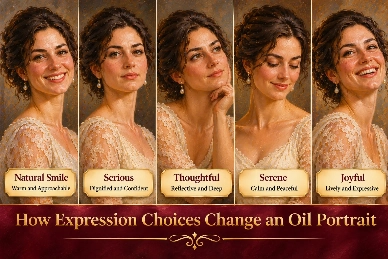
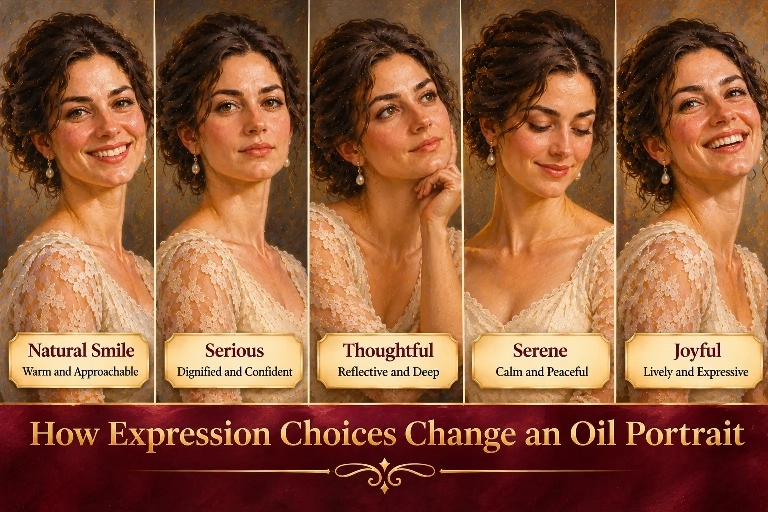
When commissioning an oil portrait, choosing the right photograph involves more than finding an image that clearly shows the subject's face. The facial expression is one of the most important elements of the painting because it communicates personality, emotion and character. A gentle smile, a thoughtful gaze or a serious expression can create very different impressions, even when the subject and composition remain unchanged.
In traditional portraiture, expressions have always played an important role in how individuals are represented. A formal expression can communicate dignity and authority, while a natural smile can create warmth and approachability. A reflective expression may introduce a sense of depth and contemplation.
Whether you are commissioning an individual portrait, a family painting, a wedding portrait or a memorial painting, the expression should reflect the person and the purpose of the artwork. This guide explores how different facial expressions influence an oil portrait and how to choose the most suitable expression for your commission.
Facial expressions influence the mood, personality and emotional character of an oil portrait. A smile can create warmth and happiness, a serious expression can communicate dignity and confidence, while a thoughtful gaze can suggest reflection and depth. The expression helps the painting feel personal and allows the viewer to connect with the subject.
The best expression is one that reflects the subject's personality and the purpose of the painting. A natural smile is popular for family and couple portraits, while a composed expression may suit formal and professional commissions. Thoughtful or reflective expressions can also create meaningful portraits. The most important consideration is that the expression feels authentic to the individual.
Yes. You can discuss the preferred expression when commissioning a portrait from photographs. Additional reference photographs may help the artist understand the subject's natural smile, eye expression and facial features. However, the expression should be considered carefully so that the finished painting retains the individual's recognisable likeness.
The face is usually the focal point of a portrait. While clothing, pose, lighting and background contribute to the overall composition, the expression often determines how the viewer responds emotionally to the painting.
Two portraits of the same person can communicate completely different impressions depending on their expressions. A slight smile may make someone appear approachable and welcoming, while a more serious expression may suggest confidence, maturity or authority.
Facial expression is also closely connected to the eyes, eyebrows and mouth. Small differences in these features can change the overall impression of the face.
In oil painting, the artist must interpret these details carefully. Subtle changes in the position of the mouth, the shape of the eyes and the surrounding facial muscles can make the difference between a convincing likeness and an expression that feels unfamiliar.
A natural smile is one of the most popular expressions for commissioned portraits. It can communicate happiness, friendliness and warmth while making the subject appear approachable and relaxed.
However, not all smiles look the same. Some people have a broad, cheerful smile, while others have a subtle smile that is only slightly visible around the mouth and eyes.
A natural smile is particularly suitable for family portraits, children's paintings, couple portraits and special occasion commissions.
A serious expression can create a sense of dignity and presence. It is often associated with traditional portraiture, where subjects were presented in a composed and formal manner.
Serious expressions do not necessarily make a portrait appear cold or unapproachable. When combined with carefully positioned lighting and a natural gaze, they can create an elegant and confident representation of the subject.
The expression should still feel natural. A face that appears excessively tense or rigid can make the portrait feel uncomfortable rather than dignified.
A thoughtful expression can introduce a more contemplative quality into an oil portrait. The subject may be looking slightly away from the viewer, gazing into the distance or appearing absorbed in a particular thought.
This approach can create an interesting emotional atmosphere without requiring a dramatic facial expression.
Thoughtful expressions may be particularly appropriate for:
The direction of the eyes is particularly important. A gentle gaze away from the viewer can create a sense of reflection, while a downward gaze may produce a quieter and more intimate impression.
A neutral expression sits between a smile and a serious expression. The mouth remains relaxed, while the eyes and overall facial appearance retain their natural character.
Neutral expressions are often effective in formal portraits because they allow the subject's facial features to remain the main focus without introducing a strong emotional message.
A neutral expression should not appear lifeless. Subtle details around the eyes and mouth are important in preserving the subject's individuality.
Some portrait commissions are intended to capture more than a person's appearance. They may represent an important memory, a relationship or a particular stage in someone's life.
In these situations, an emotional expression can make the painting especially personal.
Examples include:
It is important to avoid exaggerating emotion unnecessarily. Subtle expressions often communicate more effectively than dramatic changes to the face.
The eyes are central to facial expression and often determine whether a portrait feels lifelike. They communicate attention, emotion and personality in ways that are difficult to reproduce through the mouth alone.
A person may have a gentle smile, but the expression can feel very different depending on whether the eyes appear relaxed, joyful, serious or thoughtful.
Small highlights in the eyes can also contribute to the sense of life and expression in an oil painting. Their placement should complement the direction and quality of the lighting.
The mouth plays an important role in communicating emotion. A slight upward movement at the corners can suggest a gentle smile, while a relaxed mouth may produce a more neutral expression.
Other facial details also contribute to the overall appearance:
These details need to work together. An expression that looks natural in a photograph may become less convincing if one facial feature is interpreted incorrectly in the painting.
The most suitable expression depends on the subject, the purpose of the commission and the emotional atmosphere you want the painting to communicate.
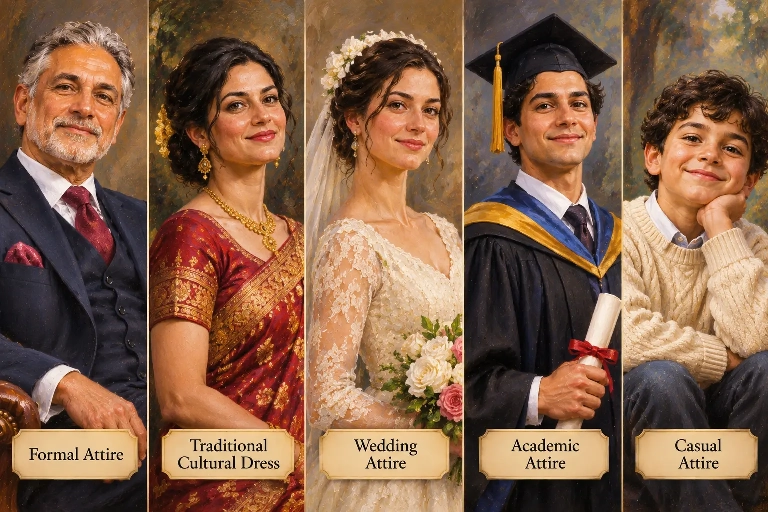
For an individual portrait, choose an expression that reflects the person's character. A natural smile may create warmth, while a composed or thoughtful expression can produce a more traditional and distinguished appearance.
Family portraits often benefit from natural, relaxed expressions. Family members do not necessarily need to have identical smiles. A combination of gentle smiles and natural expressions can create a more authentic representation of the family.
Children's portraits often benefit from natural expressions that capture their individuality. A cheerful smile, curious gaze or gentle expression can communicate personality without making the painting feel overly posed.
Couple portraits can communicate affection through expressions and eye contact. The subjects may look towards the viewer, towards one another or share a natural smile. Their expressions should complement each other and create a sense of connection.
Wedding portraits often feature joyful and affectionate expressions. A gentle smile or a natural expression of happiness can help preserve the emotional character of the occasion.
Professional portraits often use composed expressions that communicate confidence and approachability. A subtle smile can make the subject appear welcoming, while a more serious expression may suit a formal leadership portrait.
For memorial portraits, families may wish to preserve a familiar expression that reminds them of their loved one. This could be a favourite smile, a peaceful expression or a particular look that family members immediately recognise.
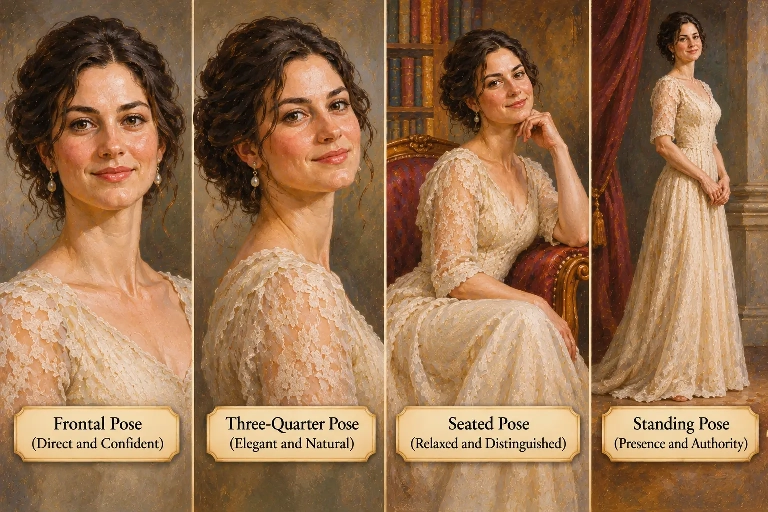
Facial expression should not be considered separately from the rest of the portrait. The position of the head, direction of the gaze and quality of lighting all influence how an expression is perceived.
A direct frontal pose with a gentle smile can create an open and engaging appearance. A three-quarter pose with a thoughtful gaze may introduce depth and elegance. The position of the head should feel natural in relation to the expression.
Soft lighting can complement gentle smiles and relaxed expressions. More directional lighting can create depth around the eyes and facial contours, particularly in serious or reflective portraits.
A simple background can help keep attention on the face, while a more detailed setting may contribute to the story behind the portrait. The background should support the expression rather than distract from it.
The reference photograph is particularly important when the expression is a central part of the commission. A photograph may show the subject clearly but still fail to capture the expression you want preserved in the painting.
When selecting reference images, consider the following:
If you have several photographs, you can provide additional references to help communicate the preferred expression. One image might show the subject's favourite smile, while another provides a clearer view of their facial features.
Yes. Different reference photographs can be used to help develop the intended expression and composition.
For example, one photograph may show the subject's natural smile, while another provides a clearer view of their eyes or facial structure. This can be helpful when the preferred expression is not captured perfectly in a single image.
However, combining different photographs requires careful consideration. The facial features, head position, eye direction and lighting need to work together so that the finished portrait looks natural.
It is helpful to identify which photograph should be used as the main reference for the subject's likeness and which images provide supporting details.
Portraits of older family members often have particular emotional significance. Families may wish to preserve a familiar smile, a thoughtful expression or the dignified appearance associated with a parent or grandparent.
When selecting an expression, consider what makes the person recognisable to family members. It may be a particular smile, the way their eyes appear when they are happy or a familiar expression captured in an old photograph.
For heritage and multi-generation portraits, natural expressions can help create a sense of continuity between generations. The painting can represent each family member as an individual while maintaining a harmonious overall composition.
Choosing the wrong expression can change the entire character of a portrait. Certain issues are worth considering before the painting begins.
Careful selection of reference photographs and clear communication about the desired expression can help avoid these problems.
Before commissioning an oil portrait, think about the emotion and personality you would like the painting to communicate.
Consider these questions:
These considerations help establish a clear artistic direction before the portrait is painted.
Facial expression is one of the most important elements of an oil portrait. It helps communicate personality, emotion and individuality, transforming a painted likeness into a meaningful representation of the subject.
A natural smile can create warmth and happiness, while a serious expression may communicate dignity and confidence. Thoughtful and reflective expressions can introduce depth, while a neutral expression can produce a timeless and understated appearance.
The eyes, mouth and subtle facial details all contribute to the finished result. When considered alongside pose, lighting, clothing and background, the right expression helps create a balanced and personal work of art.
Whether you are commissioning a portrait for yourself, a family member or someone special, choosing an expression that genuinely reflects the subject can make the painting even more meaningful.
At GFM Painting, a personalised oil portrait can be developed around your chosen photographs and artistic preferences. Whether you prefer a natural smile, a traditional formal expression or a thoughtful and reflective appearance, careful planning helps create a painting that captures the subject's individuality.
Explore the possibilities of a hand-painted oil portrait and create a lasting work of art for yourself or someone special.
Websites Built to Grow Your Business
Professional Web Design • Development • SEO • Digital Marketing
Read More
Discover a different perspective on wealth, stewardship, purpose and leadership.
Read MoreA facial expression can transform the entire character of an oil portrait. Beyond capturing someone's physical appearance, it communicates their personality, emotions and individuality.
A natural smile can create warmth and happiness, while a composed expression can convey dignity and confidence. Thoughtful and reflective expressions introduce a quieter emotional quality, allowing the portrait to communicate depth and character.
The eyes are particularly important in portraiture. Their direction, expression and subtle highlights help establish a connection between the subject and the viewer. Small details around the mouth, cheeks and eyebrows also contribute to a convincing likeness.
For a commissioned portrait, choosing the right reference photograph is essential. The most meaningful expression is often one that family and friends immediately recognise as belonging to the person.
Ultimately, a carefully captured expression brings a hand-painted portrait to life, creating a personal and lasting representation that can be treasured for generations.
Frequently Asked Questions
A natural expression that reflects the subject's personality is usually the best choice. A gentle smile creates warmth, while a composed or thoughtful expression can produce a more traditional and distinguished appearance.
Yes. You can discuss using a different expression from another reference photograph. Additional images showing the subject smiling naturally can help the artist understand their facial features and familiar expression.
The eyes are essential because they communicate much of the subject's personality and emotion. Their direction, shape and expression help create a convincing likeness and establish a connection with the viewer.
Absolutely. A formal portrait does not have to feature a serious expression. A subtle or natural smile can create warmth and approachability while maintaining an elegant and dignified presentation.
GFM Designer Ltd
Maultway Court
67-69 Ruxley Lane
Epsom, Surrey
KT19 0JG. UK
E-MAIL : info@gfmpainting.co.uk
PHONE : +44 (0) 203 592 3482
MOBILE : +44(0) 7834 393 396