Your favourites are only temporarily saved. To find them back, create your account on GFM Painting!
Already have account ?
No gift cards in your cart.
November 19, 2026


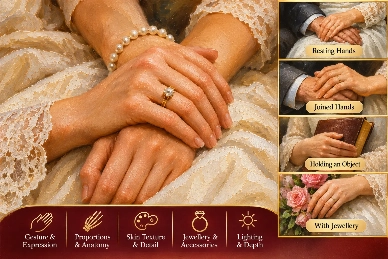
The hands are among the most expressive features of a portrait, yet they are often overlooked when planning a commissioned oil painting. Their position, gesture, proportions and level of detail can significantly influence the character and meaning of the finished artwork. Whether gently resting in a lap, holding an object, embracing another person or placed naturally beside the body, hands can communicate personality, emotion and relationships.
In a hand-painted oil portrait, accurately representing hands requires careful observation of anatomy, posture, lighting and individual details. Their appearance should complement the face and overall composition rather than distract from the main subject. Understanding how hand positioning and detail choices affect a portrait can help you make more informed decisions when commissioning a painting from a photograph.
Hand details influence the expression, personality and overall composition of an oil portrait. Their position, gesture, proportions and appearance can communicate emotion and character while adding visual interest. Carefully painted hands also help create a natural and balanced relationship between the subject's face, body and surroundings.
Hands are challenging to paint because they contain complex anatomical structures, multiple joints, overlapping fingers and subtle changes in light and shadow. Each hand also has individual characteristics. Accurate proportions, natural gestures and carefully observed details are essential for creating convincing painted hands.
Yes. The reference photograph can help determine the position and appearance of the hands. Depending on the composition, hands may be shown resting naturally, holding an object, placed together or interacting with another person. The chosen arrangement should complement the subject's posture and the overall character of the portrait.
Hands have played an important role in traditional portrait painting for centuries. They can reveal aspects of a person's identity, status, occupation, personality and relationships. In formal portraits, carefully positioned hands often contribute to a sense of dignity and elegance. In more informal paintings, relaxed gestures can communicate warmth and natural expression.
Unlike facial features, which usually attract immediate attention, hands often provide supporting details that enrich the story behind the portrait. A hand resting on a chair, holding a flower or gently touching another person's shoulder can introduce meaning without requiring additional visual elements.
When creating a commissioned oil portrait, the artist must consider how much attention the hands should receive. Their detail should be appropriate to the composition, canvas size and intended style of the painting.
The position of the hands can make a significant difference to how natural a portrait appears. Relaxed hands generally have a gentle sense of movement, with fingers positioned comfortably rather than held rigidly.
Hands resting naturally in a lap, placed loosely beside the body or gently touching an arm can create a calm and composed appearance. These arrangements are particularly suitable for traditional individual portraits and family paintings.
Careful attention should be given to the relationship between the wrists, fingers and arms. An unnatural angle or an uncomfortable-looking gesture can make the overall pose appear awkward, even when the face has been painted accurately.
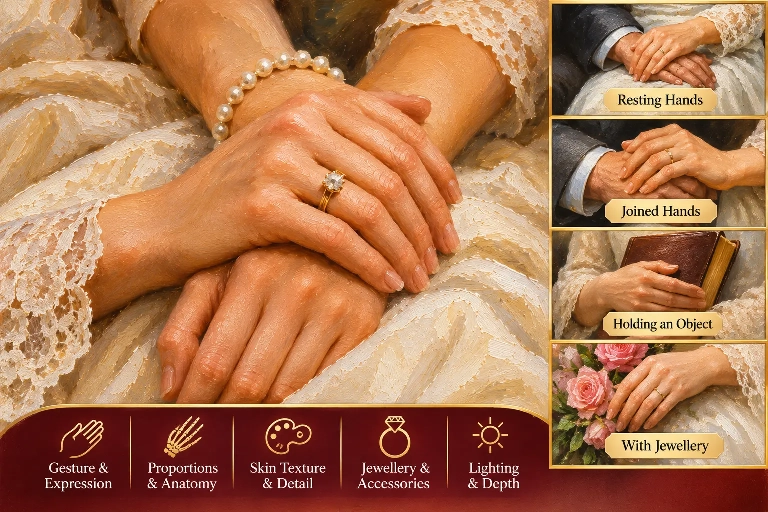
Resting hands are a popular choice for seated portraits because they create a relaxed and balanced composition. The hands may rest together, one over the other or gently across the subject's lap.
This arrangement is particularly effective for formal portraits, older subjects and traditional family paintings. It provides a natural resting position without introducing unnecessary movement into the composition.
The artist should consider the position of each finger, the angle of the wrists and the way the hands interact with the clothing. Subtle differences in lighting and shadow help distinguish the hands from the fabric beneath them.
Joined or interlocked hands can introduce a sense of unity, reflection and intimacy into a portrait. They are particularly meaningful in couple and family paintings, where the gesture may represent affection, reassurance or a close relationship.
The arrangement needs careful planning because the fingers overlap and create complex areas of light and shadow. Each hand should remain clearly distinguishable, with natural proportions and a believable connection between the subjects.
For individual portraits, gently clasped hands can create a thoughtful or formal appearance. In couple portraits, joined hands can become an important visual feature that reinforces the relationship between the two people.
Holding an object can introduce a personal element into an oil portrait. The object may reflect the subject's interests, profession, achievements or an important memory.
Examples include:
When including an object, the artist must ensure that the hand appears to hold it naturally. The fingers should follow the shape of the object, with appropriate contact, positioning and shadows.
Hands often interact with clothing in portrait photography. They may rest on a dress, hold a jacket, touch a sleeve or adjust a cuff. These small gestures can make a portrait feel more personal and natural.
Painting hands in contact with fabric requires attention to the way materials fold and respond to pressure. For example, fingers resting on a dress may create subtle creases, while a hand holding a sleeve can introduce additional folds and shadows.
The relationship between the hand and clothing should be convincing. If the fingers appear disconnected from the fabric or the pressure is not reflected in the surrounding folds, the gesture may look unnatural.
When hands occupy a prominent position in the composition, greater attention may be required to their anatomical structure and individual characteristics. This includes the shape of the fingers, knuckles, fingernails, joints, palms and wrists.
Close-up hand details can be particularly important in portraits where the hands hold a meaningful object or form a significant part of the subject's pose.
However, not every portrait requires the same level of detail. If the hands are relatively small within the composition, excessive emphasis on individual fingernails or skin texture may be unnecessary. The degree of detail should remain consistent with the overall painting.
One of the most challenging aspects of painting hands is maintaining accurate proportions. Fingers vary in length and shape, and their appearance changes depending on their position, angle and relationship to the palm.
The artist needs to consider the natural structure of the hand rather than treating it as a simple outline. The relationship between the thumb, fingers, palm and wrist is essential to creating a convincing result.
Perspective also influences the appearance of hands. A hand positioned closer to the camera may appear larger, while fingers extending away from the viewer may appear shorter. These changes should be interpreted carefully to preserve the natural proportions of the original pose.
Hands have individual characteristics that can contribute to the recognisability of a portrait. Skin texture, visible veins, knuckles, wrinkles and fingernails may all influence their appearance.
For older subjects, natural skin folds, fine lines and changes in texture can help preserve the character of the hands. For younger subjects, smoother skin and more subtle anatomical details may be appropriate.
Fingernails should also be represented naturally. Their shape, length and colour should complement the reference photograph rather than becoming an unnecessary focal point.
The artist should avoid exaggerating these details. A balanced interpretation maintains the natural appearance of the hands while preserving the painterly quality of the artwork.
Lighting plays an important role in defining the shape and structure of hands. Highlights and shadows help communicate the position of the fingers, the curves of the knuckles and the relationship between overlapping areas.
Areas facing the light source may appear brighter, while spaces between the fingers and underneath the palm may contain deeper shadows. The direction and intensity of the lighting should remain consistent with the rest of the portrait.
Careful colour transitions help create depth without making the hands appear overly dark or artificially outlined. This is particularly important when the hands are positioned against light-coloured clothing or a contrasting background.
In individual portraits, hand positioning can communicate confidence, relaxation or formality. Hands resting naturally or holding a meaningful object can add personality without taking attention away from the face.
In couple portraits, hands can communicate affection and connection. Holding hands, placing an arm around a partner or gently touching a shoulder can reinforce the emotional relationship between the subjects.
Family portraits may include several overlapping gestures, such as parents holding children's hands or family members resting their hands on one another's shoulders. These details can strengthen the sense of closeness and togetherness.
Each hand should be positioned naturally, with clear proportions and enough visual separation to ensure that the arrangement remains understandable.
Children's hands have different proportions from adult hands. Their fingers, palms and wrists should be represented in a way that reflects their age and natural development. Simple gestures, such as holding a favourite toy or resting a hand on a parent's arm, can add warmth and personality.
Rings, bracelets, watches and other accessories can add personal significance to a portrait. Wedding rings, for example, may be particularly important in couple and anniversary paintings.
These details require careful observation because their position, shape and appearance should correspond with the reference photograph. Jewellery should also interact naturally with the surrounding skin, including the way it catches light and creates small shadows.
Although accessories can add visual interest, they should not overwhelm the hand or distract from the main subject.
When commissioning an oil portrait from a photograph, consider whether the hands should be a prominent feature or simply complement the overall pose. The right decision depends on the subject, the intended composition and the meaning you want the portrait to communicate.
Consider the following points when selecting your reference photograph and discussing the composition:
A suitable reference photograph provides the artist with valuable information about the natural gesture, proportions and appearance of the hands. If the hands are not clearly visible in one photograph, additional reference images may help communicate their intended appearance.
Hands are much more than supporting features in a portrait. Their position, gesture, proportions and individual characteristics can communicate emotion, personality and meaningful relationships. From naturally resting hands to expressive gestures and carefully painted accessories, these details contribute to the overall character of the artwork.
Accurate hand painting requires attention to anatomy, lighting, skin texture and the relationship between the hands and the rest of the composition. The level of detail should complement the subject and maintain the natural balance of the portrait.
At GFM Painting, thoughtful attention to these details helps transform photographs into hand-painted portraits that capture more than a person's appearance. A carefully considered hand gesture can add another layer of personality and meaning, helping create a painting that feels individual and memorable.
Websites Built to Grow Your Business
Professional Web Design • Development • SEO • Digital Marketing
Read More
Discover a different perspective on wealth, stewardship, purpose and leadership.
Read MoreHands are among the most expressive features of a portrait, communicating personality, emotion and meaningful relationships.
Natural positioning and gestures, from relaxed hands to clasped fingers, can transform the character and atmosphere of an oil painting.
Accurate anatomy, finger proportions and carefully painted details help create realistic and elegant hands.
Skin texture, fingernails, jewellery and subtle lighting add individuality while enhancing the overall composition.
Discover how thoughtful hand details bring greater realism, depth and personal meaning to a hand-painted oil portrait.
Frequently Asked Questions
Hands add personality, emotion and meaning to a portrait. Their position and gestures can communicate relationships, confidence, affection and individual character.
Natural, relaxed positions are often effective. Hands resting in a lap, gently clasped together or placed comfortably beside the body create a balanced and elegant appearance.
Yes. Hands can hold flowers, books, musical instruments, jewellery or other personal objects. These details can reflect the subject's interests, achievements and memories.
Artists carefully consider hand anatomy, finger proportions, wrist positioning, skin texture, highlights and shadows. Accurate lighting and natural gestures help create realistic three-dimensional details.
Yes. Hand positioning and certain details can be adapted to improve the composition or introduce meaningful elements. However, any changes should maintain natural proportions and complement the subject's overall pose.

GFM Designer Ltd
Maultway Court
67-69 Ruxley Lane
Epsom, Surrey
KT19 0JG. UK

E-MAIL : info@gfmpainting.co.uk
PHONE : +44 (0) 203 592 3482
MOBILE : +44(0) 7834 393 396