Your favourites are only temporarily saved. To find them back, create your account on GFM Painting!
Already have account ?

No gift cards in your cart.
November 18, 2026


A graduation is a significant milestone that represents years of dedication, hard work and personal achievement. Whether celebrating the completion of school, a university degree, a postgraduate qualification or a doctorate, a hand-painted graduation portrait offers a meaningful way to preserve this important moment in a person's life.
Graduation photographs capture a special occasion. The academic robes, graduation cap, certificate and expressions of pride all represent the achievement. Transforming one of these photographs into a hand-painted portrait creates a lasting piece of artwork that can be displayed and treasured for years.
A commissioned graduation portrait can be created as a traditional oil painting, a delicate watercolour or a contemporary acrylic portrait. It may feature the graduate alone, include family members or incorporate meaningful details such as a university building, academic setting or graduation certificate.
Commissioning a portrait involves several decisions, including choosing suitable photographs, deciding on the composition, selecting the painting medium and agreeing the size and budget. This guide explains how to commission a graduation portrait and what to consider before starting your painting.
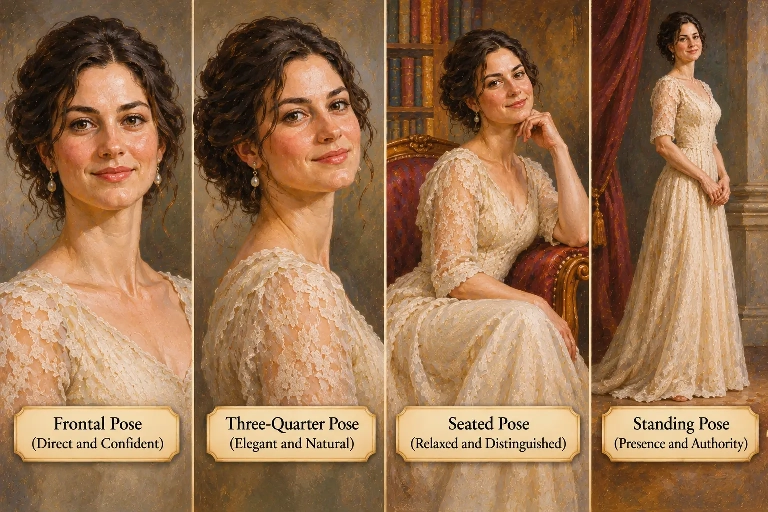
To commission a graduation portrait, begin by selecting a clear photograph of the graduate in their academic robes or graduation attire. Decide whether you want a head-and-shoulders, half-length or full-length composition, and consider whether to include a university background, certificate or other personal details. Discuss your photographs, preferred painting medium, dimensions and budget with a specialist portrait artist. They can assess the reference images, recommend a suitable approach and provide a quotation and estimated completion time.
Yes. A graduation portrait can be created from one or more photographs. The artist uses the images to study the graduate's facial features, expression, hairstyle, academic clothing and overall appearance. A formal graduation photograph can provide the main reference, while additional photographs may help clarify facial details or show the graduate in a different pose. Clear, well-lit photographs provide the most useful reference material.
Oil painting is suitable for traditional, highly detailed graduation portraits, offering rich colours and carefully developed facial features. Watercolour creates a softer and more delicate appearance, while acrylic provides versatility for realistic and contemporary styles. The best medium depends on the desired finish, the reference photographs, the composition and the artist's experience with the chosen technique.
A graduation portrait is more than a decorative painting. It celebrates an important achievement and recognises the commitment, determination and effort involved in reaching an academic milestone.
Graduation represents the culmination of a significant period of education. It may follow years of study, examinations, research, practical training and personal development.
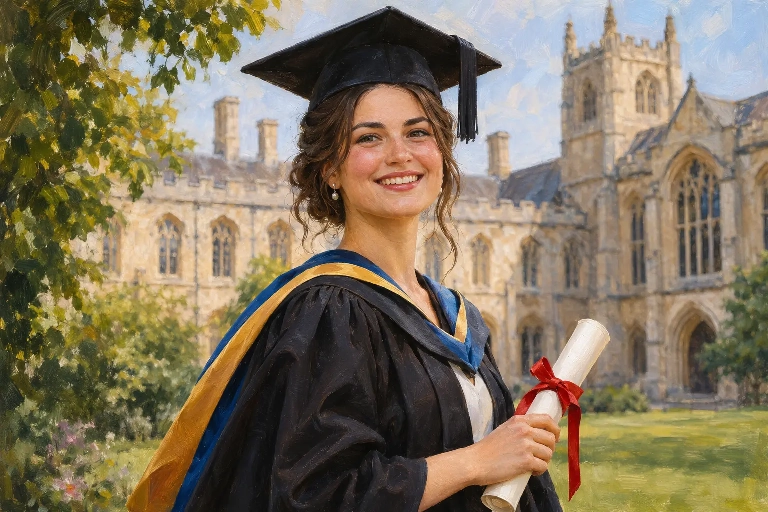
A hand-painted portrait provides a way to commemorate that achievement. It can capture the graduate wearing their academic robes, holding their certificate or standing in a setting associated with their university or institution.
For parents and families, a graduation portrait can also represent the support and encouragement that helped the graduate reach this milestone.
Graduation photographs are often shared with family and friends, but a commissioned painting offers a different way to preserve the occasion.
A hand-painted portrait can become a permanent feature in the family home, displayed alongside other important photographs and memories. It may also be passed down through generations as a reminder of the graduate's educational journey.
Unlike a mass-produced decorative image, a commissioned portrait is created around an individual and a particular achievement. The choice of photograph, artistic style, colours and composition makes the finished painting personal to the graduate and their family.
A custom graduation portrait can make a meaningful gift from parents, grandparents, siblings, partners or friends.
Rather than choosing a conventional graduation present, a family can commission artwork created specifically for the graduate. The painting may include personal details that reflect their studies, interests or future ambitions.
It is particularly suitable for significant achievements such as completing a university degree, postgraduate qualification, doctorate or professional programme.
A graduation portrait can represent more than the ceremony itself. It can recognise the time, discipline and determination required to complete a course of study.
For some graduates, the achievement may have involved overcoming personal challenges, balancing education with employment or studying away from home. A carefully chosen composition can help celebrate the wider journey behind the qualification.
Before contacting an artist, consider what you would like the finished painting to represent. A clear idea of the preferred photograph, pose, clothing, artistic style and intended display location will make the commissioning process easier.
Graduation portraits can be created in several formats, depending on the photographs available and the desired artistic result.
The most suitable format will depend on the photograph, the details you want to preserve and the size of the finished painting.
The qualification being celebrated can influence the composition and details included in the portrait.
A school or college graduation may feature a formal academic outfit or a photograph taken at the ceremony. A university graduation may include distinctive robes, hoods and academic accessories associated with the institution and qualification.
A postgraduate or doctoral graduation may have additional academic clothing or insignia that the graduate wishes to preserve.
If the academic attire is an important part of the portrait, provide photographs showing its colours, patterns and distinctive details clearly.
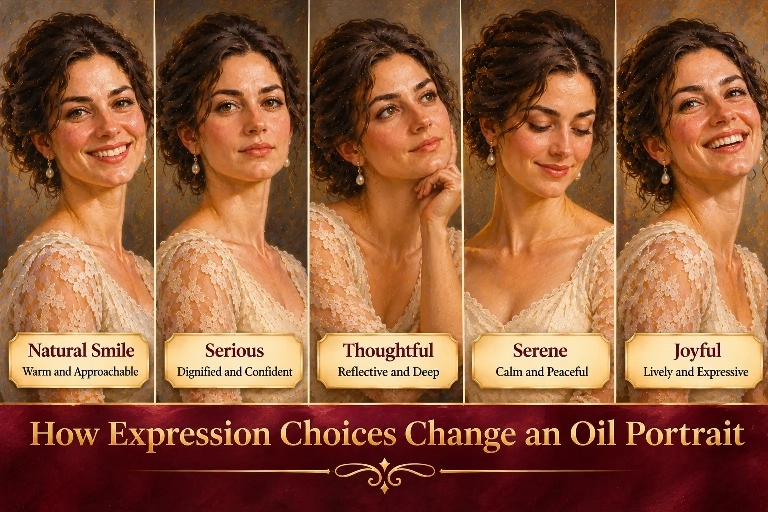
The graduate's expression is one of the most important elements of the portrait. A natural smile, confident expression or thoughtful pose can give the painting its individual character.
Some people prefer a formal photograph taken during the graduation ceremony, while others choose a more relaxed image captured afterwards.
Consider whether you want the portrait to convey formality, pride, celebration or a more personal representation of the graduate.
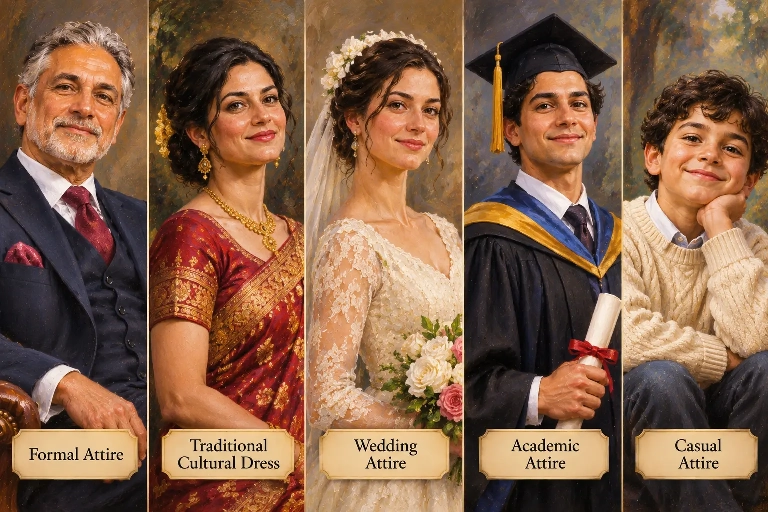
Academic clothing often has distinctive features that make a graduation portrait recognisable.
If these features are important, provide clear photographs showing the details accurately. The artist can then consider how best to represent them within the composition.
Reference photographs provide the artist with the information needed to create an accurate and recognisable graduation portrait. They show the graduate's facial structure, expression, hairstyle, skin tones, academic clothing and proportions.
A formal graduation photograph can be an excellent starting point, but it is not always the only image required. Additional photographs can help clarify facial details or provide a better view of the academic attire.
It is often helpful to provide several photographs. One may show the preferred pose, while another provides a clearer view of the graduate's face or academic attire.
Yes. Additional photographs can help the artist understand the graduate's appearance more fully.
For example, the main graduation photograph may have the ideal pose, but a separate close-up may provide clearer facial details. Another image may show the colours and design of the academic hood more accurately.
Identify the main reference photograph and explain which details should be taken from the additional images. This helps the artist understand how the different references should be used.
Yes. An older graduation photograph can be used as the basis for a portrait, provided it contains sufficient detail to establish the graduate's appearance.
Older photographs may have faded, become discoloured or lost some clarity. A high-quality scan or digital copy can help the artist assess the available detail.
If the original photograph is unclear, additional images from around the same period may help clarify facial features, hairstyle and clothing.
The artist should assess the photographs before accepting the commission and explain any limitations.
One of the most important aspects of a successful graduation portrait is preserving the graduate's individual likeness.
A painting may be beautifully executed, but it will not fulfil its purpose if the person is not recognisable. The artist must study the facial proportions, expression and distinctive features rather than relying on a generalised representation.
Every person has distinctive facial proportions. The relationship between the eyes, nose, mouth, cheeks, jawline and overall shape of the face contributes to individual appearance.
The artist needs to study these relationships carefully, particularly when working from photographs taken at different angles or under different lighting conditions.
The eyes are often central to the character of a portrait. Their shape, position and expression contribute significantly to the graduate's likeness.
Small details around the eyes, eyebrows and mouth can influence how natural and recognisable the finished painting appears.
A confident graduation-day smile may be particularly important because it reflects the pride and happiness associated with the achievement.
Hair texture, hairstyle, skin tones and other distinctive features should be considered as part of the portrait.
If the graduate has a particular hairstyle, glasses, facial hair or another recognisable feature, provide photographs that show these details clearly.
The aim is to create a painting that represents the individual rather than simply reproducing the general appearance of a graduation photograph.
A graduation portrait should reflect the graduate as they appeared at the time of the achievement.
If the photograph was taken several years ago, the painting may be intended to preserve that particular stage of life. If you want to use an older graduation photograph with a more recent facial reference, explain this to the artist before the composition is agreed.
The background can add context and personal significance to a graduation portrait.
Some people prefer a simple background that keeps attention on the graduate, while others want to include a recognisable university building, campus or location associated with their studies.
A university building can provide a strong visual connection to the graduate's educational journey.
It may be the main university building, a historic campus, a library or another location that has personal significance.
If you want a recognisable building included, provide a suitable reference photograph. The artist can then consider how much of the architecture should appear without distracting from the graduate.
A neutral background can be particularly effective for formal portraits.
It keeps the focus on the graduate's face, academic clothing and expression. This approach may also be suitable when the available reference photograph has a busy or unsuitable background.
A graduation portrait can include additional details that reflect the graduate's interests or academic achievements.
These details should complement the main portrait rather than compete with it.
If institutional logos, crests or other protected designs are to be reproduced, ensure that their use is appropriate and that the reference material is supplied for the intended purpose.
It is possible to create a graduation portrait using separate photographs, provided there are suitable reference images of the graduate.
This can be useful when the ideal photograph does not exist. For example, a formal graduation photograph may show the perfect pose but not provide enough detail of the face. A separate close-up can help the artist understand the graduate's features more clearly.
Separate photographs may also be used when:
The artist needs to consider the angle, perspective, lighting, proportions and positioning of the different references.
Combining photographs requires careful artistic planning. The aim is to create a natural composition in which the graduate, clothing and background work together rather than appearing as unrelated elements.
The painting medium influences the texture, colour, detail and overall atmosphere of the finished graduation portrait.
Oil, watercolour and acrylic each offer different artistic possibilities. The most suitable choice depends on the desired appearance, the reference photograph and the level of detail required.
Oil painting is a popular choice for traditional graduation portraits because it allows rich colours, subtle skin tones and carefully developed tonal transitions.
Oil paint can be applied in layers, allowing the artist to develop facial features, hair, academic clothing and background details gradually.
Advantages include:
Oil painting is particularly suitable for formal graduation portraits where facial likeness and academic attire are important.
Watercolour offers a softer and more delicate appearance. Its transparent washes can create an elegant portrait with a light and expressive quality.
Traditional watercolour requires specialist knowledge because the artist must control the interaction between water, pigment and the painting surface. It is generally painted on specialist watercolour paper.
Advantages include:
Watercolour can be particularly attractive for graduation portraits where a gentle and understated style is preferred. Achieving accurate facial likeness still requires careful planning and experience with the medium.
Acrylic is a versatile water-based medium that can be used for realistic and contemporary graduation portraits.
It dries relatively quickly compared with oil paint, allowing artists to develop layers and details through a different working process.
Advantages include:
A realistic portrait aims to represent the graduate's appearance closely, paying particular attention to facial proportions, expressions and academic clothing.
An expressive portrait may use softer brushwork, more interpretative colour or simplified background details.
Both approaches can produce attractive artwork, but the choice depends on personal preference and the intended atmosphere.
Sharing examples of paintings you admire can help the artist understand the desired style and level of detail.
The dimensions of a graduation portrait should reflect the composition, the level of detail required and the intended display location.
Smaller paintings can be suitable for head-and-shoulders and compact half-length compositions.
They may work well in bedrooms, studies, offices and family display spaces.
The dimensions should still provide enough room for the artist to develop the graduate's facial features clearly.
Larger paintings provide more room for full-length figures, detailed academic clothing and background elements.
They can create a strong focal point in a living room, study or office. A larger format may also be appropriate when the composition includes a university building or several personal details.
Oil and acrylic paintings are commonly created on canvas. Cotton and linen are established options, each offering different surface characteristics and textures.
Linen is traditionally valued for its fine surface and stability, while cotton canvas is widely used and available in different textures and weights. The most suitable surface depends on the medium and the artist's technique.
Traditional watercolour is generally painted on specialist watercolour paper. The weight and texture of the paper should be appropriate for the intended technique.
The artist can advise on the most suitable surface after reviewing the reference photographs and proposed composition.
The cost of a graduation portrait depends on the painting dimensions, medium, complexity and amount of detail required. Each commission is different, so a quotation should reflect the specific requirements of the painting.
Larger paintings generally require more materials and working time. They may also allow for additional details in the academic clothing, background and composition.
A portrait featuring one graduate involves different requirements from a painting that includes parents, siblings or other family members.
Each additional person requires careful attention to facial likeness, proportions, positioning and the overall balance of the composition.
A close-up portrait with a simple background may involve a different amount of work from a full-length painting featuring detailed academic robes, a certificate and a university building.
Academic clothing may contain intricate colours, patterns, trims and other identifying details that require careful attention.
Oil, watercolour and acrylic involve different working methods and technical requirements.
Specialist watercolour work, for example, requires experience with traditional watercolour techniques and suitable materials. Oil painting may involve several working stages and appropriate drying time.
A simple background may be more straightforward than a detailed university setting, architectural composition or landscape.
Additional elements such as certificates, books, medals and institutional details may also increase the amount of work involved.
Before confirming the commission, request a quotation that identifies:
It is also helpful to establish payment arrangements and any applicable delivery or international shipping costs.
A clear commissioning process helps ensure that the customer and artist understand the requirements before the painting begins.
Begin by explaining the graduation achievement, the photographs available, preferred medium, approximate dimensions and intended display location.
If the portrait is intended as a surprise gift or for a particular graduation celebration, mention the required date so that the artist can consider the proposed schedule.
The artist reviews the photographs to assess their clarity, suitability and the amount of detail available.
Additional photographs may be requested if important facial features, academic clothing or other details are not sufficiently visible.
The proposed pose, expression, background, artistic style and dimensions are discussed.
This is the opportunity to establish the artistic direction and identify features that are particularly important, such as the graduation cap, university hood, certificate or campus setting.
Once the requirements have been assessed, the customer should receive a quotation and estimated completion time.
The commission can then be confirmed in accordance with the agreed payment and booking arrangements.
The artist develops the portrait using the agreed reference photographs and composition.
Depending on the medium, the process may involve preparatory drawing, establishing the main forms, developing colour and tone, refining facial features and completing the academic clothing and background.
Oil paintings may require several working stages and drying time, while watercolour and acrylic follow different working processes.
Once the painting is completed, it can be checked and prepared for collection or delivery.
Any review arrangements should have been agreed before the commission began.
The completion time depends on the painting dimensions, medium, complexity and the artist's workload.
A small head-and-shoulders portrait may involve a different schedule from a large full-length painting featuring detailed academic robes and a university background.
Oil paintings require appropriate working and drying time, while traditional watercolour requires specialist handling and careful planning. The level of facial detail and complexity of the composition can also influence the timescale.
If the portrait is intended as a graduation gift, make enquiries well in advance of the ceremony or celebration.
Confirm the estimated completion and delivery dates before placing the order, allowing time for any framing, packaging and delivery arrangements.
Once the painting is complete, consider how it will be presented and where it will be displayed.
A frame should complement the painting and the surrounding interior.
Traditional graduation portraits may suit classic wooden or decorative frames, while contemporary paintings can work with simpler finishes.
For paintings on paper, appropriate mounting and framing materials should be considered to help protect the artwork.
Paintings require suitable protection during transport. Packaging arrangements should take account of the medium, dimensions, painted surface and whether the artwork is framed.
For some larger canvas paintings, rolled delivery may be possible where the medium and condition of the artwork allow. This should be agreed with the artist in advance, as not every finished painting is suitable for rolling.
For international orders, confirm the delivery method, insurance, customs arrangements and any additional charges before dispatch.
Choose a location away from prolonged direct sunlight, excessive humidity and sudden temperature changes.
Avoid placing the painting close to radiators, fireplaces or other heat sources.
Follow the artist's care instructions, particularly for oil paintings that may require appropriate drying or curing time before certain finishing and framing processes.
Careful preparation helps prevent misunderstandings and gives the artist the information needed to create a recognisable and meaningful portrait.
Commissioning a graduation portrait is an opportunity to celebrate an important achievement and preserve a significant moment in a person's life. Whether it captures the graduate wearing their academic robes, holding their certificate or standing in front of their university, a hand-painted portrait can become a meaningful reminder of years of dedication and hard work.
The most successful commissions begin with suitable reference photographs, thoughtful planning and clear communication with the artist. Decisions about composition, artistic style, medium, dimensions and background all contribute to the final result.
From traditional oil painting to delicate watercolour and versatile acrylic, the right medium can help create a portrait that reflects the graduate's appearance, personality and academic achievement.
A hand-painted graduation portrait is more than a representation of a photograph. It is an artistic celebration of an important milestone, created to be displayed, appreciated and treasured for years to come.
At GFM Painting, each custom portrait begins with an understanding of the person, the photographs and the achievement being celebrated. Whether you are planning a traditional graduation portrait, a contemporary composition or a family painting, the requirements can be discussed before the work is confirmed.
Share your graduation photographs, preferred painting medium and ideas for the composition to begin the process. The team can assess the project, discuss suitable artistic options and provide a quotation based on your requirements.
Whether you are celebrating a school graduation, university degree, postgraduate qualification or doctorate, a hand-painted portrait can provide a lasting way to commemorate the occasion.
Explore GFM Painting's graduation portrait collection and enquire about commissioning your personalised graduation painting.
Explore Graduation Portraits at GFM Painting
Visit GFM Painting | Request a Portrait Commission
Explore our hand-painted portrait services and related guides to discover more ways to turn your favourite photographs into personalised works of art.
Websites Built to Grow Your Business
Professional Web Design • Development • SEO • Digital Marketing
Read More
Discover a different perspective on wealth, stewardship, purpose and leadership.
Read MoreGraduation represents years of dedication, hard work and personal achievement.
A hand-painted graduation portrait transforms a treasured photograph into a lasting work of art.
From academic robes and graduation caps to certificates and university settings, every detail can help tell the story of an important milestone.
Whether celebrating a school, university or postgraduate achievement, a personalised painting makes a meaningful gift.
Created to be displayed and treasured, a graduation portrait preserves a moment of pride for years to come.
Frequently Asked Questions
Yes. An older graduation photograph can be used as the main reference, provided it contains sufficient detail to establish the graduate's facial features and academic clothing. If the photograph is faded or unclear, additional photographs can help the artist achieve a more accurate likeness.
Yes. Separate photographs can be combined to create a single composition. For example, the artist may use one photograph for the graduate's face, another for the academic robes and a separate image for the background. The lighting, proportions and positioning must be considered to create a natural result.
Yes. A university building, campus, graduation certificate, academic medals or other meaningful details can be incorporated into the composition. Provide suitable reference photographs and discuss which elements you would like included before the painting begins.
The ideal size depends on the composition and intended display location. Smaller sizes are suitable for head-and-shoulders portraits, while larger canvases provide more space for full-length figures, academic robes and detailed backgrounds. The artist can recommend suitable dimensions after reviewing your photographs.
GFM Designer Ltd
Maultway Court
67-69 Ruxley Lane
Epsom, Surrey
KT19 0JG. UK
E-MAIL : info@gfmpainting.co.uk
PHONE : +44 (0) 203 592 3482
MOBILE : +44(0) 7834 393 396