Your favourites are only temporarily saved. To find them back, create your account on GFM Painting!
Already have account ?

No gift cards in your cart.
November 13, 2026


The Renaissance transformed European painting through a renewed interest in nature, human anatomy, perspective and the visual possibilities of colour. From the rich blues and reds of religious altarpieces to the subtle skin tones and atmospheric landscapes of the High Renaissance, artists developed new ways to represent the world with greater depth, realism and emotional expression.
Colour was more than a decorative feature of Renaissance art. It communicated religious devotion, wealth, identity, power and human emotion. Artists experimented with pigments, painting surfaces, light and shadow to create images that appeared increasingly lifelike. Their achievements helped establish colour as one of the most important elements of Western painting.
From the early experiments of Masaccio and Fra Angelico to the innovations of Leonardo da Vinci, Raphael, Michelangelo and Titian, the story of Renaissance art is also a story of how artists learned to see, understand and use colour in new ways.
Colour helped Renaissance artists create realistic figures, communicate religious and symbolic meanings, establish atmosphere and demonstrate the wealth and status of their patrons. It also became an important tool for representing light, shadow, depth and natural form.
Renaissance artists used pigments that produced colours such as ultramarine blue, vermilion red, ochres, earth greens, lead white and various yellows. The availability, quality and cost of these materials influenced the appearance of individual paintings.
Artists combined observation, linear perspective, anatomical study, tonal modelling and increasingly sophisticated colour techniques. The use of egg tempera and oil painting, alongside methods such as chiaroscuro and sfumato, helped create convincing forms, depth and atmospheric effects.
The Renaissance, meaning rebirth, was a period of major artistic and intellectual development in Europe. It began in Italy during the fourteenth century and flourished throughout the fifteenth and sixteenth centuries, before influencing artistic traditions across the continent.
Artists and scholars developed a renewed interest in the achievements of ancient Greece and Rome. Humanism encouraged greater attention to human experience, individual identity, nature and the physical world. These ideas influenced painting, sculpture, architecture and the wider visual arts.
Colour played an important role in this transformation. Medieval religious paintings had often used brilliant colours, decorative patterns and gold backgrounds to communicate spiritual importance. Renaissance artists continued to value rich colours but increasingly explored how colour could describe the natural appearance of people, objects and landscapes.
They studied how light affected surfaces, how shadows changed according to their surroundings and how different colours could create the illusion of depth. New artistic methods also allowed painters to blend tones, develop translucent layers and represent the human body with greater subtlety.
The Renaissance did not introduce a single universal approach to colour. Different artists, regions and periods developed their own methods. Understanding these differences reveals how colour became one of the defining features of Renaissance painting.
The development of Renaissance colour cannot be separated from the artistic traditions that came before it. Medieval painters had already mastered the use of brilliant pigments, gold leaf and decorative surfaces, particularly in religious manuscripts, icons and altarpieces.
However, the Renaissance brought a growing interest in representing the physical world with greater naturalism.
Medieval religious art frequently used colour to establish spiritual hierarchy and symbolic meaning. Gold backgrounds represented heavenly light, while richly coloured garments distinguished important religious figures.
The colours were often selected for their symbolic and decorative value rather than to reproduce natural lighting conditions.
Artists such as Giotto di Bondone began to introduce greater solidity and emotional expression into painted figures. His work helped establish an important transition towards the more naturalistic approaches developed during the Renaissance.
During the early fifteenth century, artists increasingly explored the relationship between colour, form, space and light.
The development of linear perspective helped create the illusion of three-dimensional space on flat surfaces. At the same time, the study of anatomy and proportion encouraged painters to represent the human body more convincingly.
Colour became an essential part of this process. Instead of relying only on outlines and flat areas of pigment, artists used variations in tone and colour to suggest volume, depth and the effects of natural light.
Renaissance painting continued to serve religious and ceremonial purposes, but its subject matter and visual ambitions expanded.
Artists increasingly explored:
These developments created new opportunities for artists to use colour as a means of both representation and expression.
Renaissance painting developed over several generations. Although the periods overlapped and differed across Europe, the distinction between Early, High and Late Renaissance art helps explain how approaches to colour evolved.
The Early Renaissance, particularly in fifteenth-century Florence, was characterised by experimentation with perspective, anatomy and naturalistic representation.
Artists such as Masaccio, Fra Angelico and Sandro Botticelli used colour to establish clear forms, balanced compositions and meaningful relationships between figures and their surroundings.
Masaccio's frescoes in the Brancacci Chapel demonstrate how colour and tonal modelling could contribute to the illusion of three-dimensional bodies. His figures appear substantial and occupy a convincing architectural space.
Fra Angelico, by contrast, often combined delicate colours, brilliant decorative details and spiritual atmosphere. His religious paintings show how the older tradition of symbolic colour could coexist with Renaissance interest in naturalism.
The High Renaissance, associated particularly with the late fifteenth and early sixteenth centuries, brought greater emphasis on compositional harmony, balanced proportions and sophisticated representations of the human figure.
Leonardo da Vinci, Raphael and Michelangelo became central figures of this period.
Colour was used with increasing subtlety to describe flesh, clothing, landscape and atmospheric conditions. Artists developed more sophisticated ways of combining light and shadow, while carefully controlling the relationship between figures and their surroundings.
Leonardo's use of sfumato created gradual transitions between tones, while Raphael used colour to support the clarity and balance of his compositions.
Michelangelo's monumental frescoes demonstrated how colour could contribute to powerful figures, complex narratives and dramatic visual effects.
The Late Renaissance saw artists explore more individual and experimental approaches.
Some painters moved away from the harmonious ideals associated with the High Renaissance, using unusual colour combinations, elongated figures, dramatic compositions and more complex lighting.
Artists associated with Mannerism, including Jacopo Pontormo and Parmigianino, used colour in expressive and sometimes unexpected ways.
In Venice, Titian developed a rich approach to colour through layered oil paint, atmospheric transitions and expressive brushwork.
These developments prepared the way for the dramatic visual language of Baroque painting.
Renaissance artists worked with pigments made from minerals, earths, plants and other natural materials. The colour of a painting depended not only on artistic intention but also on the quality, availability and cost of its materials.
Some pigments were relatively accessible, while others were expensive and highly valued.
Ultramarine was one of the most prestigious pigments available to Renaissance painters. Traditionally produced from lapis lazuli, a semi-precious stone imported from regions including present-day Afghanistan, it was costly to obtain and prepare.
Its intense blue made it especially suitable for important religious commissions.
The Virgin Mary's cloak was frequently painted in blue, reflecting established devotional associations and, in some commissions, the exceptional value of the pigment.
Renaissance painters used a variety of red pigments, including vermilion and red lakes. These colours could be used for clothing, decorative details, architectural features and areas of visual emphasis.
Yellows and ochres were obtained from mineral and earth-based sources. They provided warm tones for landscapes, fabrics, architecture and the representation of flesh.
Earth pigments such as umbers and siennas offered a range of browns and muted colours that were important for shadows, underpainting and natural surfaces.
Green pigments were produced from different mineral and plant-based materials. Their properties varied, and some could be less stable than other pigments.
Lead white was widely used to create highlights, pale colours and lighter tonal mixtures. Black pigments and dark earth colours helped establish shadows and contrasts.
The cost of certain pigments meant that colour could communicate the wealth and importance of a patron.
Commissioners sometimes specified the use of expensive materials in contracts for religious paintings and altarpieces.
The selection of pigments was therefore connected to both artistic decisions and the financial resources available to the person commissioning the work.
Renaissance artists did not share one single approach to colour. Their individual techniques reflected their training, location, materials and artistic ambitions.
Several masters made particularly important contributions to the development of colour in painting.
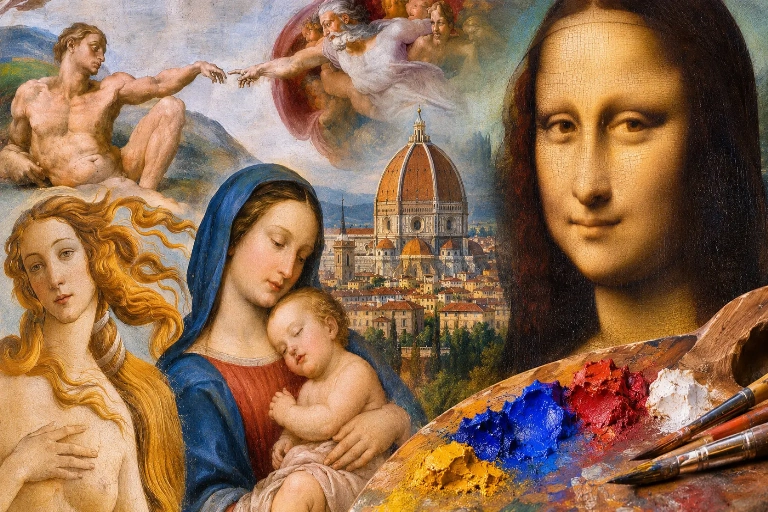
Leonardo da Vinci (1452–1519) explored how light and shadow could create realistic forms and atmospheric settings.
His technique of sfumato involved softly blending tones and colours to reduce harsh outlines. This helped create subtle transitions between light and shadow, particularly in the representation of faces and landscapes.
In the Mona Lisa, Leonardo used delicate tonal changes to create a sense of depth and psychological subtlety. The landscape behind the figure also demonstrates his interest in atmospheric perspective, where distant forms become softer and less distinct.
His approach showed how colour could create a convincing impression of space, atmosphere and human presence.
Sandro Botticelli (c. 1445–1510) developed a distinctive style characterised by flowing outlines, elegant figures and carefully arranged compositions.
His famous painting The Birth of Venus demonstrates the importance of colour in creating a graceful and decorative visual experience.
Soft skin tones, flowing hair, pale fabrics and the colours of the surrounding landscape contribute to the painting's sense of movement and idealised beauty.
Botticelli's work demonstrates that Renaissance naturalism did not eliminate decorative qualities or symbolic colour.
Raphael (1483–1520) became known for his balanced compositions, idealised figures and clear visual organisation.
In The School of Athens, colour helps distinguish the figures and organise the architectural setting. The use of different coloured garments creates visual rhythm while supporting the overall harmony of the composition.
His paintings demonstrate how colour can guide the viewer's attention without overwhelming the structure of the image.
Michelangelo (1475–1564) is widely recognised for his achievements in sculpture and painting.
The ceiling of the Sistine Chapel demonstrates his extraordinary ability to combine colour, anatomy and monumental composition.
His figures are defined by powerful bodies, expressive gestures and dramatic poses. Colour contributes to the physical presence of the figures and helps distinguish the many scenes within the overall composition.
The fresco technique required artists to work on freshly applied plaster, demanding careful planning and efficient execution.
Titian (c. 1488/90–1576) became one of the most influential painters of the Venetian Renaissance.
Venetian painting developed a particularly strong reputation for colour, often described through the concept of colorito. This approach placed importance on the expressive possibilities of applying and combining paint, rather than relying primarily on drawing and outline.
Titian used layers of oil paint, rich colour relationships and expressive brushwork to create luminous surfaces and complex forms.
His paintings demonstrate how colour could communicate sensuality, emotion, atmosphere and dramatic intensity.
The development of Renaissance painting involved significant advances in materials and artistic techniques.
Artists explored how different painting methods could produce more convincing representations of the human body, natural surfaces and atmospheric conditions.
Egg tempera was widely used during the Early Renaissance, particularly for paintings on wooden panels.
The pigment was mixed with egg yolk, producing a fast-drying medium that encouraged careful and controlled application.
Its characteristics included:
Artists such as Botticelli continued to use tempera even as oil painting became increasingly popular.
Fresco painting involved applying pigments mixed with water onto freshly prepared plaster.
As the plaster dried, the pigment became integrated with the surface. This method was particularly suitable for large-scale religious and public commissions.
The Sistine Chapel ceiling by Michelangelo remains one of the most celebrated examples of Renaissance fresco painting.
Fresco required artists to plan compositions carefully because each section had to be completed while the plaster remained workable.
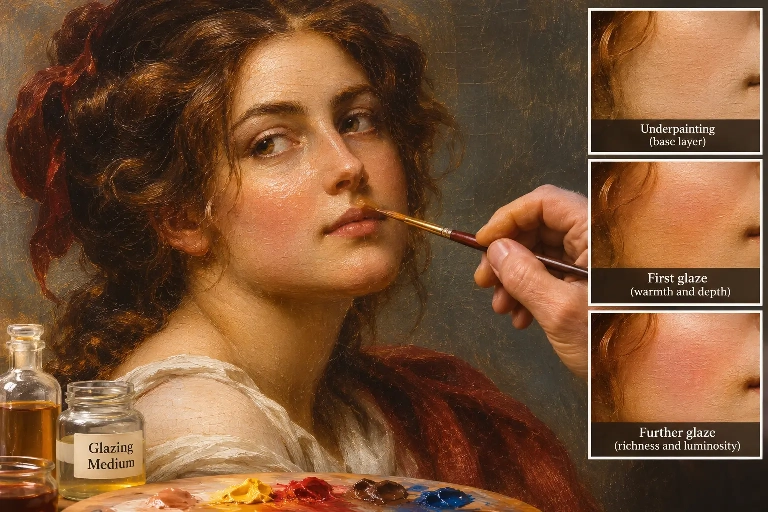
Oil painting offered artists greater flexibility in blending colours and creating translucent layers.
Oil-based pigments could be applied in thin glazes, allowing light to interact with underlying layers and creating depth and richness.
The growing adoption of oil painting helped artists explore:
Although oil painting was already well established in Northern Europe before the Italian Renaissance, its techniques spread and developed across southern Europe during the fifteenth and sixteenth centuries.
Two important techniques helped Renaissance artists develop more convincing representations of form.
Chiaroscuro refers to the use of light and dark to create the illusion of volume and depth. It helped artists make figures and objects appear three-dimensional.
Sfumato refers to the gradual blending of tones and colours, creating soft transitions without sharply defined outlines. Leonardo da Vinci is particularly associated with this technique.
Together with perspective, anatomy and careful observation, these methods transformed the visual possibilities of Renaissance painting.
Although the Renaissance began in Italy, different regions developed distinctive approaches to painting.
Two particularly influential traditions emerged in Florence and Venice.
Florentine artists placed considerable importance on disegno, a term associated with drawing, design and the intellectual planning of an artwork.
Drawing was regarded as the foundation of artistic creation. Artists studied anatomy, movement and proportion, often preparing detailed drawings before beginning a painting.
Colour remained important, but it was frequently organised around carefully constructed forms and compositions.
Leonardo, Michelangelo and Raphael all demonstrate aspects of this broader central Italian emphasis on drawing and design.
Venetian artists developed a strong reputation for colorito, referring not simply to the selection of colours but to the expressive use and application of paint.
The Venetian environment, with its commercial connections and access to materials, supported experimentation with rich pigments and oil painting.
Artists such as Giovanni Bellini, Giorgione and Titian explored layered colours, soft transitions and atmospheric effects.
Their paintings often created a sense of richness through the interaction of colour, light and surface.
The distinction between Florentine disegno and Venetian colorito is useful for understanding different artistic priorities, but it should not be treated as an absolute division.
Artists across Italy combined drawing, colour, light and painting techniques in different ways.
Together, these regional traditions expanded the expressive possibilities of Renaissance painting.
The Renaissance established artistic principles and techniques that continued to influence European painting for centuries.
Its exploration of naturalism, perspective, anatomy, light and colour shaped later developments in Mannerism, Baroque painting and subsequent artistic movements.
Baroque artists developed more dramatic approaches to light, shadow and colour.
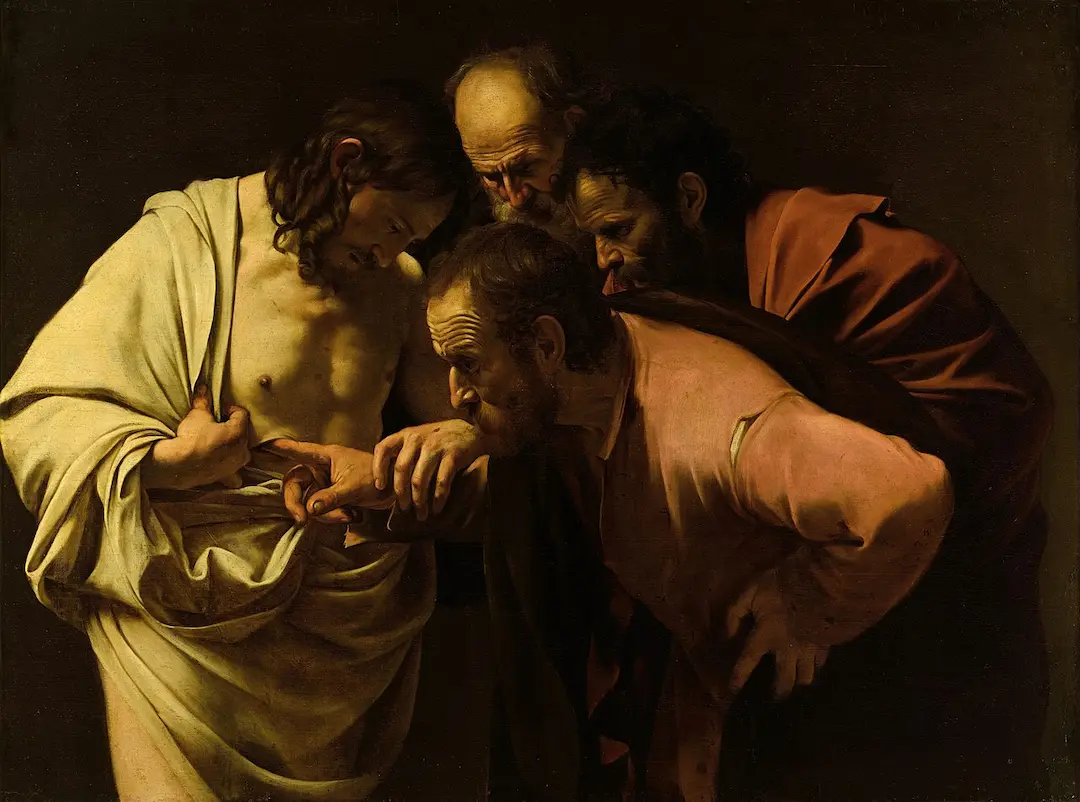
Painters such as Caravaggio used powerful contrasts between illuminated figures and dark backgrounds to create theatrical compositions.
Although Baroque painting developed its own distinctive visual language, it built upon many of the technical foundations established during the Renaissance.
Renaissance artists helped establish portraiture as an important genre for communicating individual identity, status and personality.
Their attention to skin tones, fabrics, lighting and facial expression influenced generations of portrait painters.
The careful use of colour allowed artists to represent both physical appearance and social position.
Renaissance paintings remain influential because they demonstrate how artistic technique and intellectual ambition can work together.
Their use of colour continues to provide valuable lessons in:
For contemporary artists, the Renaissance remains an important source of inspiration and technical study.
The Renaissance transformed European painting through a deeper understanding of colour, light, perspective and the natural world.
From the carefully controlled tempera paintings of the Early Renaissance to the sophisticated oil techniques of Venetian masters, artists developed new ways to represent form, atmosphere and human experience.
Leonardo da Vinci explored subtle tonal transitions, Botticelli combined graceful figures with decorative colour, Raphael achieved compositional harmony, Michelangelo used colour to strengthen monumental forms, and Titian demonstrated the expressive richness of Venetian painting.
Their achievements reveal that Renaissance colour was never simply decorative. It was connected to artistic knowledge, religious belief, material wealth, regional traditions and individual creativity.
The enduring importance of Renaissance painting lies in its ability to unite technical skill with visual imagination. Through colour, its artists transformed the representation of the world and established a legacy that continues to shape how we understand and appreciate Western art.
Websites Built to Grow Your Business
Professional Web Design • Development • SEO • Digital Marketing
Read More
Discover a different perspective on wealth, stewardship, purpose and leadership.
Read MoreThe Renaissance transformed European art, bringing a renewed understanding of colour, light, perspective and the beauty of the natural world.
From the brilliant blues of religious masterpieces to the rich reds, delicate skin tones and atmospheric landscapes of celebrated paintings, Renaissance artists explored colour with extraordinary skill and imagination.
Masters such as Leonardo da Vinci, Raphael, Michelangelo, Botticelli and Titian developed distinctive approaches that helped redefine painting and influence generations of artists.
Through innovative pigments, sophisticated painting techniques and a deeper understanding of light and shadow, colour became an essential part of artistic expression, religious symbolism and visual storytelling.
Discover how Renaissance artists transformed the language of painting, why their use of colour remains influential and how their masterpieces continue to inspire artists and collectors today.
Frequently Asked Questions
Early Renaissance painting focused on developing perspective, naturalistic figures and the representation of three-dimensional space. High Renaissance painting refined these ideas through greater compositional harmony, idealised forms and sophisticated treatments of light, colour and anatomy.
Ultramarine was traditionally made from lapis lazuli, a rare semi-precious stone imported from distant regions. Its intense blue colour and high production cost made it a prestigious pigment, often reserved for important details in religious paintings, particularly the Virgin Mary's clothing.
Tempera uses pigments mixed with an egg-based binder and dries relatively quickly, allowing artists to create precise details. Oil painting uses pigments suspended in drying oil, providing greater flexibility for blending colours, applying translucent layers and creating subtle tonal transitions.
Disegno refers to drawing, design and the structural planning of an artwork, traditionally associated with Florentine artistic practice. Colorito refers to the expressive application and combination of colour, particularly associated with Venetian painting. Both approaches contributed significantly to Renaissance art.
GFM Designer Ltd
Maultway Court
67-69 Ruxley Lane
Epsom, Surrey
KT19 0JG. UK
E-MAIL : info@gfmpainting.co.uk
PHONE : +44 (0) 203 592 3482
MOBILE : +44(0) 7834 393 396