Your favourites are only temporarily saved. To find them back, create your account on GFM Painting!
Already have account ?

No gift cards in your cart.
November 13, 2026


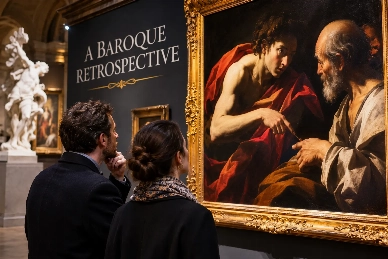
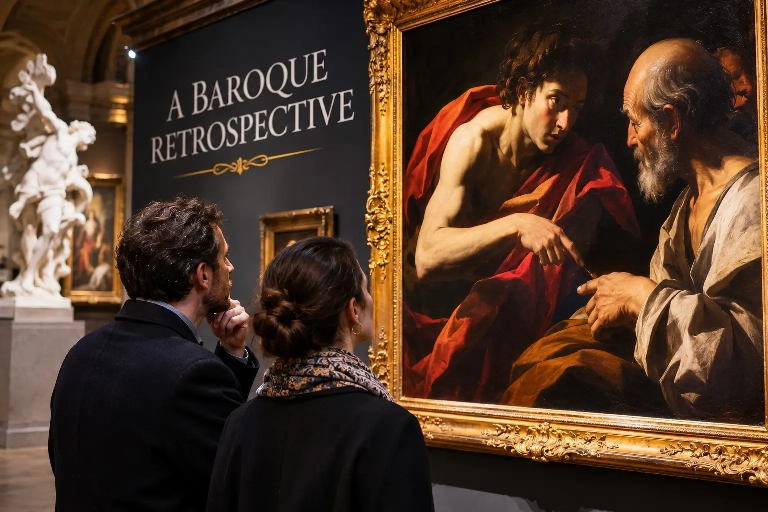
A Baroque art retrospective offers visitors an opportunity to explore one of the most dramatic and expressive periods in European art history. Through powerful compositions, striking contrasts of light and darkness, rich colours and emotionally charged subjects, Baroque artists transformed the way stories were represented in painting and sculpture.
From the intense realism of Caravaggio to the energetic compositions of Peter Paul Rubens and the psychological depth of Rembrandt, a retrospective brings together works that reveal the extraordinary diversity of Baroque artistic achievement.
A Baroque art retrospective is an exhibition that brings together paintings, sculptures and other artworks associated with the Baroque period or a particular Baroque artist. It allows visitors to explore artistic development, historical influences, techniques and recurring themes across a collection of works.
Baroque art is recognised for its dramatic lighting, dynamic compositions, rich colours, emotional intensity and theatrical presentation. Artists frequently used movement, expressive gestures and strong contrasts between light and darkness to create powerful visual narratives.
Important artists associated with the Baroque period include Caravaggio, Peter Paul Rubens, Rembrandt van Rijn, Diego Velázquez and Artemisia Gentileschi. Gian Lorenzo Bernini is also an essential figure in Baroque sculpture and architecture. Each artist developed a distinctive approach to composition, colour, light and storytelling.
The Baroque period emerged in Europe during the late sixteenth century and developed throughout the seventeenth and early eighteenth centuries. It was a time of considerable religious, political and cultural change, and these developments influenced the subjects, styles and purposes of artistic production.
Baroque artists moved beyond the balanced compositions and restrained presentation often associated with earlier Renaissance art. They explored dramatic moments, powerful emotions, theatrical arrangements and convincing representations of the human figure.
Religious institutions, royal courts, aristocratic families and wealthy private patrons commissioned artworks to communicate faith, authority, prestige and cultural identity. As a result, Baroque painting and sculpture developed across different European regions, each with its own artistic traditions and characteristics.
A retrospective provides an opportunity to understand these developments by bringing artworks together. Rather than viewing individual masterpieces in isolation, visitors can compare artistic approaches, recognise shared influences and discover how different painters interpreted the world around them.
To appreciate a Baroque retrospective, it helps to understand the historical circumstances in which the movement developed. Baroque art was not a single, uniform style. It encompassed different regional traditions, artistic personalities and approaches to religious, historical and secular subjects.
The Baroque style emerged in late sixteenth-century Italy, particularly Rome, before spreading across much of Europe. Its development was closely connected to the religious and cultural environment of the period.
The Catholic Counter-Reformation played an important role in encouraging religious imagery that could communicate biblical narratives clearly and emotionally. Paintings and sculptures were expected to engage viewers, strengthen devotion and make religious stories accessible through compelling visual representation.
Religious institutions commissioned altarpieces, church decorations and paintings illustrating important biblical events. Meanwhile, royal courts and aristocratic families commissioned portraits, historical scenes and mythological compositions that demonstrated their status and political authority.
These different forms of patronage encouraged artists to develop a wide range of subjects and techniques. Understanding who commissioned an artwork can therefore reveal why it was created and how its composition was intended to communicate with its original audience.
Baroque art developed differently across European countries. Italian artists often explored dramatic religious subjects and theatrical lighting. Flemish painting became renowned for energetic compositions, colour and movement, while Dutch painters developed distinctive approaches to portraiture, domestic interiors, landscapes and still life.
Spanish Baroque painting frequently combined realism with religious intensity and psychological depth. French Baroque art, particularly in royal settings, often reflected classical order, grandeur and the authority of the monarchy.
When visiting a retrospective, recognising these regional differences helps explain why Baroque art cannot be reduced to one visual formula.
One of the most recognisable characteristics of Baroque painting is its dramatic treatment of light and darkness. Artists used illumination to guide the viewer's attention, establish atmosphere and intensify the emotional impact of a scene.
Chiaroscuro refers to the use of contrasting light and dark areas to create the appearance of volume, depth and three-dimensional form. The technique helps artists represent the structure of faces, bodies and objects while establishing a convincing sense of illumination.
In Baroque painting, chiaroscuro could also strengthen the narrative. A face emerging from shadow or a figure illuminated against a dark background could become the central focus of the composition.
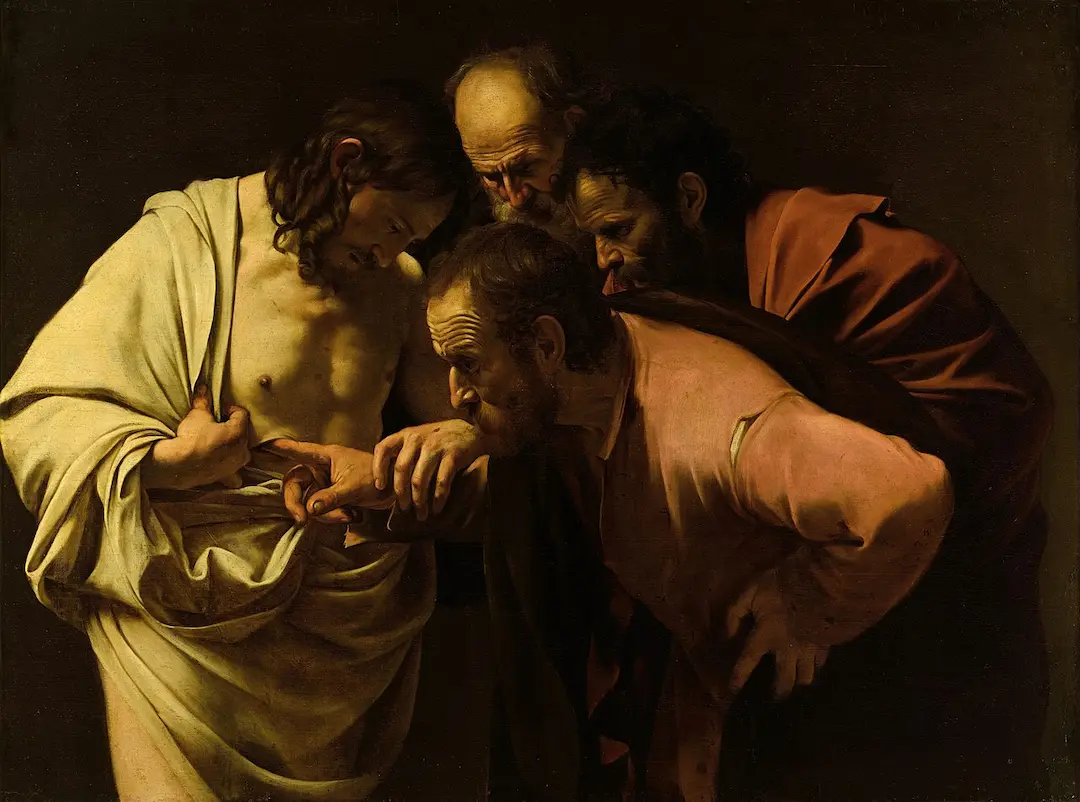
Tenebrism is a more extreme approach to light and darkness, characterised by large areas of deep shadow interrupted by intensely illuminated figures or objects. It is particularly associated with Caravaggio and artists influenced by his work.
While chiaroscuro can involve gradual transitions between light and shadow, tenebrism often creates a more theatrical contrast.
Caravaggio transformed the treatment of light in religious and narrative painting. His figures often appear within dark environments, with strong illumination revealing their expressions, gestures and physical presence.
When examining his paintings in an exhibition, notice how light directs attention towards particular faces, hands or objects. Consider how the surrounding darkness increases the emotional intensity of the scene.
Also observe whether the light appears natural, theatrical or symbolic. These decisions help explain how the artist directs the viewer's interpretation.
Baroque artists frequently created compositions that appear full of movement and dramatic energy. Rather than presenting figures in static arrangements, they explored moments of action, emotional reaction and physical tension.
Look closely at the positions of the figures. Arms may extend across the composition, bodies may twist or turn, and facial expressions may communicate fear, grief, determination or joy.
These gestures help establish relationships between the figures and encourage the viewer to follow the action taking place within the painting.
Diagonal lines were frequently used to create movement and direct attention. Figures, architectural elements, weapons, fabrics and gestures may form diagonal arrangements that lead the eye through the composition.
Unlike a strictly symmetrical arrangement, a dynamic composition can create tension and a sense that the scene is unfolding before the viewer.
Baroque paintings often depict decisive moments in biblical stories, mythology and history. Artists selected moments of heightened emotion because they offered opportunities to communicate narrative meaning through expression, movement and dramatic lighting.
When studying a painting, ask what has happened immediately before the scene and what might happen afterwards. Understanding the moment represented can make the composition more meaningful.
A Baroque retrospective becomes particularly rewarding when visitors understand the individual contributions of its major artists. Although these painters and sculptors shared certain characteristics, each developed a distinctive artistic language.
Caravaggio is one of the most influential figures in the development of Baroque painting. He combined dramatic illumination with naturalistic representations of human figures, often presenting religious subjects through recognisable physical expressions and everyday details.
Look for his use of intense contrasts between light and darkness, carefully arranged gestures and convincing representations of human emotion. His paintings frequently draw the viewer directly into the action.
Peter Paul Rubens became renowned for his large-scale compositions, energetic figures and rich use of colour. His paintings often contain dramatic movement, elaborate arrangements and powerful representations of the human body.
When viewing his work, examine the flowing movement of the figures, the treatment of fabric and the relationships between warm and cool colours. His compositions often create a sense of continuous action.
Rembrandt developed a distinctive approach to portraiture, biblical subjects and historical scenes. His work is particularly admired for its psychological depth, subtle treatment of light and expressive handling of paint.
Look closely at how he uses illumination to reveal individual features and establish emotional atmosphere. His portraits often communicate personality through facial expression, posture and the careful treatment of light.
Diego Velázquez was one of the leading painters of the Spanish Golden Age. His portraits and court paintings demonstrate exceptional observation, sophisticated composition and a sensitive approach to light and atmosphere.
In works such as Las Meninas, consider how the arrangement of figures, mirrors, space and perspective influences the viewer's position within the scene.
Artemisia Gentileschi was an important Italian Baroque painter whose work frequently explored biblical and historical narratives involving determined female protagonists.
Her paintings are particularly notable for their expressive figures, dramatic lighting and intense presentation of narrative action. Her interpretation of subjects such as Judith and Holofernes provides an opportunity to examine how Baroque artists represented courage, conflict and emotion.
Although primarily recognised as a sculptor and architect, Gian Lorenzo Bernini is essential to understanding the wider Baroque visual tradition. His sculptures combine dramatic movement, expressive gestures and an extraordinary sense of physical presence.
When examining his work, observe how the treatment of marble creates the appearance of flowing fabric, changing expressions and moments of physical action. His sculpture demonstrates how Baroque theatricality extended beyond painting.
Baroque painting is not defined by dramatic composition and lighting alone. Its visual impact also depends on the artists' understanding of colour, pigments, materials and paint application.
Baroque painters frequently used strong colour contrasts to establish visual emphasis and create atmosphere. Warm reds, deep blues, golden yellows and rich earth colours could be combined to distinguish figures, fabrics and important details.
Colour was not simply decorative. It helped establish relationships between figures, communicate status and reinforce the emotional character of a scene.
Look closely at how artists represented human skin. Subtle variations in warm and cool tones, highlights and shadows helped create the impression of volume and natural illumination.
Different artists developed individual approaches to flesh tones. Some used strong contrasts, while others preferred gradual transitions and more restrained colour relationships.
Baroque painters often demonstrated remarkable skill in representing different materials. Silk, velvet, lace, armour, jewellery and polished metal required different approaches to colour, texture and reflected light.
Examine how highlights and shadows help distinguish one material from another. A reflective surface may contain sharp highlights, while velvet or other textured fabrics may absorb light and create softer tonal transitions.
Brushwork varies considerably between Baroque artists. Some paintings contain finely controlled details, while others feature more visible, expressive applications of paint.
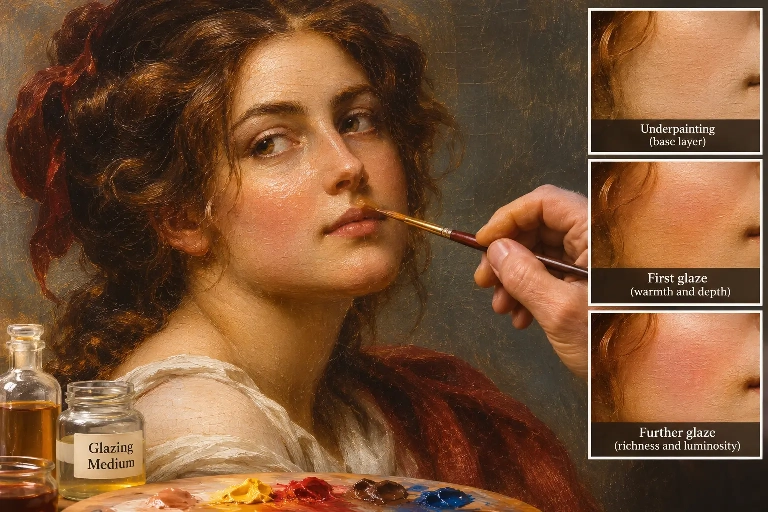
Look at the surface from a suitable viewing distance and then examine it more closely where permitted. Consider how the artist used layers, brushstrokes and changes in paint thickness to achieve the finished effect.
Understanding these technical decisions helps visitors appreciate the craftsmanship behind the image rather than focusing exclusively on its subject.
Baroque art frequently explored stories drawn from religion, classical mythology and history. These subjects gave artists opportunities to communicate complex ideas through dramatic scenes and recognisable characters.
Religious paintings formed an important part of Baroque artistic production, particularly in Catholic regions. Artists depicted the lives of Christ, the Virgin Mary, saints, martyrs and important biblical events.
These works often aimed to communicate religious meaning through accessible storytelling, expressive figures and dramatic visual arrangements.
Mythological subjects provided another important source of inspiration. Stories involving gods, heroes, transformations and dramatic encounters allowed artists to explore human emotions, physical movement and symbolic meanings.
When viewing mythological paintings, consider whether the figures represent particular virtues, human weaknesses or broader cultural ideas.
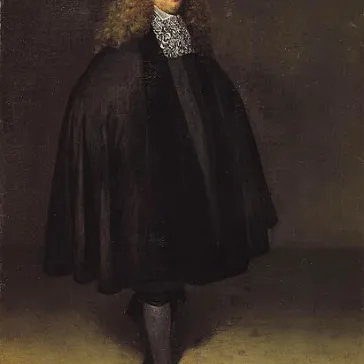
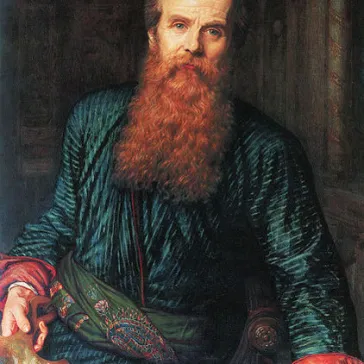
Portraiture played an important role in communicating social position, political authority and personal identity. Rulers, aristocrats, military leaders and wealthy patrons commissioned portraits that presented them in carefully constructed ways.
Clothing, jewellery, posture, architecture and surrounding objects could all communicate status. Examine these details to understand how the portrait was intended to represent its subject.
Many Baroque paintings contain objects and visual references that carry meanings beyond their immediate appearance. Flowers, fruit, books, musical instruments, religious objects and classical symbols may communicate ideas about mortality, faith, knowledge, wealth or virtue.
Reading exhibition labels and catalogue explanations can help visitors identify these references and understand the wider meaning of a composition.
A retrospective is more than a collection of famous artworks. Its arrangement is usually designed to help visitors understand an artist's development, a particular period or the relationship between different artistic approaches.
Some retrospectives arrange artworks chronologically, allowing visitors to follow an artist's career from early experiments to mature works. Others organise paintings around subjects, techniques, historical events or artistic influences.
Understanding the exhibition's structure helps visitors recognise the story that the curator is trying to communicate.
If an exhibition includes works from different stages of an artist's career, compare their compositions, colour choices, brushwork and treatment of light.
Look for changes in technique and subject matter. An artist may develop a more confident approach to colour, simplify compositions or introduce new ways of representing emotion and movement.
Artists rarely work in isolation. Their development may be influenced by teachers, contemporaries, earlier masters, regional traditions and changing artistic expectations.
Exhibition displays may reveal these relationships by placing works alongside those of other artists. Comparing them can help visitors identify shared techniques and distinctive individual choices.
Exhibition labels, wall texts and catalogues provide useful information about the date, subject, ownership and historical circumstances of an artwork.
However, visitors should also spend time observing the painting itself. Consider how the visual evidence supports the information provided and whether particular details become more meaningful after reading the accompanying explanation.
A thoughtful approach can make a visit to a Baroque retrospective considerably more rewarding. Rather than attempting to view every artwork quickly, allow time to examine individual paintings and understand their visual construction.
Choose a few works that attract your attention and examine them carefully. Observe the main subject, the arrangement of figures, the direction of light and the use of colour.
Ask yourself what makes the painting visually powerful and how the artist has directed your attention.
Look for subtle details such as reflections, fabric folds, facial expressions, background objects and transitions between light and shadow.
Where the exhibition permits, observe the painting from different distances. A work may appear highly detailed from close up but reveal a carefully balanced overall composition when viewed from further away.
Comparing the works of different artists can reveal the diversity of Baroque painting. One painter may emphasise dramatic lighting, while another focuses on colour, movement, psychological expression or surface detail.
Consider how these differences reflect individual artistic choices as well as regional and historical influences.
Exhibition catalogues, educational talks, audio guides and museum resources can provide additional historical and technical information. They may also introduce visitors to works held in other collections that are not included in the exhibition.
After the visit, exploring related paintings and artists can help deepen your understanding of the period and its continuing influence on Western art.
A Baroque art retrospective provides an opportunity to understand a period defined by artistic experimentation, dramatic storytelling and exceptional craftsmanship. Through the works of Caravaggio, Rubens, Rembrandt, Velázquez, Gentileschi and Bernini, visitors can explore the many ways artists used light, colour, movement and emotion to transform visual expression.
Looking beyond the fame of individual masterpieces reveals the techniques and historical circumstances that shaped them. The contrasts between regional traditions, religious subjects, royal commissions and personal artistic approaches demonstrate the remarkable diversity of Baroque art.
Whether examining a dramatic religious painting, an intimate portrait or an expressive sculpture, the most rewarding exhibition experience comes from taking time to observe how each artwork has been constructed and what it communicates.
By understanding the artistic choices behind the masterpieces, visitors can develop a deeper appreciation of the Baroque period and its lasting contribution to the history of art.
Websites Built to Grow Your Business
Professional Web Design • Development • SEO • Digital Marketing
Read More
Discover a different perspective on wealth, stewardship, purpose and leadership.
Read MoreThe Baroque period transformed European art through dramatic storytelling, powerful emotions and extraordinary technical craftsmanship.
From the striking contrasts of light and darkness in Caravaggio's paintings to the energetic compositions of Rubens and the psychological depth of Rembrandt, Baroque artists created works that continue to captivate audiences.
A retrospective offers an opportunity to explore these masterpieces together, revealing the artistic journeys, historical influences and creative innovations behind them.
Discover how colour, movement, light and composition shaped one of the most expressive periods in Western art history.
Explore what to look for when visiting a Baroque retrospective and develop a deeper appreciation of the artists and masterpieces that defined this remarkable era.
Frequently Asked Questions
A Baroque exhibition may showcase artworks from different artists, regions or periods within the Baroque movement. A retrospective typically examines an artist's career or artistic development in greater depth, bringing together works from different stages of their life to reveal changes in style, technique and subject matter.
Caravaggio transformed Baroque painting through his dramatic use of light and darkness, known as tenebrism, and his realistic representation of human figures. His compositions brought religious and historical narratives to life through powerful expressions, naturalistic details and theatrical lighting.
No. Although religious subjects were particularly important, Baroque artists also painted portraits, landscapes, still life, mythological scenes, historical events and everyday life. Wealthy private patrons and royal courts commissioned many works that explored subjects beyond religion.
Visitors should look at the composition, lighting, colour, brushwork, facial expressions and treatment of texture. Particular attention should be given to how the artist uses light and shadow to guide the viewer's attention and how gestures and movement communicate the story.
GFM Designer Ltd
Maultway Court
67-69 Ruxley Lane
Epsom, Surrey
KT19 0JG. UK
E-MAIL : info@gfmpainting.co.uk
PHONE : +44 (0) 203 592 3482
MOBILE : +44(0) 7834 393 396