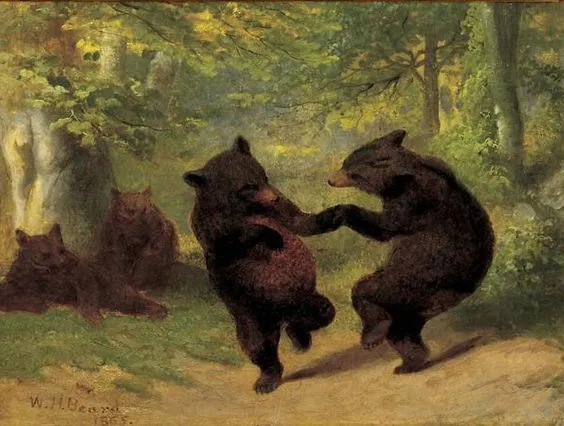
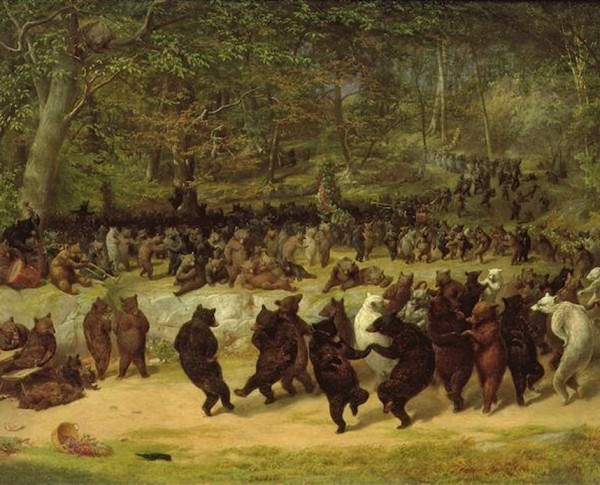
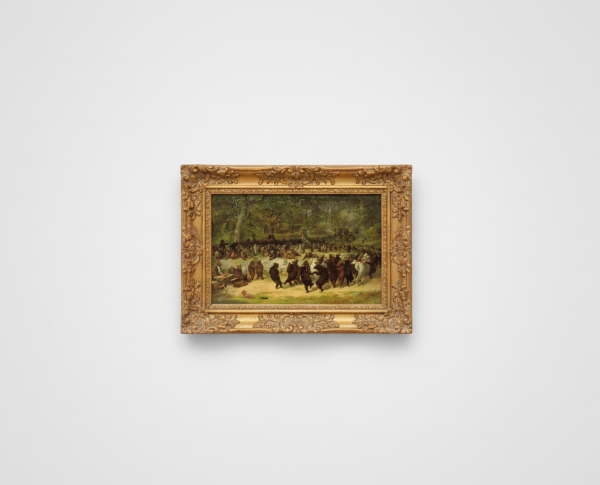
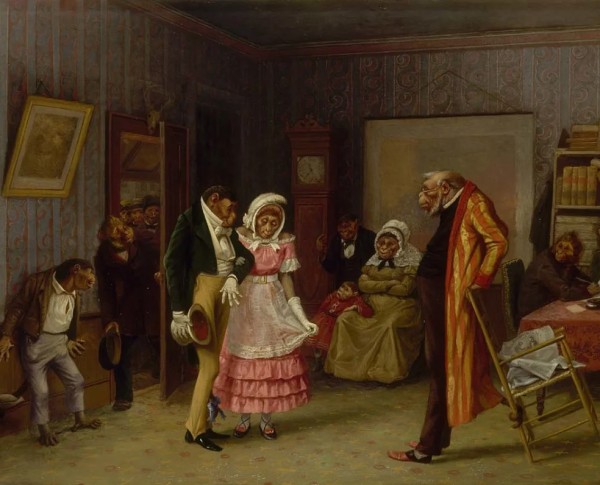
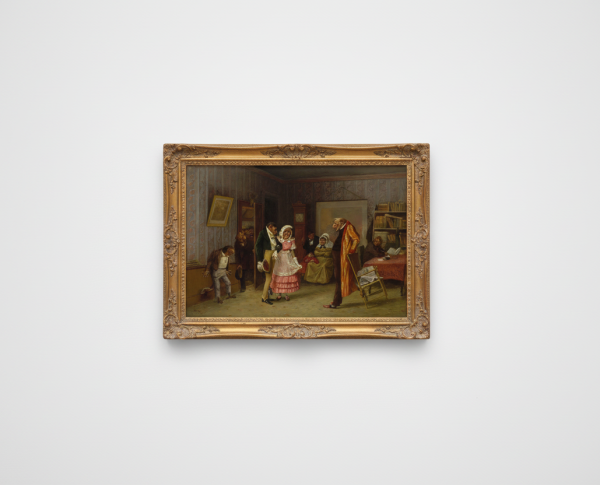
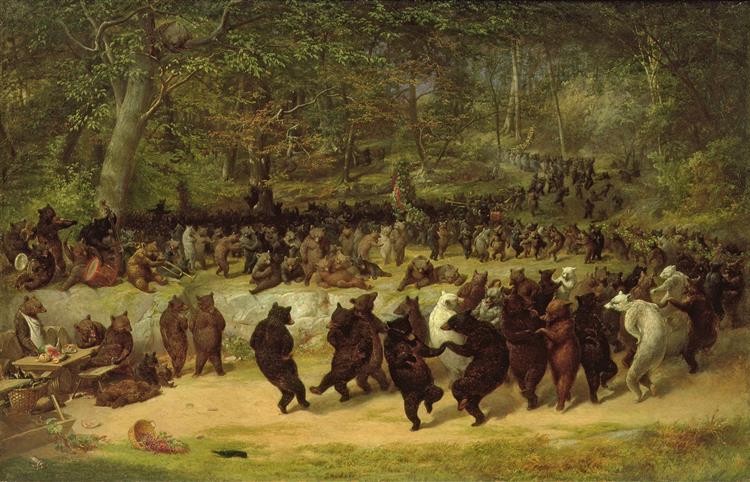
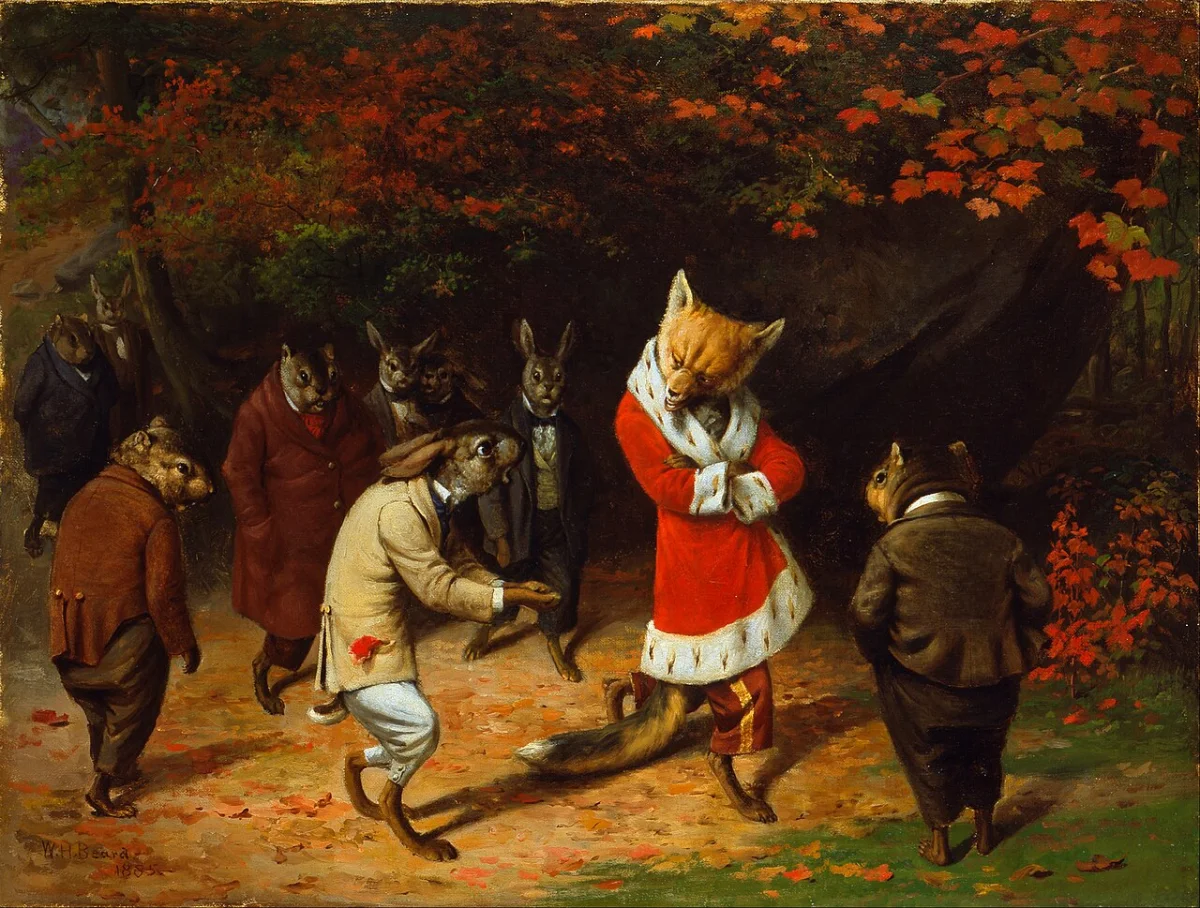
William Holbrook Beard’s mastery is evident in every detail of "The Bear Dance," skillfully rendered in oil on canvas. His ability to breathe life into his animal subjects, combined with the lush, atmospheric backgrounds, highlights his command of the Romanticism style. For collectors and art lovers alike, this painting exemplifies the technical excellence and emotional depth found in many oil on canvas works from this period.
"The Bear Dance" is more than just a fine art painting for sale; it’s a visual narrative rich in symbolism. Beard’s depiction of dancing bears offers a satirical commentary on human behavior, a common theme in Romanticism. The painting invites viewers to interpret its deeper meanings, making it a fascinating study for those interested in the stories that hand-painted oil paintings can convey through expressive imagery and composition.
For art collectors, "The Bear Dance" by William Holbrook Beard represents an exceptional opportunity to own a piece of Romanticism history. This hand-painted oil painting exemplifies the charm and value of period masterpieces, making it a prized addition to any collection. As a fine art painting for sale, it appeals to those who appreciate both the artistic technique and the narrative depth that define Beard’s enduring legacy.
When Art Meets History
"The Bear Dance" by William Holbrook Beard stands as a unique hand-painted oil painting within the Romanticism movement. Created in the late 19th century, this artwork captures the spirit of its era, blending humor with social commentary through anthropomorphic bears. Beard’s approach aligns him with artists like J.M.W. Turner and John Constable, whose works such as "The Fighting 'Téméraire'" and "The Hay Wain, 1821" also reflect the Romantic fascination with nature and storytelling.
Techniques That Speak
William Holbrook Beard’s "The Bear Dance" showcases meticulous oil on canvas technique, characterized by rich textures and dynamic brushwork. The artist’s layering of oil paints creates depth and movement, bringing the dancing bears to life. This mastery can be compared to the techniques seen in Romantic masterpieces like "Washington Crossing the Delaware 1851" and "Ship at Sea, Sunset," where the interplay of light and shadow enhances the narrative embedded within the scene.
Emotions on Display
In "The Bear Dance," Beard infuses his fine art painting for sale with a playful yet poignant emotional tone. The animated expressions and lively poses of the bears evoke both amusement and reflection, prompting viewers to consider deeper themes beneath the surface. This emotional resonance is a hallmark of Romanticism, evident in related paintings such as "The Slave Ship 1840," where artists sought to stir the soul and provoke thought through vivid imagery and dramatic composition.
Coveted by Collectors
As a celebrated hand-painted oil painting, "The Bear Dance" holds significant appeal for collectors of Romantic art. Its unique subject matter, coupled with Beard’s technical skill, makes it a sought-after piece alongside works like "Washington Crossing the Delaware 1851" and "The Hay Wain, 1821." For those seeking a fine art painting for sale, Beard’s creation offers both historical value and timeless charm, ensuring its continued admiration in prestigious collections around the world.
Related Romanticism Hand-Painted Oil Paintings by Other Artists
Other Famous Romanticism Artists:
Frequently Asked Questions About The Bear Dance
What is the historical context of "The Bear Dance"?
"The Bear Dance," painted by William Holbrook Beard in the late 19th century, reflects the fascination with wildlife and the American frontier during a time when the nation was expanding westward. The painting captures the spirit of exploration and the relationship between humans and nature.
What artistic techniques did William Holbrook Beard employ in this painting?
Beard utilized a combination of realism and romanticism in "The Bear Dance," employing detailed brushwork to depict the bears and dancers with lifelike precision while also infusing the scene with a sense of whimsy and fantasy.
What is the significance of the bears in "The Bear Dance"?
The bears in the painting symbolize strength and wildness, representing the untamed nature of the American wilderness. Their inclusion in a dance with humans suggests a harmonious relationship between man and beast, a theme prevalent in Beard's work.
How does "The Bear Dance" reflect the cultural attitudes of its time?
The painting reflects a growing interest in nature and wildlife conservation during the late 19th century. It also illustrates the romanticized view of Native American culture, as the dance motif evokes traditional ceremonies, albeit through a Western lens.
What is the symbolism behind the dance depicted in the painting?
The dance symbolizes unity and celebration, suggesting a connection between humans and the natural world. It can also be interpreted as a commentary on the coexistence of civilization and wilderness, highlighting the importance of respecting nature.
In what ways does "The Bear Dance" exemplify Beard's artistic style?
Beard's artistic style is characterized by vibrant colors, intricate details, and a playful narrative quality. "The Bear Dance" exemplifies these traits through its lively composition and the dynamic interaction between the bears and the human figures.
What influences can be seen in Beard's portrayal of animals in this painting?
Beard was influenced by the animal paintings of earlier artists and the burgeoning field of natural history. His portrayal of animals in "The Bear Dance" emphasizes their personality and character, showcasing a blend of realism and anthropomorphism.
How does "The Bear Dance" fit into the broader context of American art?
"The Bear Dance" is an important example of American genre painting, which often depicted scenes of everyday life and nature. It reflects the national identity of the time, merging themes of adventure, nature, and folklore that were central to American art in the 19th century.
What themes are prevalent in "The Bear Dance"?
The prevalent themes in "The Bear Dance" include the celebration of nature, the interplay between civilization and wilderness, and the exploration of cultural narratives. These themes resonate with the American spirit of the time, emphasizing a connection to the land.
What impact did "The Bear Dance" have on Beard's career?






















_GFM_Painting_(1).webp)

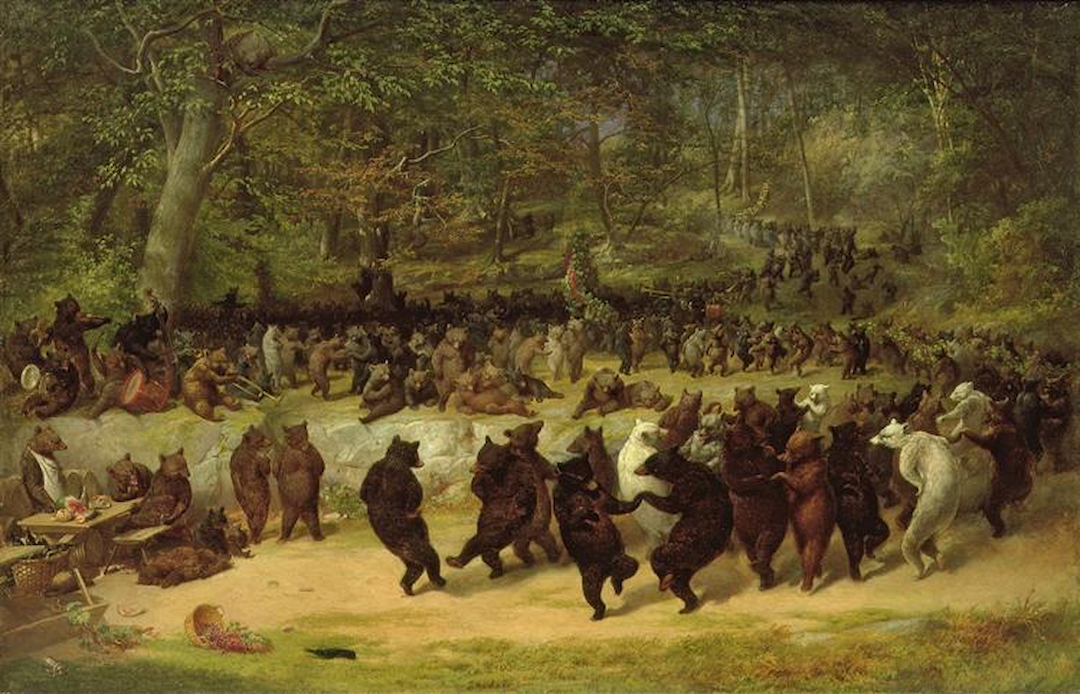

 100% Hand-Painted: Finished in 3-6 Weeks

.png)















_(1).webp)