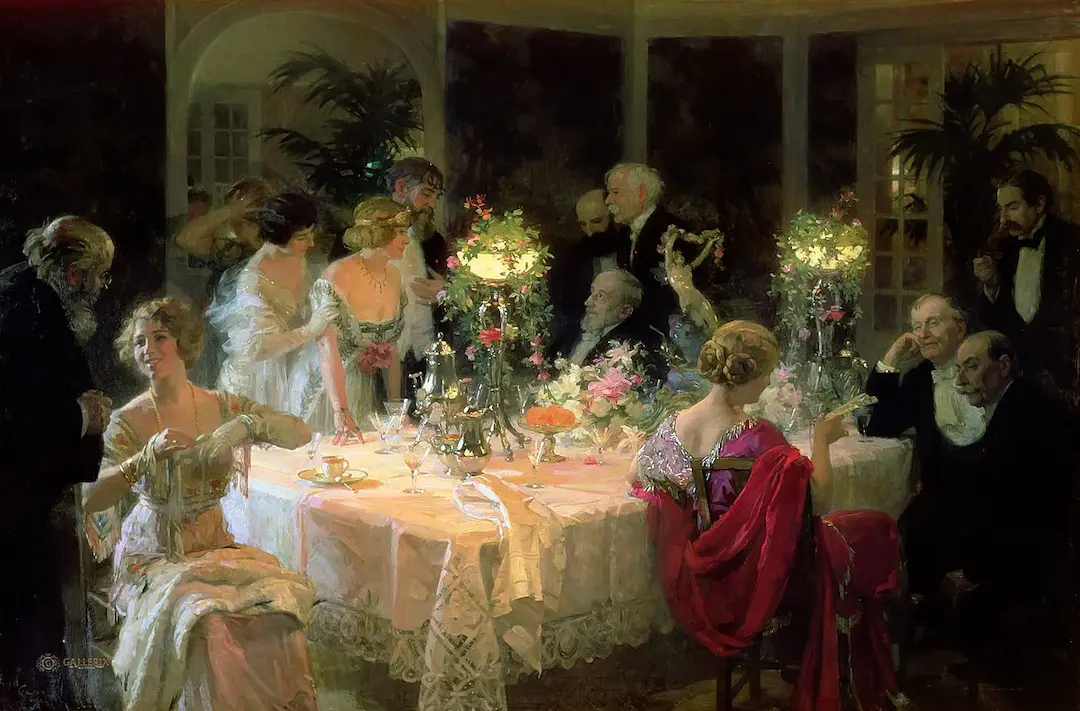
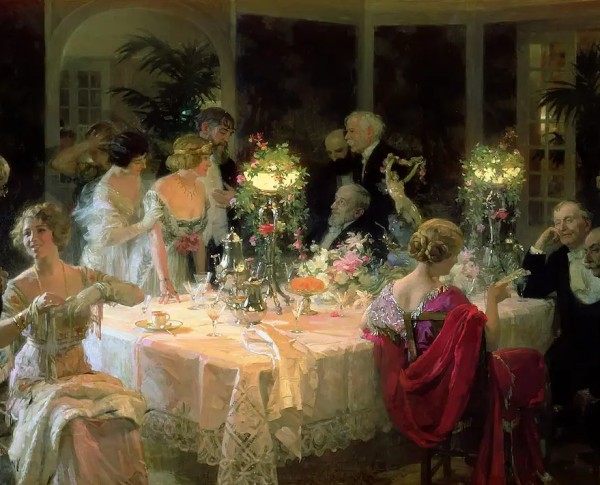
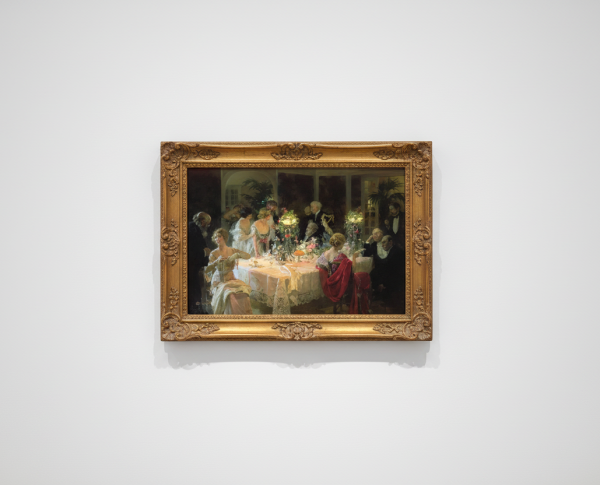
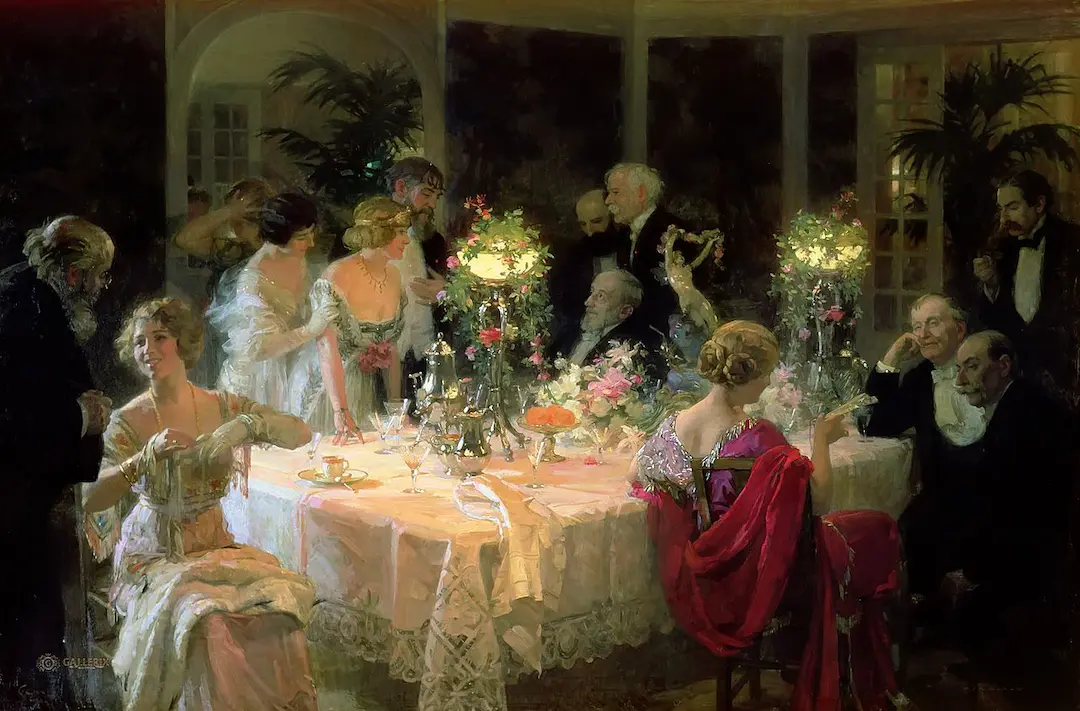
"The Dinner Party" by Jules Grun is a testament to the artist’s technical prowess, utilizing oil on canvas to achieve a remarkable sense of depth and realism. Each brushstroke demonstrates Grun’s command over light and color, illuminating the festive atmosphere of the scene. As a celebrated work within the Belle Époque movement, this oil on canvas painting continues to inspire admiration for its meticulous execution and enduring appeal among collectors and connoisseurs of fine art.
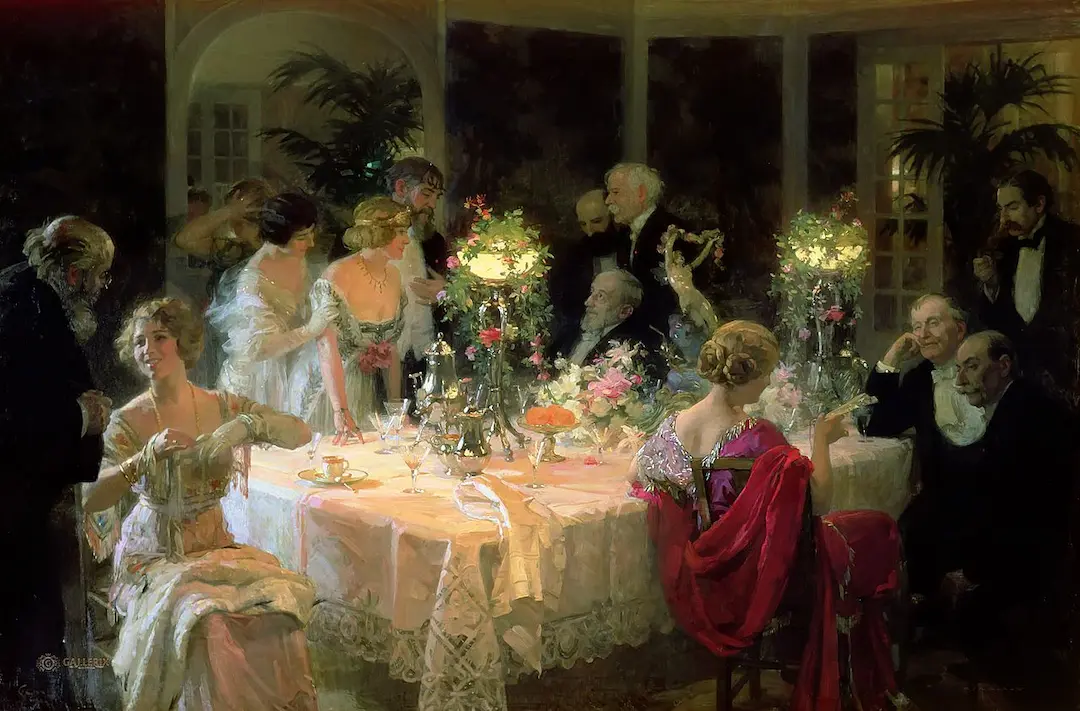
Within "The Dinner Party," Jules Grun weaves a narrative rich with symbolism, portraying the social rituals and opulence of Belle Époque Paris. The composition captures nuanced interactions among guests, highlighting themes of sophistication and camaraderie. This fine art painting for sale not only delights the eye but also invites viewers to explore the subtleties of human connection, making it a prized addition for anyone interested in the stories behind masterful works of art.
Owning "The Dinner Party" by Jules Grun means possessing a piece of Belle Époque history, celebrated for its artistry and cultural significance. This hand-painted oil painting exemplifies the luxurious lifestyle and artistic innovation of its time. With its vibrant depiction of a lavish gathering, it remains a highly sought-after fine art painting for sale, appealing to collectors who value both historical importance and aesthetic beauty in their art collections.
When Art Meets History
"The Dinner Party" by Jules Grun stands as a hallmark of the Belle Époque movement, capturing the spirit of an era marked by elegance and social vibrancy. This hand-painted oil painting intricately portrays a lavish gathering, reflecting the cultural shifts of late 19th-century Paris. Like other masterpieces from this period, Grun’s work invites viewers to step into a world where art and history intertwine, immortalizing the sophistication that defined the Belle Époque.
Techniques That Speak
Jules Grun’s "The Dinner Party" demonstrates his masterful command of oil on canvas, with each brushstroke contributing to the painting’s vivid realism. The use of light and shadow highlights the opulence of the scene, while the rich palette embodies the exuberance of Belle Époque society. Grun’s attention to detail and composition aligns with other acclaimed works from the movement, ensuring this piece remains a benchmark for technical excellence in oil on canvas art.
Emotions on Display
In "The Dinner Party," Jules Grun skillfully conveys a spectrum of emotions, from joy and anticipation to subtle intrigue among the guests. The painting’s lively atmosphere, characteristic of Belle Époque gatherings, draws the viewer into the social dynamics at play. As a fine art painting for sale, it continues to captivate audiences, much like Grun's other celebrated works, by offering a timeless glimpse into the emotional fabric of a bygone era.
Coveted by Collectors
"The Dinner Party" by Jules Grun is highly sought after by collectors of Belle Époque art, prized for its historical significance and artistic mastery. This hand-painted oil painting is a testament to Grun’s enduring legacy, standing alongside other renowned pieces from the movement. Its availability as a fine art painting for sale makes it an exceptional addition to any collection, symbolizing a commitment to preserving the elegance and innovation of this influential period.
Frequently Asked Questions About The Dinner Party
What is the historical context of "The Dinner Party"?
"The Dinner Party," created by Jules Grun in the late 19th century, reflects the social dynamics and cultural shifts of the Belle Époque era in France, a time characterized by artistic flourishing and the emergence of modernity.
What artistic techniques did Jules Grun employ in "The Dinner Party"?
Grun utilized a combination of Impressionistic brushwork and vibrant color palettes to capture the lively atmosphere of the gathering, emphasizing movement and the interplay of light and shadow.
What themes are explored in "The Dinner Party"?
The painting explores themes of social interaction, celebration, and the complexities of human relationships, highlighting the joy and camaraderie of shared meals among friends.
Who are the figures depicted in "The Dinner Party"?
The painting features a diverse group of elegantly dressed individuals, representing various social classes and backgrounds, which underscores the inclusivity and vibrancy of Parisian society during that period.
What is the significance of the setting in "The Dinner Party"?
The intimate yet festive setting of the dining table serves as a focal point, symbolizing unity and the importance of communal experiences in fostering relationships and cultural exchange.
How does "The Dinner Party" reflect the values of its time?
The painting reflects the values of leisure, social engagement, and the celebration of life that were prevalent during the Belle Époque, showcasing a society that embraced art, culture, and the joys of dining together.
What role does color play in "The Dinner Party"?
Color plays a crucial role in conveying the mood and vibrancy of the scene, with warm tones enhancing the feeling of warmth and camaraderie among the guests, while cooler shades provide contrast and depth.
What can be said about the composition of "The Dinner Party"?
The composition is carefully arranged to draw the viewer’s eye toward the central table, creating a sense of balance and harmony, while the varied poses of the figures add dynamism and interest to the scene.
How does "The Dinner Party" compare to other works by Jules Grun?
Compared to other works by Grun, "The Dinner Party" showcases his mastery of capturing social gatherings and the human experience, often focusing on themes of leisure and the joys of life, which are prevalent throughout his oeuvre.
What is the legacy of "The Dinner Party" in art history?
"The Dinner Party" has become a significant work in art history, representing the intersection of social commentary and artistic innovation, and continues to inspire discussions about community, culture, and the role of art in society.






















_GFM_Painting_(1).webp)


 100% Hand-Painted: Finished in 3-6 Weeks

.png)















_(1).webp)