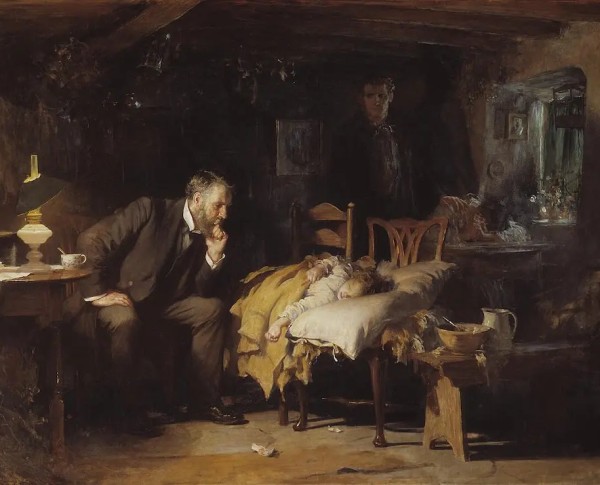
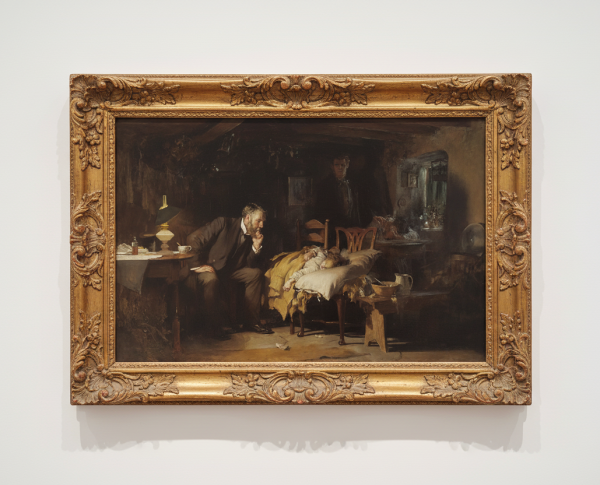
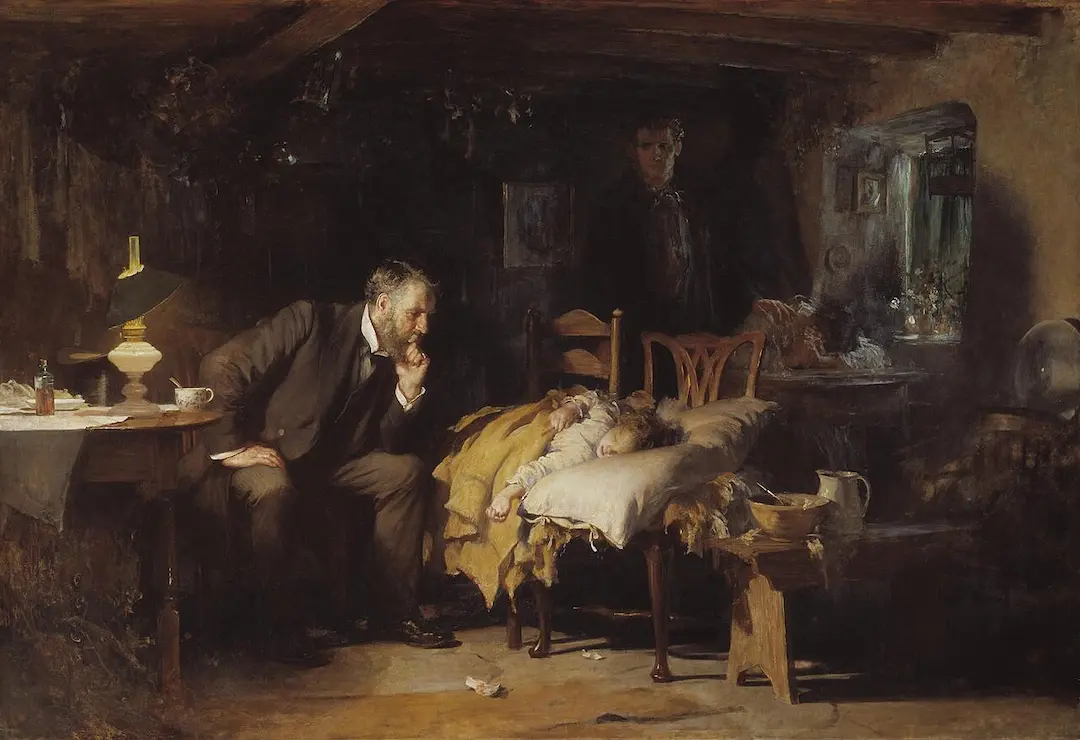
In "The Doctor," Samuel Luke Fildes demonstrates exceptional technique through his use of oil on canvas. Every brushstroke is meticulously crafted, highlighting the emotional depth and realism that define the Social Realism movement. The interplay of light and shadow, combined with the detailed rendering of the figures, showcases Fildes’ mastery. A hand-painted oil painting of this caliber is a testament to the enduring appeal of traditional artistic methods, making it a coveted piece among art lovers.
"The Doctor" by Samuel Luke Fildes is more than just a fine art painting for sale; it is a narrative woven into the fabric of Social Realism. The painting’s symbolic elements—such as the attentive doctor and anxious parents—reflect the era’s social concerns and the importance of medical care. Fildes’ oil on canvas composition draws viewers into a story of hope and resilience, making it a thought-provoking addition to any collection or gallery.
For collectors seeking a hand-painted oil painting that embodies the essence of the Social Realism movement, "The Doctor" by Samuel Luke Fildes is an unparalleled choice. The artwork’s historical context and emotional impact elevate its status as a fine art painting for sale. Its timeless appeal and meticulous execution ensure that it remains a prized possession, celebrated by those who appreciate both artistic excellence and meaningful storytelling in oil on canvas masterpieces.
When Art Meets History
Samuel Luke Fildes’ masterpiece, "The Doctor," stands as a testament to the Social Realism movement’s focus on everyday life and social issues. This hand-painted oil painting, created in 1891, captures a poignant moment as a physician watches over a sick child. Fildes, renowned for his ability to convey powerful narratives, uses this work to highlight the compassion of medical professionals. "The Doctor" remains a significant piece in the context of both art history and societal values.
Techniques That Speak
Fildes’ "The Doctor" showcases his mastery in oil on canvas, utilizing intricate brushwork and nuanced lighting to bring the scene to life. The careful rendering of textures—from the doctor’s thoughtful expression to the gentle folds of the bedding—demonstrates the artist’s technical prowess. As a leading figure in Social Realism, Fildes employs these techniques to immerse viewers in the emotional atmosphere, making this painting a benchmark for realist technique among fine art painting for sale.
Emotions on Display
"The Doctor" by Samuel Luke Fildes is celebrated for its profound emotional depth, a hallmark of Social Realism. The painting’s subdued palette and intimate setting evoke empathy and contemplation, drawing viewers into the tender relationship between the physician and his patient. Fildes’ skillful use of composition and expression ensures that this hand-painted oil painting resonates with audiences, reflecting the universal themes of care and hope that define the movement’s most memorable works.
Coveted by Collectors
As an iconic example of Social Realism, "The Doctor" continues to captivate art enthusiasts and collectors worldwide. Its reputation as a fine art painting for sale is reinforced by its historical significance and the enduring popularity of Samuel Luke Fildes’ works. This oil on canvas not only exemplifies the movement’s ideals but also stands as a treasured piece within prestigious collections, ensuring its legacy among masterpieces of 19th-century realism.
Frequently Asked Questions About The Doctor
What is the historical context of "The Doctor"?
"The Doctor" was painted in 1891 by Samuel Luke Fildes during a time when the medical profession was gaining recognition and respect. This period marked significant advancements in medical science and public health, which influenced the portrayal of doctors in art.
What artistic techniques did Fildes use in "The Doctor"?
Fildes employed realism in "The Doctor," focusing on detailed representation and emotional depth. His use of light and shadow enhances the dramatic effect, drawing attention to the central figures and their expressions.
What is the significance of the doctor’s pose in the painting?
The doctor’s pose, leaning over the child, conveys compassion and dedication. It symbolizes the nurturing aspect of the medical profession, emphasizing the emotional connection between the caregiver and the patient.
How does "The Doctor" reflect societal views on medicine in the 19th century?
The painting reflects a growing trust in medical professionals during the 19th century. It illustrates the shift from superstition to scientific understanding, portraying the doctor as a figure of hope and authority in the face of illness.
What are the symbolic elements present in "The Doctor"?
Symbolism in "The Doctor" includes the presence of the child, representing innocence and vulnerability, and the doctor, symbolizing knowledge and care. The contrasting emotions of the figures highlight the tension between life and death.
How does the composition of "The Doctor" enhance its narrative?
The composition is carefully arranged to guide the viewer’s eye towards the interaction between the doctor and the child. The triangular arrangement of figures creates a focal point that emphasizes the emotional gravity of the scene.
What role does color play in "The Doctor"?
Fildes uses a muted color palette to evoke a somber mood, reflecting the seriousness of the situation. The warm tones of the doctor’s clothing contrast with the cooler tones surrounding the child, highlighting the doctor’s role as a source of warmth and comfort.
How was "The Doctor" received by contemporary audiences?
Upon its exhibition, "The Doctor" was well-received, praised for its emotional depth and realism. It resonated with audiences who were experiencing the transformations in healthcare and the growing appreciation for the medical profession.
What influence did "The Doctor" have on later artistic representations of medicine?
The painting set a precedent for future artworks depicting medical themes, emphasizing the humanistic aspects of healthcare. It inspired artists to explore the emotional connections between doctors and patients in their works.
What legacy has "The Doctor" left in the art world?
"The Doctor" remains a significant work in the art world, often cited in discussions about realism and the portrayal of medical themes. Its enduring relevance speaks to the universal experiences of care, compassion, and the human condition.






















_GFM_Painting_(1).webp)


 100% Hand-Painted: Finished in 3-6 Weeks

.png)















_(1).webp)