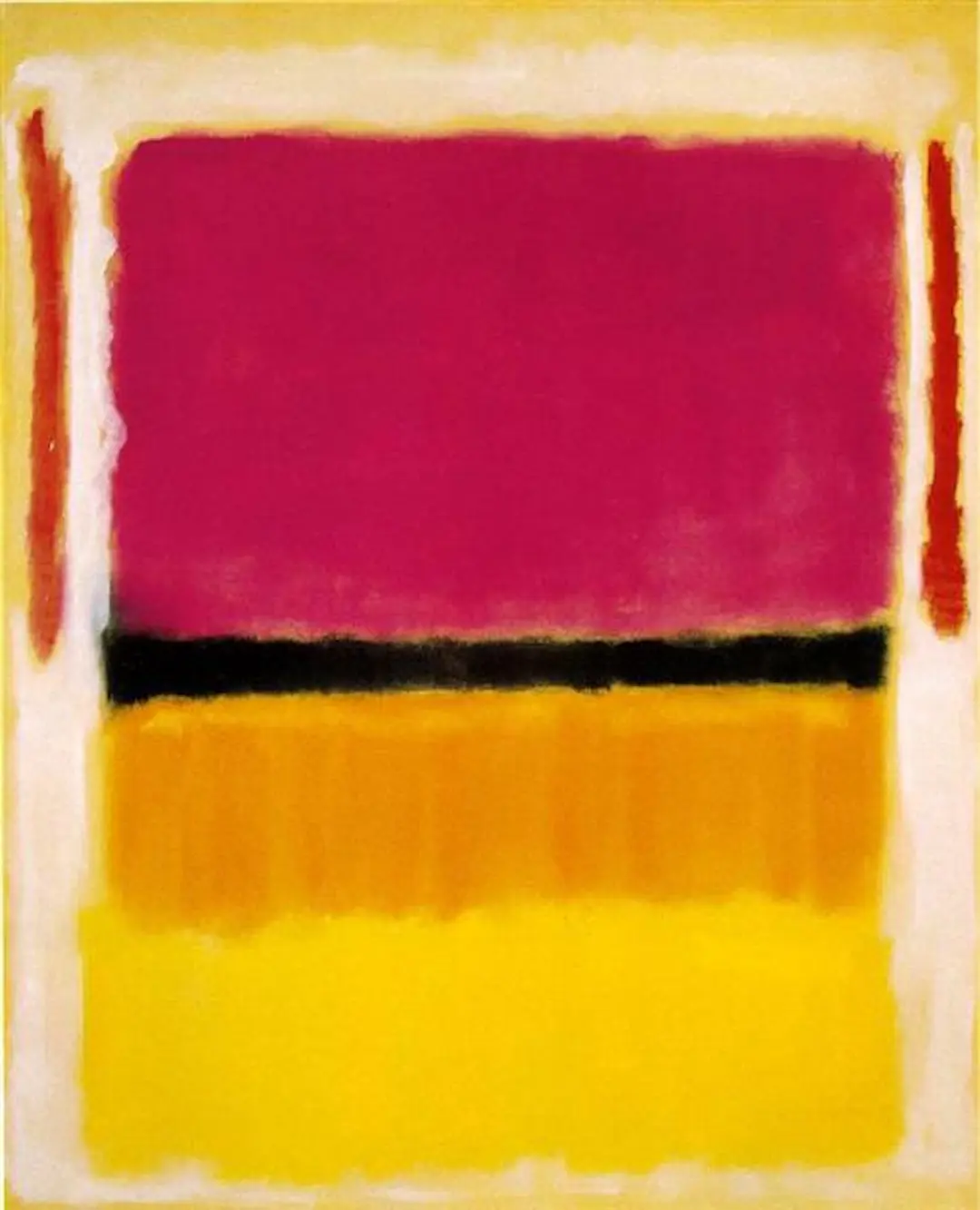
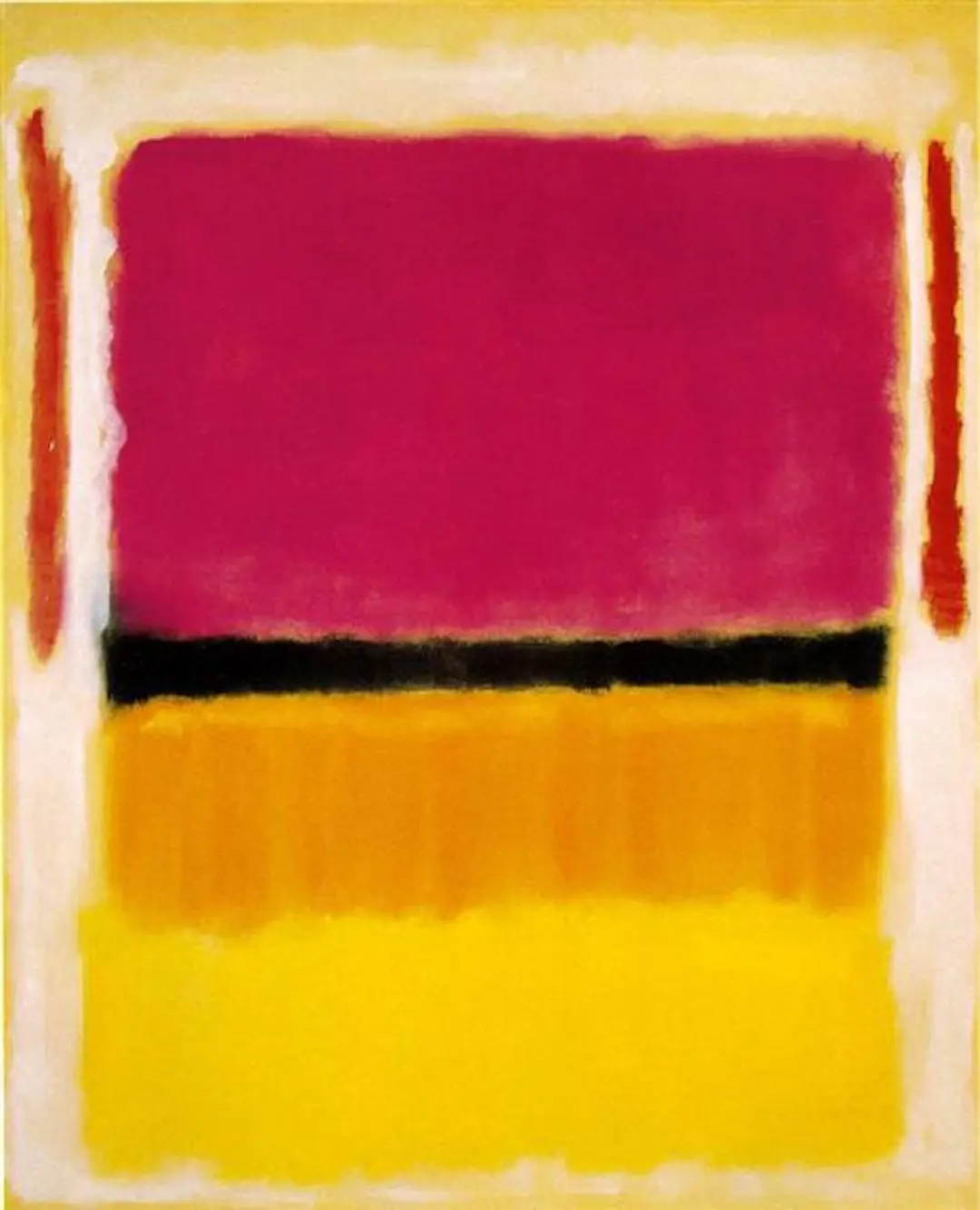
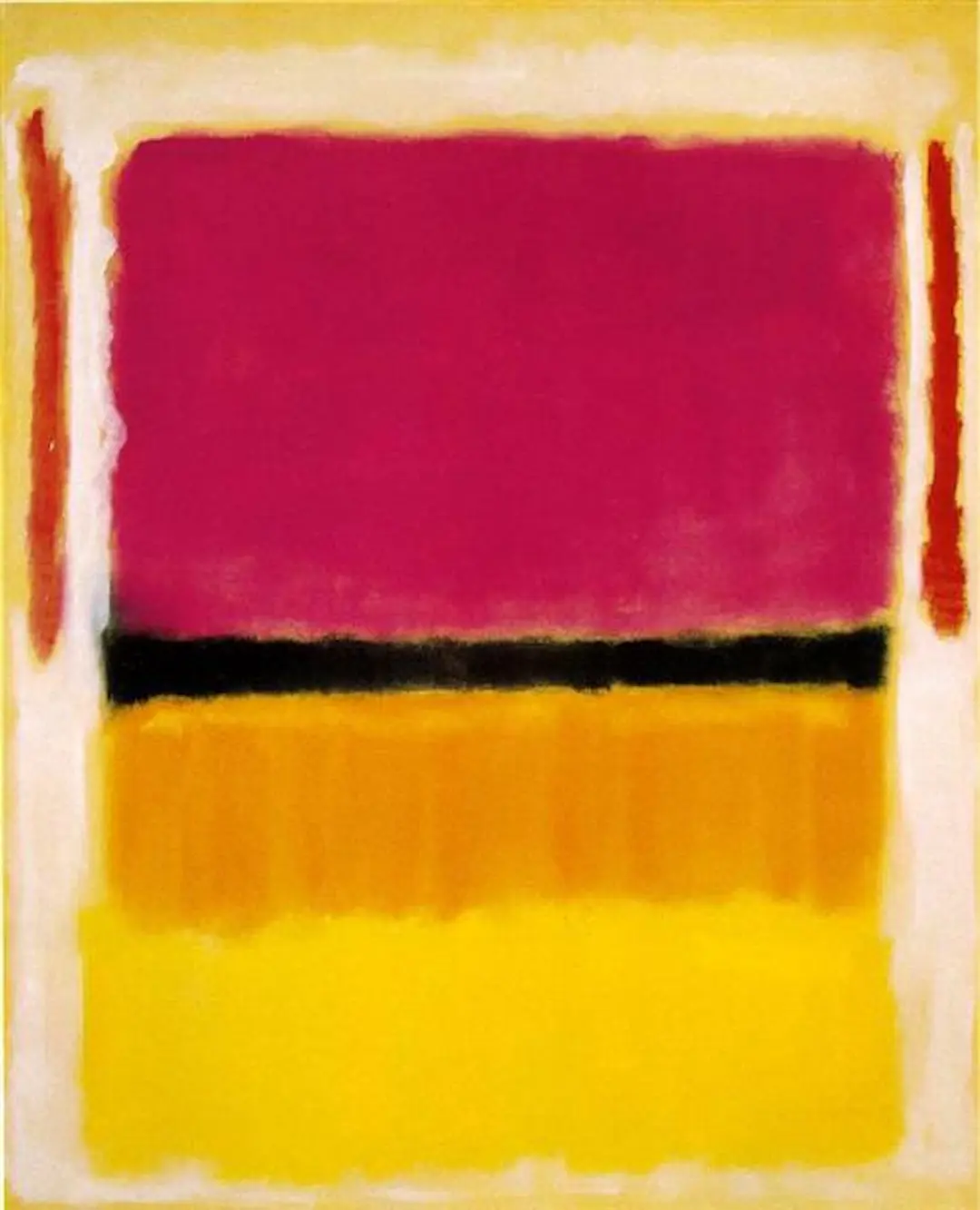
Rothko’s technique in this oil on canvas masterpiece demonstrates his exceptional skill and understanding of color relationships. “Untitled (Violet, Black, Orange, Yellow on White and Red), 1949” features luminous layers, each brushstroke contributing to a sense of depth and contemplation. The subtle blending and bold contrasts are hallmarks of Rothko’s Abstract Expressionism, making this work a prime example of his artistic mastery. Art lovers appreciate the sophistication and emotional resonance captured within this iconic canvas.
Every fine art painting for sale tells a unique story, and Rothko’s “Untitled (Violet, Black, Orange, Yellow on White and Red), 1949” is no exception. Through his use of color fields and gentle transitions, Rothko invites viewers into a space of introspection and emotion. The symbolic use of vibrant hues embodies the essence of Abstract Expressionism, encouraging personal interpretation. This painting continues to inspire deep reflection and conversation among art historians, collectors, and admirers worldwide.
Owning a work like “Untitled (Violet, Black, Orange, Yellow on White and Red), 1949” by Mark Rothko is the dream of many collectors seeking an exceptional oil on canvas piece. As a pivotal figure in Abstract Expressionism, Rothko’s paintings are highly prized in the art market. This particular painting remains a sought-after acquisition, admired for its profound simplicity and emotional impact. Collectors cherish the opportunity to own a masterpiece that encapsulates a critical moment in art history.
When Art Meets History
Mark Rothko’s "Untitled (Violet, Black, Orange, Yellow on White and Red), 1949" stands as a testament to the Abstract Expressionism movement. This hand-painted oil painting emerged during a time when artists like Rothko redefined modern art. Alongside related works such as "Yellow Red Blue" and "Composition VII," Rothko’s painting reflects the post-war shift toward emotional depth and abstraction, making it a pivotal moment where art and history effortlessly intertwined.
Techniques That Speak
Rothko’s mastery of oil on canvas is evident in "Untitled (Violet, Black, Orange, Yellow on White and Red), 1949." Using subtle layering and luminous color fields, he creates a visual experience that pulls viewers into the depths of Abstract Expressionism. The soft blending seen here also appears in related paintings like "Squares with Concentric Rings" and "The Composition V111," showcasing Rothko’s innovative approach to painting and his signature use of vibrant, emotive hues.
Emotions on Display
This fine art painting for sale is more than a visual feast—it’s an invitation to feel. Mark Rothko’s "Untitled (Violet, Black, Orange, Yellow on White and Red), 1949" explores themes of spirituality and human emotion, hallmarks of Abstract Expressionism. Like "Yellow Red Blue" and "Composition VII," Rothko’s work evokes contemplation and introspection, prompting viewers to connect with their innermost feelings through bold colors and expansive forms.
Coveted by Collectors
Collectors worldwide seek Rothko’s masterpieces, and "Untitled (Violet, Black, Orange, Yellow on White and Red), 1949" is no exception. This oil on canvas painting holds a prestigious place among fine art enthusiasts, often displayed alongside related works like "The Composition V111." Mark Rothko’s unique vision within the Abstract Expressionism movement ensures that each piece, including this one, remains highly desirable and valuable in the world’s most renowned art collections.
Related Abstract Expressionism Hand-Painted Oil Paintings by Other Artists
Other Famous Abstract Expressionism Artists:
Frequently Asked Questions About Untitled (Violet, Black, Orange, Yellow on White and Red), 1949
What is the significance of the title "Untitled" in Rothko's work?
The title "Untitled" suggests a focus on the emotional and experiential aspects of the painting rather than a specific narrative or subject matter. Rothko aimed to evoke feelings and introspection in the viewer, allowing for a personal interpretation of the colors and forms.
How does the color palette in this painting reflect Rothko's artistic style?
The color palette of violet, black, orange, yellow, white, and red exemplifies Rothko's exploration of color as a means of expression. His use of bold, contrasting colors is intended to elicit emotional responses, creating a dynamic interplay between the hues that invites contemplation.
What artistic movement is Mark Rothko associated with?
Mark Rothko is primarily associated with Abstract Expressionism, a movement characterized by an emphasis on spontaneous, automatic, or subconscious creation. His work often focuses on color fields and emotional resonance rather than representational forms.
What themes are prevalent in Rothko's "Untitled" series?
The themes prevalent in Rothko's "Untitled" series include existentialism, spirituality, and the human condition. His paintings often explore the relationship between color and emotion, inviting viewers to engage with their own feelings and experiences.
How does "Untitled (Violet, Black, Orange, Yellow on White and Red)" fit into Rothko's overall body of work?
This painting is representative of Rothko's mature style, showcasing his shift towards larger canvases and a more simplified color palette. It reflects his ongoing exploration of color relationships and their emotional impact, which became a hallmark of his later works.
What was Rothko's intention behind the use of large color fields in his paintings?
Rothko intended for large color fields to create an immersive experience for the viewer. By enveloping the audience in color, he sought to evoke deep emotional responses and encourage a meditative state, allowing for a personal connection to the artwork.
What role does abstraction play in Rothko's "Untitled" painting?
Abstraction in Rothko's "Untitled" painting serves to eliminate representational elements, focusing instead on the emotional and spiritual essence of color. This approach allows viewers to engage with the artwork on a more instinctual level, fostering a unique interpretation based on individual experiences.
How did Rothko's personal life influence his artistic output?
Rothko's personal life, including his struggles with depression and existential concerns, significantly influenced his artistic output. His emotional experiences are reflected in the intensity of his color choices and the contemplative nature of his compositions, making his work deeply personal and relatable.
What impact did "Untitled (Violet, Black, Orange, Yellow on White and Red)" have on contemporary art?
This painting has had a profound impact on contemporary art by challenging traditional notions of representation and encouraging a focus on emotional engagement through abstraction. Rothko's work paved the way for future artists to explore the relationship between color, form, and viewer perception.
In what ways does this painting reflect the cultural context of the late 1940s?
The painting reflects the cultural context of the late 1940s, a period marked by post-war introspection and a search for meaning. Rothko's emphasis on emotional depth and spiritual exploration resonates with the broader existential inquiries of the time, making his work particularly relevant to the era's artistic discourse.






















_GFM_Painting_(1).webp)


 100% Hand-Painted: Finished in 3-6 Weeks

.png)















_(1).webp)