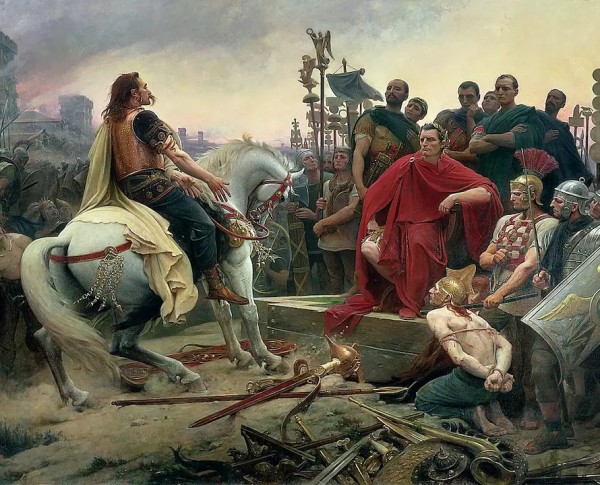
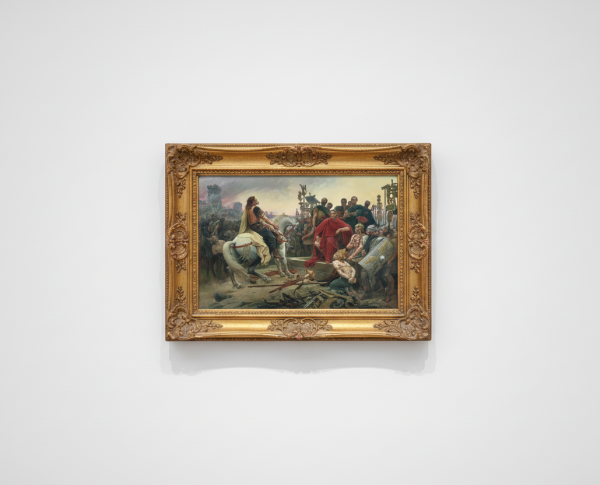
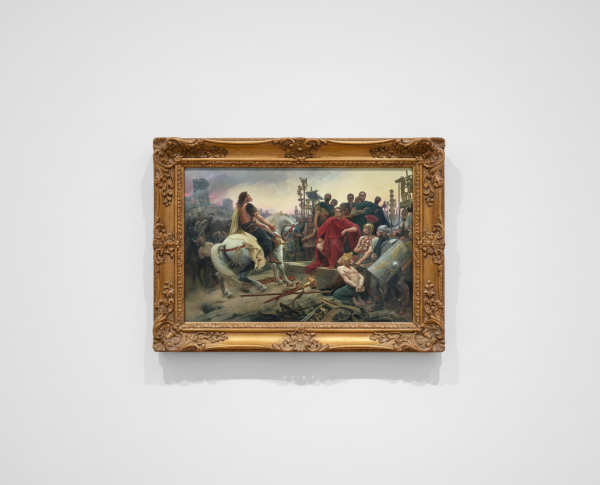
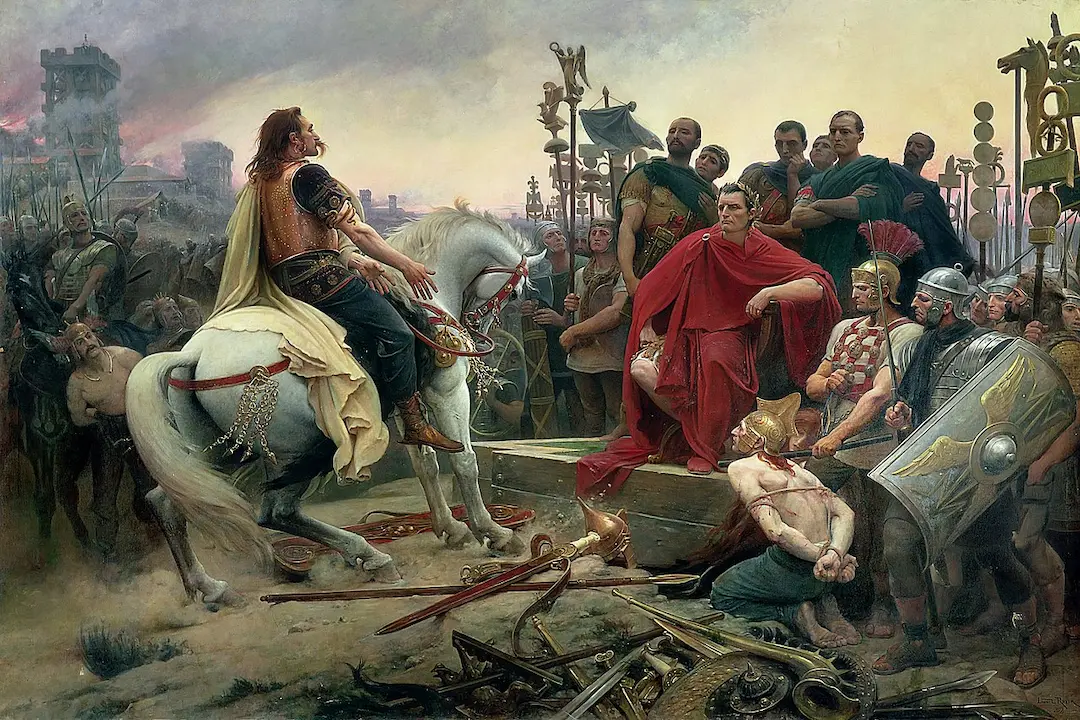
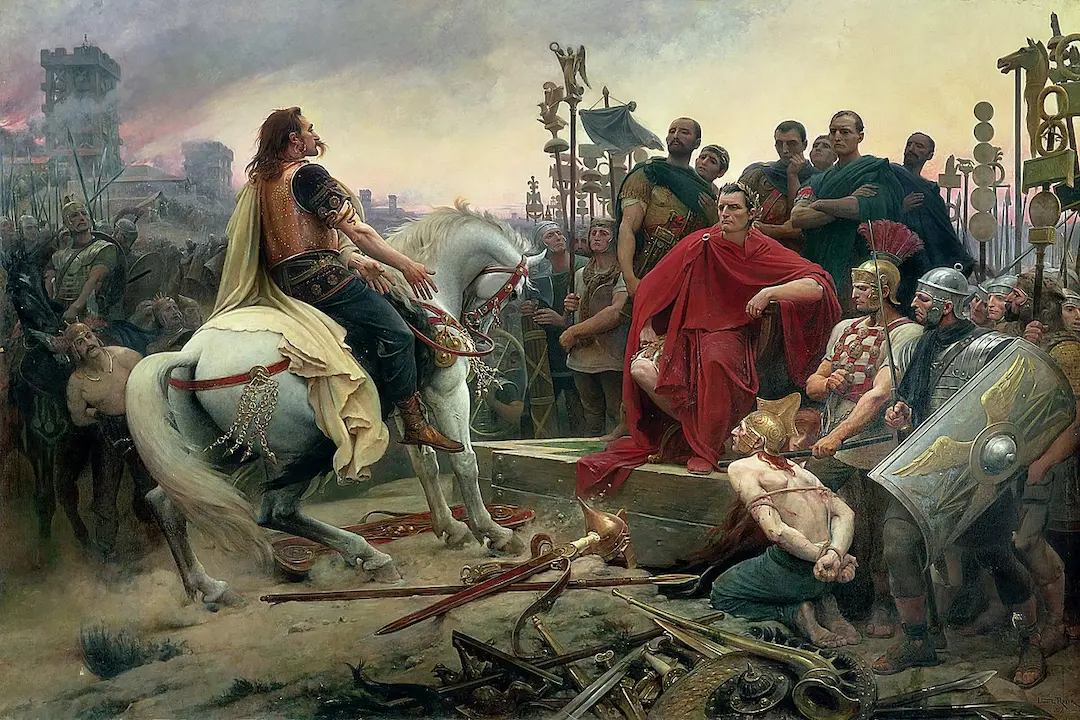
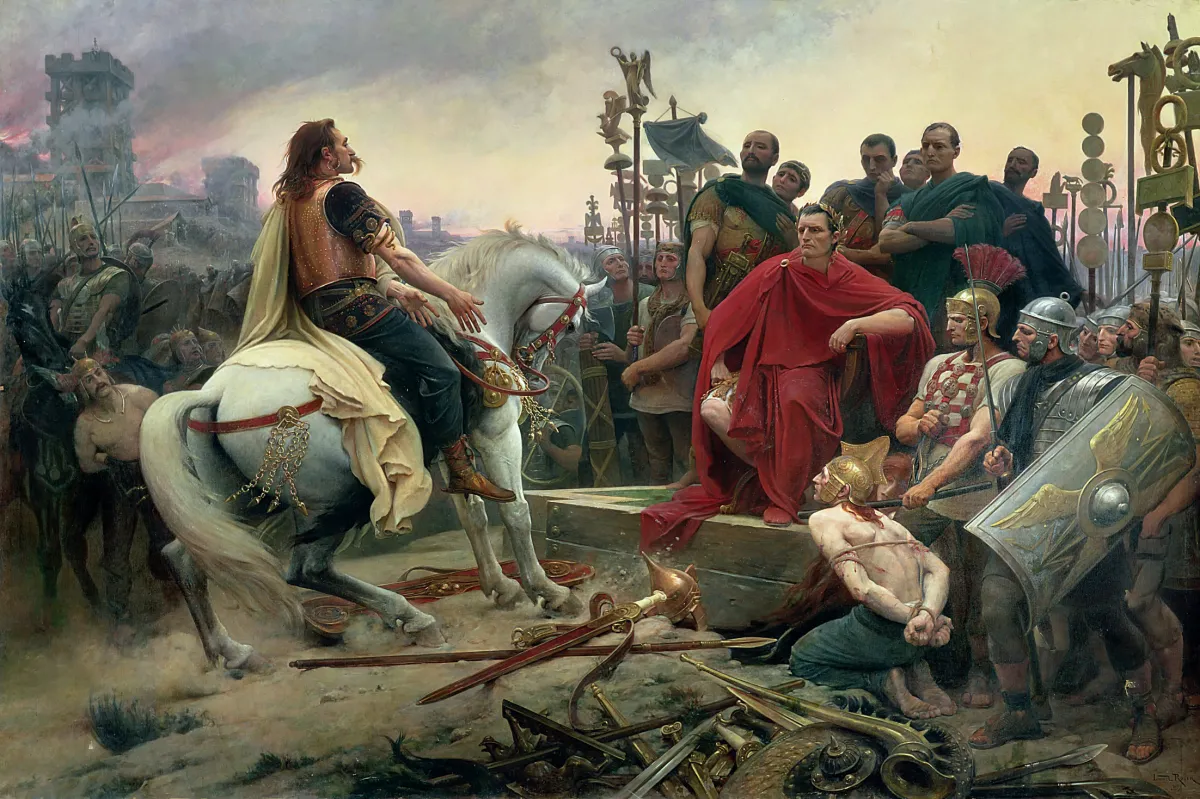
"Vercingetorix throws down his arms at the feet of Julius Caesar, 1899," is a celebrated hand-painted oil painting by Lionel Noel Royer, a distinguished figure in the Academic Art movement. This masterpiece immortalizes a pivotal moment in ancient history, capturing the surrender of the Gallic chieftain to the Roman emperor. Royer’s meticulous attention to historical detail and dramatic composition make this work a must-see for anyone seeking a masterfully crafted hand-painted oil painting.
Lionel Noel Royer’s "Vercingetorix throws down his arms at the feet of Julius Caesar, 1899" exemplifies the technical prowess and refined skill found in oil on canvas works from the Academic Art era. The painting’s lifelike textures and dynamic lighting showcase Royer’s dedication to realism and narrative clarity. Collectors and enthusiasts of oil on canvas pieces will appreciate the painting’s exceptional artistry and the way it embodies the disciplined techniques characteristic of the Academic Art movement.
This fine art painting for sale is rich in symbolism, with every element thoughtfully arranged by Lionel Noel Royer to convey themes of honor, defeat, and cultural transformation. "Vercingetorix throws down his arms at the feet of Julius Caesar, 1899" not only narrates a dramatic historical event but also reflects the values and aesthetics of Academic Art. The painting’s powerful storytelling invites viewers to explore the deeper meanings behind each figure and gesture.
For collectors seeking a remarkable example of Academic Art, Lionel Noel Royer’s "Vercingetorix throws down his arms at the feet of Julius Caesar, 1899" stands out as a fine art painting for sale that combines historical gravitas with outstanding artistic execution. The painting’s enduring appeal lies in its blend of narrative depth and technical brilliance, making it a coveted piece for those who appreciate museum-quality masterpieces and wish to own a work by a renowned artist.
When Art Meets History
"Vercingetorix throws down his arms at the feet of Julius Caesar, 1899" by Lionel Noel Royer captures a pivotal moment in Roman and Gallic history. As a fine example of the Academic Art movement, this hand-painted oil painting immortalizes the dramatic surrender of the Gallic leader. Royer’s attention to historical accuracy aligns his work with other notable paintings, such as "Jeune femme denudée sur canape (Young woman naked on a settee)" and "A Forester at Home."
Techniques That Speak
Lionel Noel Royer employs masterful techniques in this oil on canvas, characteristic of the Academic Art movement. His precise brushwork and attention to detail lend authenticity and grandeur to the scene. The use of light and shadow emphasizes the emotional tension between conqueror and captive. This painting stands proudly alongside works like "Rest on the Flight into Egypt," demonstrating Royer’s commitment to technical excellence in every oil on canvas he creates.
Emotions on Display
The powerful emotions in "Vercingetorix throws down his arms at the feet of Julius Caesar, 1899" are palpable. Royer’s composition and color choices convey the despair of defeat and the dignity of Vercingetorix. This fine art painting for sale invites viewers to witness a turning point in history, much like his other works, including "A Forester at Home." Collectors and art lovers are drawn to the evocative storytelling present in every scene.
Coveted by Collectors
Collectors prize Lionel Noel Royer’s paintings for their historical depth and technical mastery. "Vercingetorix throws down his arms at the feet of Julius Caesar, 1899" is especially sought after as a hand-painted oil painting representing the Academic Art movement. Its connection to related works like "Rest on the Flight into Egypt" increases its desirability. Art enthusiasts value these pieces for their ability to bring history vividly to life in any collection.
Related Academic Art Hand-Painted Oil Paintings by Other Artists
Other Famous Academic Art Artists:
Frequently Asked Questions About Vercingetorix throws down his arms at the feet of Julius Caesar, 1899
What historical event does this painting depict?
This painting illustrates the moment when Vercingetorix, the chieftain of the Gauls, surrenders to Julius Caesar after the Battle of Alesia in 52 BC, marking a significant turning point in the Gallic Wars.
Who was Vercingetorix, and why is he significant in history?
Vercingetorix was a Gallic leader who united various tribes against Roman conquest. His resistance against Caesar is seen as a symbol of national pride and the struggle for freedom in France.
What artistic techniques did Lionel Noel Royer employ in this painting?
Royer utilized dramatic lighting and rich colors to enhance the emotional intensity of the scene, while also employing realistic anatomical proportions and detailed textures to bring the figures to life.
What is the significance of the gesture of surrender depicted in the painting?
The act of Vercingetorix throwing down his arms symbolizes defeat, but it also represents the complexity of power dynamics, bravery, and the tragic consequences of war.
How does the composition of the painting contribute to its narrative?
The composition is designed to draw the viewer's eye towards the central figures of Vercingetorix and Caesar, emphasizing the tension and drama of the moment, while the surrounding soldiers highlight the context of the surrender.
What role does symbolism play in this artwork?
Symbolism is prevalent in the painting, with Vercingetorix's discarded arms representing loss and submission, while Caesar's posture conveys authority and triumph, reflecting the themes of conquest and power.
In what ways does this painting reflect the artistic movements of its time?
This painting reflects the academic and historical painting styles of the late 19th century, characterized by a focus on historical accuracy, dramatic narratives, and an emphasis on classical themes.
What emotions are conveyed through the expressions of the figures in the painting?
The expressions of both Vercingetorix and Caesar convey a mix of sorrow, resignation, and triumph, encapsulating the emotional weight of the moment and the gravity of their historical confrontation.
How has this painting influenced modern perceptions of Julius Caesar and Vercingetorix?
This painting has contributed to the romanticized view of both figures, portraying Caesar as a powerful conqueror and Vercingetorix as a noble warrior, thus shaping the narrative of their legacies in popular culture.
Where can I view this painting, and is it part of a larger collection?
This painting is housed in the Musée de l'Armée in Paris, and it is part of a larger collection that focuses on French military history and notable historical figures.






















_GFM_Painting_(1).webp)


 100% Hand-Painted: Finished in 3-6 Weeks

.png)















_(1).webp)