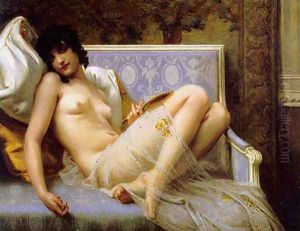
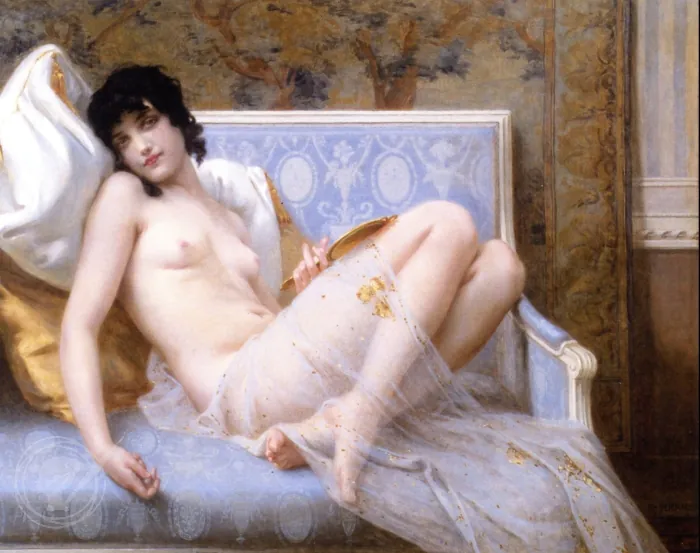
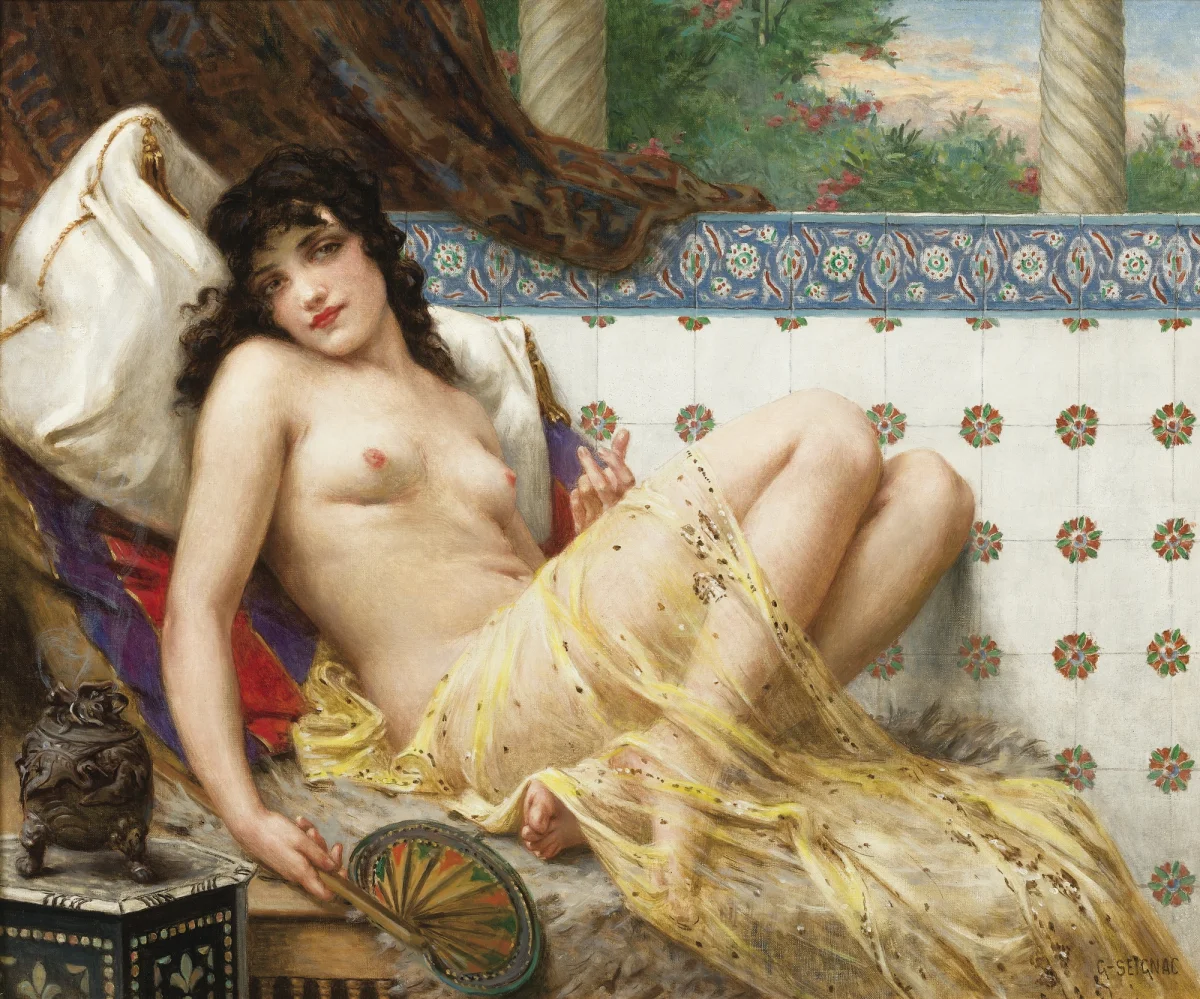
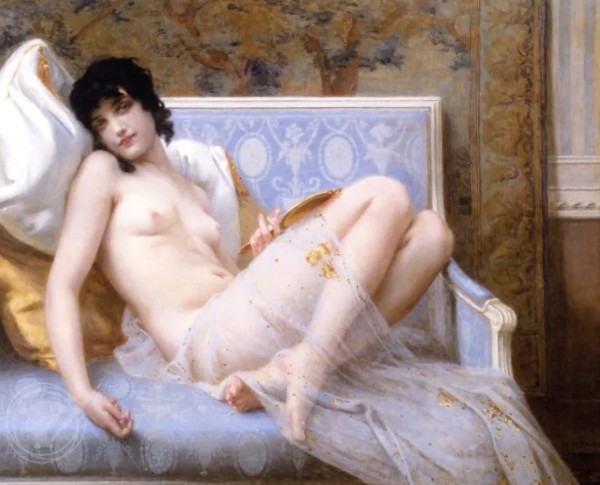
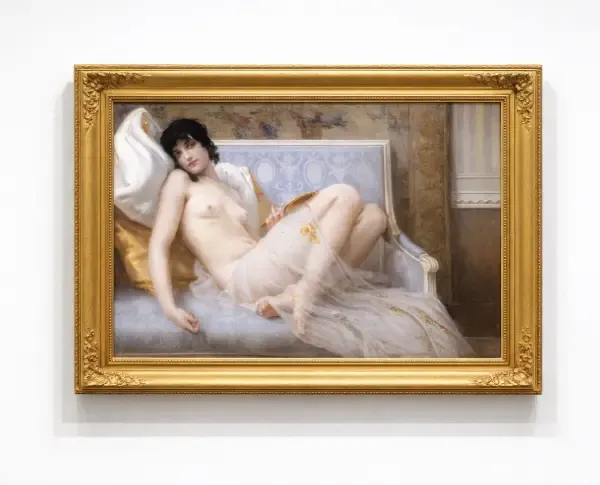
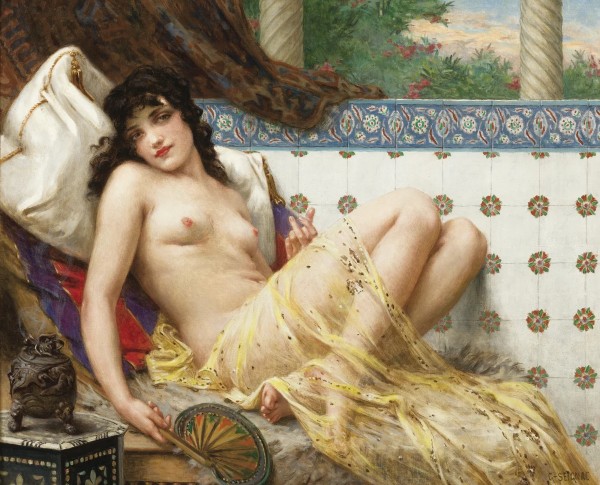
Seignac’s "Jeune femme denudée sur canape" showcases his exceptional skill in oil on canvas, reflecting the meticulous training typical of Academic Art. Each brushstroke brings the subject’s delicate form and luxurious setting to life, demonstrating the artist’s keen understanding of anatomy and light. The painting’s exquisite execution and rich palette make it a standout among fine art enthusiasts, and its presence is sure to elevate any space with the grace of a true oil on canvas classic.
Within "Jeune femme denudée sur canape," Guillaume Seignac weaves subtle stories and symbolic nuances. The relaxed pose and serene expression of the subject invite viewers to contemplate themes of beauty, vulnerability, and introspection. As a fine art painting for sale, it not only represents the aesthetic ideals of the Academic Art movement but also offers a window into the cultural values of its time. Collectors and admirers alike are drawn to its layered meanings and emotive power.
Owning "Jeune femme denudée sur canape" by Guillaume Seignac is an opportunity to possess a piece of Academic Art history. This hand-painted oil painting holds enduring appeal for discerning collectors and art lovers. Its authenticity and sophistication make it more than just a decoration—it is a legacy to be cherished. For those seeking a fine art painting for sale, Seignac’s masterpiece promises both artistic and investment value, bringing elegance and distinction to any private collection.
When Art Meets History
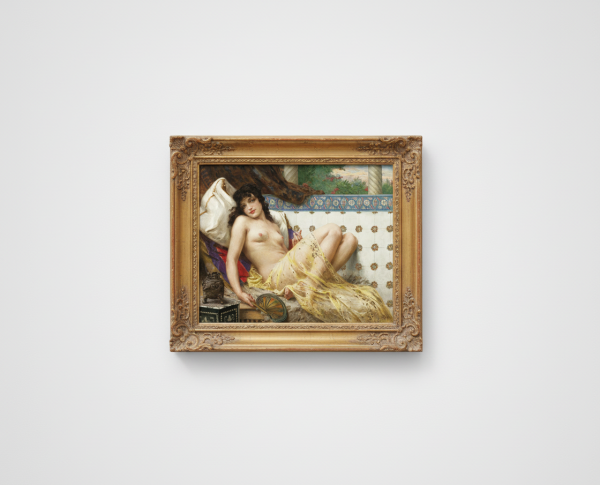
"Jeune femme denudée sur canape (Young woman naked on a settee)" by Guillaume Seignac is a captivating example of the Academic Art movement. Painted in the early twentieth century, this hand-painted oil painting reflects the era’s fascination with classical beauty and refined technique. Seignac, known for works like "A Forester at Home" and "Rest on the Flight into Egypt," masterfully brings history and artistry together in this evocative composition, which continues to enchant art lovers worldwide.
Techniques That Speak
Guillaume Seignac’s "Jeune femme denudée sur canape" showcases his expert use of oil on canvas, a favored medium among Academic artists. The delicate rendering of the figure’s skin, the play of light across the settee, and the intricate details all highlight Seignac’s technical prowess. Similar to his work "Vercingetorix throws down his arms at the feet of Julius Caesar, 1899," this painting demonstrates the artist’s dedication to realism and classical ideals, making each brushstroke significant.
Emotions on Display
The emotional resonance of "Jeune femme denudée sur canape" lies in its subtlety. Seignac’s fine art painting for sale captures a moment of quiet introspection, inviting viewers to contemplate the subject’s thoughts and feelings. Like in his other masterpieces, Seignac communicates vulnerability and grace through posture and expression, embodying the sensitive spirit of Academic Art. The result is a work that continues to move audiences, much like "Rest on the Flight into Egypt."
Coveted by Collectors
As a stunning example of Academic Art, "Jeune femme denudée sur canape" remains highly sought after by art collectors. The painting’s timeless elegance and technical brilliance contribute to its enduring appeal. Collectors often seek out Seignac’s works, including "A Forester at Home" and "Vercingetorix throws down his arms at the feet of Julius Caesar, 1899," valuing each oil on canvas for its historical significance and masterful execution within the fine art market.
Related Academic Art Hand-Painted Oil Paintings by Other Artists
Other Famous Academic Art Artists:
Frequently Asked Questions About Jeune femme denudée sur canape (Young woman naked on a settee)
What is the historical context of "Jeune femme denudée sur canape"?
This painting was created during the early 20th century, a time when the art world was experiencing significant shifts towards modernism and the exploration of the human form. It reflects the prevailing artistic movements that emphasized beauty, sensuality, and the human experience.
What artistic techniques did Guillaume Seignac employ in this painting?
Seignac utilized classical techniques such as chiaroscuro to create depth and dimension, along with a soft color palette that enhances the sensuality of the subject. His brushwork is smooth and refined, contributing to the overall elegance of the piece.
What is the significance of the subject matter in this painting?
The depiction of a nude woman is a traditional theme in art, often symbolizing beauty, purity, and the idealization of the female form. In this work, the relaxed pose of the woman suggests intimacy and vulnerability, inviting viewers to contemplate the complexities of femininity.
How does this painting reflect the values of the Belle Époque period?
The Belle Époque was characterized by a flourishing of the arts and a celebration of beauty and elegance. Seignac's painting embodies these values through its focus on aesthetic pleasure and the portrayal of the female figure as an object of admiration and desire.
What role does light play in "Jeune femme denudée sur canape"?
Light is skillfully used to highlight the contours of the woman's body and create a sense of warmth and intimacy. The soft illumination enhances the overall mood of the painting, drawing the viewer's eye to the subject while evoking a sense of tranquility.
In what ways does this painting connect to classical art traditions?
This work draws on classical themes and techniques, reminiscent of the works of Renaissance masters who celebrated the human form. Seignac's attention to anatomical detail and composition reflects a reverence for the traditions of Western art while incorporating a modern sensibility.
What emotions does "Jeune femme denudée sur canape" evoke in viewers?
The painting elicits feelings of admiration and contemplation, as well as a sense of intimacy. The subject's serene expression and relaxed posture invite viewers to engage with the artwork on a personal level, fostering a connection to the themes of beauty and vulnerability.
How does Seignac's style differ from other artists of his time?
While many artists of the early 20th century were exploring abstraction and avant-garde styles, Seignac remained committed to representational art, focusing on realism and the beauty of the human figure. His work stands out for its classical approach and emphasis on sensuality.
What impact did "Jeune femme denudée sur canape" have on contemporary art?
This painting contributed to the ongoing dialogue about the representation of the female form in art, influencing later artists who sought to explore themes of femininity, sexuality, and identity. It remains a significant example of early 20th-century academic painting.
What are the key symbols present in this painting?
The nude figure symbolizes purity and vulnerability, while the settee serves as a backdrop that suggests comfort and intimacy. Together, these elements create a narrative that invites viewers to reflect on themes of beauty, desire, and the complexity of human relationships.






















_GFM_Painting_(1).webp)


 100% Hand-Painted: Finished in 3-6 Weeks

.png)















_(1).webp)




.webp)