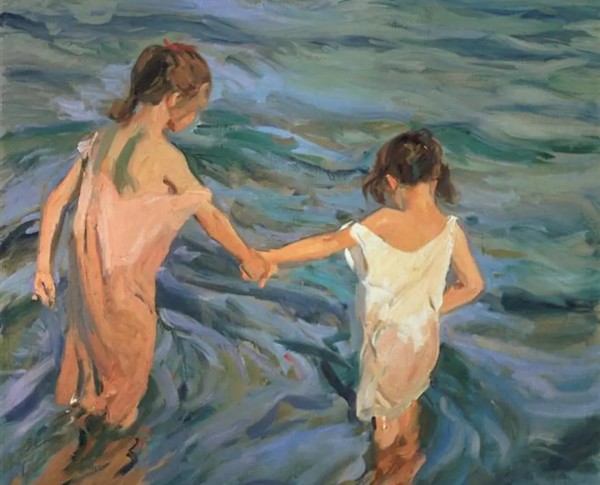
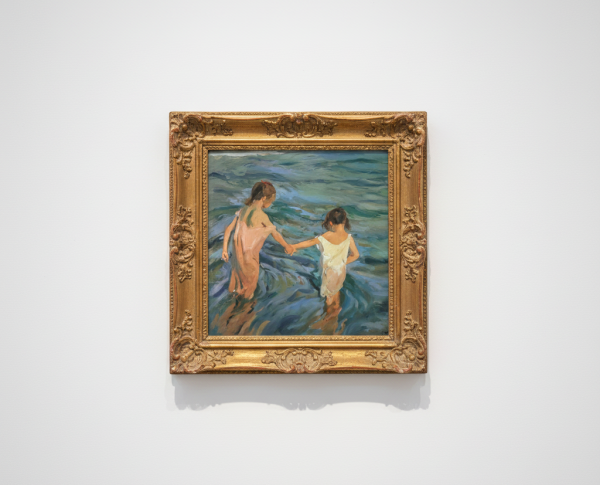
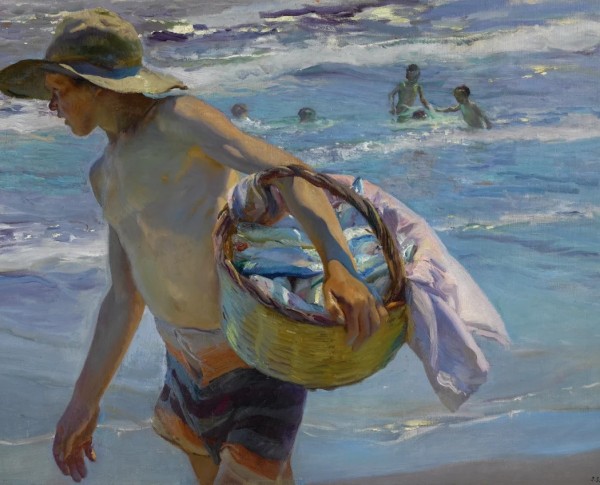
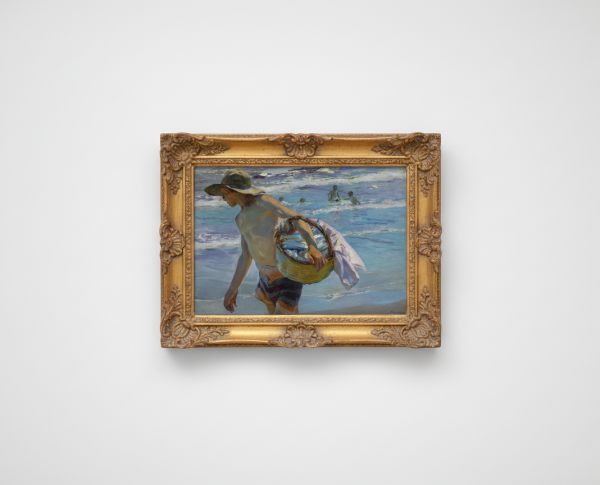
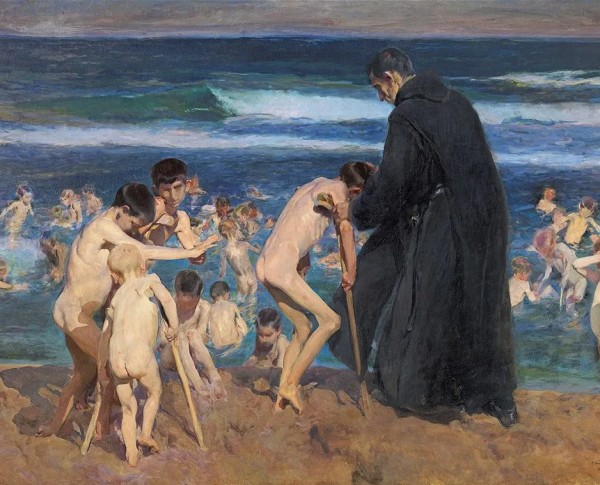
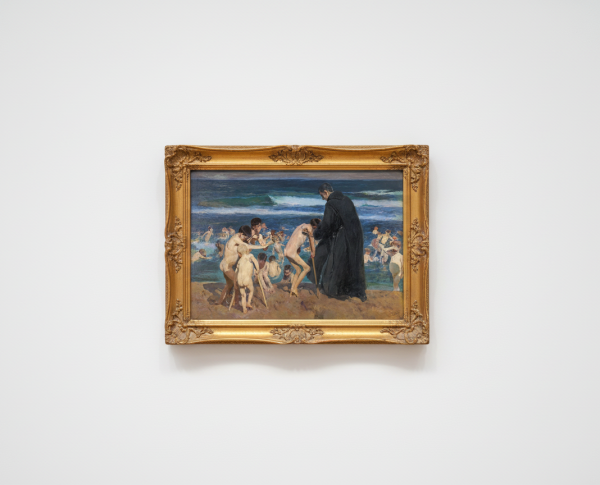
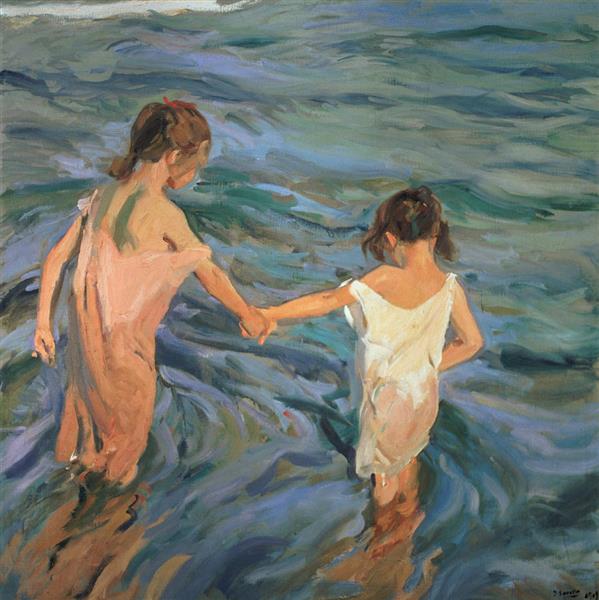
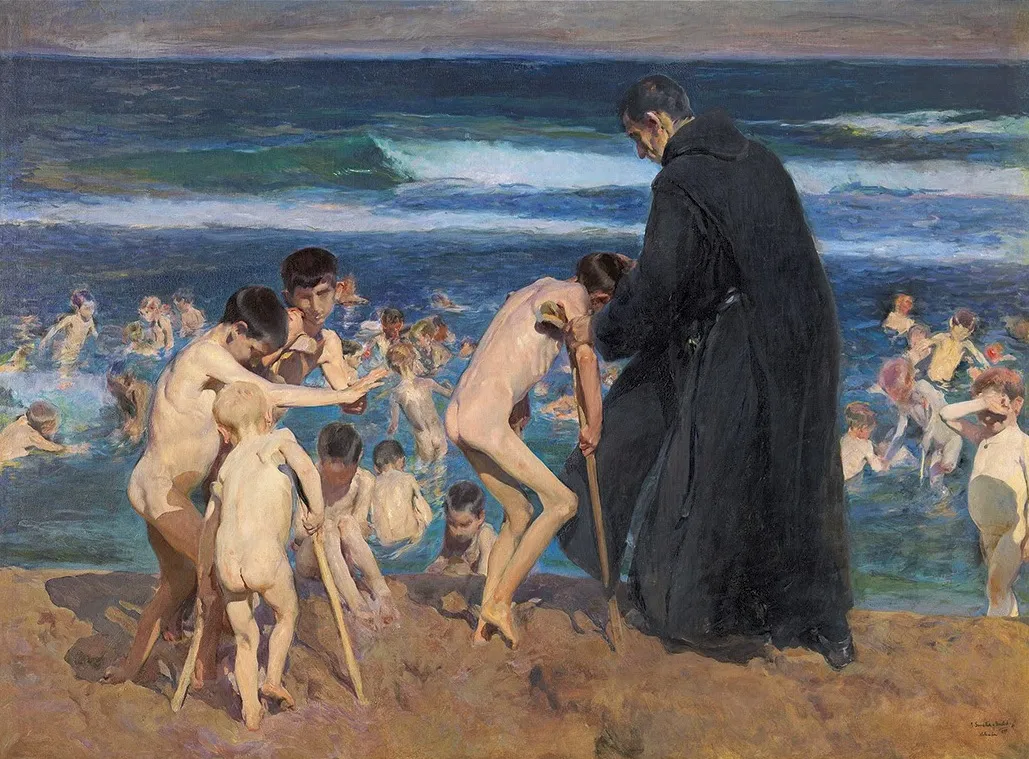
Joaquín Sorolla y Bastida’s "Children in the Sea, 1909" highlights his exceptional skill with oil on canvas. Each brushstroke conveys the shimmering Mediterranean light and the playful innocence of childhood. Within the Impressionism movement, Sorolla’s technique stands out for its fluidity and vibrant color palette. For admirers of his work, acquiring a hand-painted oil painting like this is an opportunity to own a piece of artistic mastery and to experience the beauty of Sorolla’s vision firsthand.
This fine art painting for sale is more than a mere scene; it tells a story of carefree summer days and the universal joy of childhood. "Children in the Sea, 1909" by Joaquín Sorolla y Bastida, a key Impressionist artist, uses the sea as a symbol of freedom and adventure. The children’s laughter and movement evoke themes of innocence and happiness, making this oil on canvas a timeless celebration of life’s simple pleasures and enduring memories.
For collectors seeking a hand-painted oil painting, "Children in the Sea, 1909" by Joaquín Sorolla y Bastida offers both artistic and historical value. As a stunning example of Impressionism, this oil on canvas captures fleeting moments with exceptional light and color. Owning such a fine art painting for sale not only enhances any collection but also connects you with the rich legacy of Sorolla and the vibrant world he so masterfully brought to life.
When Art Meets History
"Children in the Sea, 1909" by Joaquín Sorolla y Bastida stands as a glowing testament to the Impressionism movement. Painted during a period of rapid change, this hand-painted oil painting captures the innocence and joy of youth against the timeless backdrop of the Spanish coast. Sorolla’s work parallels other masterpieces like "Rouen Cathedral, End of the Day" and "Les barques. Régates à Argenteuil," reflecting both historical context and the artist’s unique vision within Impressionist circles.
Techniques That Speak
Joaquín Sorolla y Bastida’s mastery is evident in his vibrant use of oil on canvas, a hallmark of Impressionist technique. In "Children in the Sea, 1909," the artist applies loose, fluid brushstrokes to render sunlight shimmering on water, infusing movement and life into the composition. Similar to works like "Dancers In Pink" and "Fishermen in Poissy," Sorolla’s approach emphasizes natural light and fleeting moments, making each scene pulse with realism and immediacy.
Emotions on Display
The emotional resonance of "Children in the Sea, 1909" is unmistakable, as Sorolla y Bastida skillfully conveys the carefree spirit of childhood. This fine art painting for sale radiates warmth and nostalgia, inviting viewers to relive playful seaside memories. Much like "Still Life with Eggs" and "Dancers In Pink," the painting’s expressive brushwork and luminous palette evoke a sense of wonder, making it a cherished example of Impressionist emotional depth and storytelling.
Coveted by Collectors
Collectors worldwide prize "Children in the Sea, 1909" for its exceptional artistry and historical significance. As a hand-painted oil painting by Joaquín Sorolla y Bastida within the Impressionism movement, it holds a prestigious place among fine art collections. Alongside related works such as "Les barques. Régates à Argenteuil" and "Fishermen in Poissy," this masterpiece remains highly sought-after for its beauty, craftsmanship, and powerful connection to a pivotal era in art history.
Related Impressionism Hand-Painted Oil Paintings by Other Artists
Other Famous Impressionism Artists:
Frequently Asked Questions About Children in the Sea, 1909
What is the historical context of "Children in the Sea, 1909"?
"Children in the Sea" was painted during a period of significant artistic innovation in Spain, known as the Modernismo movement. Joaquín Sorolla y Bastida was influenced by Impressionism and sought to capture the effects of light and color in his works, reflecting the vibrant culture of early 20th-century Spain.
What artistic techniques did Sorolla use in this painting?
Sorolla employed loose brushwork and a bright color palette to convey the luminosity of the sea and the joy of childhood. His technique emphasizes the play of sunlight on water, creating a dynamic and lively atmosphere that invites viewers into the scene.
What themes are explored in "Children in the Sea"?
The painting explores themes of innocence, joy, and the carefree nature of childhood. It captures a moment of playfulness and freedom, reflecting the artist's admiration for the vitality of youth and the beauty of natural surroundings.
How does Sorolla portray light in this painting?
Sorolla masterfully captures the effects of sunlight on water and skin, using bright whites and vibrant blues to create a shimmering effect. The interplay of light and shadow adds depth and dimension, enhancing the overall sense of movement and life within the composition.
What is the significance of the children depicted in the painting?
The children symbolize purity and joy, representing the untainted spirit of youth. Their playful interaction with the sea serves as a metaphor for the freedom and spontaneity of childhood, inviting viewers to reflect on their own experiences of innocence and joy.
In what ways does "Children in the Sea" reflect Sorolla's personal style?
This painting exemplifies Sorolla's signature style, characterized by a focus on natural light, vibrant colors, and the depiction of everyday life. His ability to capture fleeting moments with emotional depth is evident in the joyful expressions and dynamic poses of the children.
What role does the sea play in the composition?
The sea serves as both a backdrop and a central element of the painting, symbolizing freedom and adventure. It enhances the sense of movement and vitality, while also reflecting the broader themes of nature and the relationship between humanity and the environment.
How does this painting compare to other works by Sorolla?
"Children in the Sea" shares thematic and stylistic similarities with other works by Sorolla, particularly his focus on light, color, and the depiction of children. However, this piece stands out for its lively composition and the joyful interaction between the figures and their surroundings.
What influence did "Children in the Sea" have on later artists?
The painting has inspired numerous artists who admire Sorolla's ability to capture light and movement. His innovative approach to color and composition has influenced both Impressionist and contemporary artists, encouraging them to explore similar themes of nature and human experience.
Where can I view "Children in the Sea" today?
"Children in the Sea, 1909" is part of the permanent collection at the Museo Sorolla in Madrid, Spain. The museum is dedicated to the works of Joaquín Sorolla and provides a comprehensive overview of his artistic journey and contributions to the art world.






















_GFM_Painting_(1).webp)

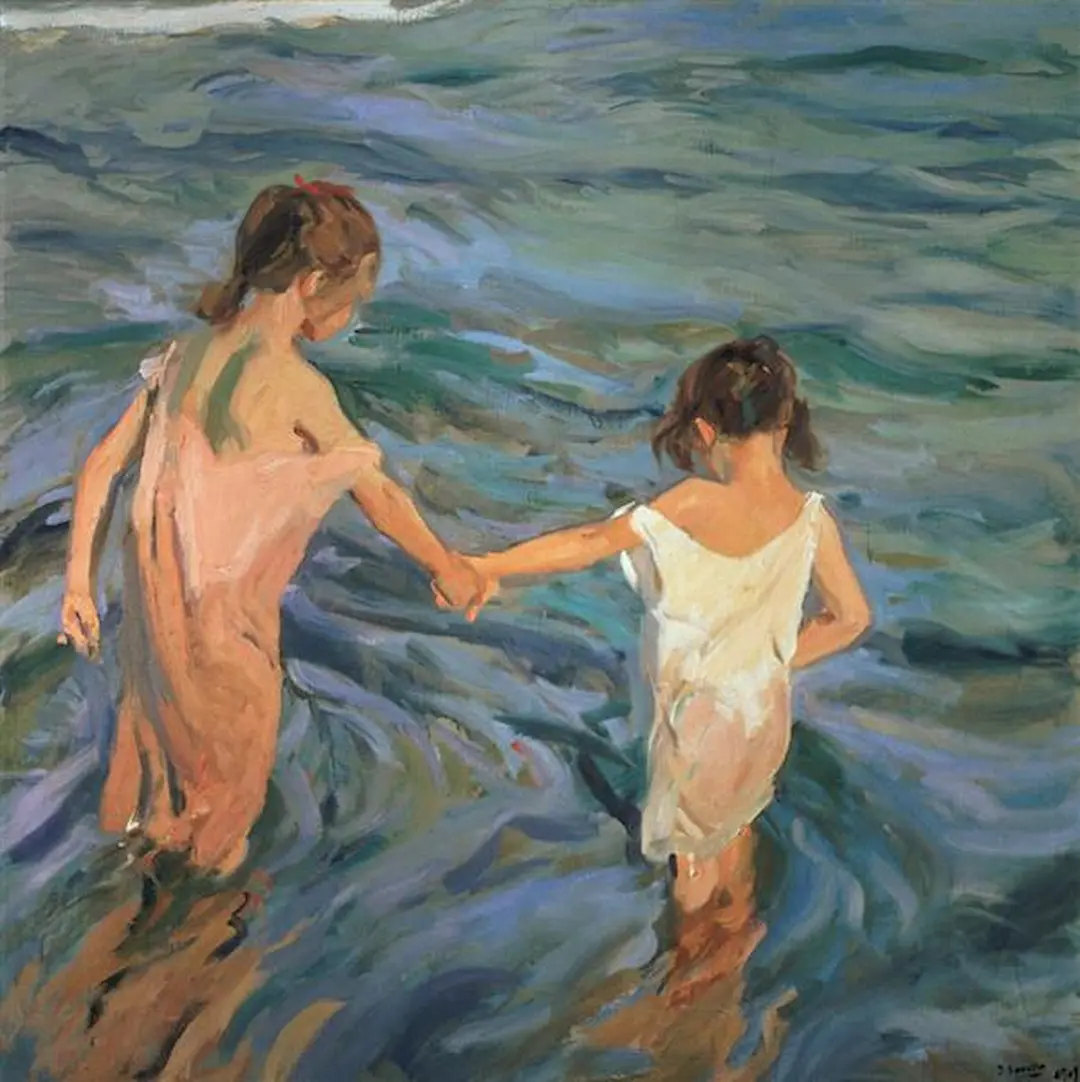

 100% Hand-Painted: Finished in 3-6 Weeks


.png)















_(1).webp)