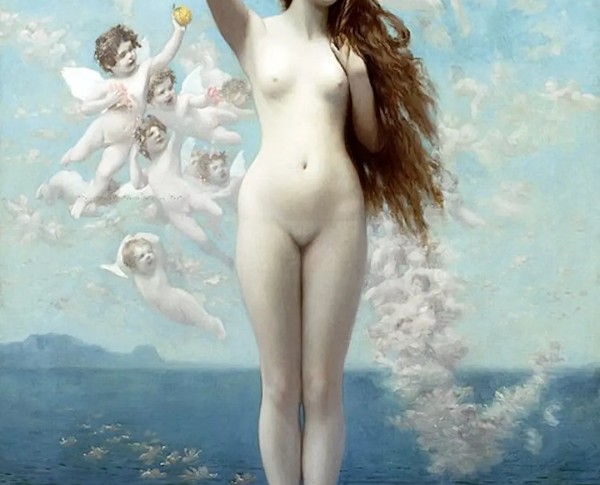
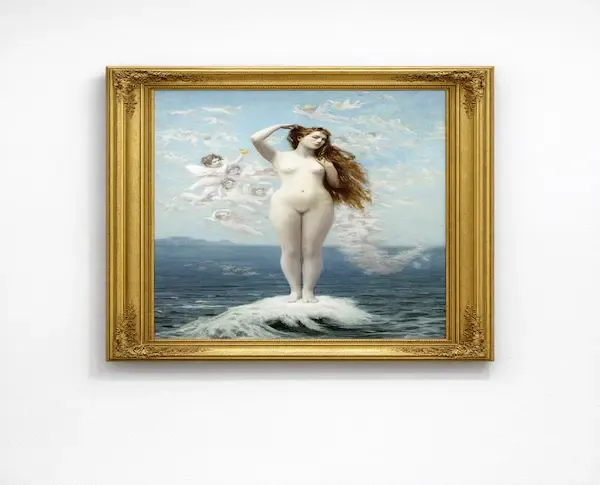
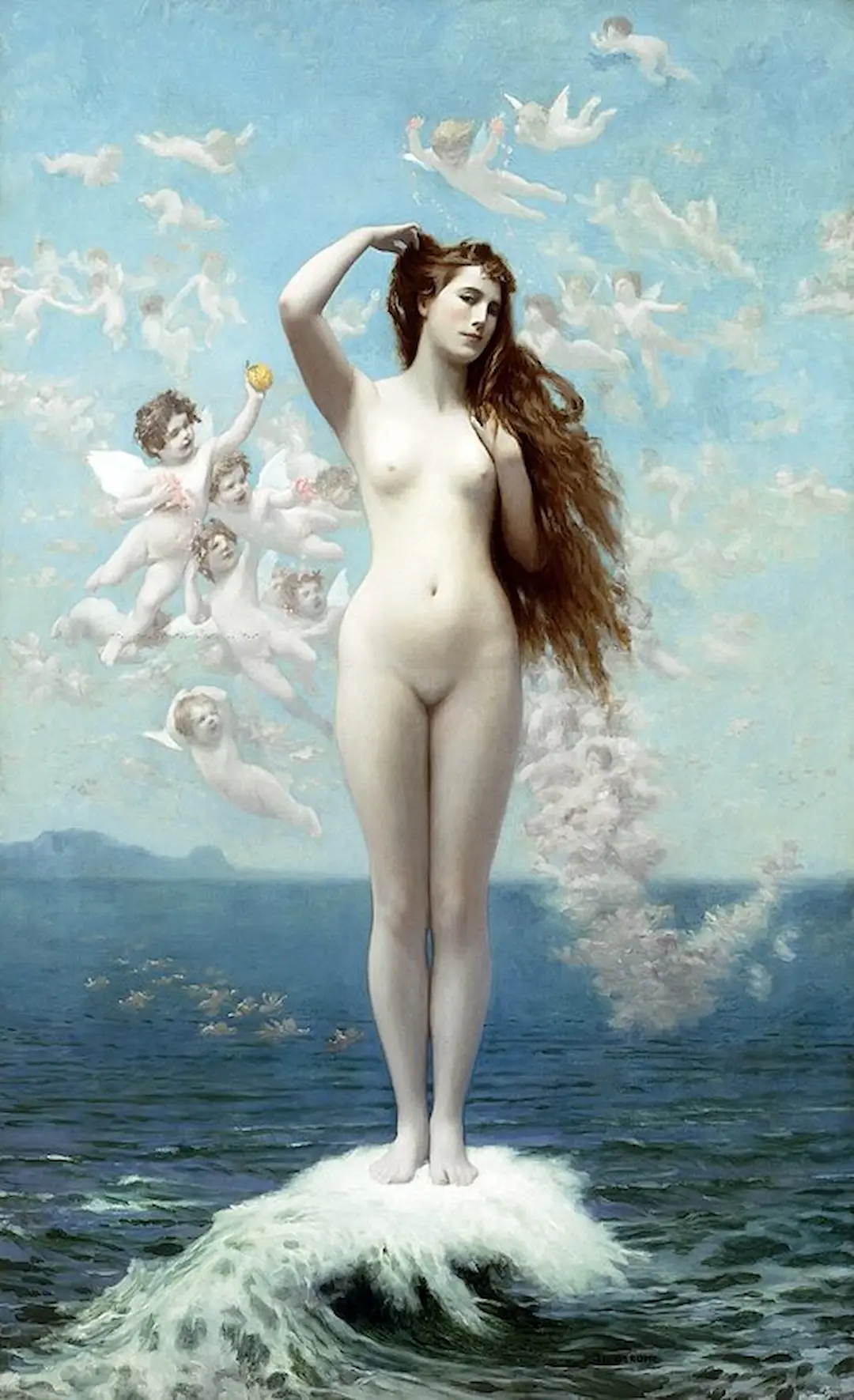
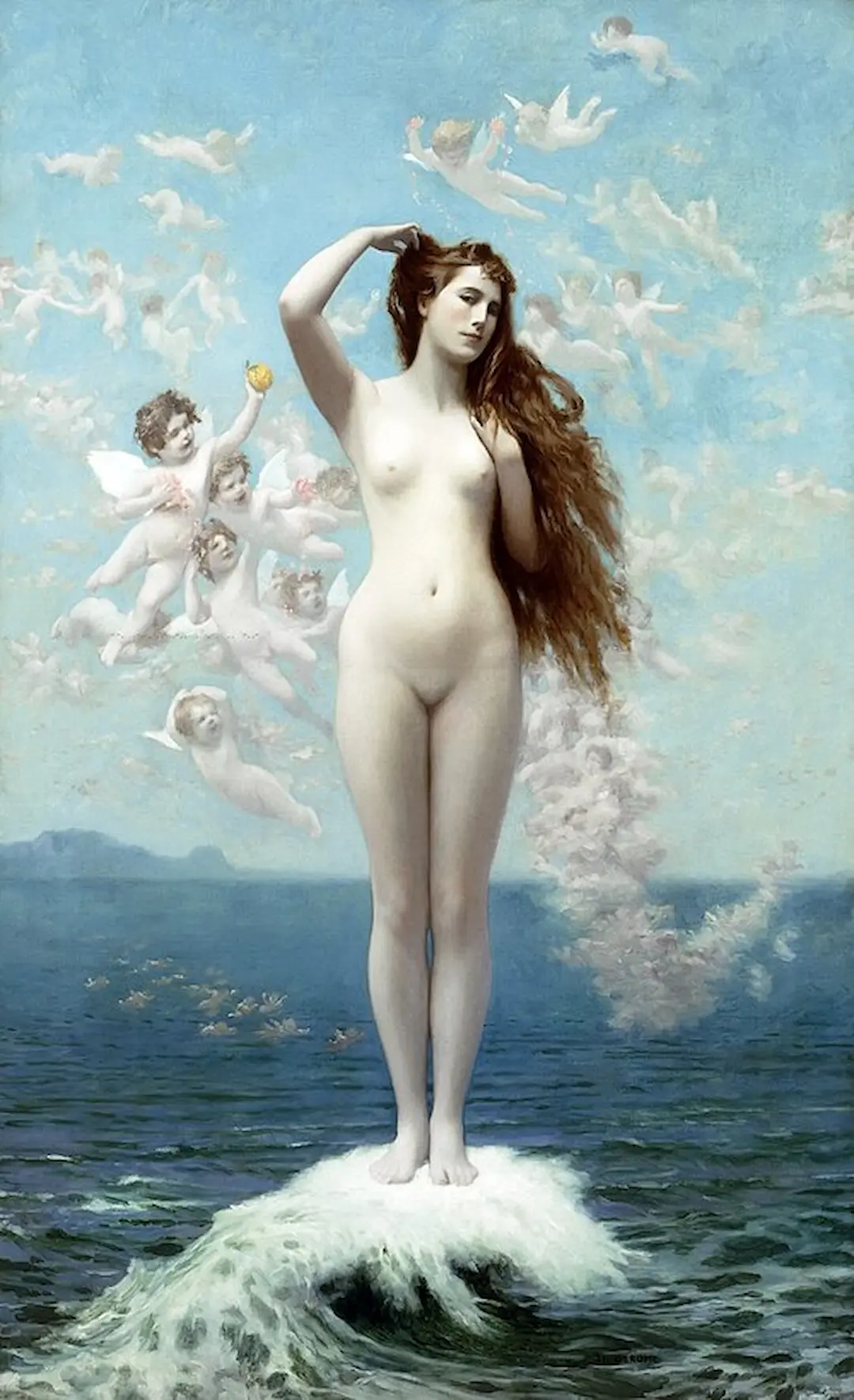
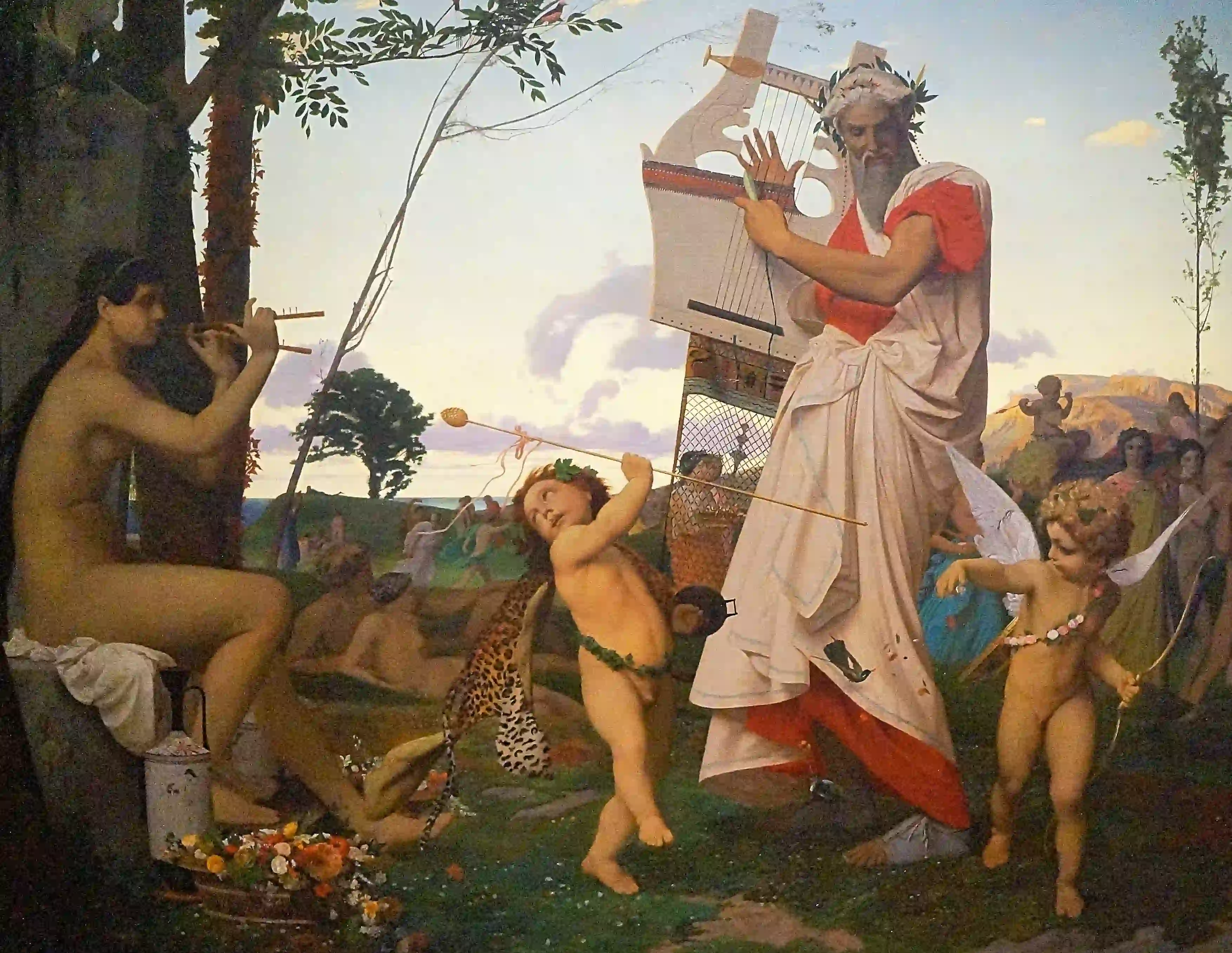
Jean-Léon Gérôme’s "Venus Rising" showcases his technical brilliance and dedication to detail, hallmarks of the Academic Classicism movement. Each brushstroke demonstrates his expertise in creating lifelike textures and luminous skin tones. Rendered as an oil on canvas, the artwork exemplifies Gérôme’s ability to merge classical subjects with impeccable craftsmanship. For those seeking a touch of timeless elegance, this masterpiece remains a prime example of the movement’s highest ideals and artistic achievements.
"Venus Rising" is more than a visual delight; it is rich with symbolic meaning and narrative depth. Gérôme weaves classical mythology into his composition, using Venus as a symbol of love and beauty. The hand-painted oil painting invites viewers to interpret the goddess’s emergence, embodying ideals that transcend time. Collectors and admirers of Academic Classicism are drawn to the painting’s layered storytelling, making it a truly meaningful fine art painting for sale.
For art collectors and enthusiasts, "Venus Rising" by Jean-Léon Gérôme represents a pinnacle of Academic Classicism. This exquisite oil on canvas is sought after for its historical significance and artistic mastery. As a fine art painting for sale, it promises to elevate any collection with its blend of mythological allure and technical perfection. Gérôme’s iconic work continues to be a prized acquisition, embodying the timeless appeal of classical art for discerning collectors worldwide.
When Art Meets History
"Venus Rising" by Jean-Léon Gérôme is a remarkable example of Academic Classicism, a movement celebrated for its reverence for classical antiquity and technical mastery. This hand-painted oil painting transports viewers to mythological realms, much like related works such as "La Vierge au Lys (The Virgin of the Lilies)" and "L'innocence (Innocence)." Gérôme’s dedication to historical accuracy and idealized beauty shines through, making "Venus Rising" a testament to the enduring allure of classical art.
Techniques That Speak
Jean-Léon Gérôme’s "Venus Rising" showcases his extraordinary skill in manipulating oil on canvas, a medium favored by Academic Classicism artists. Gérôme’s meticulous brushwork and mastery of light and shadow bring the goddess Venus to life, echoing the elegance seen in "Le Ravissement de Psyche (The Rapture of Psyche)" and "Flaming June." Every detail, from the delicate skin tones to the flowing drapery, demonstrates his technical prowess and devotion to the traditions of fine art.
Emotions on Display
The emotive power of "Venus Rising" lies in its ability to evoke a sense of awe and reverence, hallmarks of Jean-Léon Gérôme’s finest works. As with "Nymphes et Satyre (Nymphs and Satyr)," Gérôme captures a poignant moment of transformation and beauty. This fine art painting for sale invites viewers to immerse themselves in the tender expressions and serene atmosphere, making it a captivating addition to any collection of Academic Classicism masterpieces.
Coveted by Collectors
Collectors of Academic Classicism highly prize "Venus Rising" by Jean-Léon Gérôme for its historical significance and exceptional artistry. The painting’s status as a hand-painted oil painting ensures its uniqueness and enduring value. Alongside related masterpieces like "L'innocence (Innocence)" and "Flaming June," "Venus Rising" remains a sought-after treasure, admired for its blend of mythological narrative and technical brilliance in the world of fine art painting for sale.
Related Academic Classicism Hand-Painted Oil Paintings by Other Artists
Other Famous Academic Classicism Artists:
Frequently Asked Questions About Venus Rising
What is the historical context of "Venus Rising"?
"Venus Rising," painted by Jean-Léon Gérôme in the late 19th century, reflects the academic art movement of the time, which emphasized realism and classical themes. This period saw a resurgence of interest in mythology and classical antiquity, influenced by archaeological discoveries in places like Pompeii.
Who is the artist behind "Venus Rising"?
Jean-Léon Gérôme was a prominent French painter and sculptor known for his historical and mythological subjects. He was a key figure in the academic art movement and is celebrated for his meticulous attention to detail and vibrant use of color.
What themes are explored in "Venus Rising"?
The painting explores themes of beauty, femininity, and rebirth. Venus, the Roman goddess of love and beauty, symbolizes the ideal of physical perfection and the power of attraction, while her rising from the sea suggests renewal and the emergence of beauty from chaos.
What artistic techniques did Gérôme use in "Venus Rising"?
Gérôme employed a combination of realism and idealism in "Venus Rising." His use of chiaroscuro enhances the three-dimensionality of the figures, while his meticulous attention to detail in textures and colors exemplifies his skill in oil painting.
What is the significance of the setting in "Venus Rising"?
The setting, with its serene waters and ethereal light, serves to enhance the mythological narrative. The tranquil environment contrasts with the tumultuous emotions often associated with love, symbolizing the harmony that beauty can bring to life.
How does "Venus Rising" reflect the ideals of the 19th-century art movement?
The painting embodies the 19th-century ideals of beauty and classical inspiration, showcasing the era's fascination with mythology and the human form. Gérôme's work aligns with the academic standards of the time, which valued technical skill and historical accuracy.
What symbolism is present in the depiction of Venus?
Venus is often associated with love, beauty, and desire. In "Venus Rising," her emergence from the sea symbolizes the birth of love and the transformative power of beauty, suggesting that love can arise from the depths of emotion and experience.
How does the composition of "Venus Rising" contribute to its overall impact?
The composition is carefully arranged to draw the viewer's eye toward Venus, who is centrally positioned and illuminated. The flowing lines of her form and the surrounding water create a sense of movement, enhancing the dynamic quality of the scene and emphasizing her grace.
In what ways has "Venus Rising" influenced modern interpretations of classical themes?
"Venus Rising" has inspired contemporary artists to explore themes of beauty and femininity through a modern lens. Its blend of realism and idealism continues to resonate, prompting discussions about the portrayal of women in art and the enduring nature of classical mythology.
What role does color play in "Venus Rising"?
Color in "Venus Rising" is used to evoke emotion and enhance the ethereal quality of the scene. The soft pastels of Venus's skin contrast with the deep blues of the water, creating a visual harmony that emphasizes her beauty and the tranquil setting, inviting viewers into the mythological narrative.






















_GFM_Painting_(1).webp)


 100% Hand-Painted: Finished in 3-6 Weeks

.png)
















_(1).webp)