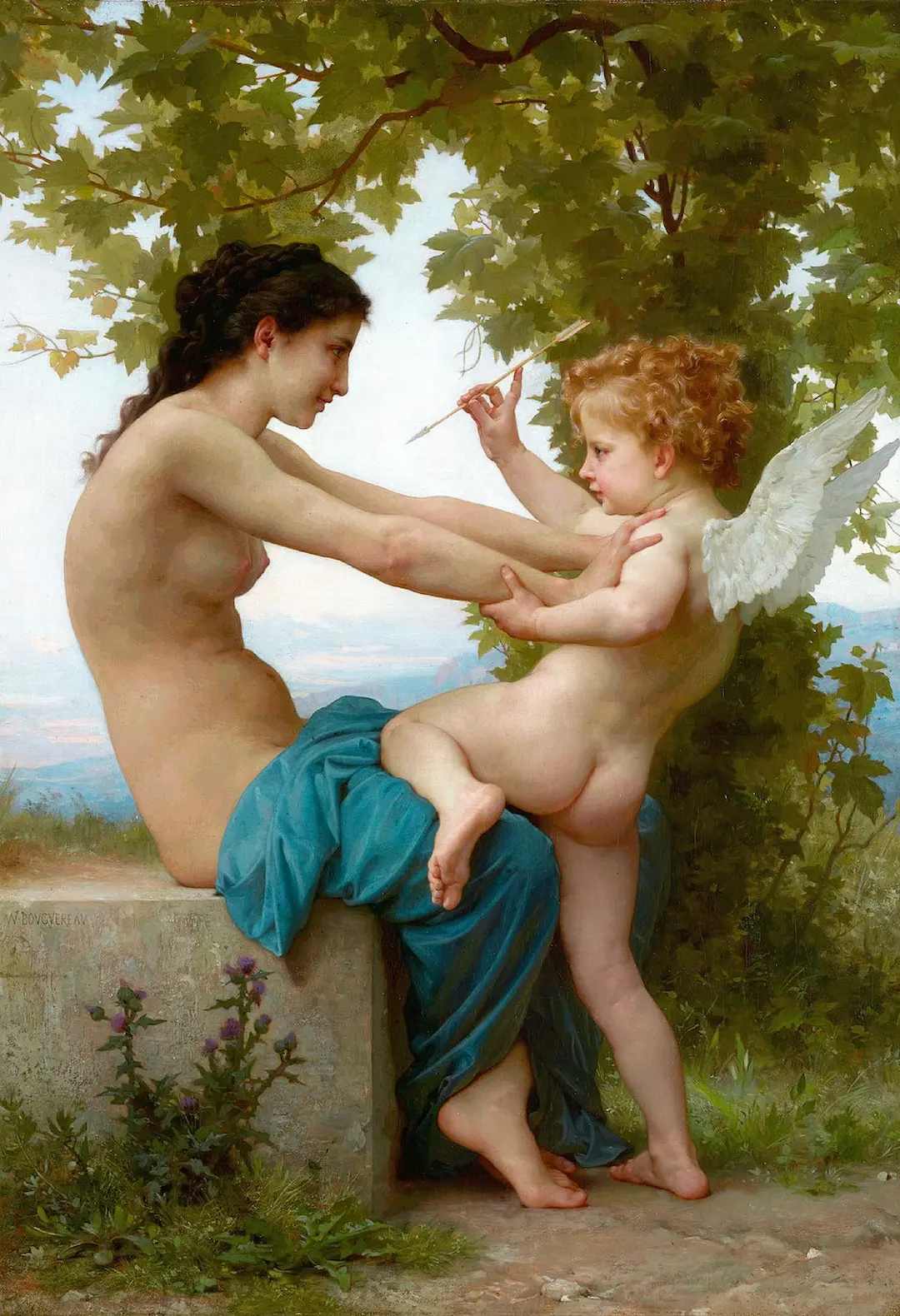
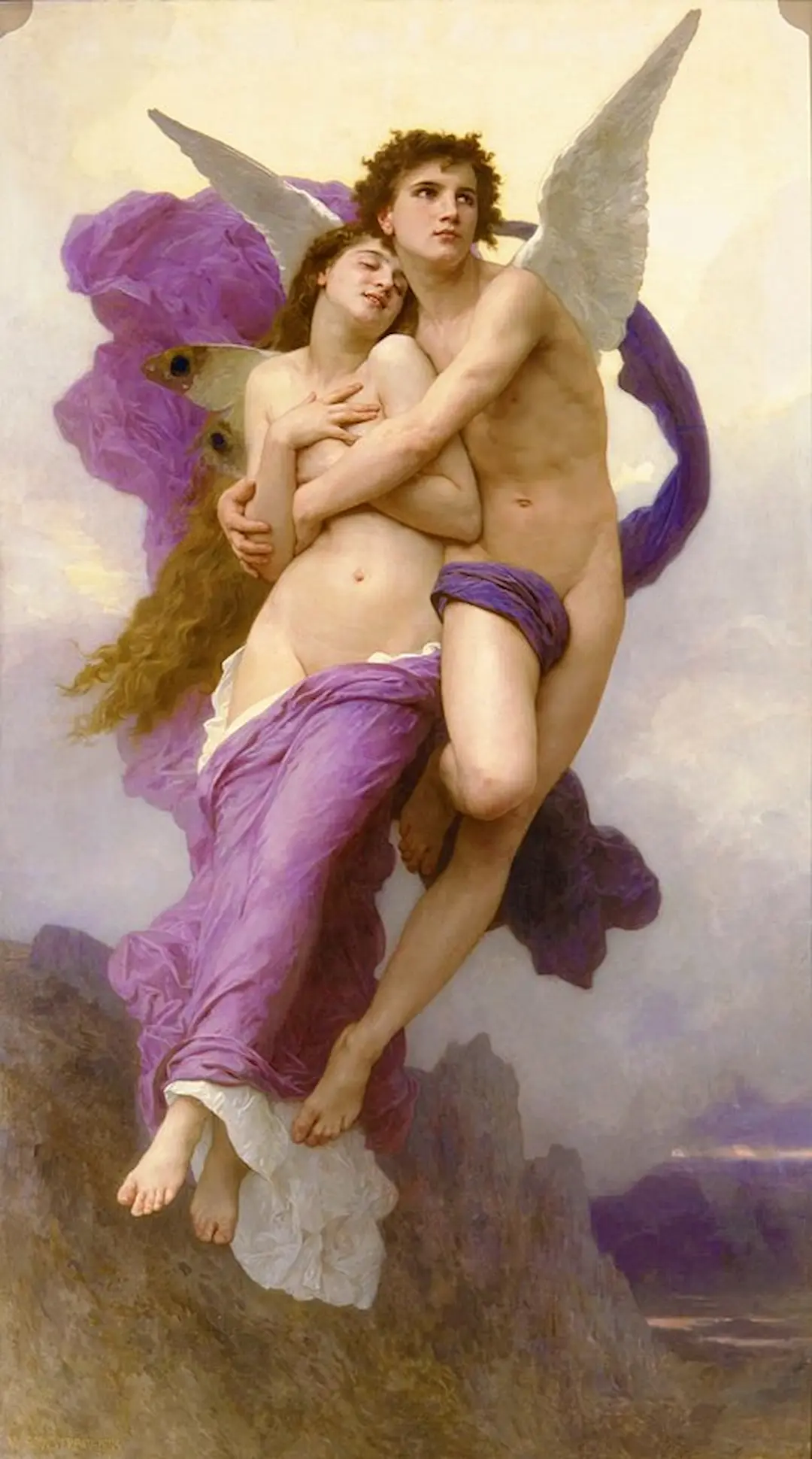
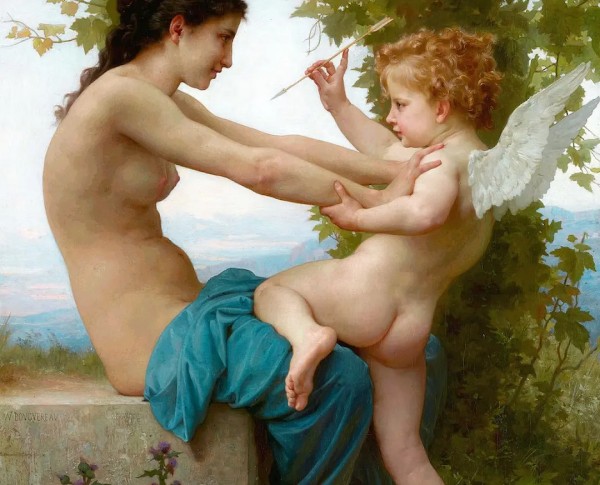
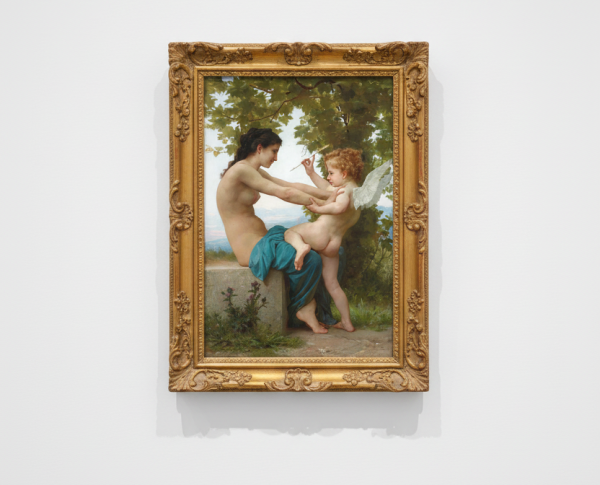
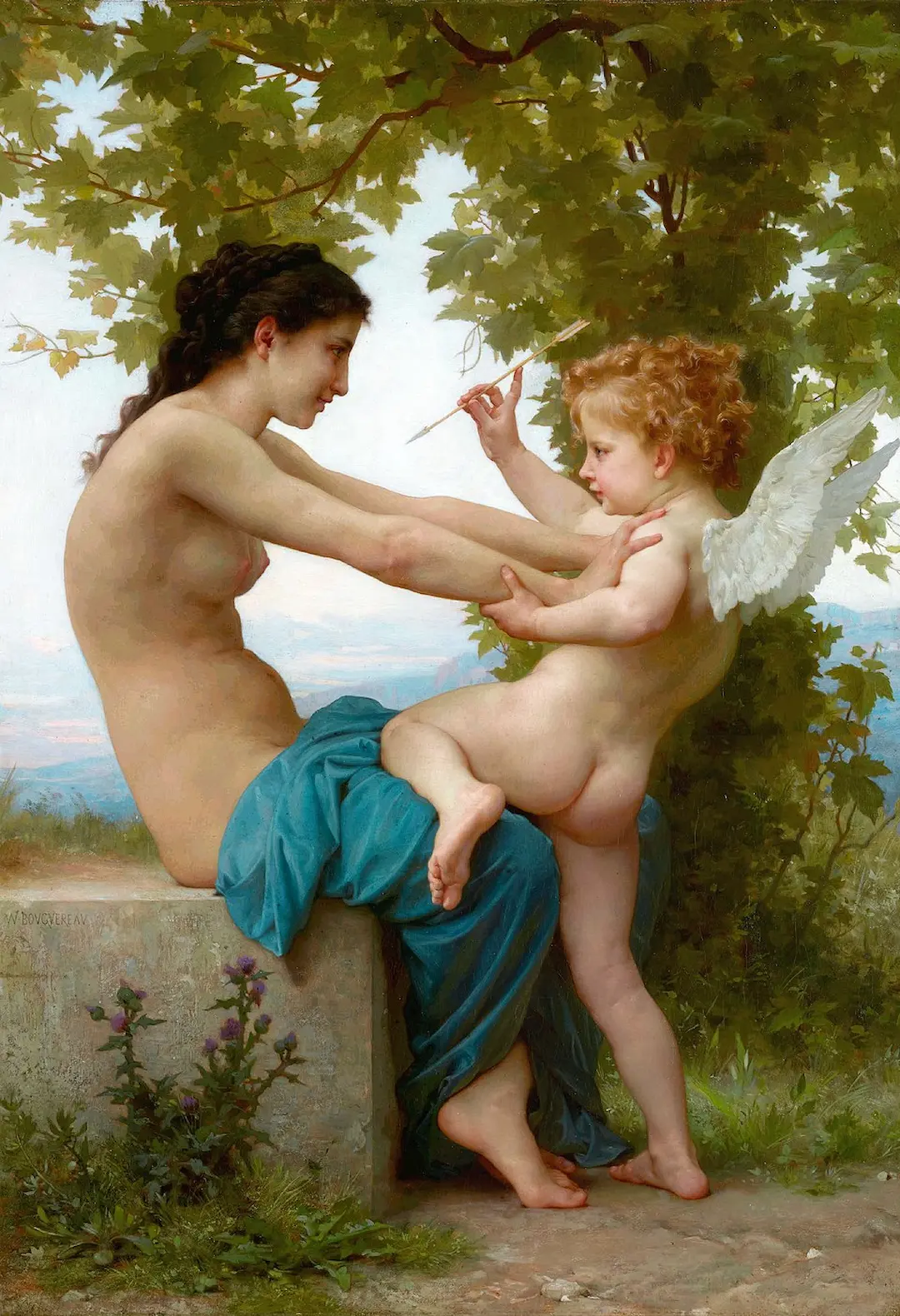
Bouguereau’s technique in "Le Ravissement de Psyche" showcases his exceptional skill with oil on canvas, a hallmark of the Academic Classicism movement. Each brushstroke reveals his dedication to anatomical precision and delicate rendering of light and texture. The painting’s refined composition echoes through his other works, such as "Young Girl Defending Herself against Eros 1880," making them highly sought-after fine art paintings for sale among connoisseurs and art enthusiasts alike.
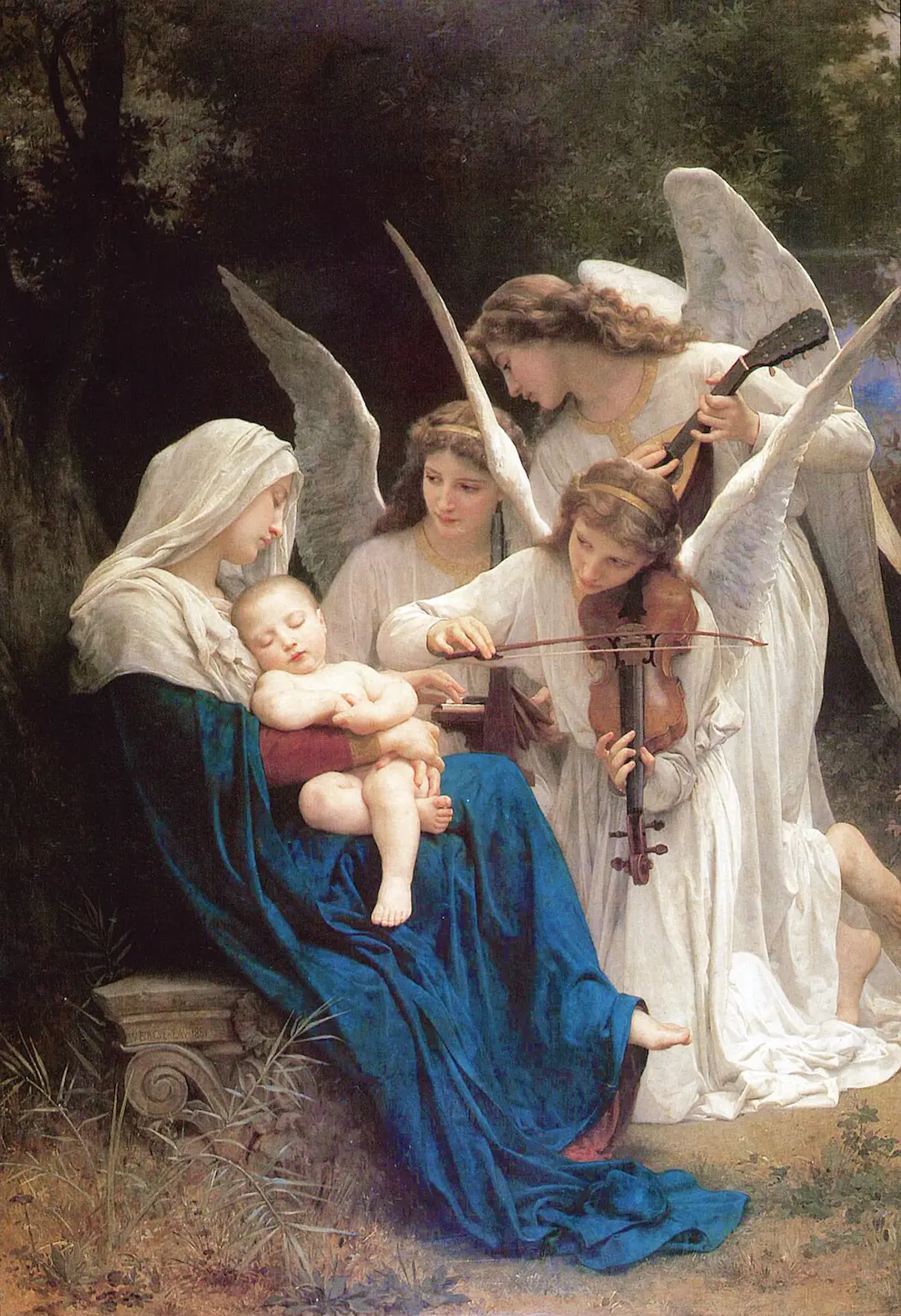
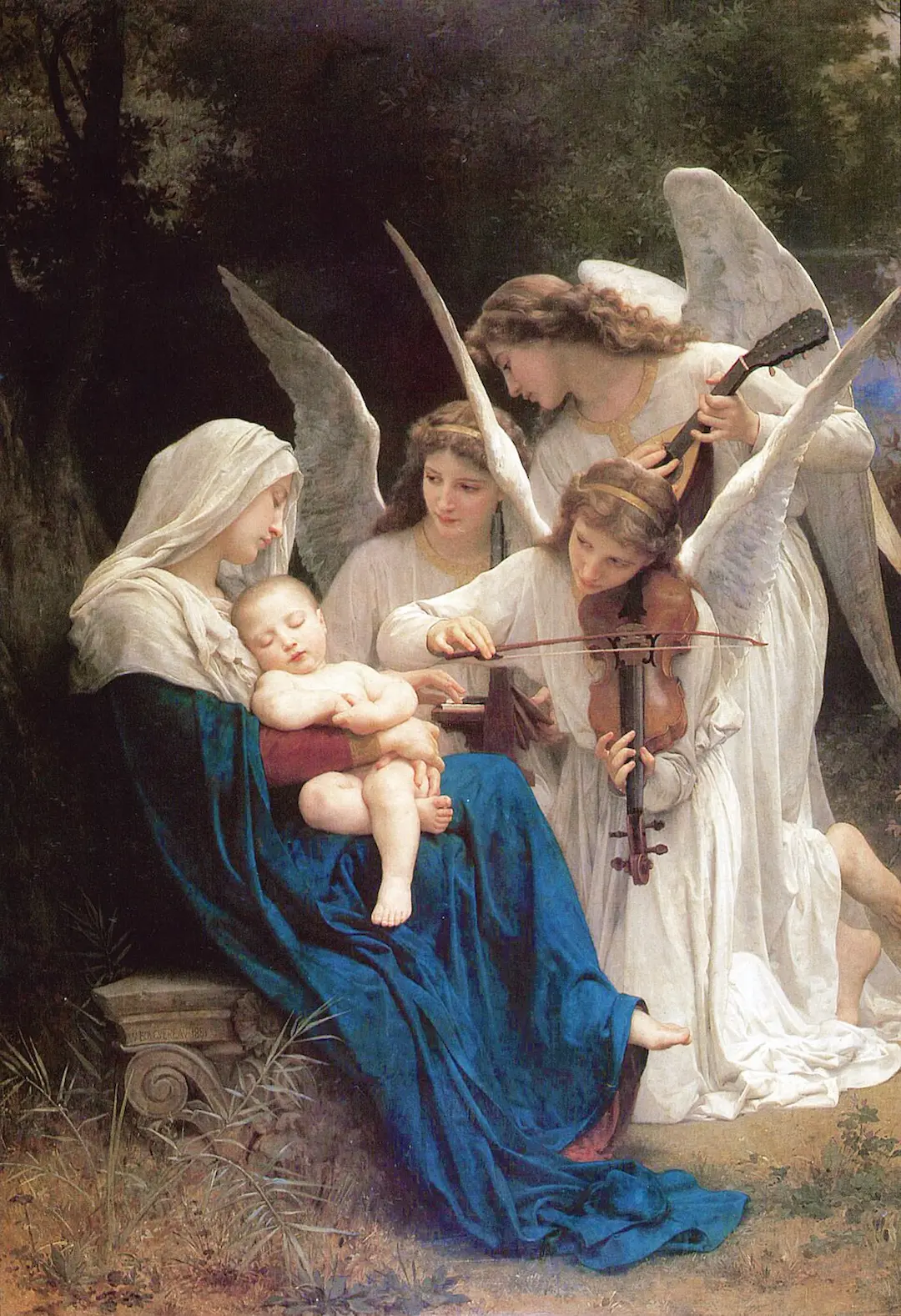
This evocative painting tells the mythological story of Psyche’s ascent, using oil on canvas to create a narrative rich with symbolism and emotion. Bouguereau’s interpretation of Psyche’s rapture is both tender and dramatic, embodying the spiritual ideals of Academic Classicism. Collectors of hand-painted oil paintings often pair this masterpiece with other symbolic works, including "L’innocence (Innocence)" and "Song of the Angels," to enrich their collections with timeless stories.
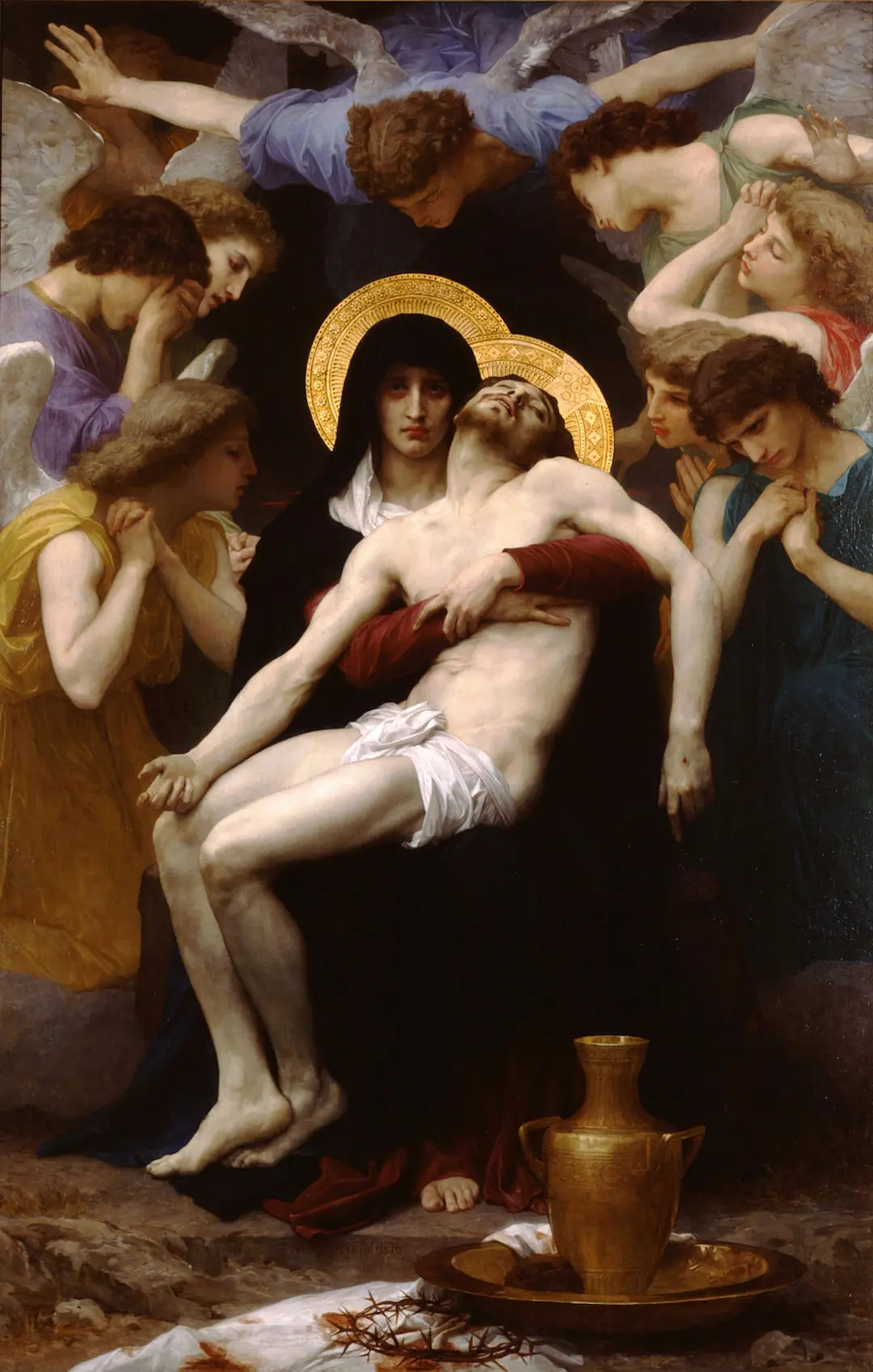
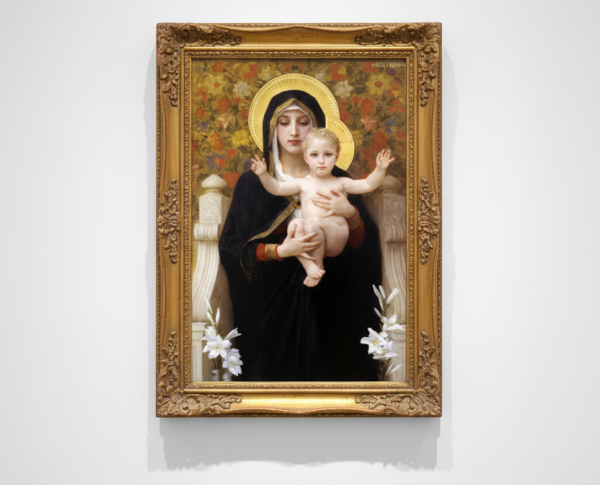
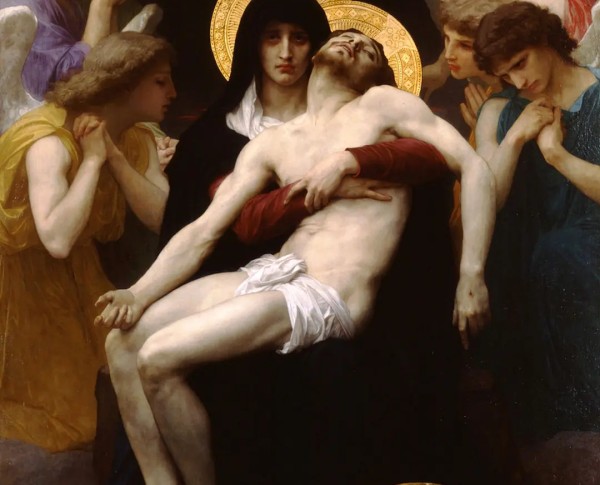
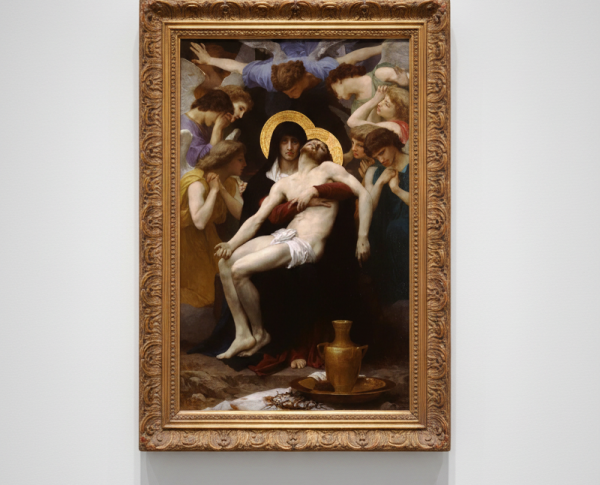
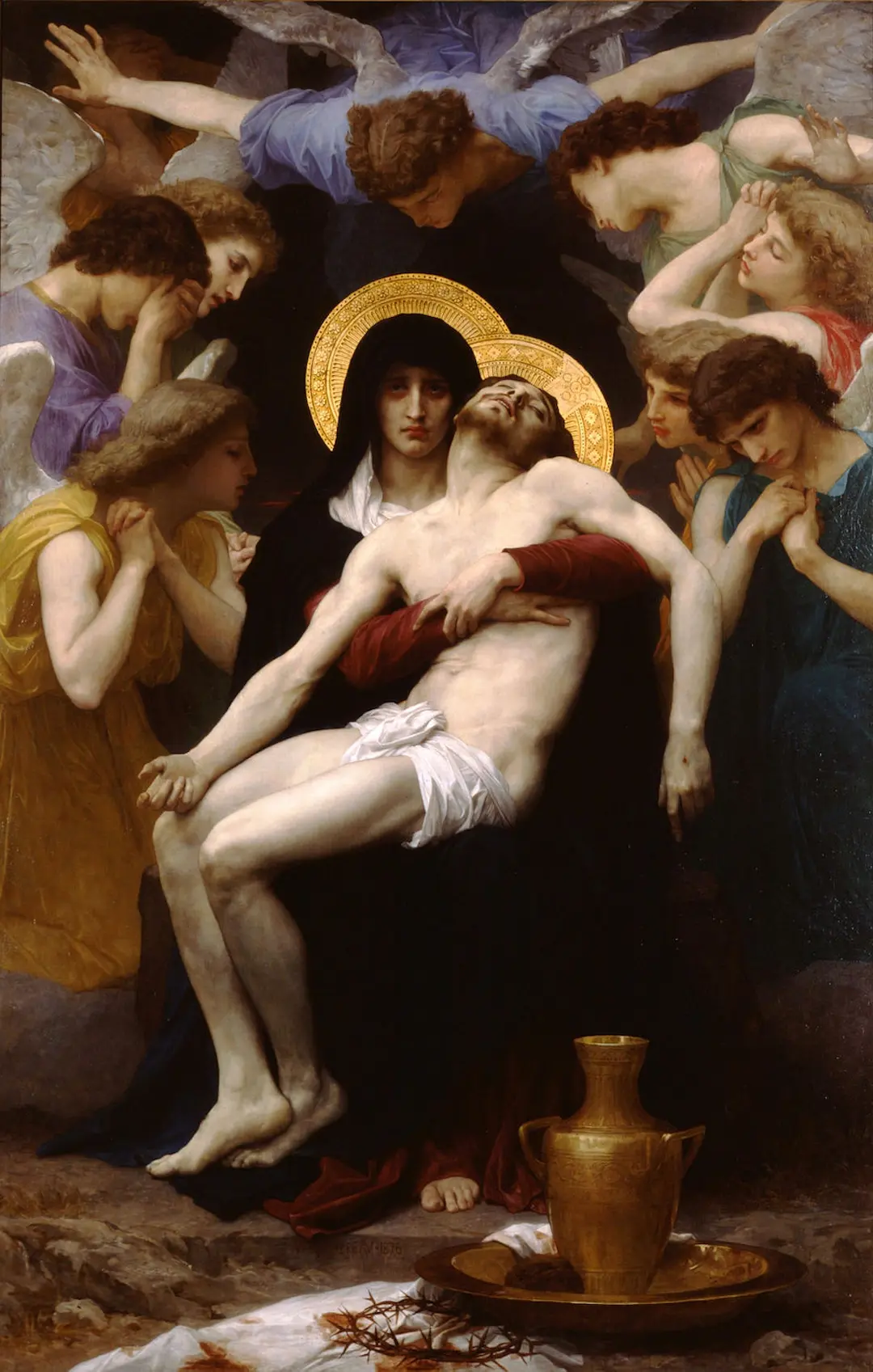
For those seeking a fine art painting for sale, "Le Ravissement de Psyche" by William-Adolphe Bouguereau represents a pinnacle of 19th-century Academic Classicism. Its exquisite detail and emotional depth make it a prized addition to any serious collection. Art lovers often complement this acquisition with related works like "Pieta" and "La Vierge au Lys (The Virgin of the Lilies)," ensuring their collections reflect the enduring legacy of Bouguereau’s genius.
When Art Meets History
"Le Ravissement de Psyche (The Rapture of Psyche)" by William-Adolphe Bouguereau stands as a brilliant example of the Academic Classicism movement. Painted in 1895, this hand-painted oil painting captures the mythological moment when Cupid lifts Psyche into the heavens. Bouguereau’s mastery rivals that of his contemporaries, as seen in related works like "Venus Rising" and "Springtime," making this masterpiece a cornerstone of 19th-century classical revival art.
Techniques That Speak
Bouguereau’s "Le Ravissement de Psyche" showcases his exceptional ability to render the human form in oil on canvas. Each brushstroke demonstrates meticulous attention to detail and a soft, luminous palette, characteristic of Academic Classicism. The composition’s harmonious balance and realistic textures echo the artist’s other celebrated paintings, such as "The Storm" and "Flaming June." This technique elevates the narrative, inviting viewers to appreciate the technical brilliance behind every inch of the canvas.
Emotions on Display
In this fine art painting for sale, Bouguereau masterfully conveys a sense of rapture and transcendence. The tender embrace between Cupid and Psyche exudes both vulnerability and adoration, echoing the emotional resonance found in related works like "Venus Rising" and "Springtime." The gentle lighting and ethereal atmosphere further heighten the painting’s romantic allure, making it a timeless expression of love and longing within the Academic Classicism movement.
Coveted by Collectors
"Le Ravissement de Psyche" remains highly sought after by collectors who value exquisite hand-painted oil paintings from the Academic Classicism era. William-Adolphe Bouguereau’s attention to mythological storytelling and technical prowess places this work alongside masterpieces like "Flaming June" and "The Storm." Its enduring appeal and historical significance ensure that this fine art painting for sale continues to captivate connoisseurs and art lovers around the world.
Related Academic Classicism Hand-Painted Oil Paintings by Other Artists
Other Famous Academic Classicism Artists:
Frequently Asked Questions About Le Ravissement de Psyche (The Rapture of Psyche)
What is the historical context of "Le Ravissement de Psyche"?
"Le Ravissement de Psyche" was painted by William-Adolphe Bouguereau in 1895, during a period marked by the rise of academic art in France. This era emphasized classical themes and techniques, reflecting the influence of the Renaissance and the Baroque periods.
What artistic techniques did Bouguereau employ in this painting?
Bouguereau is renowned for his mastery of realism and the human form. In "Le Ravissement de Psyche," he utilized meticulous brushwork, a soft color palette, and chiaroscuro to create depth and lifelike textures, particularly in the depiction of skin and fabric.
What is the significance of the mythological subject matter?
The painting depicts the myth of Psyche, a mortal woman who becomes the wife of Eros, the god of love. This theme symbolizes the journey of the soul towards divine love and enlightenment, reflecting the Romantic ideals of beauty and emotional depth prevalent in Bouguereau's work.
How does Bouguereau's portrayal of Psyche differ from other artists?
Bouguereau's portrayal of Psyche is characterized by an emphasis on emotional expression and sensuality, contrasting with more dramatic interpretations by artists like Gustave Moreau. His focus on the tender and intimate moment captures the essence of love and vulnerability.
What role does color play in "Le Ravissement de Psyche"?
The color palette in "Le Ravissement de Psyche" is soft and harmonious, featuring pastel tones that evoke a sense of tranquility and ethereality. Bouguereau's use of light and shadow enhances the three-dimensionality of the figures and the overall romantic atmosphere of the scene.
What symbolism is present in the painting?
The painting is rich in symbolism, with Psyche representing the soul and her union with Eros symbolizing the connection between love and spiritual fulfillment. The presence of butterflies in the artwork often symbolizes transformation and the soul's journey.
What was Bouguereau's influence on later artists?
Bouguereau's emphasis on realism and technical skill influenced many artists in the late 19th and early 20th centuries. His approach to the human figure and emotional expression can be seen in the works of later academic and figurative painters.
How does "Le Ravissement de Psyche" reflect the values of the Belle Époque period?
The painting reflects the values of the Belle Époque, a time of cultural flourishing in France, characterized by a fascination with beauty, love, and mythology. Bouguereau's work embodies the era's appreciation for aesthetic pleasure and emotional depth in art.
What is the significance of the composition in this painting?
The composition of "Le Ravissement de Psyche" is carefully arranged to draw the viewer's eye towards the central figures of Psyche and Eros. The flowing lines and curves create a sense of movement and intimacy, enhancing the emotional impact of the scene.
Where can I view "Le Ravissement de Psyche" today?
"Le Ravissement de Psyche" is part of various private collections and may be featured in exhibitions. For current locations and exhibitions, please check with art galleries or museums that specialize in 19th-century art.






















_GFM_Painting_(1).webp)

.webp)

 100% Hand-Painted: Finished in 3-6 Weeks
.webp)

.png)












.webp)
.webp)
.webp)



_(1).webp)