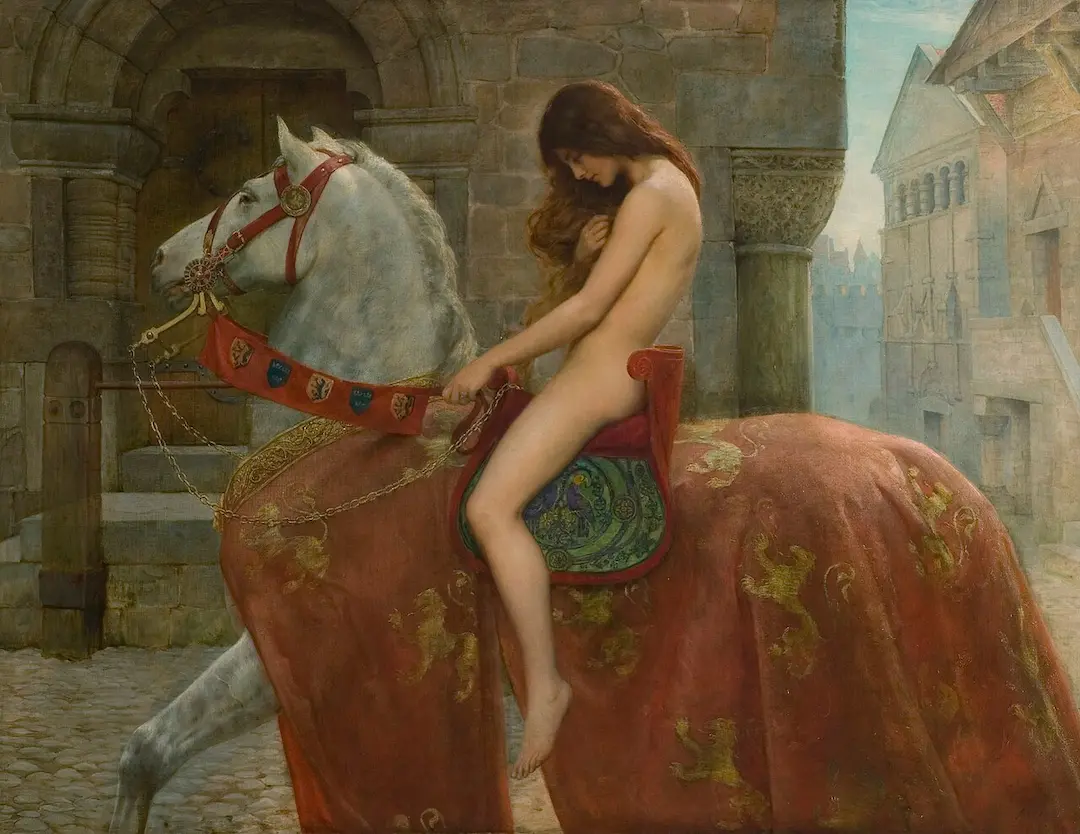
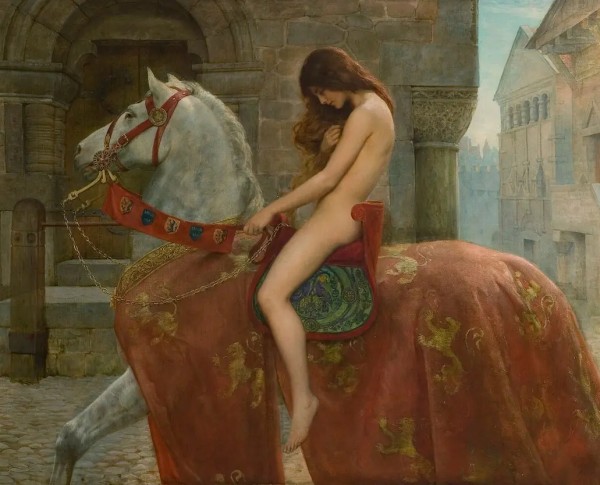
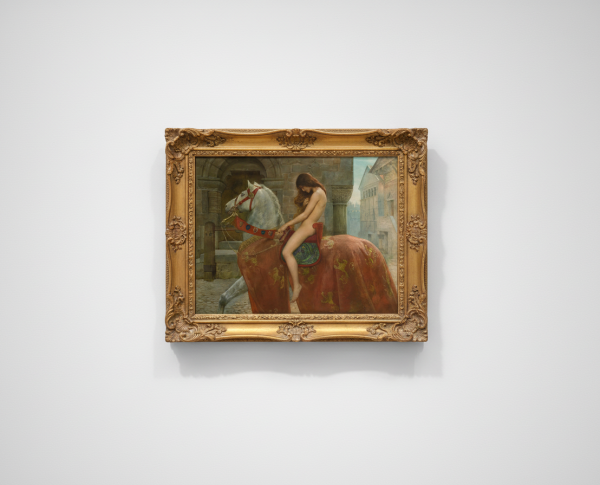
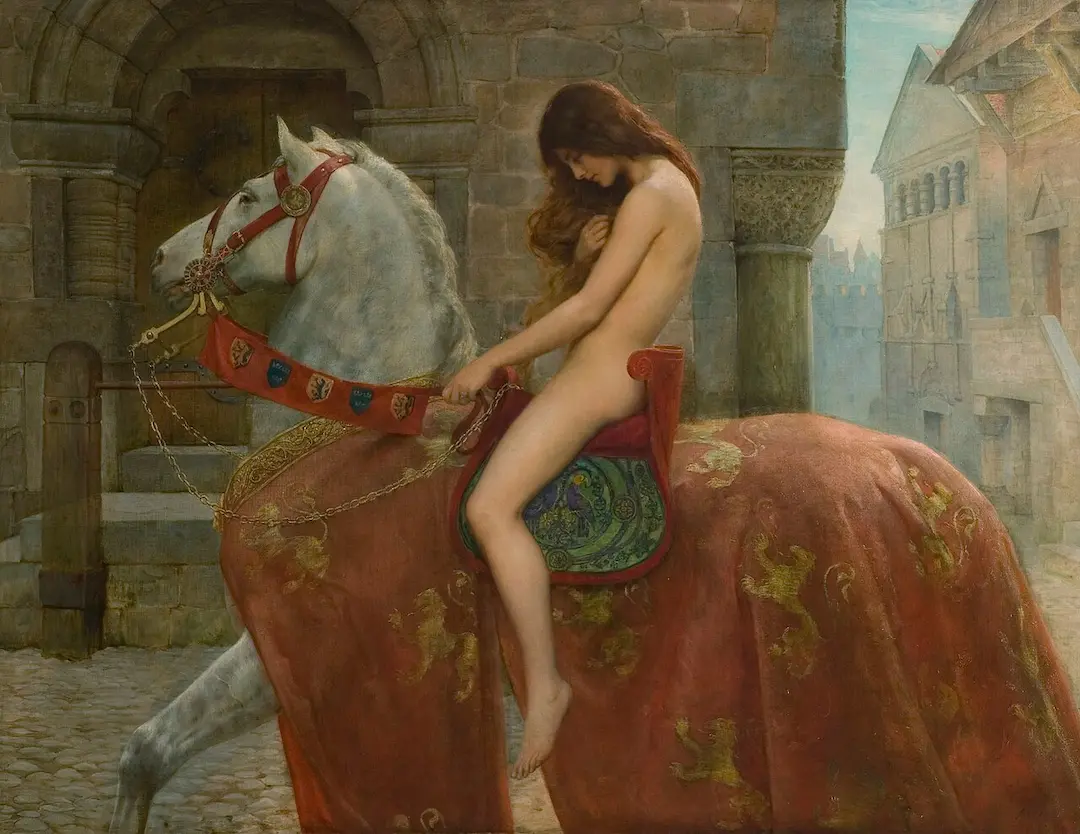
John Maler Collier's "Lady Godiva" exemplifies the artist’s command of oil on canvas, with each brushstroke revealing the technical prowess that defines Realism. The luminous rendering of Lady Godiva’s figure and the atmospheric background showcase Collier’s ability to blend light, shadow, and texture. This painting not only highlights the artist’s mastery but also serves as an iconic example of the Realism movement’s pursuit of lifelike representation in fine art.
The narrative behind "Lady Godiva" is rich with symbolism, as John Maler Collier reinterprets the legendary tale through his Realist lens. The hand-painted oil painting reflects themes of sacrifice, dignity, and social justice, inviting viewers to explore the deeper meanings within the composition. Collier’s attention to symbolic detail transforms this fine art painting for sale into a conversation piece that resonates with both art historians and casual admirers of classic stories.
For collectors and enthusiasts, "Lady Godiva" by John Maler Collier represents more than just an oil on canvas; it is a fine art painting for sale that embodies the spirit of the Realism movement. The painting’s historical significance, combined with Collier’s artistic legacy, makes it a prized addition to any collection. As Realism continues to inspire contemporary artists, owning this masterpiece connects collectors to a pivotal moment in art history.
When Art Meets History
"Lady Godiva" by John Maler Collier is a remarkable hand-painted oil painting that masterfully blends historical narrative with artistic expression. As a key work within the Realism movement, Collier’s piece revisits the legendary ride of Lady Godiva, capturing her courage and vulnerability. Like "Morning in the Pine-tree Forest" or "The Angelus, 1857-59," this artwork transports viewers to a pivotal moment in history, making it a treasured addition for those seeking a fine art painting for sale.
Techniques That Speak
Collier’s "Lady Godiva" showcases his expertise with oil on canvas, a medium that brings depth and luminosity to the Realism movement. His careful attention to detail and lifelike rendering echo the technical mastery found in works like "Las Meninas" or "Breezing Up (or A Fair Wind)." Through subtle brushwork and naturalistic lighting, Collier breathes life into the scene, making this hand-painted oil painting a testament to the enduring power of classical technique.
Emotions on Display
The emotional resonance in John Maler Collier’s "Lady Godiva" is palpable, drawing viewers into the subject’s quiet bravery and vulnerability. As with related masterpieces such as "A Dash for the Timber" or "The Angelus, 1857-59," Collier’s work is more than an oil on canvas; it is an exploration of human sentiment. The painting’s emotive qualities make it a standout example of the Realism movement and a sought-after fine art painting for sale.
Coveted by Collectors
Collectors prize "Lady Godiva" by John Maler Collier for its historical significance and masterful execution as a hand-painted oil painting. The Realism movement’s commitment to truth and detail is evident throughout, making this piece as desirable as "Morning in the Pine-tree Forest" or "Las Meninas." For those searching for a fine art painting for sale, Collier’s evocative portrayal of Lady Godiva continues to captivate and inspire, securing its place among the world’s most admired artworks.
Related Realism Hand-Painted Oil Paintings by Other Artists
Other Famous Realism Artists:
Frequently Asked Questions About Lady Godiva
What is the historical context of "Lady Godiva"?
"Lady Godiva" by John Maler Collier is rooted in the legend of Lady Godiva, a noblewoman from 11th-century England. The story highlights her act of riding naked through Coventry to protest her husband's oppressive taxation on the townspeople.
Who was John Maler Collier?
John Maler Collier was a British painter known for his historical and mythological subjects. Active during the late 19th and early 20th centuries, Collier's works often reflect a blend of realism and romanticism, capturing the essence of the narratives he portrayed.
What artistic techniques did Collier use in "Lady Godiva"?
Collier employed a combination of rich color palettes, detailed brushwork, and dramatic lighting to enhance the emotional impact of "Lady Godiva." His use of chiaroscuro helps to create depth and focus on the figure of Godiva amidst the surrounding landscape.
What symbolism is present in "Lady Godiva"?
The painting symbolizes themes of bravery, sacrifice, and social justice. Lady Godiva's nakedness represents vulnerability, while her bold act of defiance against tyranny highlights the struggle for the rights of the oppressed.
How does Collier's portrayal of Lady Godiva differ from other artists?
Collier's portrayal is notable for its focus on the emotional and psychological aspects of Lady Godiva's character, rather than merely depicting her as an object of beauty. This approach adds depth to her narrative, emphasizing her courage and moral fortitude.
What elements of the painting reflect the Victorian era?
The Victorian era was characterized by a fascination with morality, virtue, and historical narratives. Collier's "Lady Godiva" reflects these values through its emphasis on moral righteousness and the romanticization of historical figures, typical of Victorian art.
What is the significance of the setting in "Lady Godiva"?
The setting of Coventry is significant as it anchors the legend in a specific historical context. The lush landscape and detailed architecture serve to enhance the narrative, providing a backdrop that contrasts with Lady Godiva's bold act.
How has "Lady Godiva" influenced modern interpretations of the legend?
Collier's interpretation has influenced modern portrayals of Lady Godiva by emphasizing her agency and moral strength. This has led to a reevaluation of her story in contemporary discussions around feminism and social justice.
What was the public reception of "Lady Godiva" when it was first exhibited?
Upon its exhibition, "Lady Godiva" received a mixed reception. While many praised Collier's technical skill and the painting's dramatic narrative, some critics were uncomfortable with the overt sensuality of the subject matter, reflecting the societal norms of the time.
In what ways does "Lady Godiva" continue to resonate with audiences today?
"Lady Godiva" continues to resonate with audiences through its timeless themes of courage and social justice. The painting invites viewers to reflect on issues of power, oppression, and the importance of standing up for one's beliefs, making it relevant in contemporary discourse.






















_GFM_Painting_(1).webp)

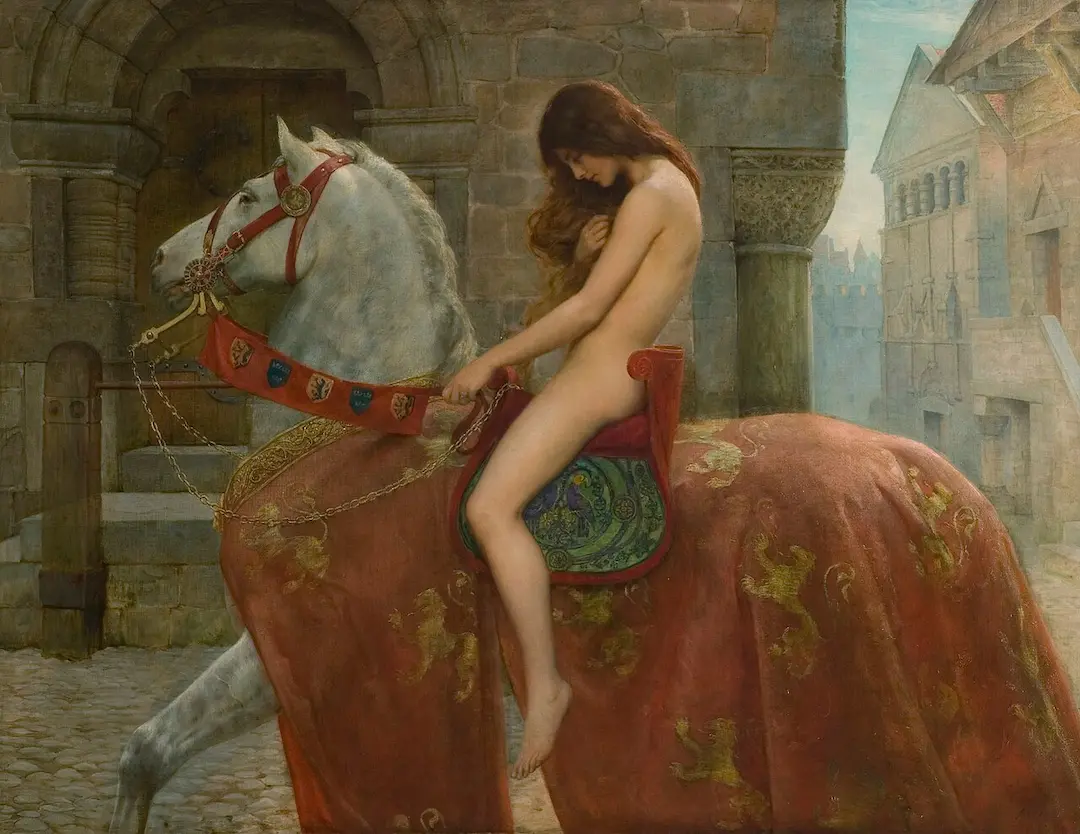

 100% Hand-Painted: Finished in 3-6 Weeks

.png)















_(1).webp)