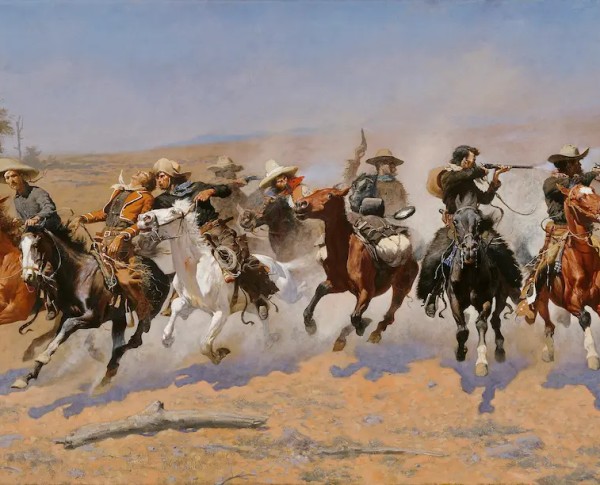
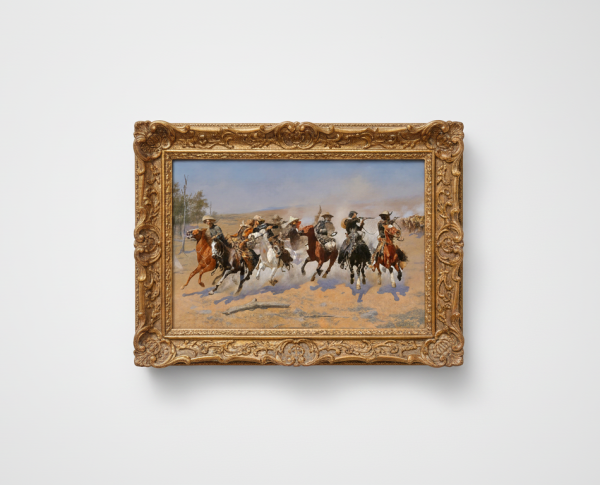
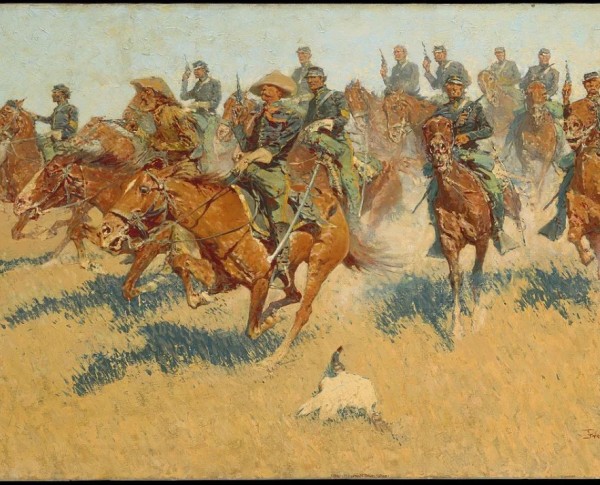
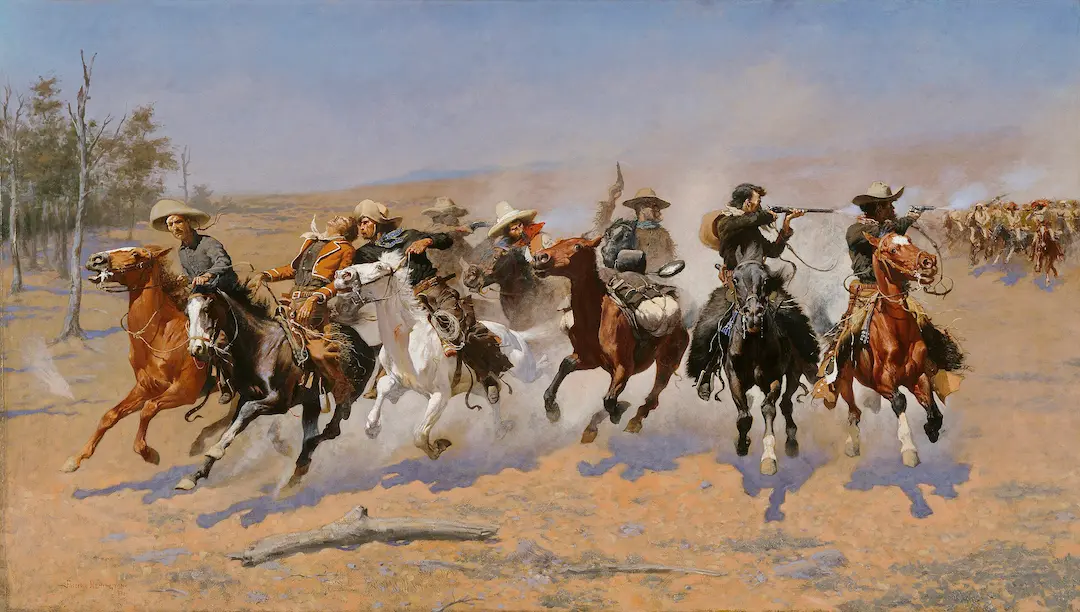
"A Dash for the Timber" showcases Remington’s exceptional skill with oil on canvas, using dynamic brushwork to convey movement and urgency. The Realism movement’s influence is evident in the lifelike expressions and natural landscapes, making this painting a true masterpiece. Every element, from the dust clouds to the horses’ muscles, demonstrates Remington’s commitment to capturing reality. For enthusiasts, owning a hand-painted oil painting like this brings the wild frontier into any collection.
Frederic Remington’s "A Dash for the Timber" tells a vivid story of courage and survival, hallmarks of the Realism movement. The painting’s action-packed scene symbolizes the challenges faced by pioneers in the West. As a fine art painting for sale, it invites collectors to own not just a work of art, but a piece of history. Remington’s narrative approach allows viewers to imagine the danger and determination present in every brushstroke.
For art lovers and historians alike, "A Dash for the Timber" is a prized oil on canvas by Frederic Remington and a highlight of the Realism movement. Its authentic portrayal of Western life makes it a sought-after hand-painted oil painting among collectors. As a fine art painting for sale, it represents both artistic mastery and cultural heritage, making it an exceptional addition to any serious collection of historical artworks.
When Art Meets History
Frederic Remington’s masterpiece, "A Dash for the Timber," embodies the Realism movement’s commitment to authentic storytelling. This hand-painted oil painting captures a dramatic moment of the American West, with cowboys fleeing danger at breakneck speed. Remington’s attention to historical detail is evident, offering a vivid glimpse into life on the frontier. Collectors and enthusiasts alike appreciate how this work connects to other iconic pieces like "Las Meninas" and "Breezing Up (or A Fair Wind)."
Techniques That Speak
In "A Dash for the Timber," Remington’s use of oil on canvas brings the sweeping landscape and galloping horses to life with remarkable clarity. The artist’s brushwork and dynamic composition are hallmarks of the Realism movement, revealing both motion and emotion in every stroke. Like related works such as "Lady Godiva" and "The Angelus, 1857-59," this painting showcases technical mastery, making it a standout example for those seeking an exceptional oil on canvas.
Emotions on Display
Remington’s "A Dash for the Timber" is a fine art painting for sale that stirs intense feelings of urgency and bravery. The wild energy of the fleeing riders, set against a rugged landscape, immerses viewers in the peril and adventure of the Old West. This emotional depth is a hallmark of Realism, connecting the piece to masterpieces like "Morning in the Pine-tree Forest" and "Las Meninas." Remington’s work continues to captivate audiences worldwide.
Coveted by Collectors
"A Dash for the Timber" by Frederic Remington is highly sought after in the world of fine art painting for sale. Its compelling narrative, historical significance, and masterful execution make it a prized addition to any collection. Collectors value its connection to the Realism movement and its kinship with celebrated paintings like "Lady Godiva" and "Breezing Up (or A Fair Wind)." Remington’s legacy endures, making this piece a timeless treasure.
Related Realism Hand-Painted Oil Paintings by Other Artists
Other Famous Realism Artists:
Frequently Asked Questions About A Dash for the Timber
What is the historical context of "A Dash for the Timber"?
"A Dash for the Timber," painted by Frederic Remington in 1900, reflects the late 19th-century American fascination with the West, capturing the spirit of adventure and the rugged individualism associated with the frontier era.
What themes are explored in "A Dash for the Timber"?
The painting explores themes of survival, bravery, and the relationship between man and nature, illustrating the challenges faced by cowboys and settlers in the untamed wilderness.
How does Frederic Remington's style influence the painting?
Remington's distinctive style, characterized by dynamic movement and attention to detail, enhances the sense of urgency and action in "A Dash for the Timber," drawing viewers into the dramatic scene.
What artistic techniques are used in "A Dash for the Timber"?
Remington employs techniques such as bold brushwork, contrasting light and shadow, and a rich color palette to create depth and emphasize the emotional intensity of the moment.
What symbolism is present in the painting?
The horses in "A Dash for the Timber" symbolize strength and resilience, while the timber itself represents both the physical obstacles of the landscape and the broader challenges of frontier life.
How does "A Dash for the Timber" reflect American identity?
The painting embodies the American spirit of exploration and the ideal of the rugged individual, capturing the essence of the Western experience and its impact on national identity at the turn of the century.
What role did Frederic Remington play in American art?
Frederic Remington is regarded as a pivotal figure in American art, known for his depictions of the American West, which helped shape the public's perception of Western life and culture through his illustrations and paintings.
What is the significance of the title "A Dash for the Timber"?
The title suggests urgency and the need for shelter, reflecting the perilous nature of life on the frontier and the instinctive drive for survival in the face of danger.
How does "A Dash for the Timber" compare to other works by Remington?
Compared to other works by Remington, "A Dash for the Timber" showcases a heightened sense of action and drama, emphasizing the immediacy of the moment, while still retaining his signature focus on Western themes.
In what ways has "A Dash for the Timber" influenced modern perceptions of the American West?
The painting has significantly influenced modern perceptions of the American West by romanticizing the cowboy lifestyle and contributing to the mythos surrounding frontier life, which continues to resonate in contemporary culture.






















_GFM_Painting_(1).webp)


 100% Hand-Painted: Finished in 3-6 Weeks

.png)















_(1).webp)