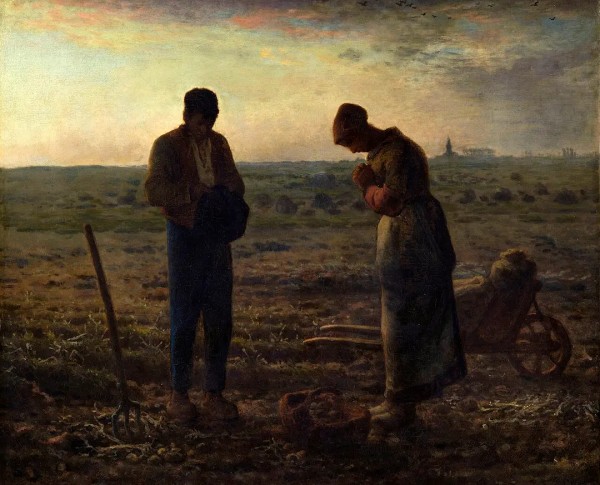
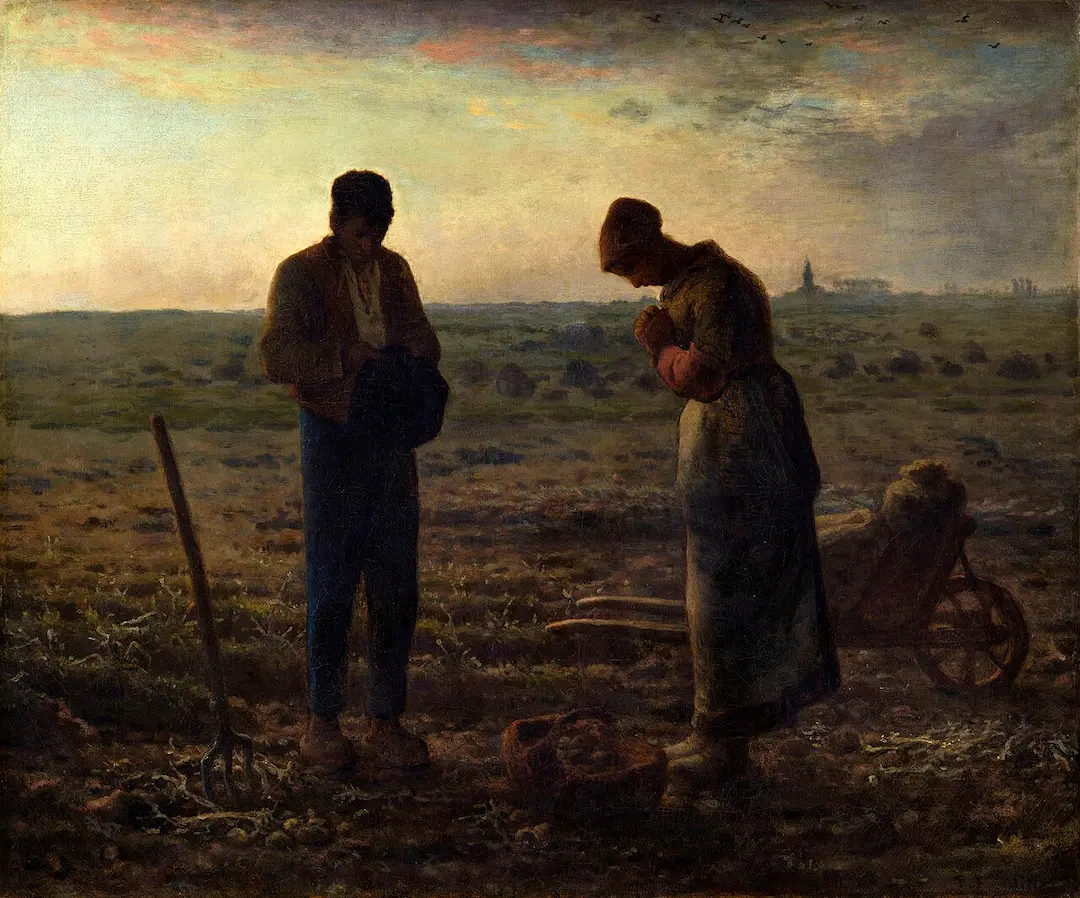
Jean-Francois Millet’s exceptional skill is evident in every detail of "The Angelus, 1857-59." Executed in oil on canvas, the painting showcases his mastery of light, texture, and composition. The earthy tones and soft brushwork exemplify the Realism movement’s dedication to truthful representation. Collectors and enthusiasts value this oil on canvas not just for its technique but also for its emotional depth, making it a true highlight in any fine art collection.
"The Angelus, 1857-59" is more than just a fine art painting for sale; it is a visual narrative filled with symbolism and meaning. Jean-Francois Millet portrays two peasants pausing in prayer, evoking themes of faith, humility, and the dignity of labor. The Realism movement’s focus on everyday life is beautifully embodied in this scene, inviting viewers to contemplate the spiritual and social dimensions woven into this fine art painting for sale.
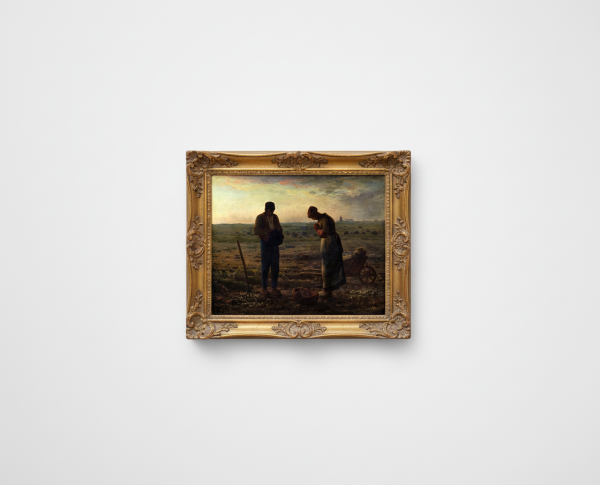
Owning "The Angelus, 1857-59" by Jean-Francois Millet brings a piece of Realism history into your collection. This hand-painted oil painting is celebrated worldwide for its emotional resonance and technical brilliance. Art collectors and connoisseurs recognize the enduring value of Millet’s work, appreciating it as a rare opportunity to acquire a genuine masterpiece. For those seeking a truly significant fine art painting for sale, "The Angelus" remains an unparalleled choice.
When Art Meets History
Jean-Francois Millet’s "The Angelus, 1857-59" stands as a testament to the Realism movement, capturing a moment of rural devotion. This hand-painted oil painting depicts two peasants pausing their work for prayer, reflecting the era’s focus on ordinary life. Like Millet’s contemporaries who created works such as "Lady Godiva" and "Morning in the Pine-tree Forest," he masterfully connects viewers to history, making "The Angelus" a timeless piece cherished by art lovers worldwide.
Techniques That Speak
Millet’s use of oil on canvas in "The Angelus, 1857-59" reveals his dedication to detail and atmospheric nuance. Through subtle brushwork and earthy tones, he communicates the solemnity and dignity of rural labor. Similar to masterpieces like "Las Meninas" and "Surrender At Santa Anna," Millet’s technique elevates everyday subjects, affirming Realism’s mission. The artist’s careful layering and light manipulation make this painting a benchmark in nineteenth-century oil on canvas artistry.
Emotions on Display
"The Angelus, 1857-59" evokes a profound sense of humility and reverence, hallmarks of Jean-Francois Millet’s approach. The figures’ bowed heads and tranquil posture invite viewers to share in their silent prayer. This emotional depth is echoed in other fine art painting for sale, such as "Breezing Up (or A Fair Wind)." Millet’s ability to infuse ordinary moments with emotional resonance makes "The Angelus" a moving masterpiece of the Realism movement.
Coveted by Collectors
Collectors prize Jean-Francois Millet’s "The Angelus, 1857-59" for its authentic portrayal of rural life and its historical significance. As a hand-painted oil painting from the Realism movement, it holds a prestigious place in art collections worldwide. Alongside acclaimed works like "Lady Godiva" and "Las Meninas," "The Angelus" remains a sought-after treasure, demonstrating the enduring appeal of Millet’s vision and the timeless value of Realism in the art market.
Related Realism Hand-Painted Oil Paintings by Other Artists
Other Famous Realism Artists:
Frequently Asked Questions About The Angelus, 1857-59
What is the historical context of "The Angelus"?
"The Angelus" was painted during a time of significant social change in France, particularly in the aftermath of the Industrial Revolution. The painting reflects the rural life and the struggles of peasant farmers in the mid-19th century, highlighting the contrast between urbanization and agrarian traditions.
What techniques did Jean-Francois Millet use in "The Angelus"?
Millet employed a realist approach, utilizing loose brushwork and a muted color palette to convey the somber mood of the scene. His use of light and shadow enhances the emotional depth of the painting, drawing attention to the figures and their surroundings.
What is the significance of the figures in "The Angelus"?
The two figures in "The Angelus" represent the archetypal peasant couple, symbolizing the dignity of labor and the connection to the land. Their posture and expressions convey a moment of reflection and prayer, emphasizing the spiritual aspect of their daily lives.
What does the title "The Angelus" refer to?
The title refers to the Catholic prayer that commemorates the Incarnation, traditionally recited at dawn, noon, and dusk. The painting captures a moment of devotion, suggesting the importance of faith in the lives of the rural working class.
How does "The Angelus" reflect the themes of realism?
"The Angelus" embodies the principles of realism by portraying everyday life without idealization. Millet focuses on the struggles and spirituality of the peasant class, offering a genuine representation of their experiences and emotions.
What is the impact of light in "The Angelus"?
The use of light in "The Angelus" plays a crucial role in setting the mood and emphasizing the figures. The soft, warm light creates a serene atmosphere, enhancing the contemplative nature of the scene and drawing the viewer's eye to the couple's moment of prayer.
How did "The Angelus" influence later artists?
The painting had a profound impact on subsequent generations of artists, particularly those associated with the Symbolist and Impressionist movements. Its focus on everyday subjects and emotional depth inspired artists to explore similar themes in their own works.
What are the symbolic elements present in "The Angelus"?
Symbolically, "The Angelus" represents the intersection of labor and spirituality. The act of prayer signifies hope and resilience amidst hardship, while the rural landscape serves as a reminder of the connection between humanity and nature.
What was the public reception of "The Angelus" upon its completion?
Upon its completion, "The Angelus" received mixed reviews. While many praised Millet's portrayal of peasant life, others criticized it for its somber tone. Over time, however, the painting has come to be regarded as one of Millet's masterpieces and a significant work in the history of art.
Where can "The Angelus" be viewed today?
"The Angelus" is part of the collection at the Musée d'Orsay in Paris, France. It remains a key attraction for visitors, showcasing Millet's contribution to the art of the 19th century and the enduring relevance of its themes.






















_GFM_Painting_(1).webp)



 100% Hand-Painted: Finished in 3-6 Weeks

.png)















_(1).webp)