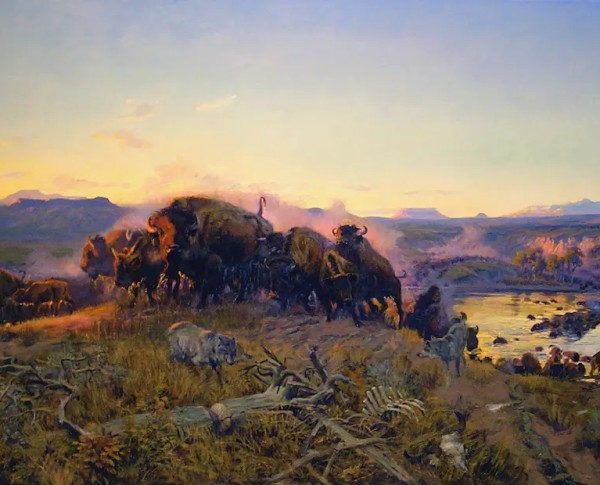
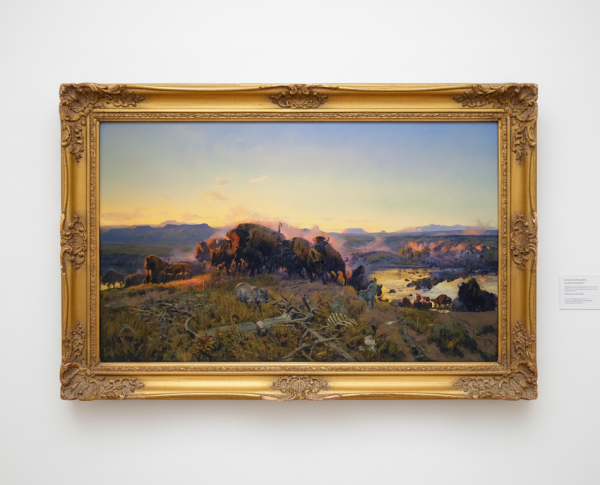
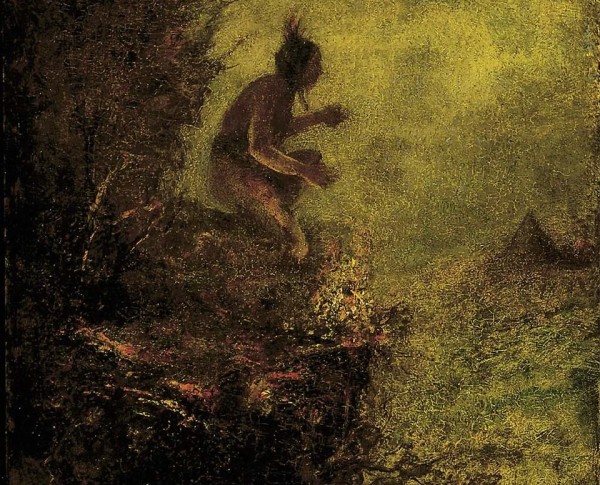
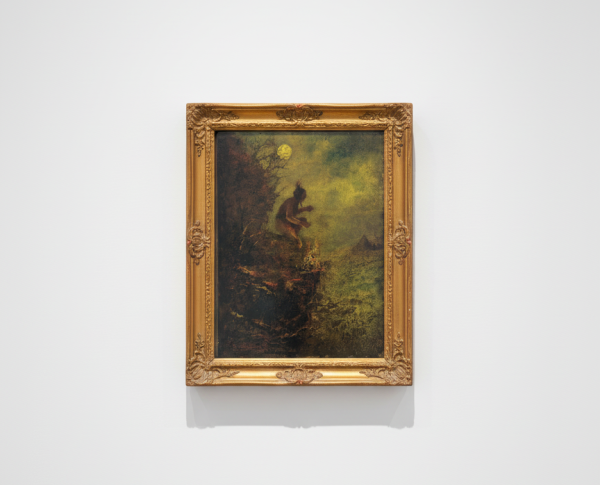
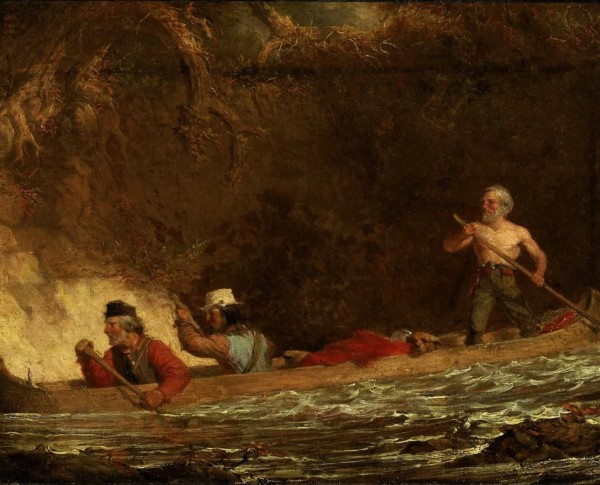
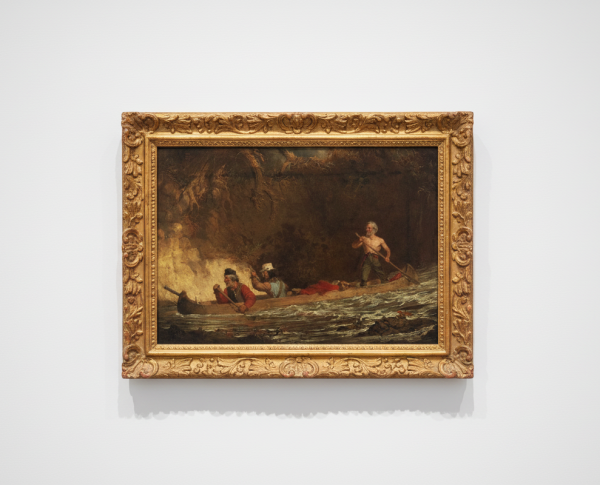
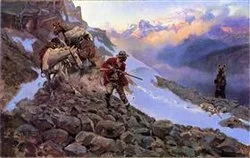
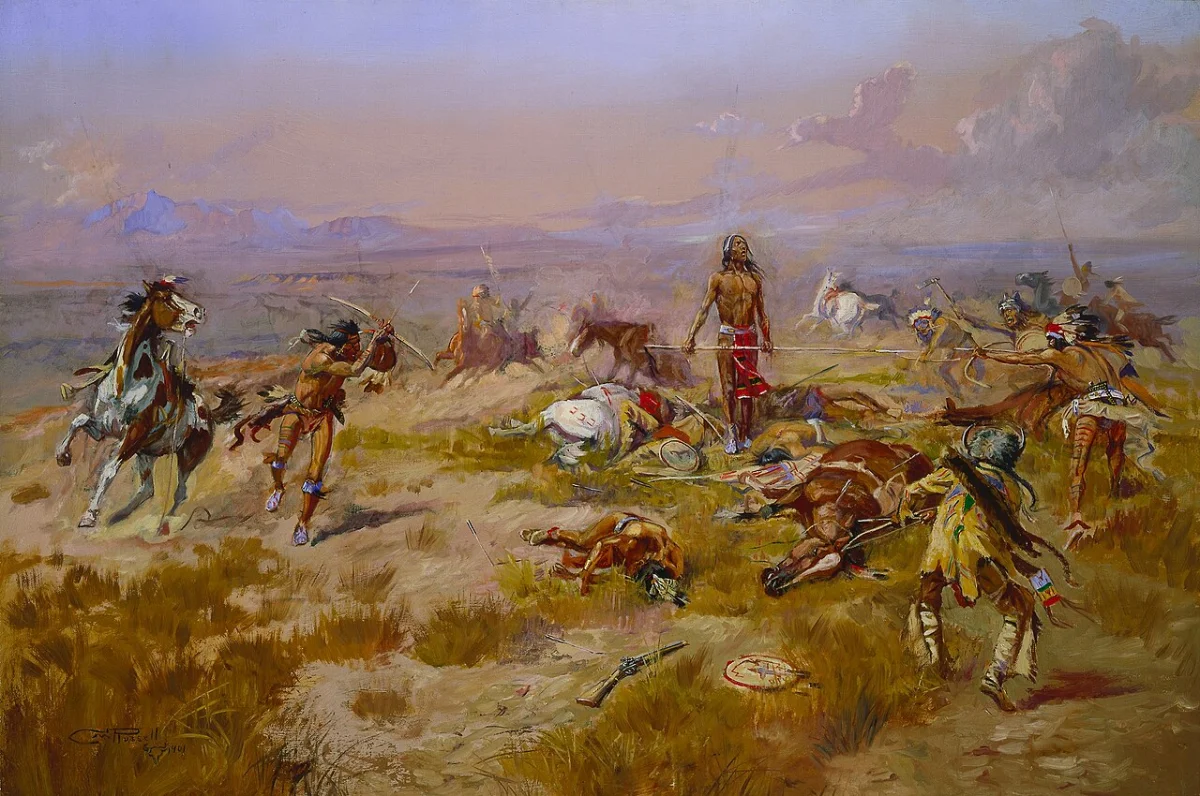
Charles Marion Russell demonstrates extraordinary skill in "Whose Meat?", utilizing oil on canvas to capture the dynamic energy of the American West. The textured brushwork and vibrant colors, typical of American Impressionism, bring the scene to life. Each detail in this oil on canvas painting reflects Russell's mastery and deep understanding of his subjects. Collectors and enthusiasts of fine art appreciate his technique, often seeking related works such as "When the Land Belonged to God."
"Whose Meat?" is more than just a fine art painting for sale; it is a tapestry of stories and symbols woven by Charles Marion Russell. The composition invites viewers to interpret the narrative, emblematic of the American Impressionism movement's focus on atmosphere and emotion. Russell’s ability to infuse meaning into his hand-painted oil paintings is also evident in related works like "When the Land Belonged to God," making his art both visually stunning and intellectually engaging.
For collectors, owning "Whose Meat?" by Charles Marion Russell is a testament to the enduring appeal of American Impressionism. This hand-painted oil painting is not just an artwork but a piece of history, connecting its owner to the spirit of the American frontier. Art aficionados often seek out related products such as "When the Land Belonged to God," recognizing the value and prestige in acquiring a fine art painting for sale from such a renowned artist.
When Art Meets History
"Whose Meat?" by Charles Marion Russell stands as a stellar example of American Impressionism, a movement celebrated for its vibrant depiction of everyday life. This hand-painted oil painting captures a pivotal moment in the American West, reflecting Russell's deep understanding of frontier history. Alongside related masterpieces like "The Avenue in the Rain" and "President Theodore Roosevelt," Russell’s work connects viewers to a time when art was both a record and a reflection of rapidly changing American landscapes.
Techniques That Speak
Charles Marion Russell’s mastery is evident in his use of oil on canvas, a medium favored by American Impressionists for its ability to capture light and movement. In "Whose Meat?", Russell employs broad, expressive brushstrokes and a rich palette, techniques also seen in works like "Carnation, Lily, Lily, Rose" and "A Morning Walk." His approach creates a dynamic visual narrative, drawing viewers into the unfolding drama while showcasing the technical prowess that defines the American Impressionism movement.
Emotions on Display
The emotive power of "Whose Meat?" lies in Russell’s ability to convey tension and curiosity through gesture and composition. This fine art painting for sale resonates with viewers, inviting them to ponder the relationships and stories behind the scene. Much like "The Daughters Of Edward Darley Boit" and "A Morning Walk," Russell’s work uses subtle expressions and body language to evoke empathy, making his contributions to American Impressionism both relatable and timeless.
Coveted by Collectors
As a cherished piece of American Impressionism, "Whose Meat?" by Charles Marion Russell is highly sought after by art enthusiasts and collectors alike. The painting’s hand-painted oil painting technique and historical significance increase its desirability, similar to the acclaim received by "President Theodore Roosevelt" and "The Avenue in the Rain." Collectors recognize Russell’s role in elevating Western art, ensuring that his works remain prized examples of American artistic heritage.
Related American Impressionism Hand-Painted Oil Paintings by Other Artists
Other Famous American Impressionism Artists:
Frequently Asked Questions About "Whose Meat?"
What is the historical context of "Whose Meat?"
"Whose Meat?" was created during the early 20th century, a period marked by significant changes in American society, including westward expansion and the complex relationships between Native Americans and settlers. The painting reflects the tensions and cultural exchanges of this era.
What artistic techniques did Charles Marion Russell employ in "Whose Meat?"
Russell utilized a combination of oil painting techniques, including layering and glazing, to create depth and texture. His attention to detail in the depiction of figures and landscapes showcases his mastery of capturing the American West.
What themes are explored in "Whose Meat?"
The painting explores themes of survival, conflict, and the intersection of cultures. It raises questions about ownership and the moral implications of hunting and resource use in the context of the American frontier.
How does "Whose Meat?" reflect Charles Marion Russell's perspective on Native American culture?
Russell's work often portrays Native Americans with a sense of respect and authenticity. In "Whose Meat?", he captures the dignity and resilience of Indigenous peoples, while also highlighting the complexities of their interactions with settlers.
What symbolism can be found in the imagery of "Whose Meat?"
The title itself suggests a deeper inquiry into ownership and entitlement, while the figures in the painting symbolize the broader struggles for survival and identity faced by both Native Americans and settlers during this tumultuous period.
In what ways does "Whose Meat?" exemplify Russell's artistic style?
Russell's signature style is characterized by dynamic compositions, vivid colors, and a strong sense of movement. "Whose Meat?" exemplifies these traits, showcasing his ability to convey emotion and narrative through visual storytelling.
What role does the landscape play in "Whose Meat?"
The landscape in "Whose Meat?" serves as both a backdrop and a character in its own right, reflecting the harsh realities of the environment that influenced the lives of its inhabitants. It underscores the themes of survival and the relationship between humans and nature.
How has "Whose Meat?" been received by art critics and historians?
Art critics and historians have praised "Whose Meat?" for its poignant commentary on cultural conflict and its artistic merit. The painting is often discussed in the context of Russell's broader body of work, which is celebrated for its historical significance and artistic innovation.
What influence did "Whose Meat?" have on subsequent artists?
"Whose Meat?" has influenced numerous artists who explore themes of the American West and Indigenous cultures. Its blend of realism and narrative has inspired contemporary discussions on representation and cultural identity in art.
Where can I view "Whose Meat?" in person?
"Whose Meat?" is part of the collection at [Gallery Name], where it is displayed alongside other significant works by Charles Marion Russell. Please check our exhibition schedule for current viewing opportunities.






















_GFM_Painting_(1).webp)


 100% Hand-Painted: Finished in 3-6 Weeks

.png)
















_(1).webp)