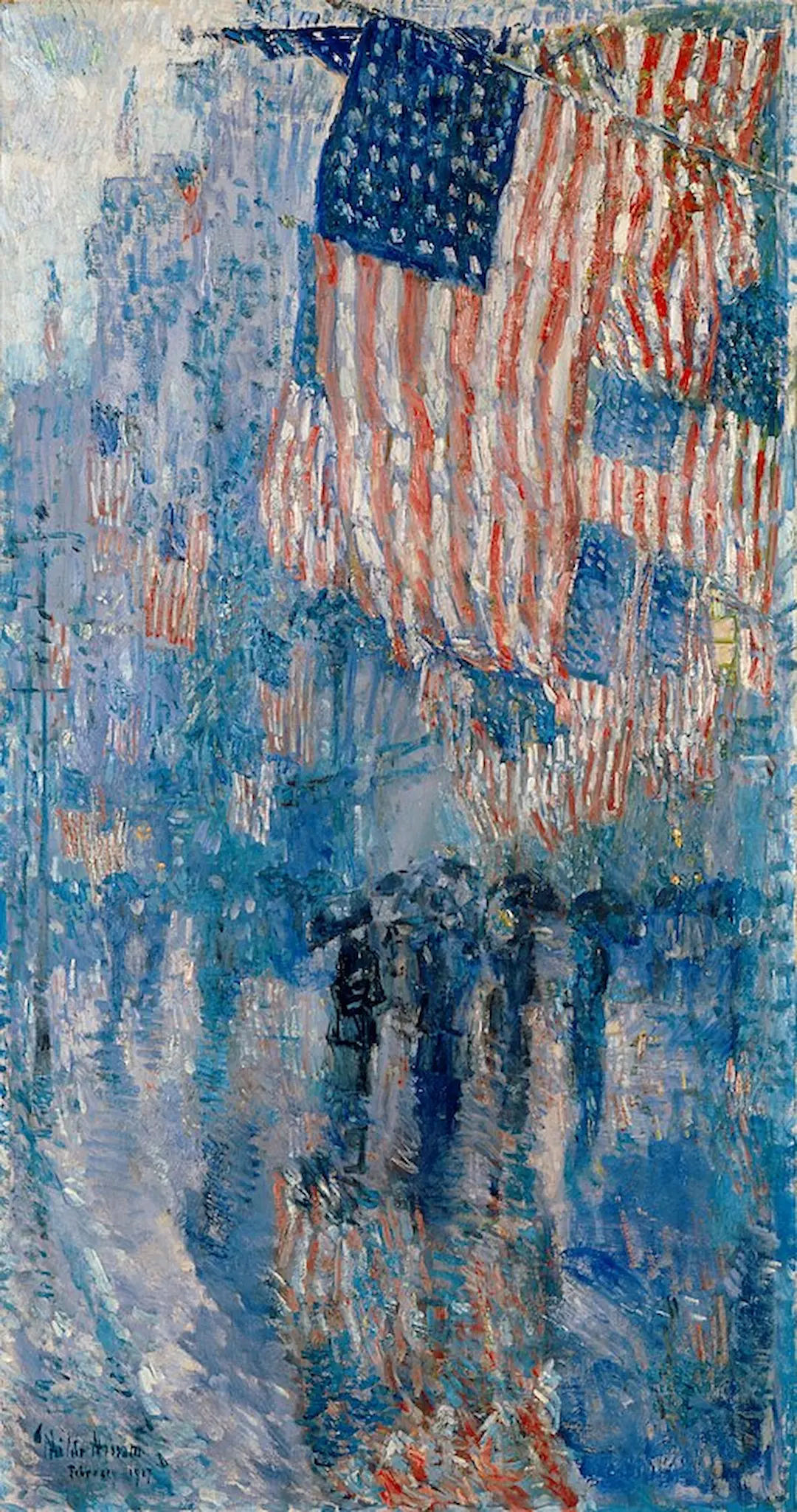
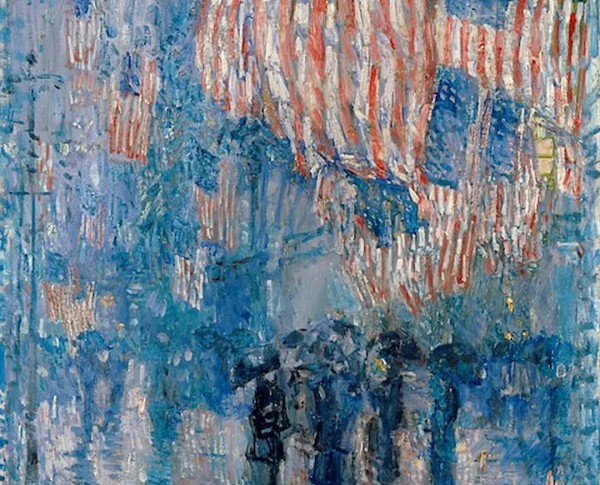
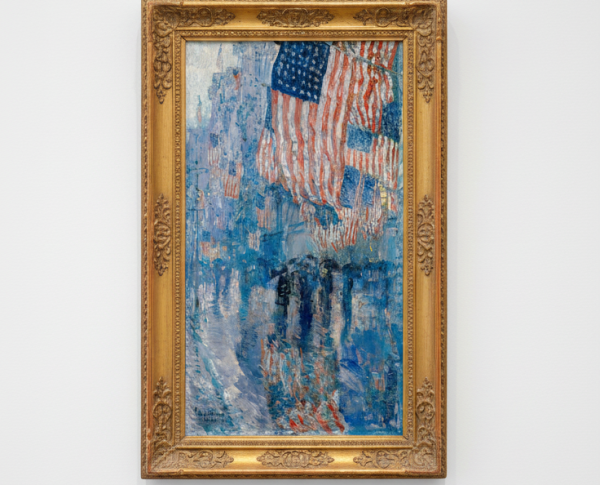
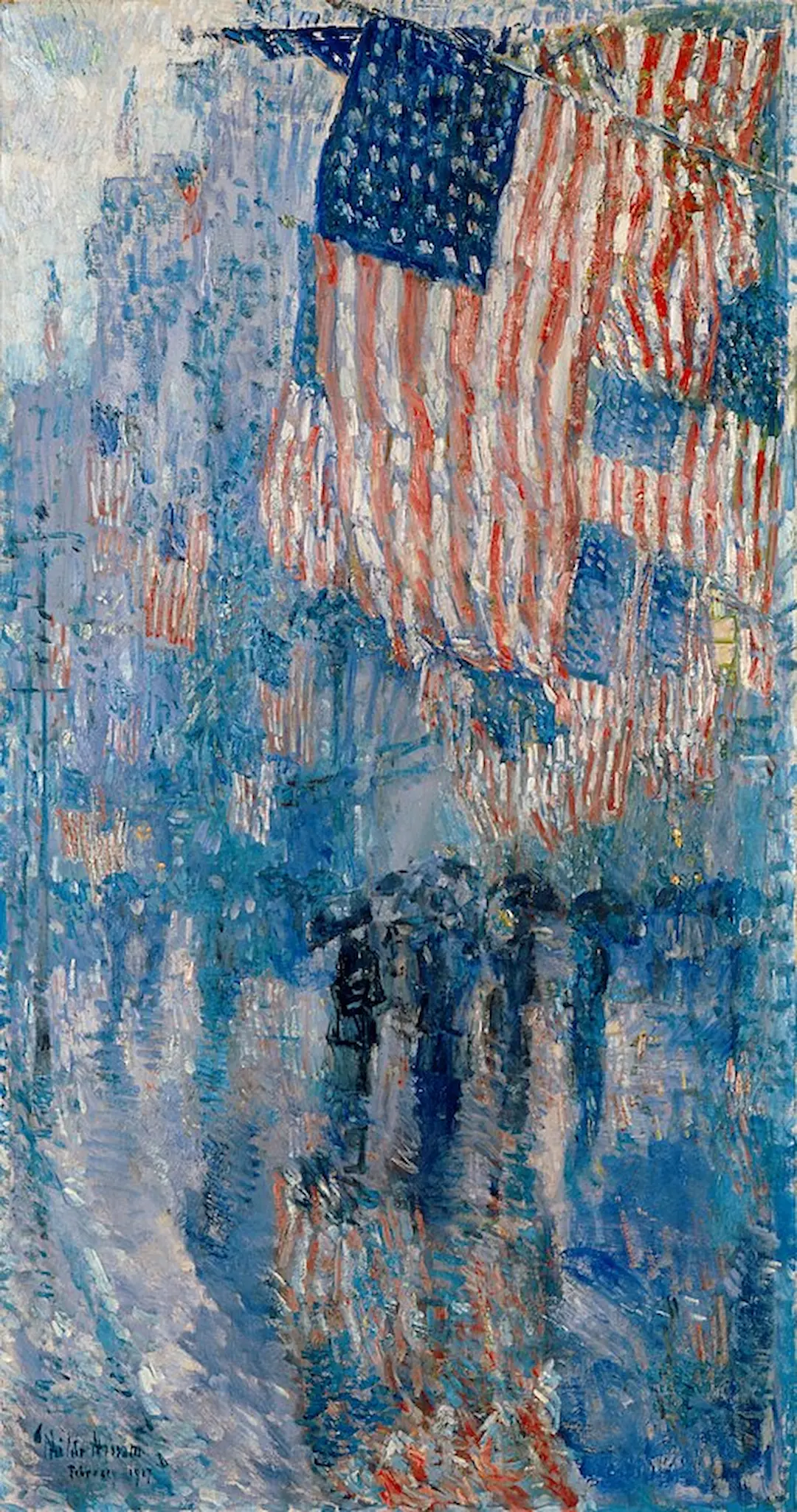
"The Avenue in the Rain" demonstrates Hassam’s exceptional technique and sensitivity to light, hallmarks of the American Impressionism movement. The artist’s use of oil on canvas delivers a textured, dynamic surface, with bold brushstrokes that evoke movement and atmosphere. Each detail, from shimmering reflections to vibrant flags, reveals Hassam’s mastery of color and form. This iconic oil on canvas remains a sought-after masterpiece for art enthusiasts and collectors alike, showcasing timeless craftsmanship.
This fine art painting for sale is more than a visual delight—it is rich with meaning. Frederick Childe Hassam painted "The Avenue in the Rain" during a period of national reflection, embedding symbols of unity and hope throughout the scene. The American flags, rain-soaked streets, and bustling figures together narrate a story of resilience and patriotism, making it a poignant representation of the American Impressionism movement and a compelling addition to any collection.
For those seeking a hand-painted oil painting that embodies both historical significance and artistic brilliance, "The Avenue in the Rain" by Frederick Childe Hassam is an exceptional choice. As a classic of American Impressionism, this piece attracts collectors and admirers of fine art painting for sale. Its striking visuals and cultural resonance ensure that it remains a prized possession, enhancing the value and beauty of any curated art collection.
When Art Meets History
Frederick Childe Hassam’s "The Avenue in the Rain" stands as a powerful testament to American Impressionism, capturing a pivotal moment in history. Painted in 1917, this hand-painted oil painting reflects the patriotic fervor during World War I, with flags lining New York’s Fifth Avenue. The artist’s keen eye for atmosphere connects this masterpiece to other iconic works like "President Theodore Roosevelt" and "Carnation, Lily, Lily, Rose," each echoing the intersection of art and national identity.
Techniques That Speak
In "The Avenue in the Rain," Hassam employs dynamic brushwork and vivid color contrasts, hallmarks of oil on canvas techniques. His signature Impressionist style, also seen in "Whose Meat?" and "The Daughters Of Edward Darley Boit," captures the shimmering reflections of flags in wet streets. The movement and energy in his strokes bring the bustling city scene to life, exemplifying the American Impressionism movement’s focus on light and immediate visual sensations.
Emotions on Display
This fine art painting for sale radiates a sense of unity and hope, as American flags flutter against a rainy cityscape. Hassam masterfully channels the collective mood of early twentieth-century America, much like "Madame X (or Madame Pierre Gautreau)" does with its evocative portraiture. The painting’s blend of somber blues and vibrant reds stirs feelings of resilience, pride, and anticipation, making "The Avenue in the Rain" a deeply emotional piece within the American Impressionism movement.
Coveted by Collectors
"The Avenue in the Rain" by Frederick Childe Hassam remains highly sought after by collectors of American Impressionism. Its historical significance and masterful execution ensure that this hand-painted oil painting holds a prestigious place in both public and private collections. Alongside related works like "Carnation, Lily, Lily, Rose" and "President Theodore Roosevelt," this masterpiece continues to captivate art enthusiasts searching for a fine art painting for sale that embodies artistic excellence and patriotic spirit.
Related American Impressionism Hand-Painted Oil Paintings by Other Artists
Other Famous American Impressionism Artists:
Frequently Asked Questions About The Avenue in the Rain
What is the historical context of "The Avenue in the Rain"?
"The Avenue in the Rain," painted in 1917, reflects the American Impressionist movement during a time when the United States was entering World War I. The painting captures a moment of serene beauty amidst the tumult of the era.
Who was Frederick Childe Hassam and what is his significance in art history?
Frederick Childe Hassam was an influential American Impressionist painter known for his vibrant cityscapes and landscapes. He played a crucial role in introducing Impressionism to the United States and is celebrated for his unique ability to capture light and atmosphere.
What artistic techniques did Hassam employ in this painting?
Hassam utilized loose brushwork and a vibrant color palette to create a sense of movement and light. The use of dappled light filtering through the trees and the reflections on the wet pavement are hallmarks of his Impressionist style.
What is the significance of the rain in "The Avenue in the Rain"?
The rain serves as a symbolic element, representing renewal and the beauty of nature. It also enhances the mood of the painting, creating a contemplative atmosphere that invites viewers to reflect on the scene.
How does "The Avenue in the Rain" reflect the Impressionist movement?
The painting embodies key characteristics of the Impressionist movement, such as an emphasis on capturing the effects of light, a focus on everyday scenes, and the use of color to convey emotion rather than strict realism.
What themes are explored in "The Avenue in the Rain"?
The primary themes include urban life, the passage of time, and the interplay between nature and civilization. The painting evokes a sense of tranquility amidst the hustle and bustle of city life.
What elements of composition are notable in this artwork?
Hassam's composition features a strong diagonal line created by the avenue, leading the viewer's eye through the painting. The placement of figures and the canopy of trees creates depth and invites exploration of the scene.
How does this painting compare to other works by Hassam?
"The Avenue in the Rain" is similar to other works by Hassam in its focus on urban landscapes and the effects of light. However, it stands out for its emotional depth and the way it captures the interplay of weather and city life.
What impact did "The Avenue in the Rain" have on American art?
The painting contributed to the recognition of American Impressionism as a significant movement in the art world. It showcased the ability of American artists to capture the essence of their environment, influencing future generations of artists.
Where can I view "The Avenue in the Rain"?
"The Avenue in the Rain" is part of the collection at the Museum of Fine Arts in Boston, where it is displayed alongside other significant works of American art.






















_GFM_Painting_(1).webp)


 100% Hand-Painted: Finished in 3-6 Weeks

.png)















_(1).webp)