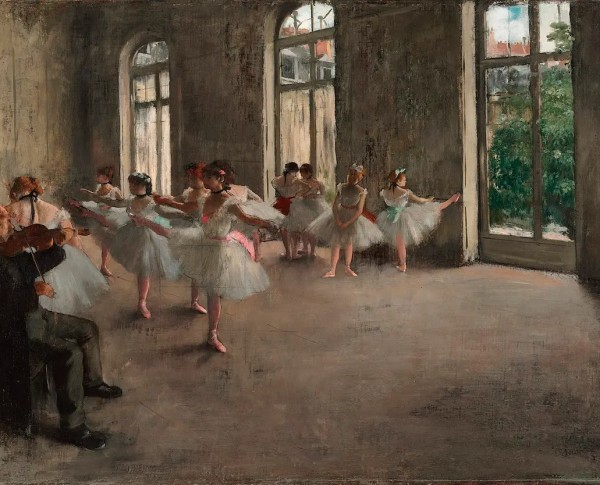
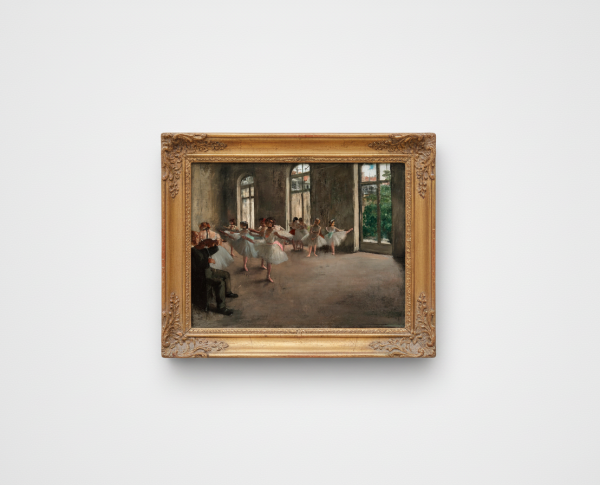
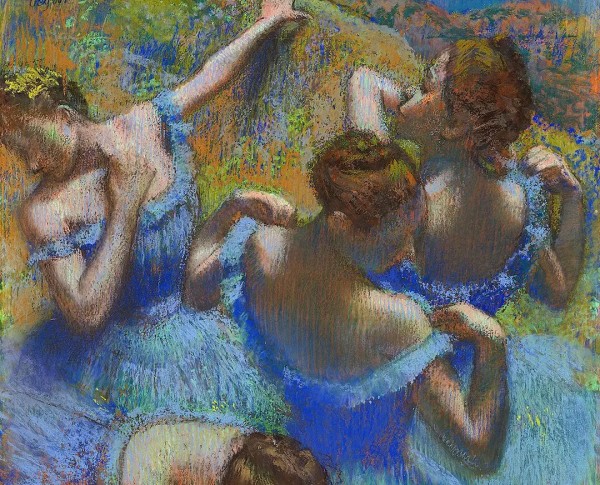
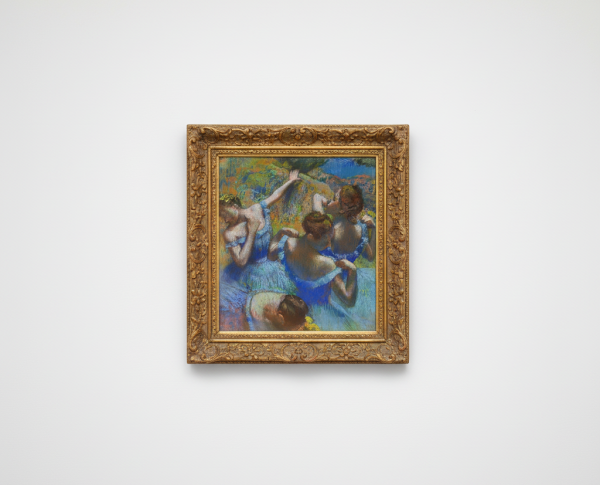
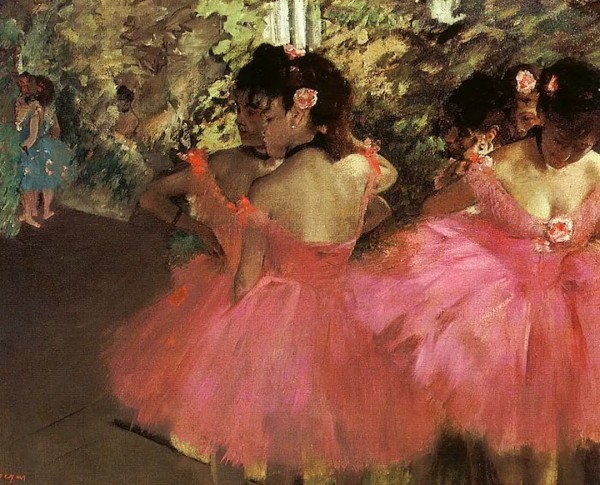
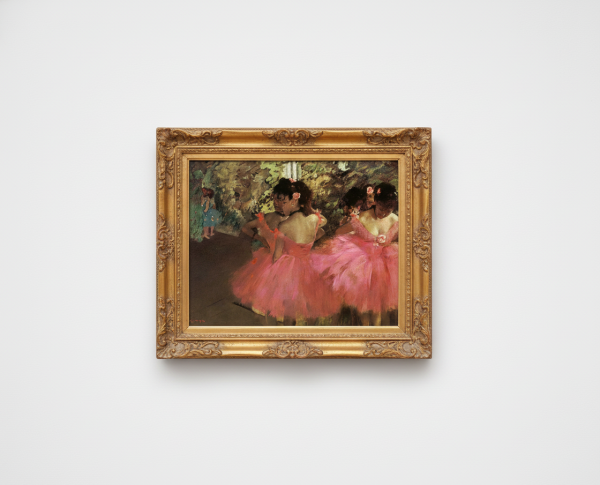
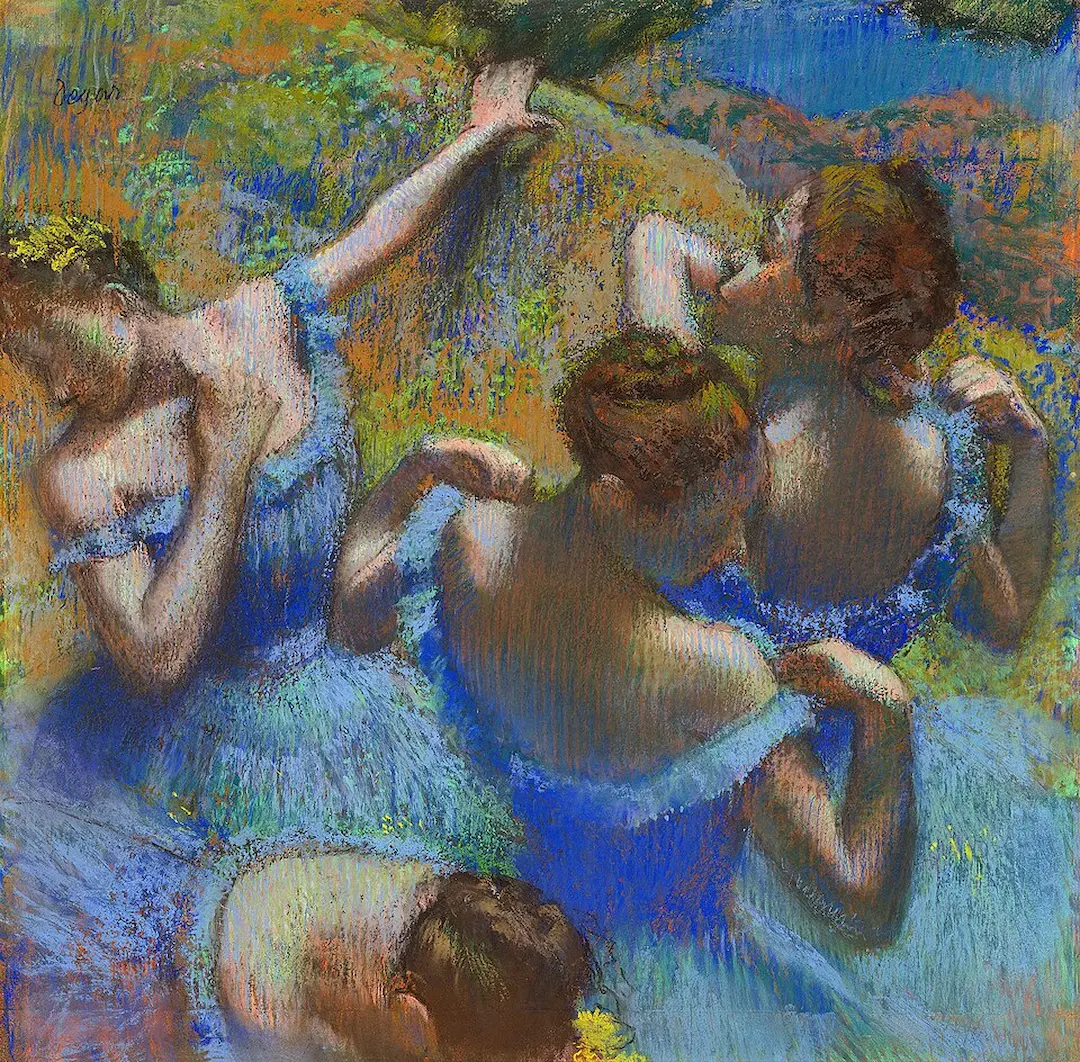
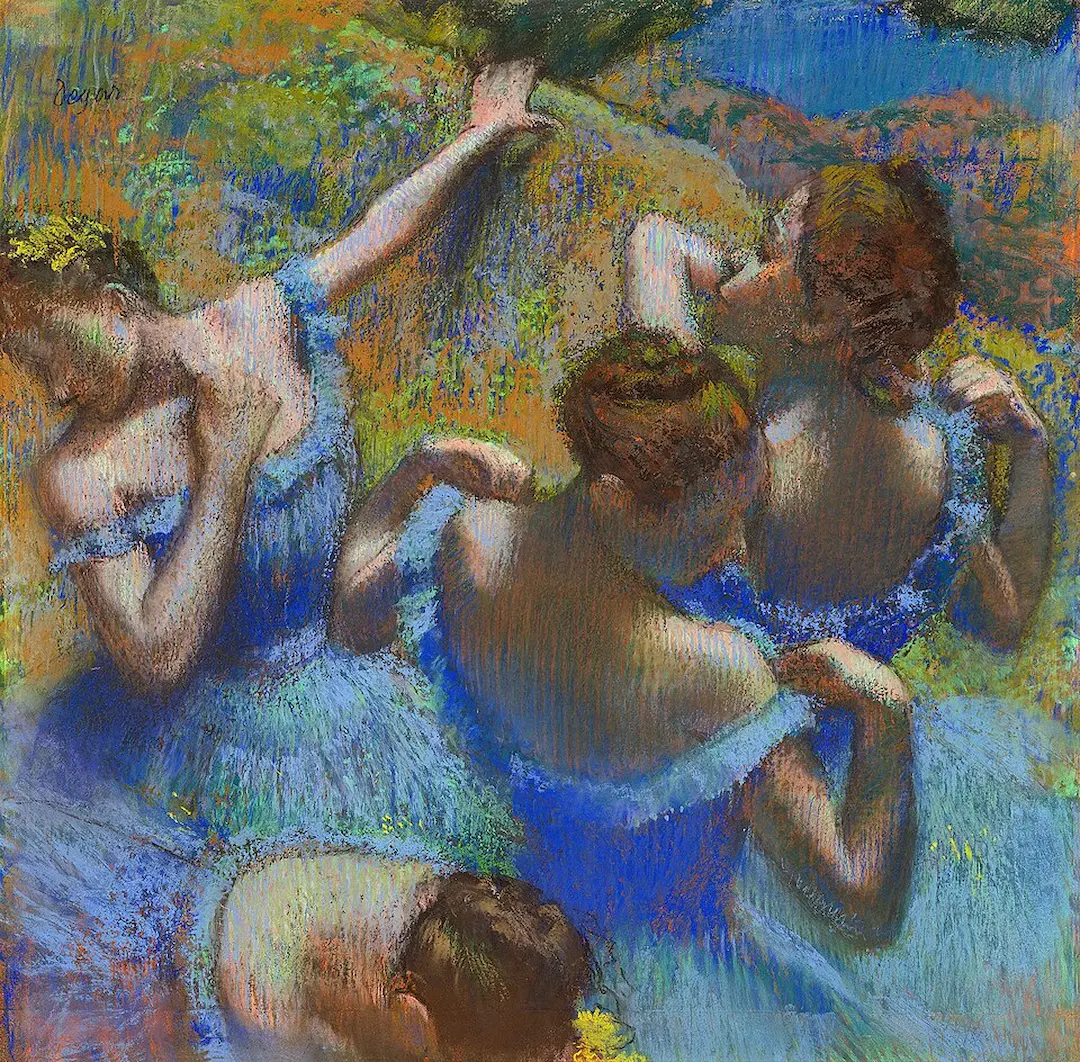
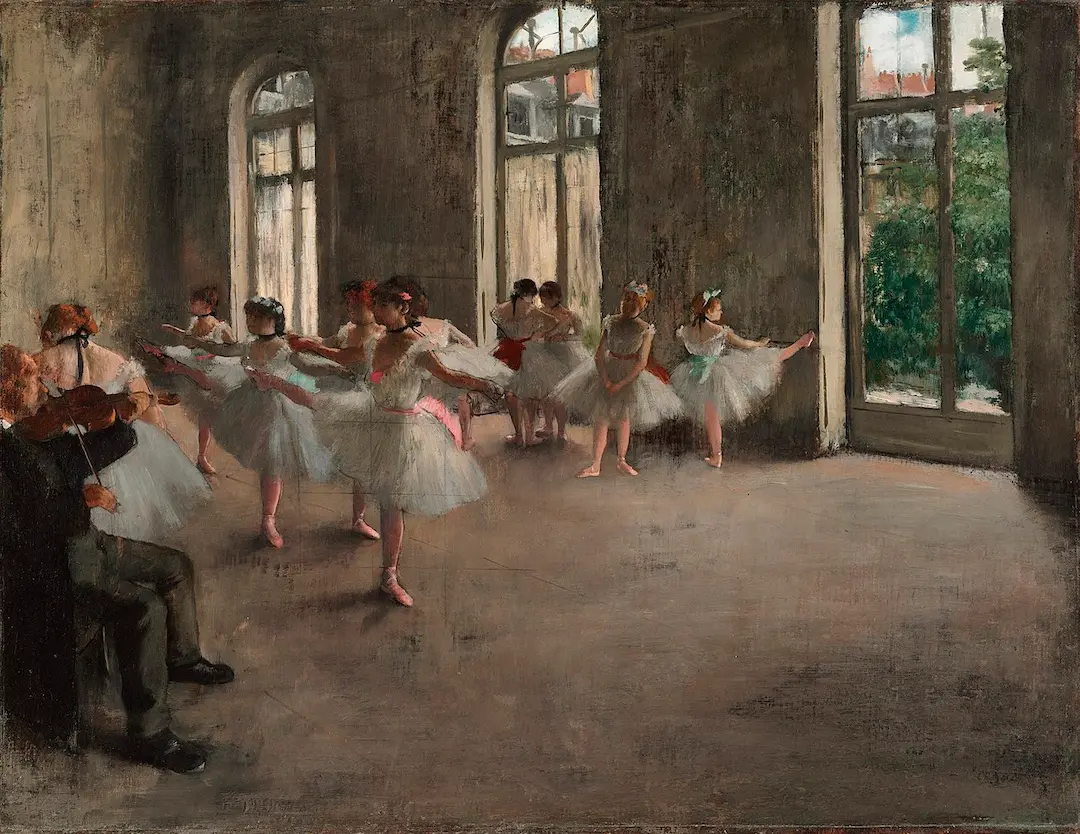
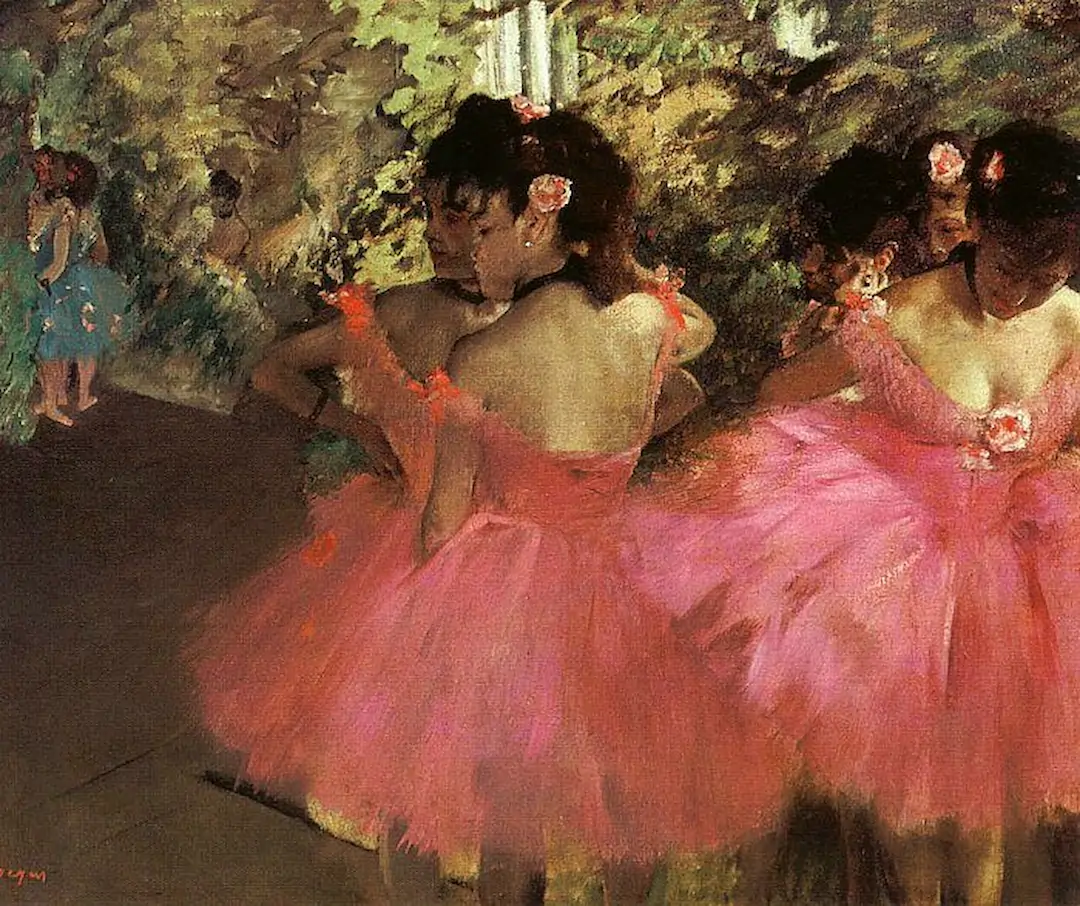
Edgar Degas’s "Blue Dancers, c.1899" showcases the artist’s exceptional technique with oil on canvas, blending vivid blues and delicate brushwork. His Impressionist style brings movement and emotion to the scene, highlighting the dancers' elegance and poise. Each stroke reveals Degas’s deep understanding of light and form, making this painting a prime example for enthusiasts of oil on canvas masterpieces. Explore related works such as "Dancers In Pink" and "Ballet Rehearsal, 1873" for more inspiration.
Within "Blue Dancers, c.1899," Edgar Degas weaves a narrative of backstage anticipation and the discipline of ballet. The Impressionism movement encouraged artists to capture everyday life, and this fine art painting for sale is no exception. The dancers’ poses and the interplay of colors suggest both unity and individuality. Collectors and admirers of Degas will find echoes of these themes in related pieces like "Dancers In Pink" and "Ballet Rehearsal, 1873."
Owning "Blue Dancers, c.1899" by Edgar Degas means possessing a significant piece of Impressionism history. This hand-painted oil painting is highly regarded among collectors seeking authentic expressions of movement and emotion. As a fine art painting for sale, it complements other Degas masterpieces such as "Dancers In Pink" and "Ballet Rehearsal, 1873." Investing in such works ensures a lasting legacy and a touch of artistic brilliance in any collection.
When Art Meets History
"Blue Dancers, c.1899" by Edgar Degas stands as a testament to the Impressionism movement, capturing the vibrant spirit of late 19th-century Paris. This hand-painted oil painting showcases Degas’ fascination with ballet and movement, similar to his other works like "The Floor Scrapers 1875" and "Dance At The Moulin De La Galette." The painting’s historical context adds depth, highlighting how Impressionists like Degas revolutionized visual storytelling through innovative techniques and everyday subjects.
Techniques That Speak
Degas’ "Blue Dancers, c.1899" employs a masterful use of oil on canvas to evoke fluidity and grace. His brushwork, marked by soft edges and vibrant colors, immerses viewers in the delicate world of ballet. These techniques are reminiscent of those seen in "The Seine At Asnieres Aka The Skiff" and "Spring Bouquet," where Impressionism’s signature play of light and movement is ever-present. Degas’ innovative approach made his work, and Impressionism as a whole, truly groundbreaking.
Emotions on Display
In "Blue Dancers, c.1899," Edgar Degas captures the raw emotion and fleeting beauty of dancers in motion, a hallmark of Impressionism. The painting’s subtle expressions and dynamic poses invite viewers to feel the anticipation and poise of the performers. Like "A Girl with a Watering Can," this fine art painting for sale conveys an intimate moment, making it resonate deeply with art lovers. Degas’ ability to translate emotion through art remains unparalleled in the movement.
Coveted by Collectors
As a celebrated masterpiece of Impressionism, "Blue Dancers, c.1899" by Edgar Degas is highly sought after among collectors of fine art. The allure of owning such an iconic oil on canvas, alongside related works like "Spring Bouquet" or "Dance At The Moulin De La Galette," lies in its historical and artistic significance. Collectors prize these paintings for their beauty, provenance, and the unique insight they provide into the world of French Impressionism.
Related Impressionism Hand-Painted Oil Paintings by Other Artists
Other Famous Impressionism Artists:
Frequently Asked Questions About Blue Dancers, c.1899
What is the historical context of "Blue Dancers"?
"Blue Dancers" was created during the late 19th century, a period marked by the rise of Impressionism in France. Edgar Degas, known for his innovative approach to movement and light, captured the essence of ballet and the world of dance, reflecting the cultural fascination with performance art during this era.
What artistic techniques did Degas use in "Blue Dancers"?
Degas employed a unique combination of pastels and oil paints to create "Blue Dancers." His use of color, particularly the various shades of blue, enhances the fluidity and grace of the dancers, while his mastery of composition draws the viewer's eye to the dynamic poses of the figures.
What themes are explored in "Blue Dancers"?
The painting explores themes of movement, femininity, and the ephemeral nature of performance. Degas captures the dancers in a moment of preparation, emphasizing the hard work behind the art of ballet, contrasting the idealized beauty often associated with dance.
How does "Blue Dancers" reflect Degas's style?
Degas's style is characterized by his focus on movement and the human form. In "Blue Dancers," he captures the dancers in a candid moment, showcasing his interest in the spontaneity of life and the beauty of the human figure in motion, which is a hallmark of his artistic approach.
What is the significance of the color blue in "Blue Dancers"?
The predominant use of blue in the painting symbolizes tranquility and elegance, while also evoking the atmosphere of the ballet stage. The color enhances the emotional depth of the work, inviting viewers to reflect on the grace and poise of the dancers.
In what ways did Degas innovate the portrayal of dancers?
Degas broke away from traditional representations of ballet by focusing on the behind-the-scenes aspects of dance. His candid portrayals of dancers in rehearsal, rather than performance, provided a more intimate glimpse into their world, highlighting both their artistry and humanity.
What influences can be seen in "Blue Dancers"?
Degas was influenced by Japanese prints and photography, which is evident in the composition and cropping of the figures. These influences contributed to his unique perspective on movement and form, allowing him to capture the dancers in a way that feels both spontaneous and carefully composed.
How does "Blue Dancers" compare to Degas's other works?
While many of Degas's works focus on the ballet theme, "Blue Dancers" stands out due to its vibrant color palette and the emotional resonance of the dancers' poses. It exemplifies his ability to blend realism with impressionistic techniques, setting it apart from his more traditional representations of dance.
What impact did "Blue Dancers" have on the art world?
"Blue Dancers" contributed to the evolution of modern art by challenging conventional representations of ballet and movement. Degas's innovative approach inspired future generations of artists to explore new ways of depicting the human form and the dynamics of performance.
What can viewers learn from "Blue Dancers"?
Viewers can gain insight into the dedication and artistry involved in ballet, as well as an appreciation for Degas's skill in capturing fleeting moments. The painting invites contemplation on the intersection of art, movement, and the emotional experiences of performers.






















_GFM_Painting_(1).webp)


 100% Hand-Painted: Finished in 3-6 Weeks

.png)















_(1).webp)