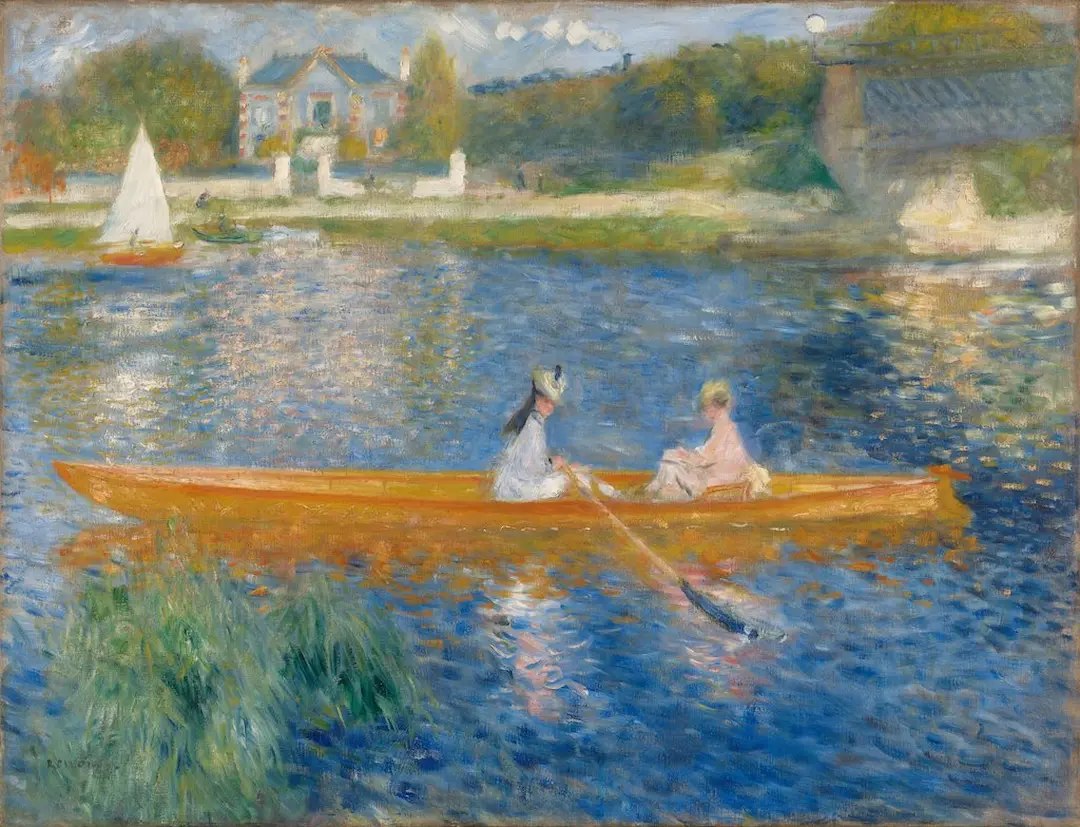
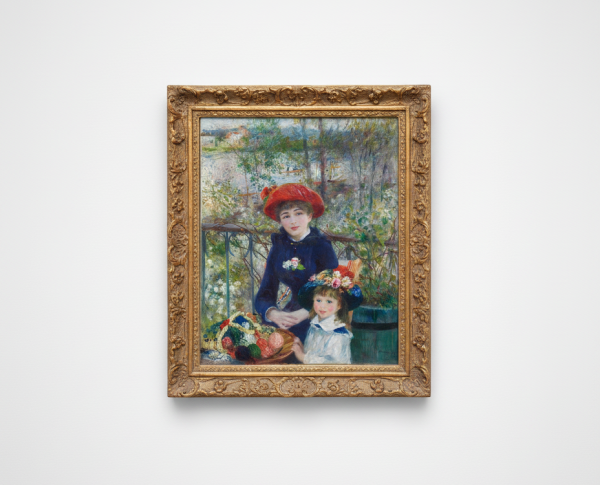
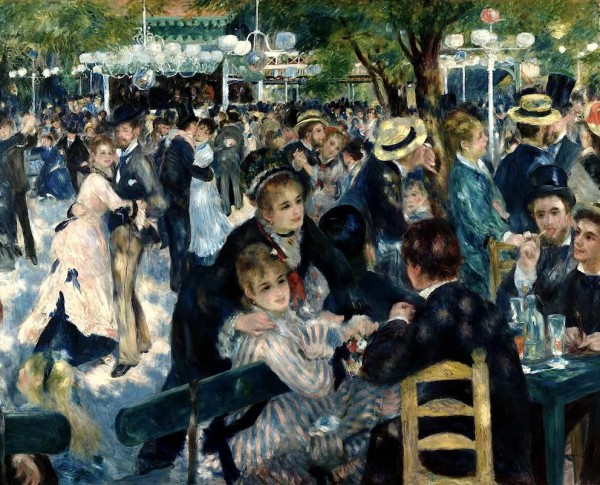
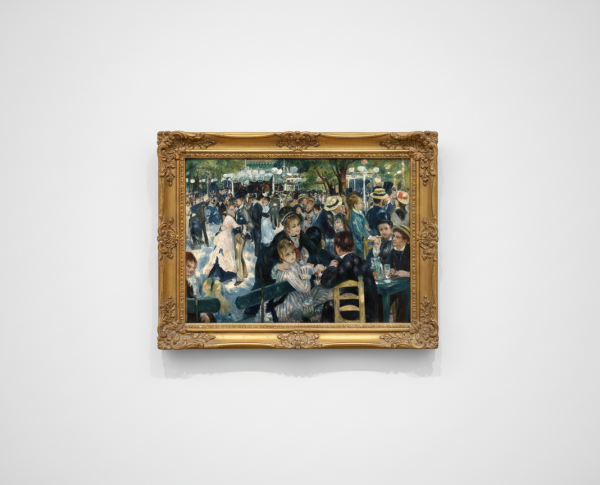
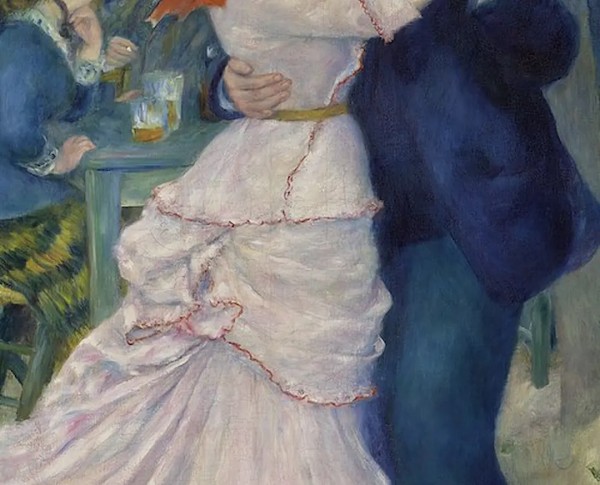
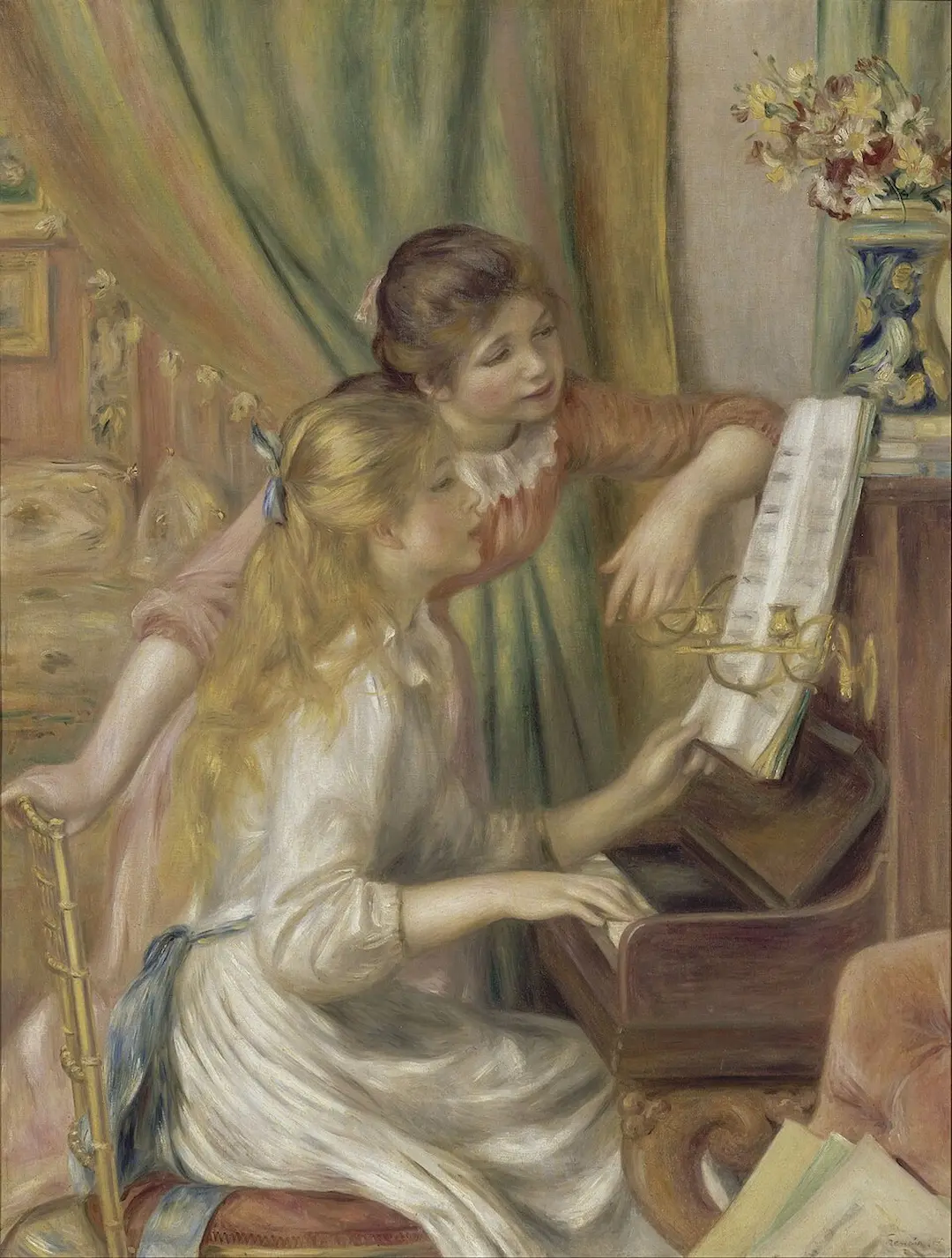
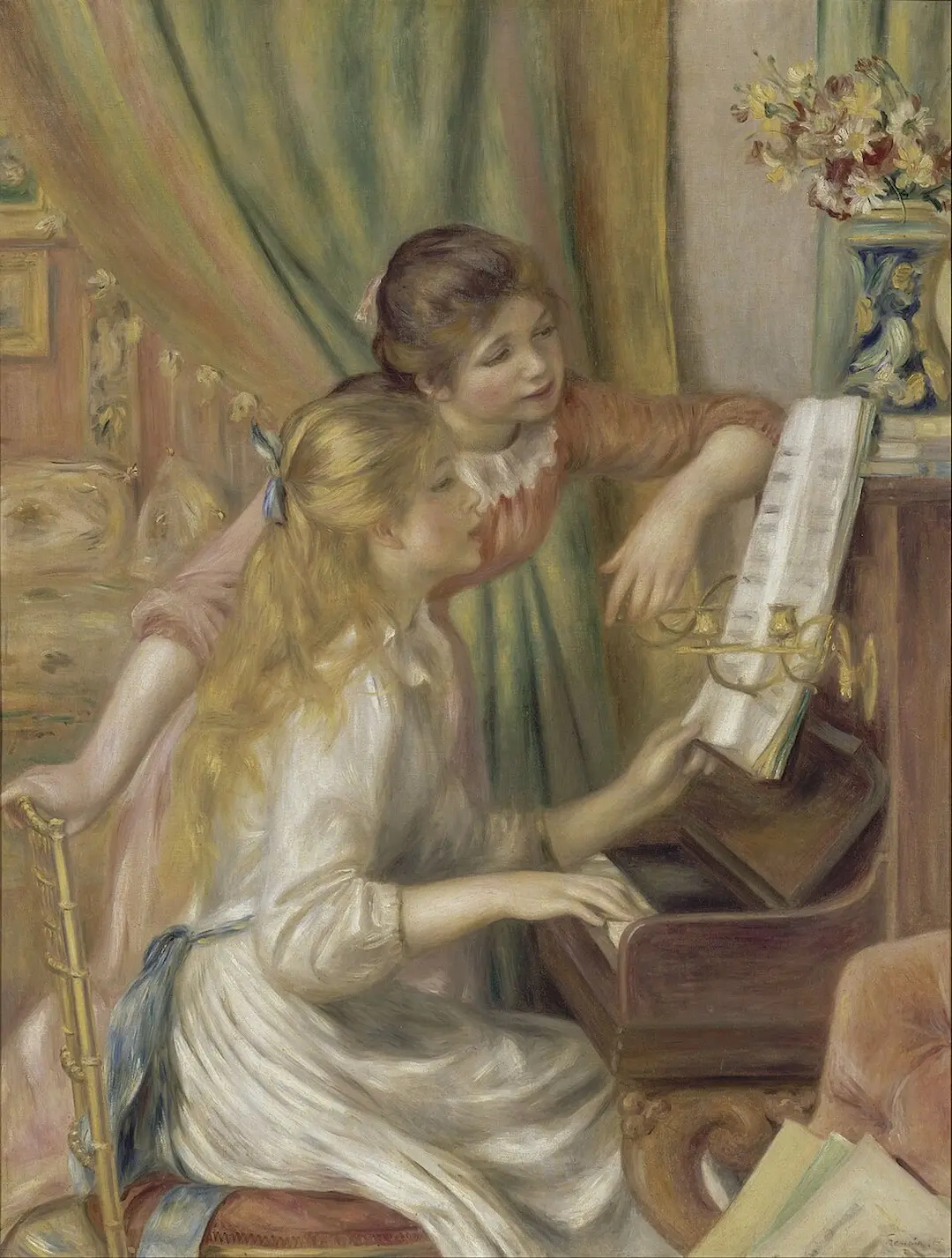
Renoir’s "Girls At The Piano2" demonstrates exquisite technique through his fluid brushwork and delicate color palette. Rendered in oil on canvas, the painting exudes the soft light and gentle atmosphere characteristic of the Impressionism movement. Each brushstroke reveals Renoir’s dedication to capturing fleeting moments. Art enthusiasts may wish to explore related works such as "The Seine At Asnieres Aka The Skiff" or "Dance At Bougival" for further examples of his mastery.
"Girls At The Piano2" is more than a fine art painting for sale; it is a narrative of youth, music, and domestic harmony. Renoir’s depiction of two young girls at a piano symbolizes the nurturing of creativity and the bonds formed through shared experiences. As with "A Girl with a Watering Can" or "Dance At The Moulin De La Galette," Renoir’s subjects often celebrate the joys of everyday life, inviting viewers to find stories within each canvas.
Owning "Girls At The Piano2" is an opportunity to possess a piece of Impressionism’s rich heritage. This hand-painted oil painting by Pierre Auguste Renoir brings elegance and historical value to any collection. Art collectors often seek such iconic works, drawn by their enduring beauty and significance. Complement your collection with related products like "Spring Bouquet" or "Dance At Bougival" to further immerse yourself in Renoir’s world of light, color, and emotion.
When Art Meets History
Pierre Auguste Renoir, a master of the Impressionism movement, created "Girls At The Piano2" during a period when art was evolving rapidly in France. This remarkable hand-painted oil painting captures a timeless domestic scene, reflecting the artist’s fascination with everyday life. Like Renoir’s "Children in the Sea, 1909" and Monet’s "Impression Sunrise," the work blends history and artistry, inviting viewers to step into the past with every brushstroke and every gentle gesture portrayed on canvas.
Techniques That Speak
Renoir’s "Girls At The Piano2" demonstrates his signature approach to oil on canvas, featuring soft, luminous textures and a delicate interplay of light and color. The Impressionism movement is characterized by visible brushwork and the depiction of fleeting moments, which Renoir masterfully applies here. Similar to Degas’ "Blue Dancers, c.1899," this painting’s technique draws the viewer into an intimate, lively atmosphere, making it a beloved example of Impressionist innovation in oil on canvas.
Emotions on Display
In "Girls At The Piano2," Pierre Auguste Renoir conveys a gentle, joyful ambiance, emphasizing the warmth of familial bonds. The artist’s skillful use of color and light infuses the scene with emotion, capturing a fleeting moment of harmony and innocence. As seen in "Wild Poppies, Near Argenteuil" and "Dancers In Pink," Renoir’s ability to evoke feeling through his fine art painting for sale continues to resonate with those who appreciate the emotional depth of Impressionism.
Coveted by Collectors
"Girls At The Piano2" stands as a testament to Renoir’s enduring legacy and the universal appeal of Impressionism. Collectors and art lovers alike seek out this and related masterpieces, eager to own a piece of history. With its exquisite composition and captivating subject matter, this hand-painted oil painting is highly prized, much like "Children in the Sea, 1909" and "Impression Sunrise," making it a cherished addition to any fine art collection.
Related Impressionism Hand-Painted Oil Paintings by Other Artists
Other Famous Impressionism Artists:
Frequently Asked Questions About Girls At The Piano2
What is the historical context of "Girls At The Piano2"?
"Girls At The Piano2" was painted by Pierre Auguste Renoir in the late 19th century, a time characterized by the Impressionist movement, which sought to capture the effects of light and color in everyday scenes.
What artistic techniques did Renoir use in this painting?
Renoir employed loose brushwork and vibrant colors to create a sense of movement and spontaneity, typical of his Impressionist style. The interplay of light and shadow enhances the three-dimensionality of the figures.
What themes are explored in "Girls At The Piano2"?
The painting explores themes of youth, innocence, and the joy of music. It captures a moment of leisure and artistic expression, reflecting the social dynamics of the time.
Who are the figures depicted in "Girls At The Piano2"?
The figures in the painting are believed to represent young girls engaged in a musical activity, symbolizing the nurturing of artistic talent and the importance of music in social gatherings during the period.
How does "Girls At The Piano2" reflect Renoir's artistic philosophy?
Renoir's philosophy emphasized the beauty of everyday life and the importance of capturing fleeting moments. This painting exemplifies his belief in the joy of human connection and the celebration of simple pleasures.
What is the significance of the piano in the painting?
The piano serves as a central motif, symbolizing creativity and cultural refinement. It represents the social and artistic aspirations of the bourgeoisie in 19th-century France.
How does color play a role in "Girls At The Piano2"?
Renoir's use of a bright and varied color palette enhances the vibrancy of the scene. The warm tones create an inviting atmosphere, drawing the viewer into the intimate setting of the painting.
What influences can be seen in Renoir's style in this work?
Renoir was influenced by the works of earlier artists such as Édouard Manet and the Barbizon School. His style in "Girls At The Piano2" reflects a blend of realism and Impressionism, focusing on light and the human form.
What is the overall mood conveyed in "Girls At The Piano2"?
The overall mood of the painting is one of joy and serenity. The interaction between the girls and the piano evokes a sense of harmony and companionship, inviting viewers to share in the moment.
How does "Girls At The Piano2" fit into Renoir's body of work?
This painting is representative of Renoir's focus on social themes and the depiction of women in domestic settings. It aligns with his later works that celebrate human relationships and the beauty of everyday life.






















_GFM_Painting_(1).webp)


 100% Hand-Painted: Finished in 3-6 Weeks

.png)

















_(1).webp)