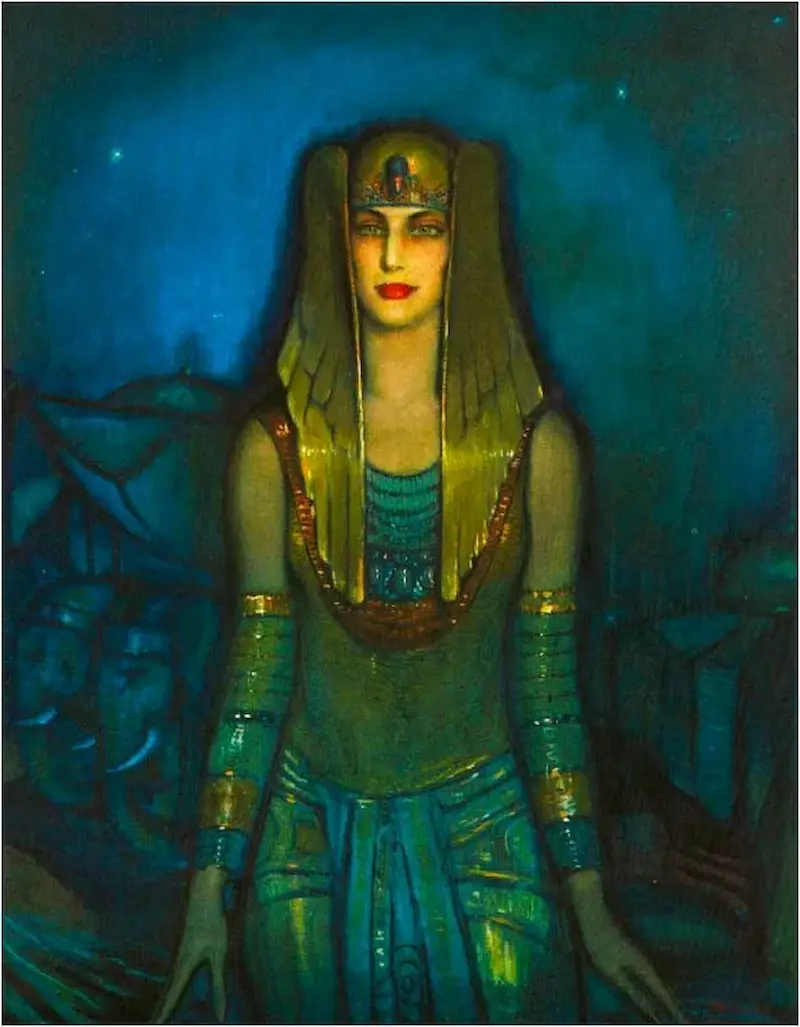
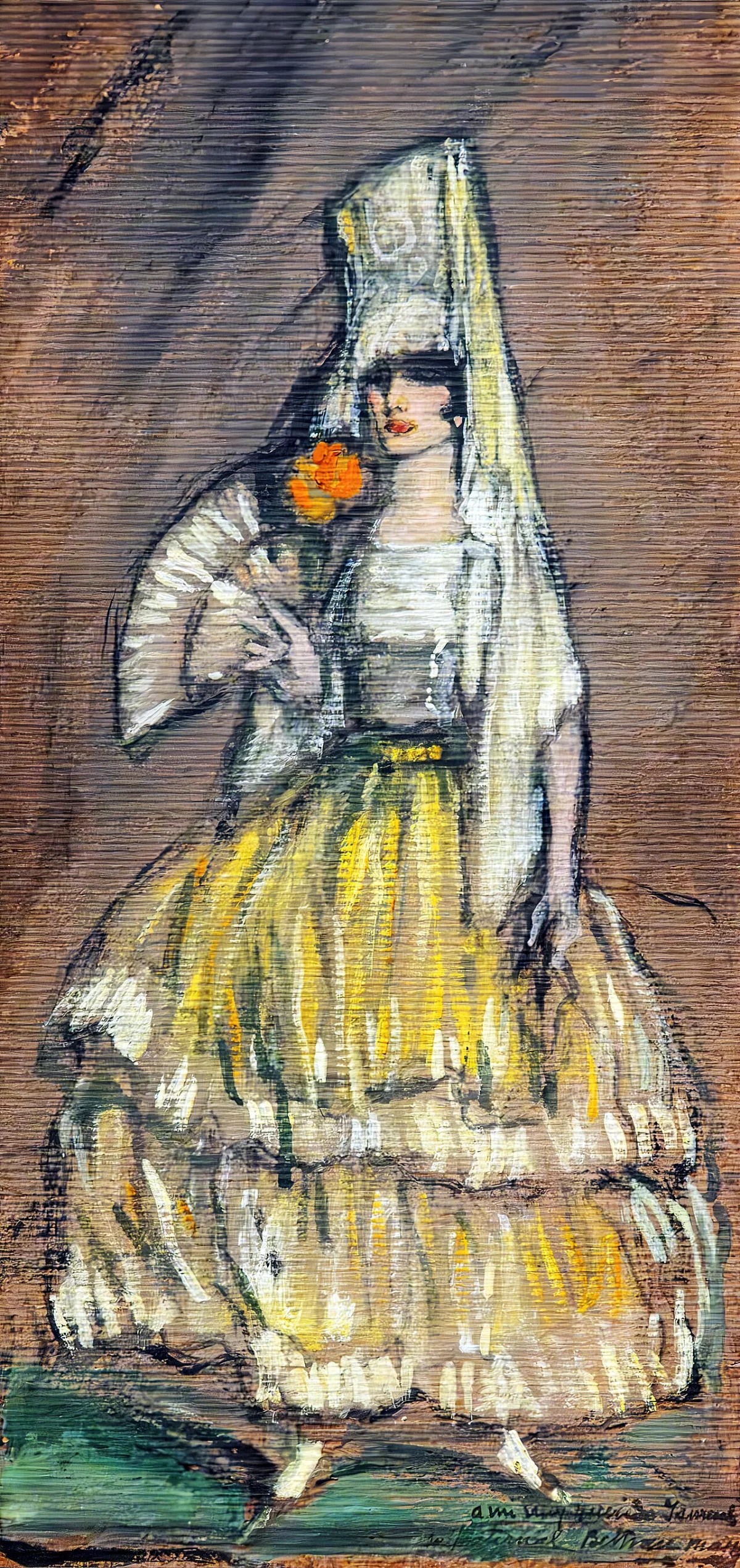
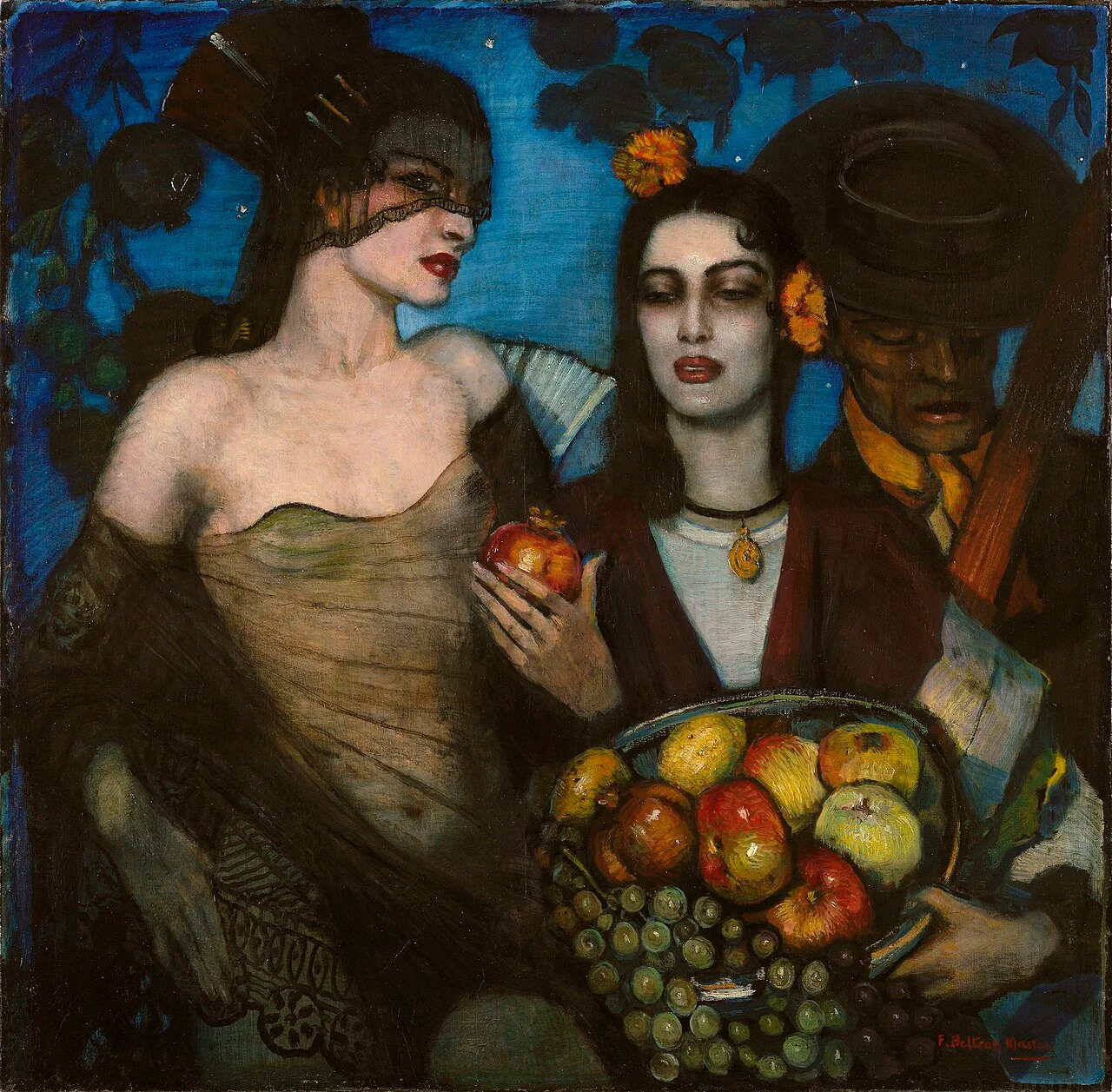
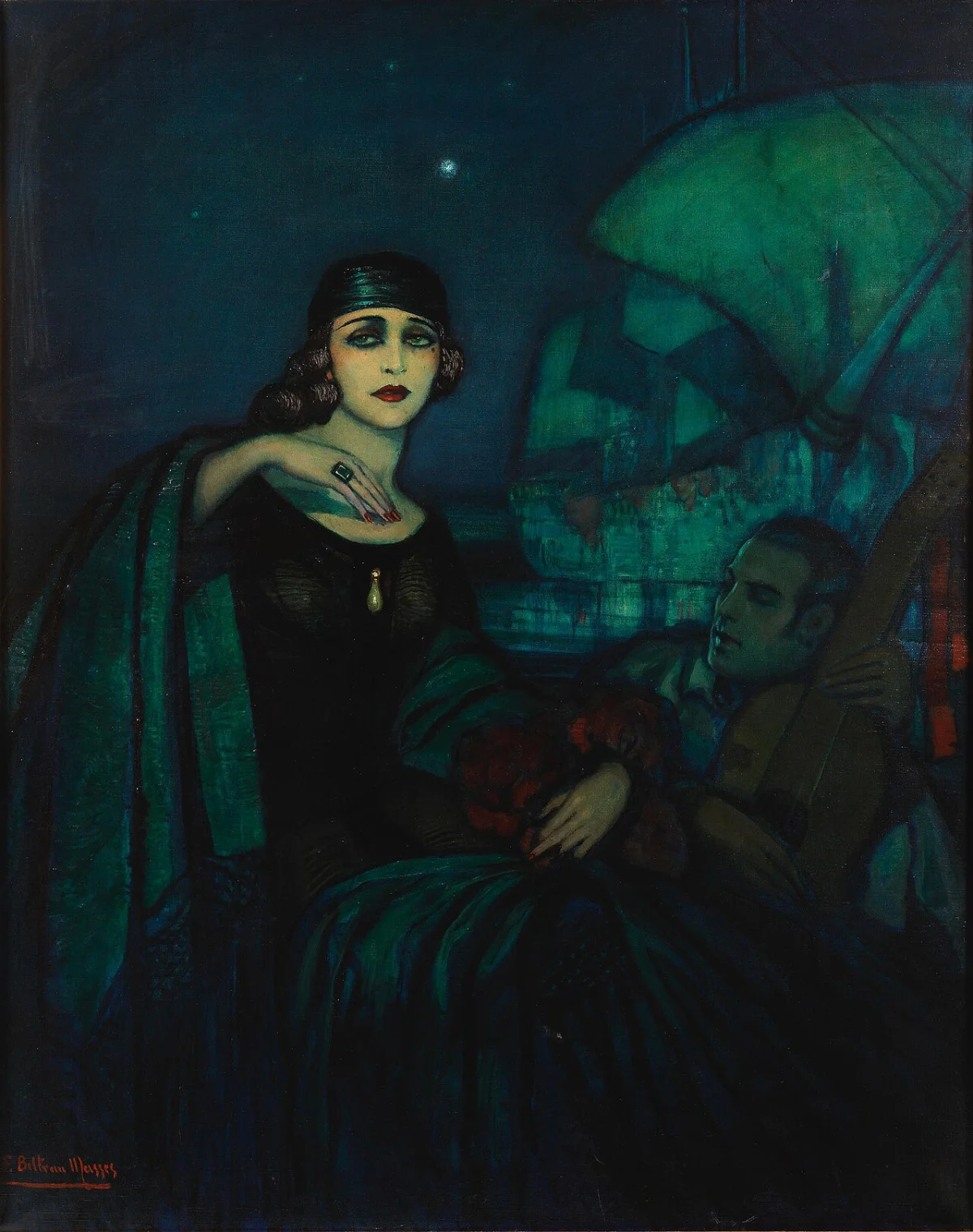
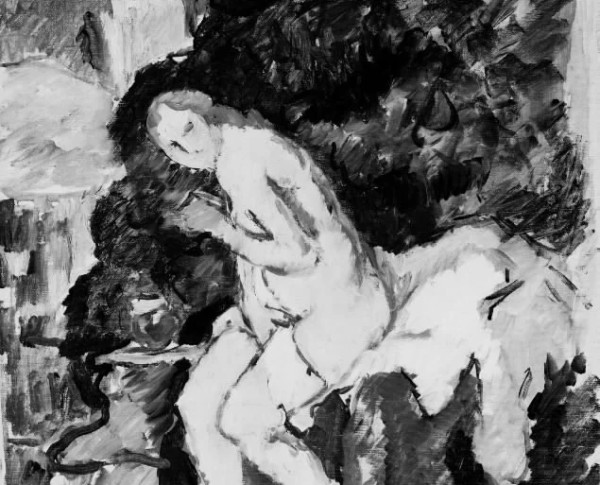
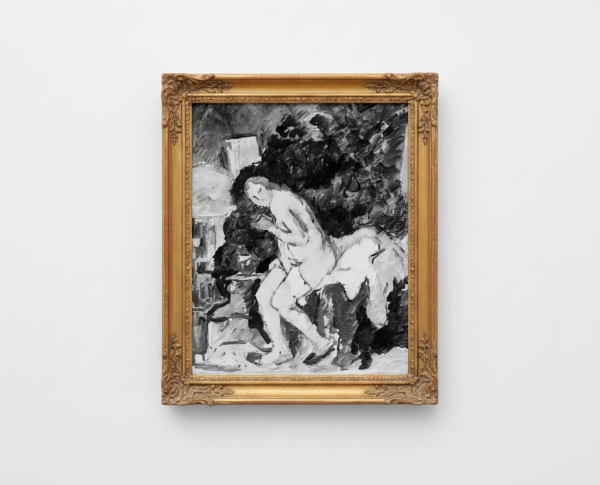
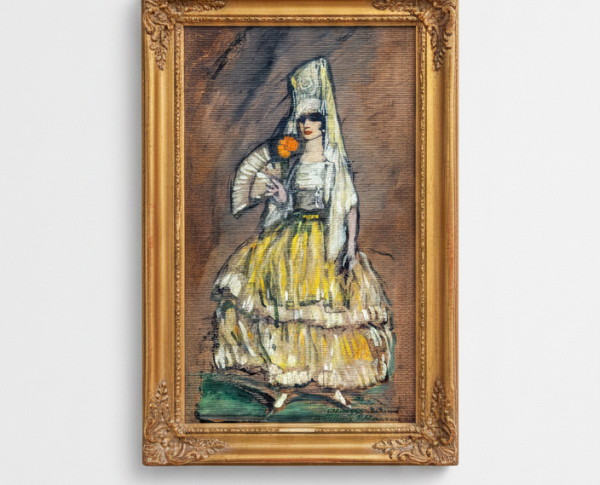
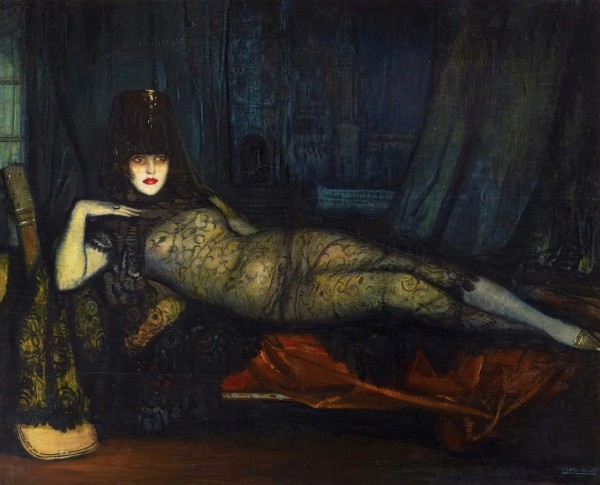
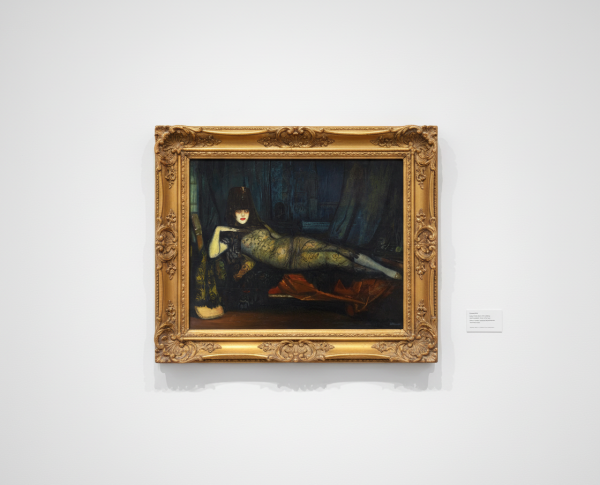
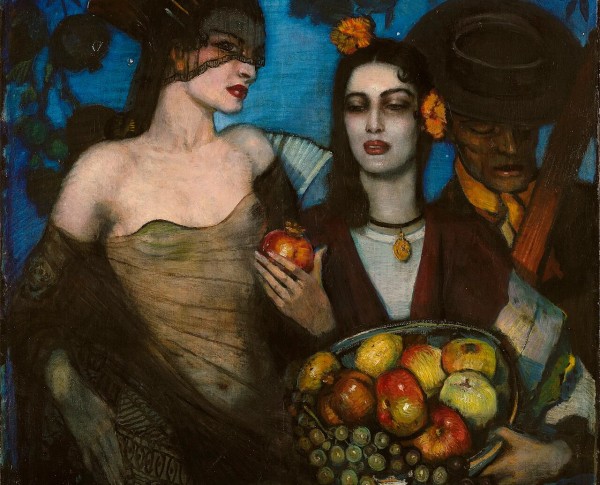
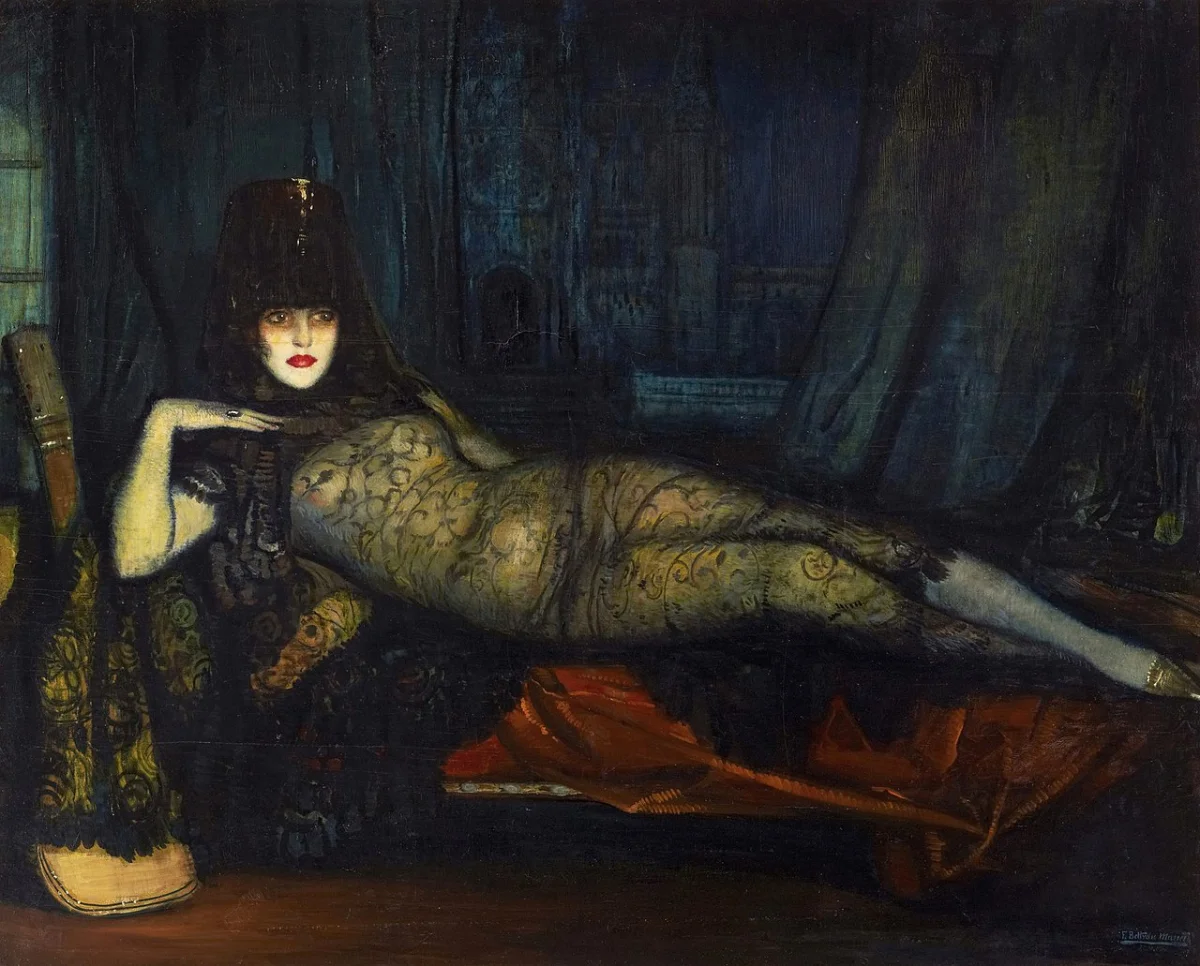
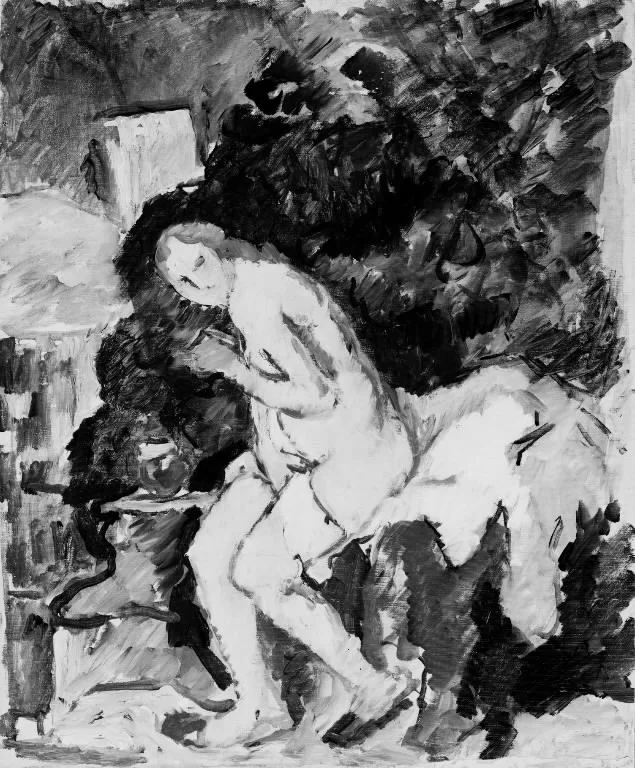
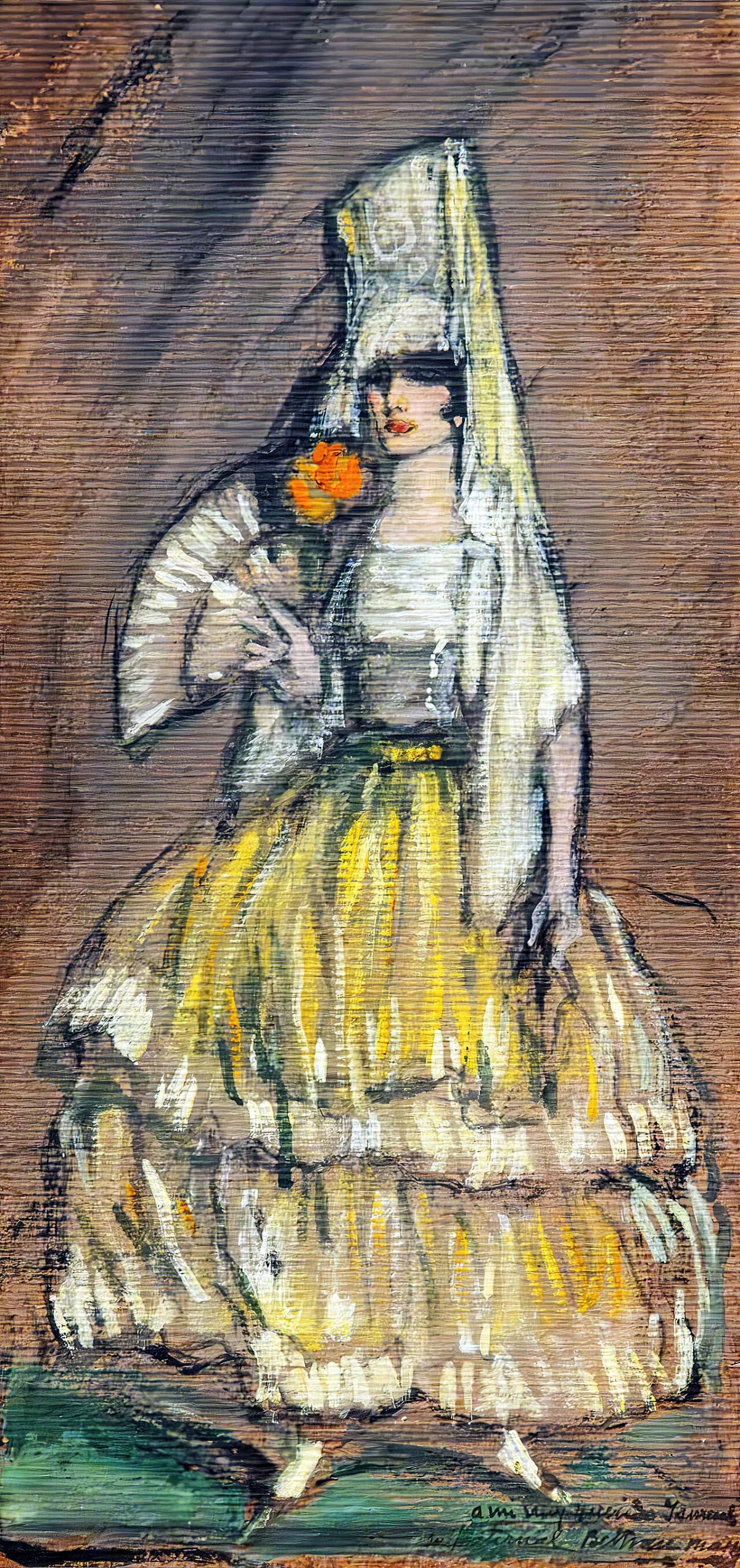
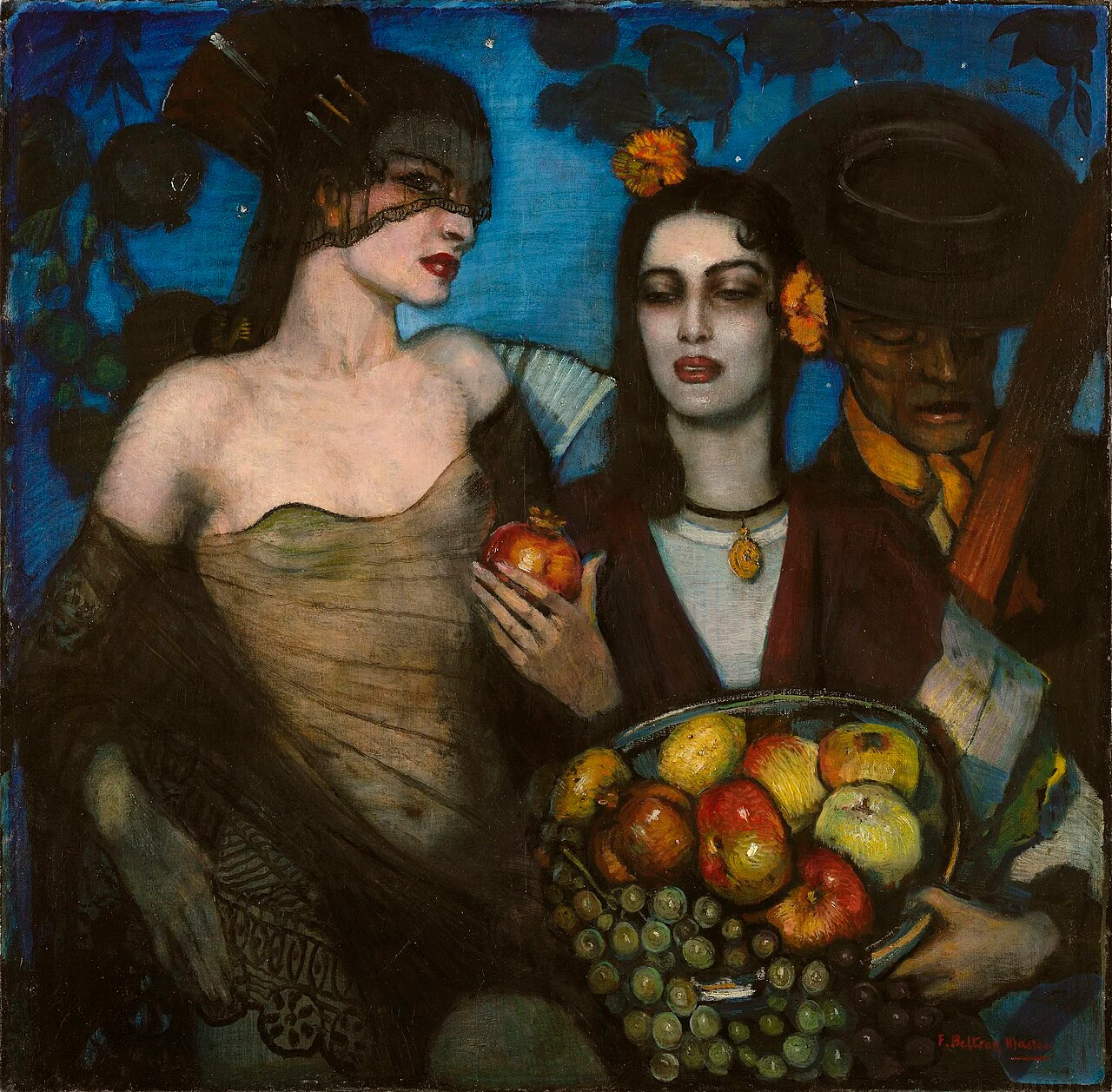
Federico Beltran Masses’ expertise is evident in every detail of "Maja Maldita," where vibrant colors and dramatic contrasts define the composition. The oil on canvas technique allows for rich textures and subtle shading, enhancing the painting’s emotional impact. As a leading figure in Symbolism, Masses infuses his work with both technical brilliance and symbolic meaning. Collectors may also appreciate related pieces, such as " 'Manola' with Mantilla and Fan" and "Susanna."
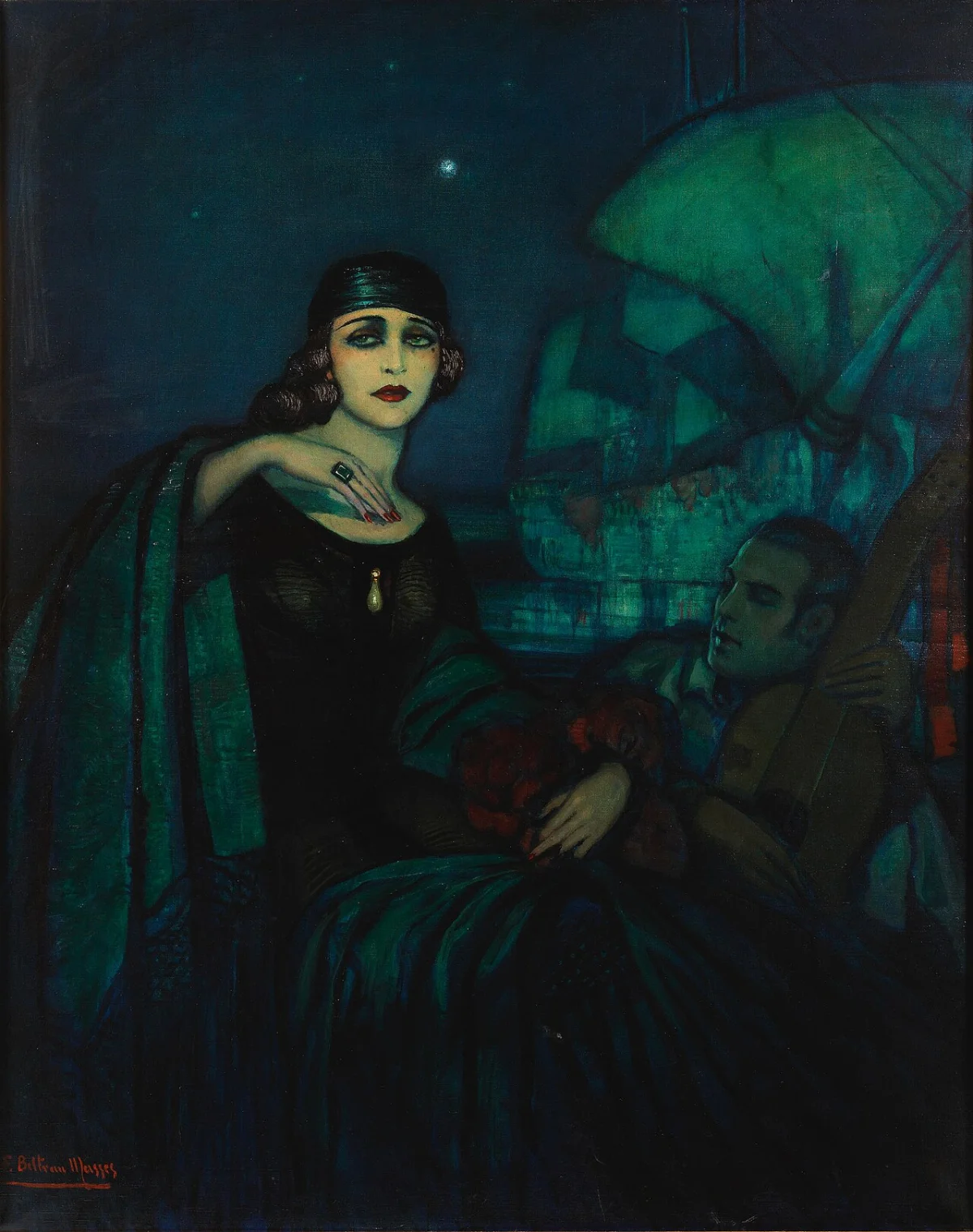
"Maja Maldita" is more than a portrait; it is a visual narrative steeped in symbolism and intrigue. Federico Beltran Masses, known for his evocative storytelling, uses the Symbolism movement’s language to convey hidden meanings through his hand-painted oil painting. The subject’s enigmatic gaze and the painting’s moody palette invite viewers to interpret its secrets. Complement your collection with other symbolic works like " 'Manola' with Mantilla and Fan" or " Susanna."
For art enthusiasts, "Maja Maldita" by Federico Beltran Masses represents a unique opportunity to own a stunning fine art painting for sale from the Symbolism era. Its oil on canvas medium ensures lasting quality and visual richness. This masterpiece pairs beautifully with related products, including " 'Manola' with Mantilla and Fan" and "Susanna," offering collectors a chance to build a cohesive and meaningful collection of Symbolist art.
When Art Meets History
Federico Beltran Masses, a celebrated Spanish painter, created "Maja Maldita" during the flourishing era of the Symbolism movement. This hand-painted oil painting stands as a testament to the artist’s fascination with enigmatic subjects and the cultural crossroads of early 20th-century Europe. Like many of his works, "Maja Maldita" reflects the enigmatic allure of Spanish tradition, echoing a period when Symbolism challenged viewers to look beyond the literal and embrace hidden meanings.
Techniques That Speak
The technique behind "Maja Maldita" is as captivating as its subject. Federico Beltran Masses masterfully used oil on canvas to create luminous textures and deep, velvety shadows. His use of rich, saturated colors and dramatic contrasts invites viewers into a world where reality and dreamscape intertwine. This approach, characteristic of Symbolism, can also be seen in other fine art painting for sale by the artist, each demonstrating his technical prowess and unique vision.
Emotions on Display
"Maja Maldita" evokes a tapestry of emotions, from intrigue to melancholy, much like other oil on canvas masterpieces by Federico Beltran Masses. The subject’s mysterious gaze and the haunting atmosphere encourage the viewer to delve into their own interpretations, a hallmark of the Symbolism movement. Through subtle gestures and expressive color choices, the artist elicits an emotional response, making this painting a profound exploration of the human psyche and symbolic storytelling.
Coveted by Collectors
Collectors and art enthusiasts are drawn to "Maja Maldita" for its mesmerizing beauty and historical significance within the Symbolism movement. As a hand-painted oil painting by Federico Beltran Masses, it represents a rare opportunity for those seeking a fine art painting for sale with both aesthetic and cultural value. The enduring allure of this masterpiece ensures its place in prestigious collections, alongside other remarkable works by the artist, admired for their mystique and technical brilliance.
Frequently Asked Questions About Maja Maldita
What is the historical context of "Maja Maldita"?
"Maja Maldita," painted by Federico Beltran Masses in the early 20th century, reflects the cultural and artistic movements of the time, particularly the influence of Spanish modernism and the exploration of sensuality in art.
Who is the subject of "Maja Maldita"?
The painting depicts a woman, often interpreted as a representation of the "Maja," a term used to describe a fashionable woman in 18th-century Spain, symbolizing both beauty and rebellion against societal norms.
What artistic techniques did Federico Beltran Masses employ in "Maja Maldita"?
Beltran Masses utilized a combination of vibrant colors, bold brushwork, and a focus on light and shadow to create a sense of depth and emotion, characteristic of his unique style and the broader trends of the time.
What symbols are present in "Maja Maldita"?
The painting incorporates various symbols, such as the woman's pose and attire, which convey themes of seduction, freedom, and defiance, reflecting the duality of the "Maja" as both an object of desire and a figure of empowerment.
How does "Maja Maldita" compare to other works by Federico Beltran Masses?
Compared to his other works, "Maja Maldita" stands out for its intense emotional expression and the exploration of feminine identity, showcasing Beltran Masses' evolution as an artist and his engagement with contemporary themes.
What is the significance of the title "Maja Maldita"?
The title translates to "Cursed Maja," suggesting a complex relationship between beauty and societal judgment, and highlighting the struggles faced by women who defy conventional expectations.
In what ways does "Maja Maldita" reflect the role of women in early 20th-century society?
The painting captures the tension between traditional roles and emerging modern identities for women, illustrating their desire for autonomy and self-expression during a period of significant social change.
What influences can be seen in the style of "Maja Maldita"?
The painting exhibits influences from both Impressionism and Symbolism, as seen in its emphasis on color and emotional resonance, which were pivotal in shaping the modern art landscape of the early 20th century.
How has "Maja Maldita" been received by critics and art historians?
Critics and art historians have praised "Maja Maldita" for its bold representation of femininity and its technical prowess, often highlighting it as a significant work within the context of Spanish modern art.
What themes are explored in "Maja Maldita"?
The painting explores themes of desire, identity, and societal constraints, inviting viewers to contemplate the complexities of female representation and the interplay between beauty and moral judgment.






















_GFM_Painting_(1).webp)


 100% Hand-Painted: Finished in 3-6 Weeks

.png)















_(1).webp)