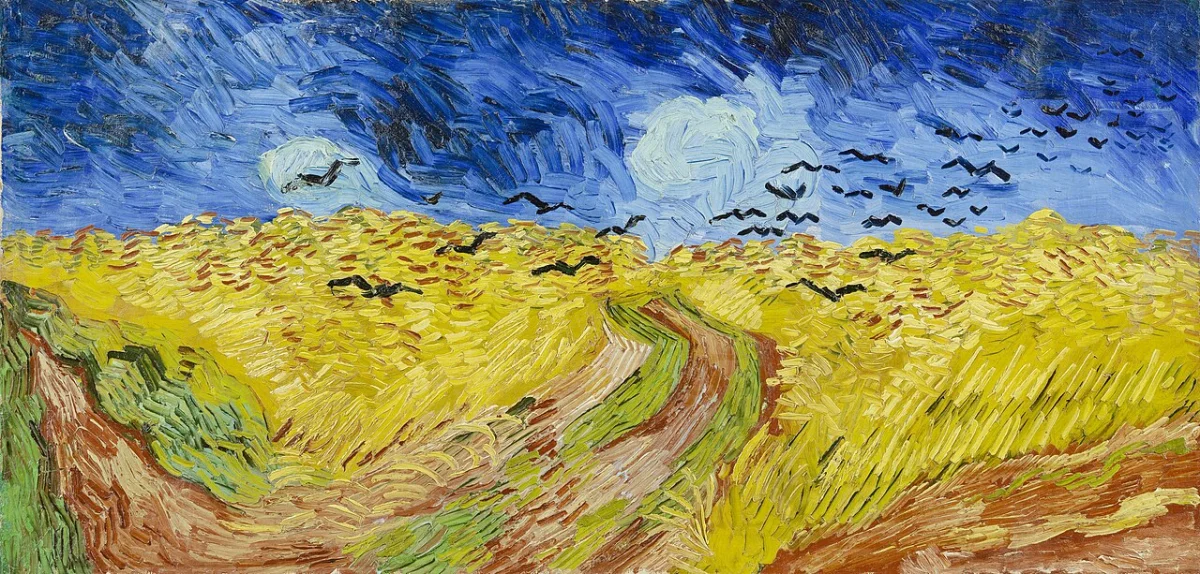
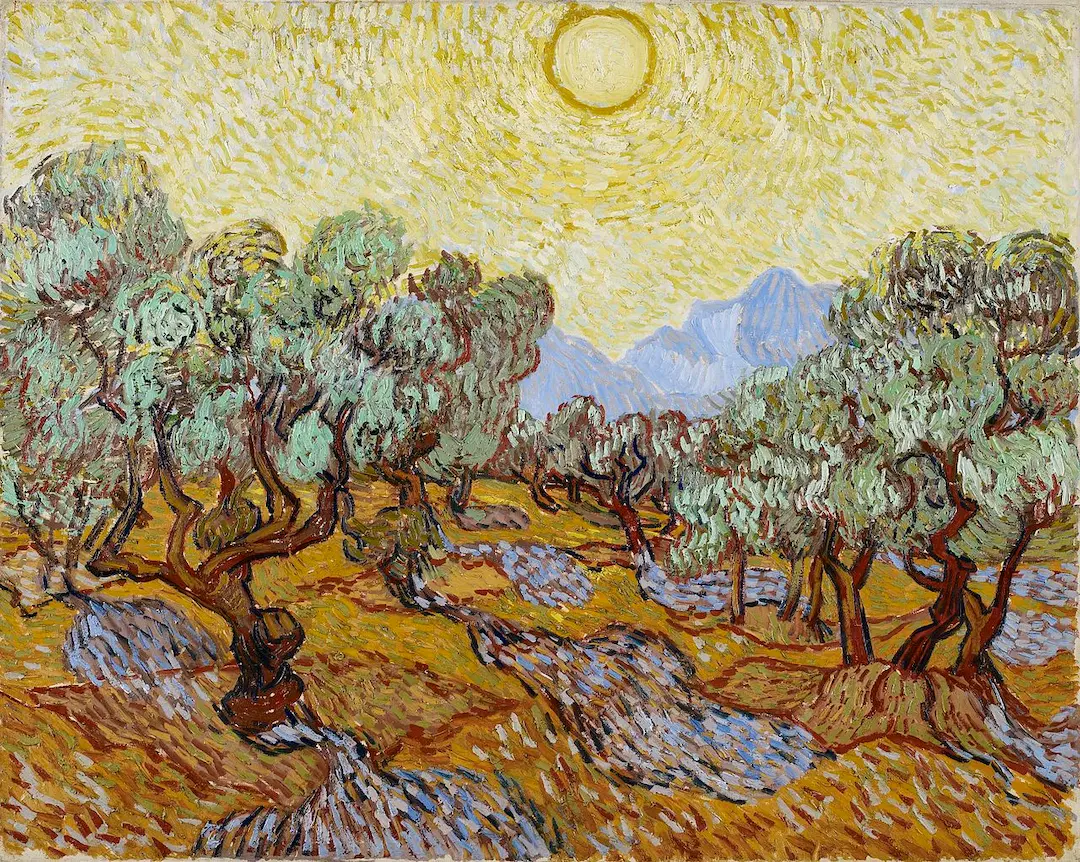
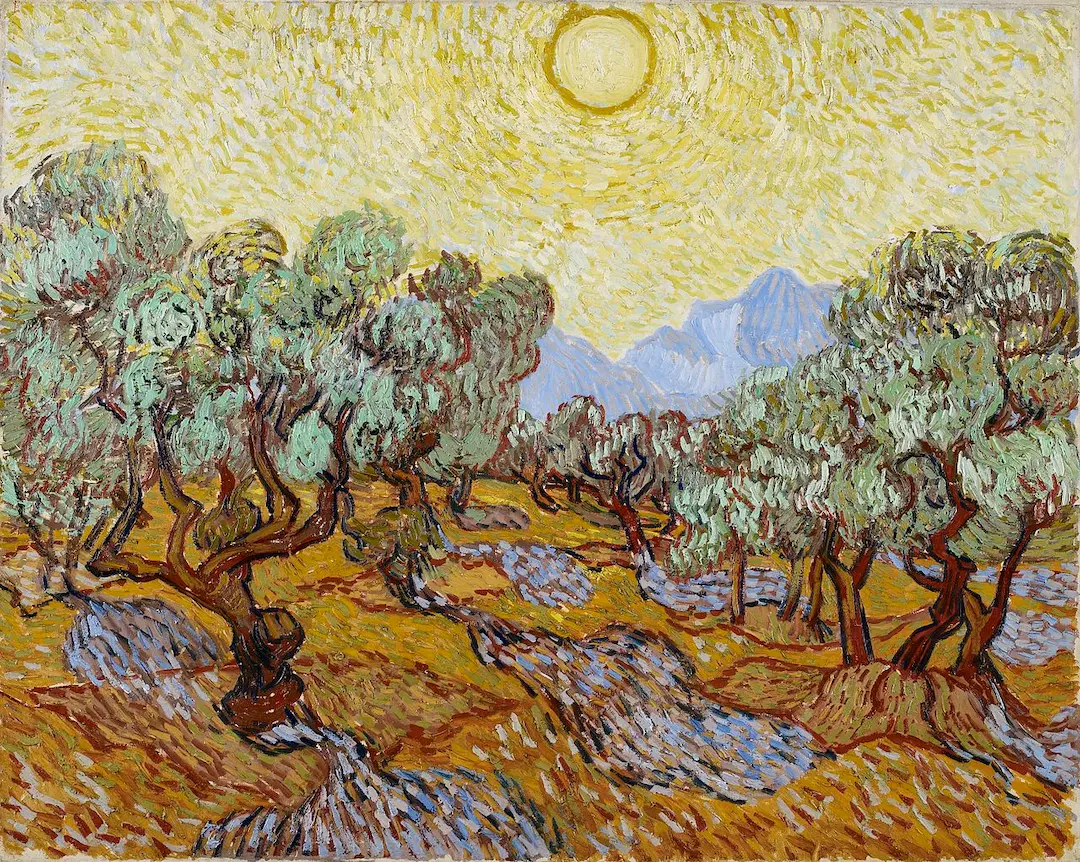
Van Gogh’s mastery is evident in every detail of "Olive Trees With Yellow Sky And Sun," where swirling brushstrokes and bold contrasts bring the landscape to life. Painted in oil on canvas, this work embodies the Post-Impressionist movement’s dedication to emotional expression. Collectors often pair this piece with related products like "Wheat Field Under Clouded Sky" and "Vase With Twelve Sunflowers II" to celebrate Van Gogh’s progression as an artist and his unique approach to color and form.
"Olive Trees With Yellow Sky And Sun" is rich in symbolism, with the golden sky and glowing sun representing hope and renewal. Van Gogh’s use of vibrant hues and organic forms transforms a simple olive grove into a profound narrative. This fine art painting for sale allows admirers to own a piece of Van Gogh’s storytelling tradition, just as with his other masterpieces such as "Skull With Burning Cigarette" and "The Drinkers," each telling its own unique story.
For art enthusiasts, "Olive Trees With Yellow Sky And Sun" is a treasure that epitomizes the allure of Post-Impressionism. As a hand-painted oil painting, it stands alongside Van Gogh’s celebrated works like "Bridges Across The Seine At Asnieres" and "Autumn Landscape with Four Trees." Acquiring this oil on canvas masterpiece not only enriches a collection but also brings the timeless beauty and emotional depth of Van Gogh’s vision into any home or gallery.
When Art Meets History
"Olive Trees With Yellow Sky And Sun" by Vincent Van Gogh is a prime example of the Post-Impressionism movement, capturing a moment where art and history intertwine. Painted during Van Gogh’s prolific period in the South of France, this hand-painted oil painting stands alongside masterpieces like "Two Tahitian Women" and "One Of The Family." The vibrant landscape reflects the era’s artistic evolution, making it an essential reference point for enthusiasts of Post-Impressionist art history.
Techniques That Speak
Van Gogh’s "Olive Trees With Yellow Sky And Sun" showcases his mastery of oil on canvas, using bold brushstrokes and a radiant palette. The swirling yellows and greens evoke a sense of movement, a hallmark of Post-Impressionism. This technique is reminiscent of the dynamic style seen in "A Sunday Afternoon on the Island of La Grande Jatte." Each stroke in this painting demonstrates Van Gogh’s innovative approach, making it a benchmark for those studying oil on canvas techniques.
Emotions on Display
In "Olive Trees With Yellow Sky And Sun," Vincent Van Gogh channels intense emotion through color and composition. The luminous sky and expressive olive trees create a vivid atmosphere, inviting viewers to feel the artist’s passion. This fine art painting for sale resonates with the emotional depth found in related works like "One Of The Family" and "Two Tahitian Women." The painting’s emotional impact is a testament to Van Gogh’s unique place within the Post-Impressionism movement.
Coveted by Collectors
Collectors worldwide highly prize "Olive Trees With Yellow Sky And Sun" for its historical significance and artistic mastery. As a hand-painted oil painting by Vincent Van Gogh, it stands as a symbol of the Post-Impressionism movement’s enduring appeal. Alongside celebrated works such as "A Sunday Afternoon on the Island of La Grande Jatte," it remains a sought-after piece, with art lovers and collectors eager to own such an iconic fine art painting for sale.
Related Post-Impressionism Hand-Painted Oil Paintings by Other Artists
Other Famous Post-Impressionism Artists:
Frequently Asked Questions About Olive Trees With Yellow Sky And Sun
What is the historical context of "Olive Trees With Yellow Sky And Sun"?
This painting was created in 1889 during Van Gogh's stay at the Saint-Paul-de-Mausole asylum in Saint-Rémy-de-Provence, France. It reflects his emotional state and his fascination with the natural landscape surrounding the asylum.
What artistic techniques did Van Gogh employ in this painting?
Van Gogh utilized his signature impasto technique, applying thick layers of paint to create texture and movement. The swirling brushstrokes convey a sense of dynamism and emotional intensity.
What is the significance of the olive trees in this artwork?
Olive trees symbolize peace and resilience. In the context of Van Gogh's life, they may represent his longing for stability and tranquility amidst his personal struggles.
How does the color palette contribute to the painting's mood?
The vibrant yellows of the sky juxtaposed with the deep greens of the olive trees create a striking contrast that evokes feelings of warmth and intensity, reflecting Van Gogh's emotional turmoil and passion for nature.
In what way does this painting reflect Van Gogh's mental state?
The vivid colors and expressive brushwork in "Olive Trees With Yellow Sky And Sun" suggest a tumultuous emotional landscape, indicative of Van Gogh's struggle with mental health during his time in the asylum.
What influences can be seen in Van Gogh's style in this painting?
Van Gogh was influenced by Impressionism and Post-Impressionism, as seen in his use of bold colors and expressive forms. This painting also reflects the influence of Japanese woodblock prints, particularly in its composition and color contrasts.
What themes are explored in "Olive Trees With Yellow Sky And Sun"?
The painting explores themes of nature, isolation, and the search for inner peace. It captures the beauty of the natural world while simultaneously reflecting the artist's inner struggles.
How does this work compare to Van Gogh's other landscape paintings?
Compared to his earlier landscape works, "Olive Trees With Yellow Sky And Sun" showcases a more emotional and expressive style, emphasizing the psychological connection between the artist and the landscape.
What is the significance of the yellow sky in this painting?
The yellow sky can be interpreted as a representation of hope or enlightenment, contrasting with the darker elements of Van Gogh's life. It also enhances the emotional intensity of the scene, inviting viewers to engage with the artist's feelings.
Where can I view "Olive Trees With Yellow Sky And Sun"?
This iconic painting is housed in the collection of the Musée d'Orsay in Paris, France, where it is part of a larger exhibition of Van Gogh's works, showcasing his evolution as an artist.






















_GFM_Painting_(1).webp)


 100% Hand-Painted: Finished in 3-6 Weeks

.png)
















_(1).webp)