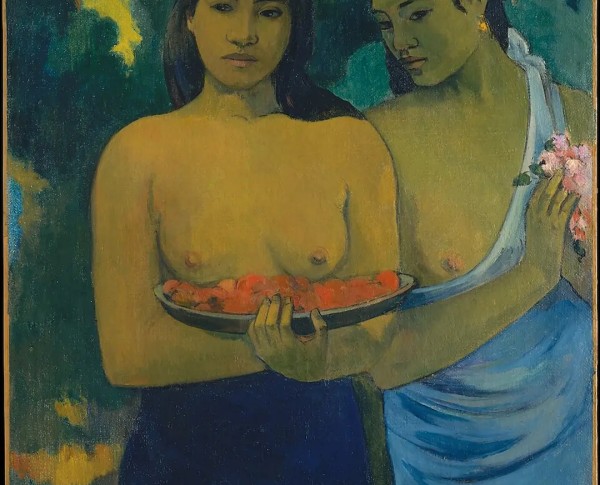
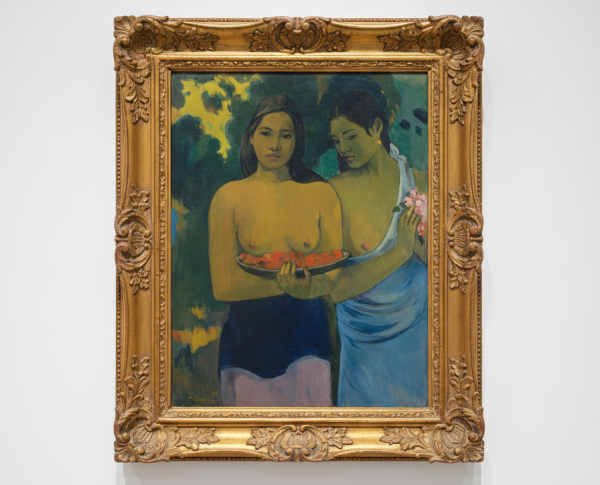
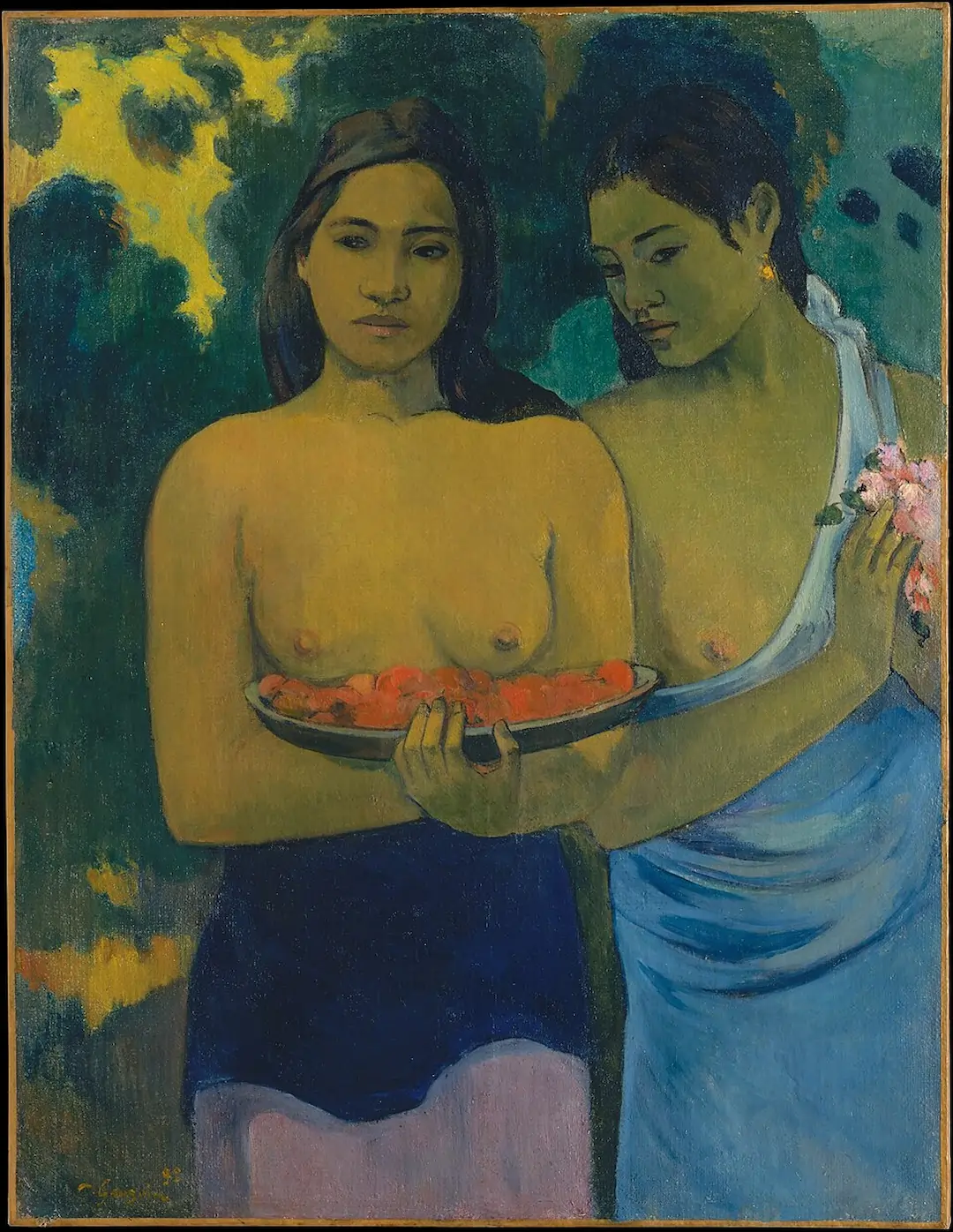
Paul Gauguin’s expertise is evident in every detail of "Two Tahitian Women," where his innovative techniques in oil on canvas breathe life into the figures. The lush, vibrant hues and expressive forms are hallmarks of Post-Impressionism, and they showcase Gauguin’s mastery. Collectors and admirers alike appreciate how this oil on canvas radiates both beauty and emotion, representing a pivotal moment in art history and offering inspiration for those seeking similar works.
Within "Two Tahitian Women," Paul Gauguin weaves stories and symbols reflective of Tahitian life and spirituality. The painting invites viewers to interpret the deeper meanings behind the women’s poses and expressions. As a fine art painting for sale, it captivates with its narrative depth and symbolic richness, making it a valuable addition to any collection. Gauguin’s Post-Impressionist approach ensures that each viewing reveals new layers of meaning and artistry.
A true gem for collectors, "Two Tahitian Women" by Paul Gauguin embodies the essence of Post-Impressionism. This hand-painted oil painting stands out for its historical significance and visual appeal. For those looking to invest in a fine art painting for sale, Gauguin’s masterpiece offers enduring value and a unique glimpse into the artist’s world. It remains a prized choice among related products for discerning art lovers and collectors worldwide.
When Art Meets History
"Two Tahitian Women" by Paul Gauguin is a hallmark of the Post-Impressionism movement, capturing a pivotal moment in art history. Painted in 1899, this hand-painted oil painting reflects Gauguin’s fascination with the vibrant culture of Tahiti. Like his contemporaries who created masterpieces such as "Starry Night" and "Irises," Gauguin sought new ways to express emotion and narrative. This work stands as a testament to the enduring influence of Post-Impressionism on modern art.
Techniques That Speak
Paul Gauguin’s "Two Tahitian Women" showcases his mastery of oil on canvas, using bold colors and distinct brushstrokes to evoke the lush landscapes and warmth of Tahiti. This technique, also seen in "Branches with Almond Blossom," allows for a depth and vibrancy that characterizes the Post-Impressionism movement. Gauguin’s innovative use of color and form sets this painting apart, making it a remarkable example for those seeking a fine art painting for sale.
Emotions on Display
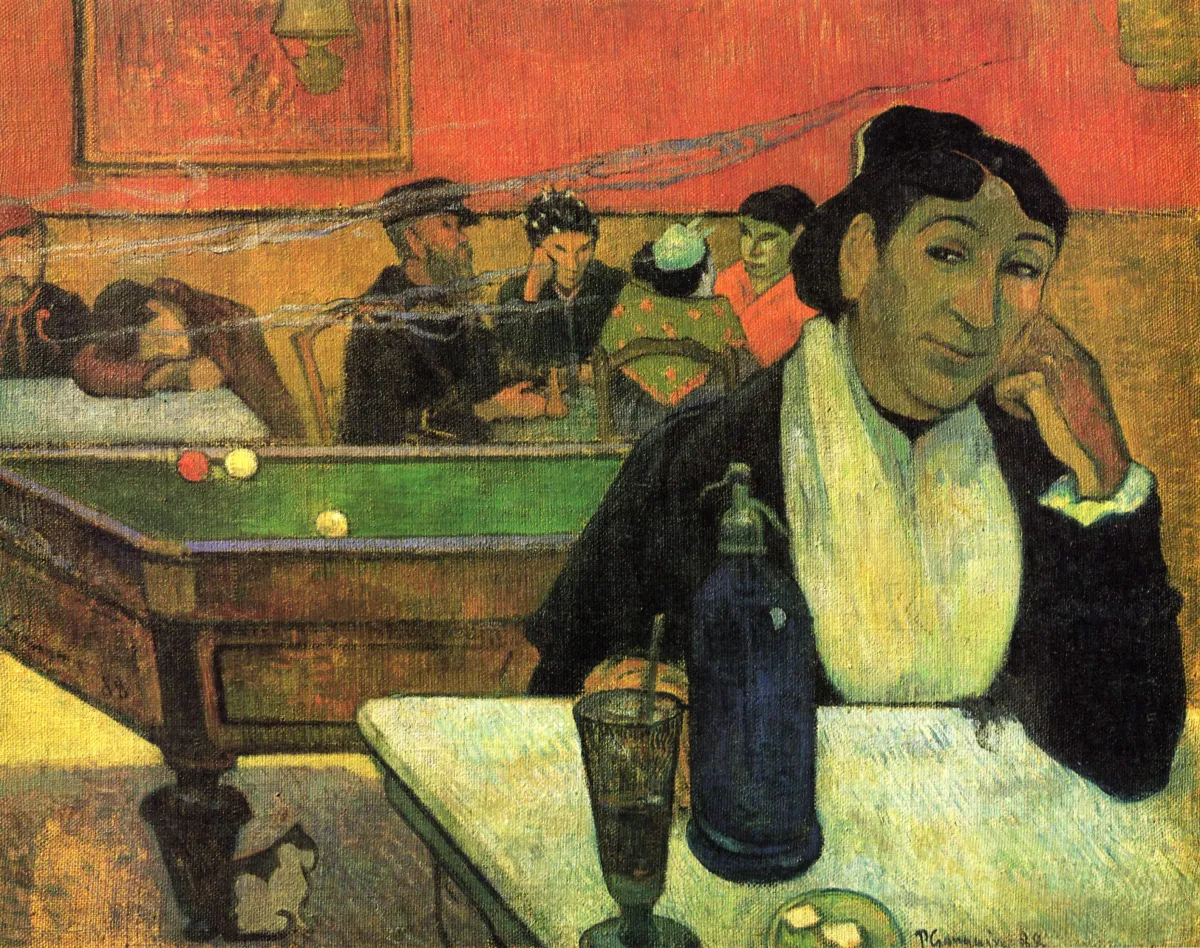
The emotional resonance in "Two Tahitian Women" is palpable, as Gauguin brings forth a sense of intimacy and serenity. Through his unique approach to oil on canvas, he captures the essence of his subjects in a way reminiscent of "The Drinkers" and "Cypress against a Starry Sky." The painting’s warm palette and inviting composition draw viewers into a world of calm contemplation, making it a sought-after hand-painted oil painting among art enthusiasts.
Coveted by Collectors
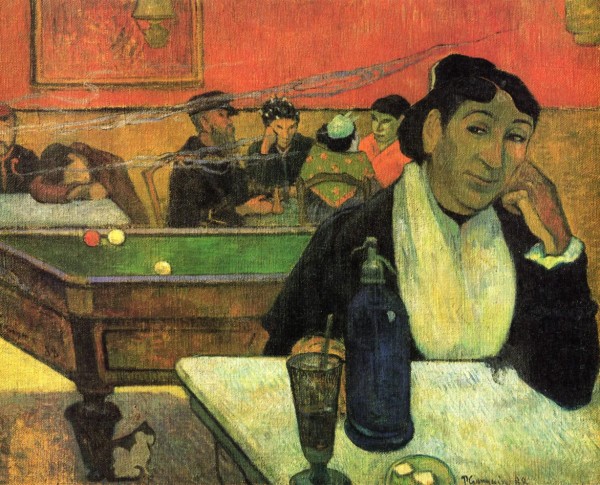
"Two Tahitian Women" remains a highly coveted artwork among collectors, admired for its historical significance and artistic mastery. As a standout piece in the Post-Impressionism movement, it shares the spotlight with related masterpieces like "Starry Night" and "Irises." Collectors seeking a fine art painting for sale are often drawn to Gauguin’s evocative style and the captivating allure of his Tahitian subjects, ensuring this painting’s lasting appeal in the art market.
Related Post-Impressionism Hand-Painted Oil Paintings by Other Artists
Other Famous Post-Impressionism Artists:
Frequently Asked Questions About Two Tahitian Women
What is the historical context of "Two Tahitian Women"?
"Two Tahitian Women" was painted by Paul Gauguin in 1899 during his time in Tahiti, a period marked by his desire to escape European civilization and explore a more primitive, natural lifestyle.
What artistic techniques did Gauguin use in this painting?
Gauguin employed bold colors, simplified forms, and strong outlines, characteristic of his post-impressionist style. He also utilized flat areas of color to create a sense of depth and emotional resonance.
What themes are explored in "Two Tahitian Women"?
The painting explores themes of femininity, cultural identity, and the contrast between Western civilization and the perceived innocence of indigenous life in Tahiti.
How does "Two Tahitian Women" reflect Gauguin's views on colonialism?
The work reflects Gauguin's ambivalence towards colonialism, portraying Tahitian women in a way that romanticizes their culture while also critiquing the impact of European colonization on their lives.
What symbolism can be found in the depiction of the women?
The two women symbolize the duality of Tahitian life, representing both the allure and the complexity of indigenous culture, as well as the artist's own struggles with identity and belonging.
What is the significance of color in "Two Tahitian Women"?
The vibrant colors used in the painting serve to evoke emotion and highlight the beauty of the Tahitian landscape, while also reflecting Gauguin's personal artistic vision and emotional state.
How does this painting fit into Gauguin's overall body of work?
"Two Tahitian Women" is a key work in Gauguin's oeuvre, showcasing his shift towards symbolism and his fascination with non-Western cultures, which became central themes in his later works.
What influence did "Two Tahitian Women" have on modern art?
The painting influenced modern art movements by challenging traditional representation and encouraging artists to explore color, form, and emotional expression beyond realistic depictions.
What is the current location of "Two Tahitian Women"?
"Two Tahitian Women" is part of the collection at the Museum of Fine Arts in Boston, where it continues to be studied and appreciated for its artistic and cultural significance.
How does "Two Tahitian Women" relate to Gauguin's other works from Tahiti?
This painting is part of a series of works Gauguin created during his time in Tahiti, all of which explore similar themes of cultural identity, beauty, and the tension between civilization and nature.






















_GFM_Painting_(1).webp)


 100% Hand-Painted: Finished in 3-6 Weeks

.png)















_(1).webp)