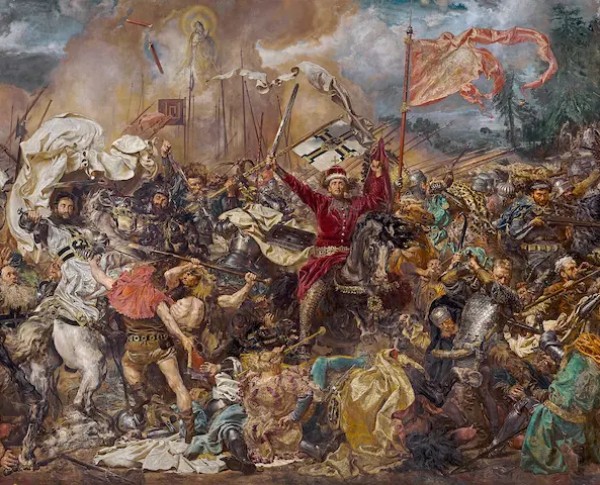
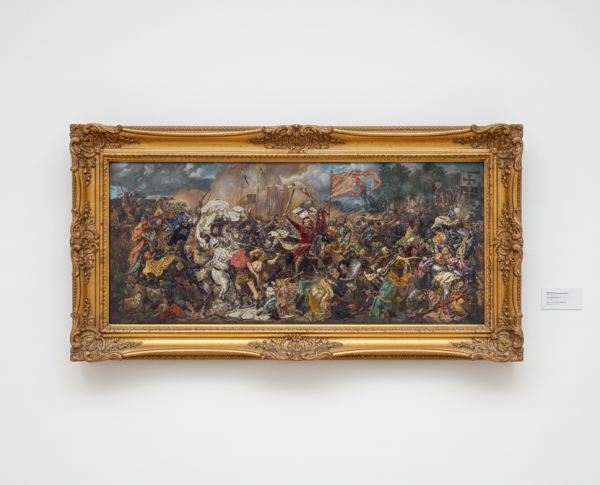
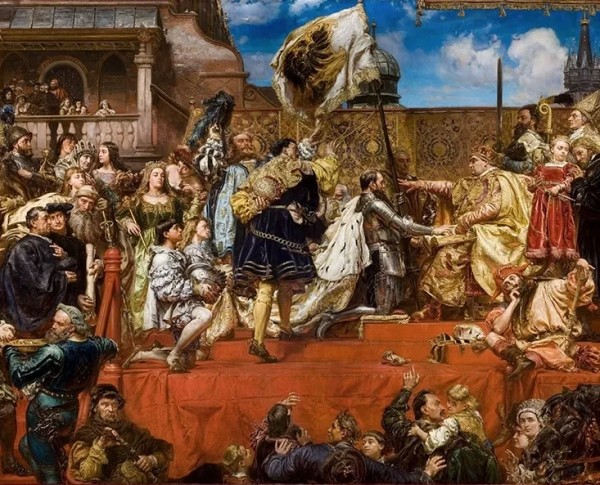
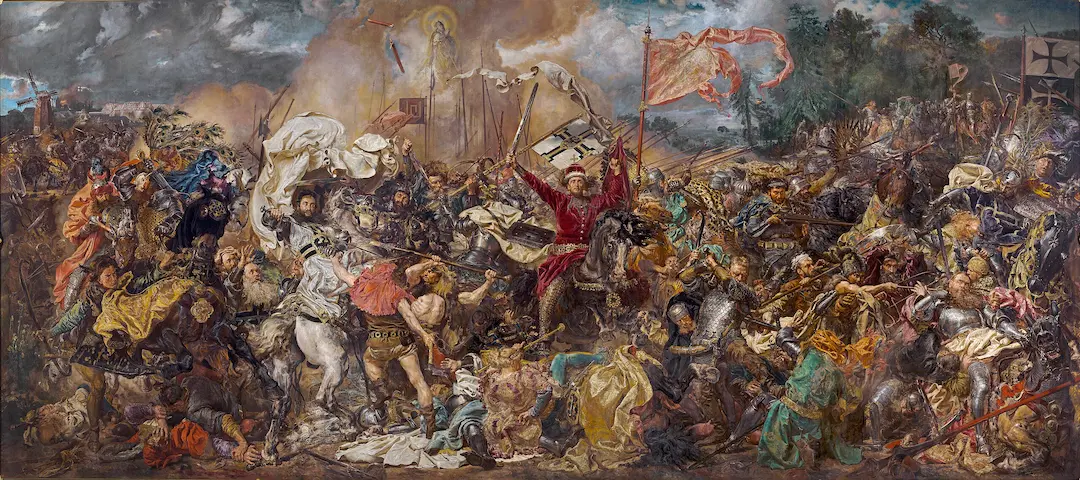
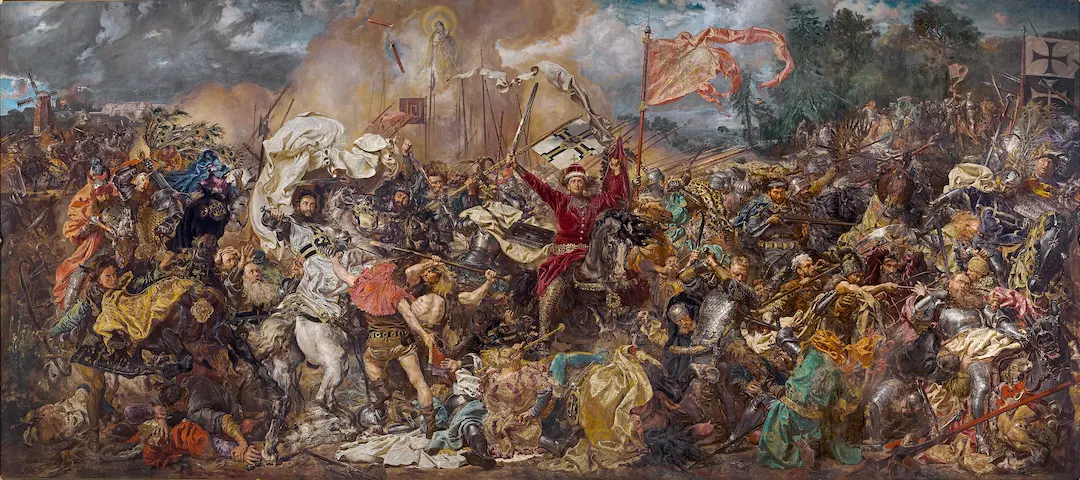
Matejko’s exceptional skill with oil on canvas is showcased in the intricate details and vivid colors of "Battle of Grunwald." Each brushstroke brings the chaotic energy of medieval warfare to life, highlighting the artist’s technical prowess and deep understanding of his subject. As a leading figure in the Historicism movement, Matejko’s use of oil on canvas elevates this scene into a timeless masterpiece, making it an inspiring reference for anyone passionate about classical European art.
"Battle of Grunwald" is more than just a fine art painting for sale; it’s a tapestry of stories and symbols embedded by Jan Matejko. The artist weaves narratives of heroism, sacrifice, and national pride throughout the composition, using vivid imagery and historical figures to convey deeper meanings. As a key work in the Historicism movement, this painting invites viewers to explore the rich interplay between history and art, making it a compelling centerpiece for any collection.
For discerning collectors, "Battle of Grunwald" by Jan Matejko represents the pinnacle of hand-painted oil painting from the Historicism period. Its grand scale, historical significance, and masterful execution make it a coveted addition to any gallery or private collection. As a fine art painting for sale, this piece not only enhances the aesthetic value of a space but also connects collectors to an important chapter of European history through the eyes of a celebrated master.
When Art Meets History
"Battle of Grunwald" by Jan Matejko stands as an iconic hand-painted oil painting representing the Historicism movement. This masterwork commemorates the pivotal 1410 battle, capturing both the chaos and heroism of medieval warfare. Matejko's deep interest in Polish history is evident, much like his other grand historical canvases. Through this oil on canvas, the artist preserves a defining moment, making history accessible to viewers through the visual language of fine art.
Techniques That Speak
Jan Matejko’s "Battle of Grunwald" showcases his mastery with oil on canvas, blending vivid color, dynamic composition, and meticulous detail. The artist’s brushwork brings movement and depth, typical of the Historicism movement. Matejko’s technique invites viewers to examine the chaotic battle scene closely, revealing individual expressions and intricate armor. Collectors and art lovers appreciate how this oil on canvas serves as a technical and narrative benchmark in nineteenth-century European painting.
Emotions on Display
In "Battle of Grunwald," Matejko channels intense emotion, from the terror of conflict to the resilience of the fighters. As a hand-painted oil painting, every stroke amplifies the drama, immersing viewers in the turmoil of the battlefield. The Historicism movement’s focus on storytelling is evident here, as Matejko captures both collective and personal struggles. The painting’s emotional impact rivals any fine art painting for sale, making it a prized centerpiece in historical art collections.
Coveted by Collectors
Collectors worldwide seek out "Battle of Grunwald" for its historical significance and artistic brilliance. As a fine art painting for sale, it embodies the pinnacle of Jan Matejko’s career and the Historicism movement. Its monumental scale and intricate details make it a standout among oil on canvas works. While no related paintings are listed, this masterpiece continues to attract admiration, cementing its place as a highly coveted treasure in the art market.
Frequently Asked Questions About Battle of Grunwald
What historical event does "Battle of Grunwald" depict?
"Battle of Grunwald" depicts the significant battle fought on July 15, 1410, between the Kingdom of Poland and the Grand Duchy of Lithuania against the Teutonic Knights, marking a pivotal moment in the history of Central Europe.
Who was the artist behind "Battle of Grunwald"?
The painting was created by Jan Matejko, a renowned Polish painter known for his historical scenes that capture the essence of Polish national identity and heritage.
What artistic style is employed in "Battle of Grunwald"?
The painting is characterized by the Historicism style, which emphasizes detailed realism and dramatic composition, effectively conveying the intensity and chaos of battle.
What is the significance of the composition in "Battle of Grunwald"?
The composition is dynamic, featuring a multitude of figures engaged in action, which creates a sense of movement and urgency, reflecting the chaos of battle while also highlighting key historical figures.
How does "Battle of Grunwald" symbolize Polish nationalism?
The painting serves as a powerful symbol of Polish nationalism, representing the unity and strength of the Polish and Lithuanian forces against foreign oppression, and is often seen as a celebration of Polish heritage.
What role do colors play in "Battle of Grunwald"?
The use of vibrant colors in the painting enhances the emotional impact, with reds and golds symbolizing valor and glory, while darker tones convey the gravity of war and loss.
Who are the key figures depicted in the painting?
Key figures include King Władysław II Jagiełło, Grand Duke Vytautas of Lithuania, and various knights and soldiers, each representing the diverse coalition that fought against the Teutonic Knights.
What techniques did Jan Matejko use to create depth in the painting?
Matejko employed techniques such as chiaroscuro and perspective to create depth, allowing viewers to feel immersed in the tumultuous scene and enhancing the three-dimensionality of the figures.
How does "Battle of Grunwald" reflect the values of its time?
The painting reflects the values of heroism, sacrifice, and collective identity prevalent in the 19th century, a period marked by national revival and a longing for independence in Poland.
Where can "Battle of Grunwald" be viewed today?
"Battle of Grunwald" is housed in the National Museum in Warsaw, Poland, where it continues to be a focal point for discussions on Polish history and art.






















_GFM_Painting_(1).webp)


 100% Hand-Painted: Finished in 3-6 Weeks

.png)















_(1).webp)