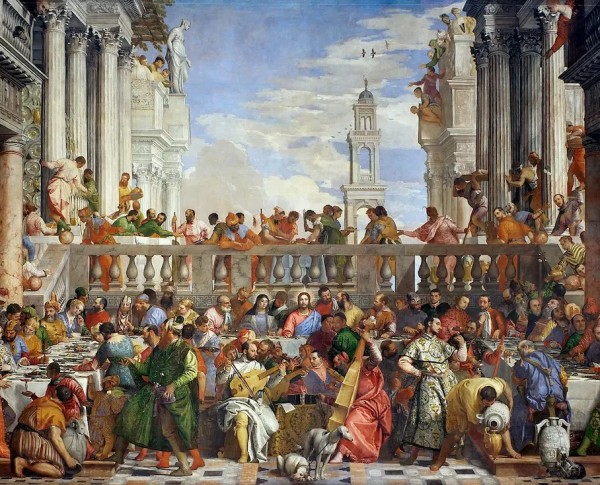
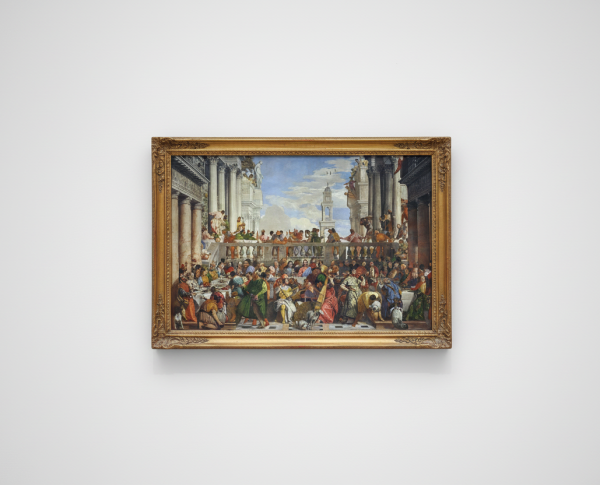
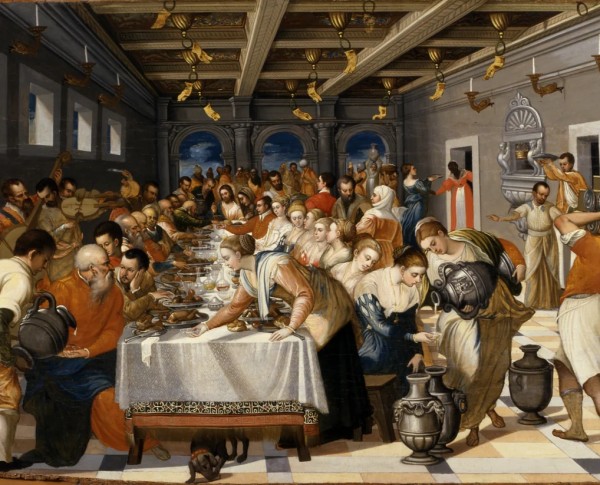
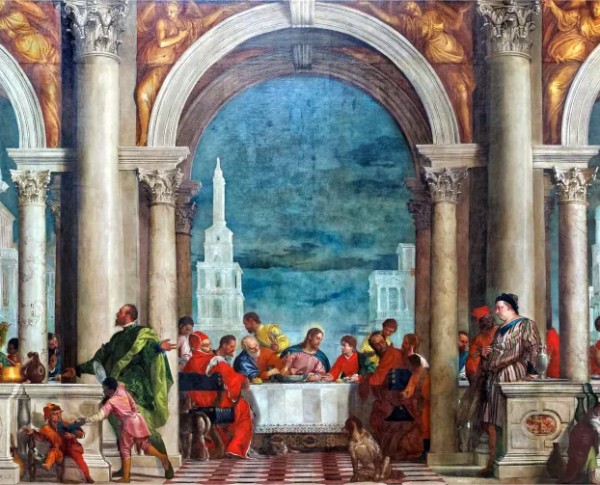
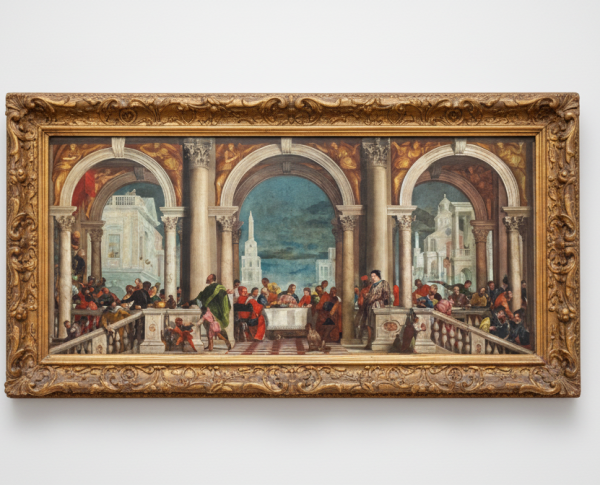
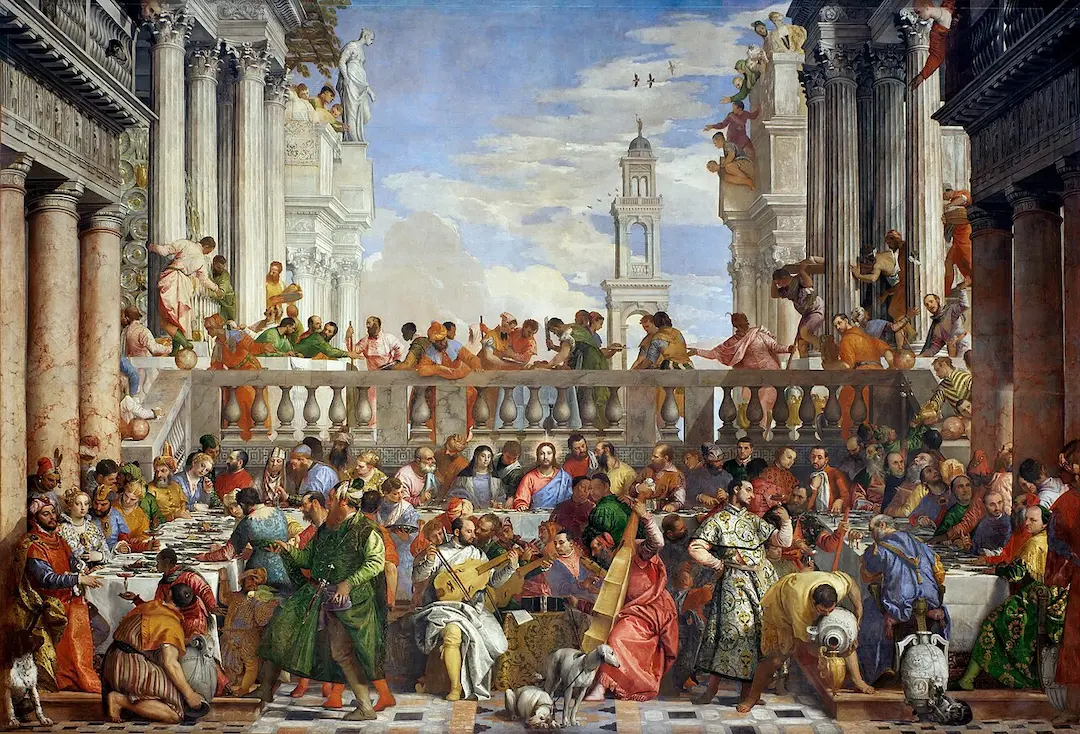
Every inch of "The Wedding at Cana" showcases Veronese’s unparalleled technique with oil on canvas, a hallmark of Renaissance painting. His vibrant colors and intricate compositions highlight his command over the medium. This fine art painting for sale exemplifies the lavish celebrations and opulent details that define Veronese’s style. Collectors often seek companion pieces like "Allegory of the Battle of Lepanto" or "The Marriage Feast at Cana, c.1562" to enrich their collections with Renaissance brilliance.
"The Wedding at Cana" by Paolo Veronese is more than a hand-painted oil painting; it’s a tapestry of stories and symbols. The painting’s bustling scene is filled with meaningful gestures and hidden allegories, reflecting the Renaissance fascination with narrative depth. Veronese’s artistry invites viewers into a world of celebration and transformation. For those drawn to layered storytelling, related products such as "The Finding of Moses" or "Minerva between Geometry and Arithmetics" provide further insight into the era’s rich symbolism.
Owning "The Wedding at Cana" as a fine art painting for sale is more than acquiring a decorative piece—it’s embracing a piece of Renaissance history by Paolo Veronese. The painting’s grandeur and historical significance make it a coveted item among collectors. Those seeking to expand their collection can explore other masterpieces like "The Vision of St. Helena" or "The Marriage Feast at Cana, c.1562," each offering unique glimpses into Veronese’s extraordinary legacy and the Renaissance movement’s artistic achievements.
When Art Meets History
"The Wedding at Cana" by Paolo Veronese stands as a monumental masterpiece of the Renaissance movement, capturing a pivotal biblical event with grandeur and detail. This hand-painted oil painting was commissioned in the 16th century for a Venetian monastery, reflecting both the artistic and religious fervor of its era. Veronese’s work sits alongside other Renaissance marvels, exemplifying how artists like him used their craft to immortalize significant moments in history.
Techniques That Speak
Paolo Veronese’s use of oil on canvas in "The Wedding at Cana" demonstrates the technical brilliance that defines Renaissance art. The painting showcases his mastery in combining vibrant colors, intricate details, and dynamic compositions. Veronese’s techniques bring life to the scene, making viewers feel present at the biblical feast. His approach to oil on canvas influenced countless artists, setting a standard for large-scale narrative works during the Renaissance period.
Emotions on Display
In "The Wedding at Cana," Veronese conveys a spectrum of emotions, from joy to reverence, through expressive faces and lively gestures. This fine art painting for sale remains celebrated for its ability to evoke a sense of participation in the festivities. As with many Renaissance works, the artist’s skillful depiction of human interactions draws viewers into the narrative, creating a lasting emotional connection that transcends centuries.
Coveted by Collectors
Collectors and art enthusiasts highly value "The Wedding at Cana" for its historical significance and artistic brilliance. As a hand-painted oil painting by Paolo Veronese, it represents the pinnacle of Renaissance creativity. While the original resides in the Louvre, reproductions and studies are coveted by those seeking a piece of art history. This masterpiece, like other renowned works from the movement, continues to inspire and attract collectors worldwide.
Frequently Asked Questions About The Wedding at Cana
What is the historical significance of The Wedding at Cana?
The Wedding at Cana is significant as it depicts one of the first miracles of Jesus, where he transforms water into wine. This event is described in the Gospel of John and symbolizes the beginning of Jesus' public ministry.
Who commissioned The Wedding at Cana and for what purpose?
The painting was commissioned by the Benedictine monks of San Giorgio Maggiore in Venice. It was intended to adorn the refectory of the monastery, serving both a decorative and didactic purpose for the monks and their guests.
What artistic techniques did Paolo Veronese use in The Wedding at Cana?
Veronese employed techniques such as vibrant color palettes, dramatic lighting, and a complex composition to create a sense of grandeur and movement. His use of perspective draws the viewer's eye into the scene, enhancing the narrative quality of the painting.
How does The Wedding at Cana reflect the Mannerist style?
The Wedding at Cana exemplifies Mannerist characteristics through its elongated figures, exaggerated poses, and intricate arrangements. Veronese's focus on elegance and beauty over naturalism aligns with the Mannerist movement's ideals.
What symbolic meanings are present in The Wedding at Cana?
The painting is rich in symbolism, with the transformation of water into wine representing the joy and abundance of the Kingdom of God. Additionally, the presence of guests at the wedding signifies community and the importance of social bonds.
What role does color play in The Wedding at Cana?
Color plays a crucial role in conveying emotion and narrative in The Wedding at Cana. The vibrant reds and golds evoke a sense of celebration, while the contrasting cool tones highlight the figures and create depth within the composition.
Who are the key figures depicted in The Wedding at Cana?
The central figures include Jesus and the Virgin Mary, who are positioned prominently in the scene. Other notable figures include the wedding guests, who represent a diverse array of social classes, emphasizing the universality of Christ's message.
What is the significance of the architectural elements in the painting?
The architectural elements in The Wedding at Cana, including the grand columns and arches, serve to elevate the scene and create a sense of divine presence. They also reflect the Renaissance interest in classical architecture, linking the biblical narrative to contemporary Venetian culture.
How has The Wedding at Cana influenced later artists?
The Wedding at Cana has had a lasting impact on artists through its innovative composition and use of color. Many later artists have drawn inspiration from Veronese's ability to blend narrative with grandeur, influencing works in both religious and secular contexts.
Where can The Wedding at Cana be viewed today?
The Wedding at Cana is housed in the Louvre Museum in Paris, France. It remains one of the highlights of the museum's collection, attracting visitors interested in Renaissance art and its historical context.






















_GFM_Painting_(1).webp)

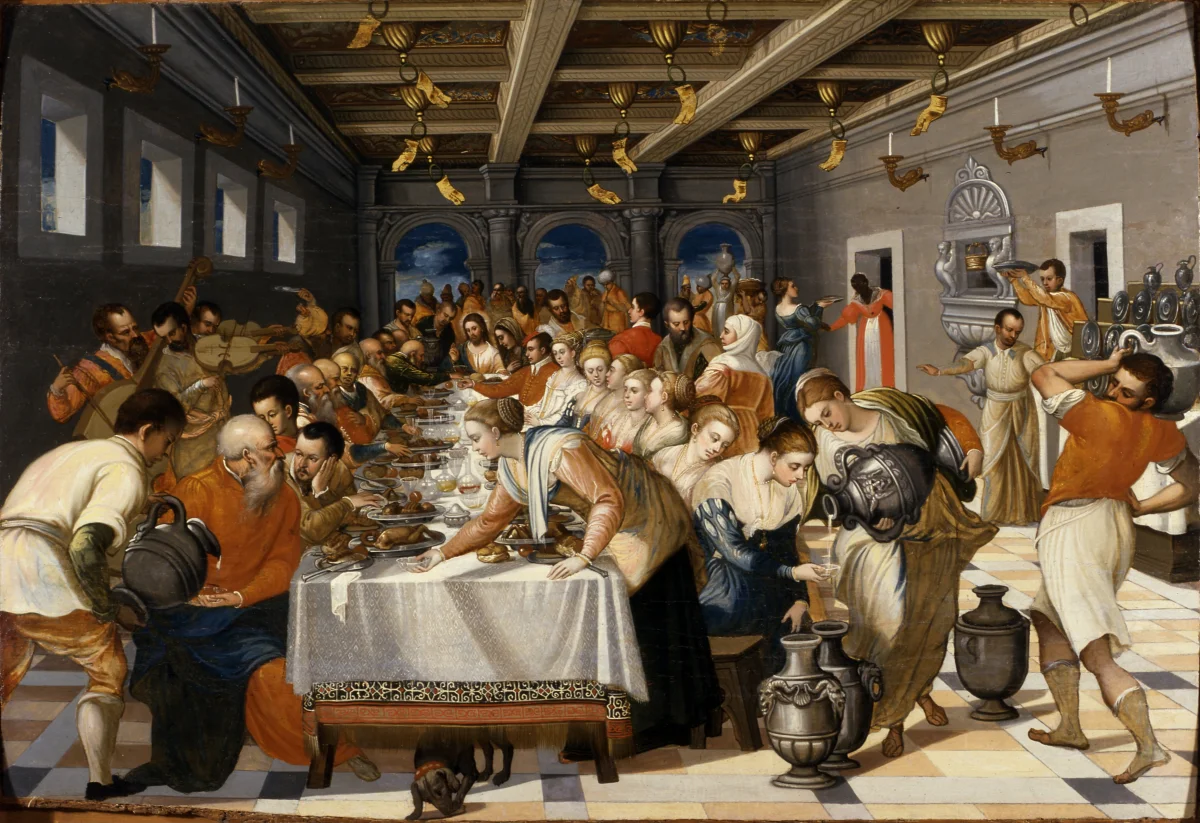

 100% Hand-Painted: Finished in 3-6 Weeks

.png)















_(1).webp)