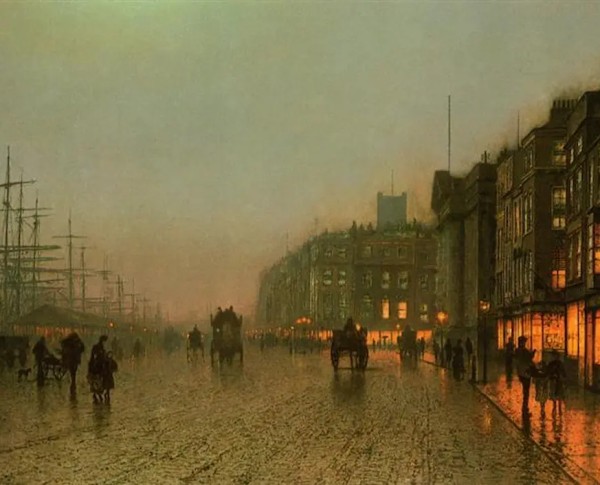
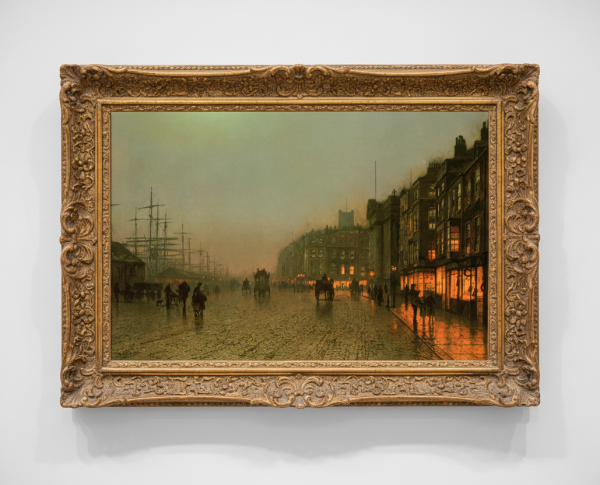
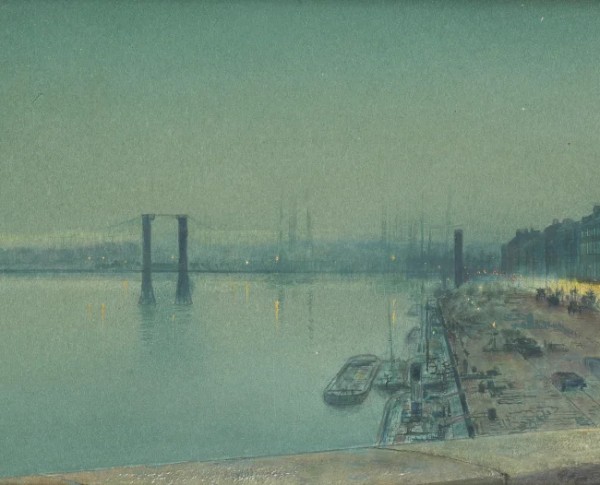
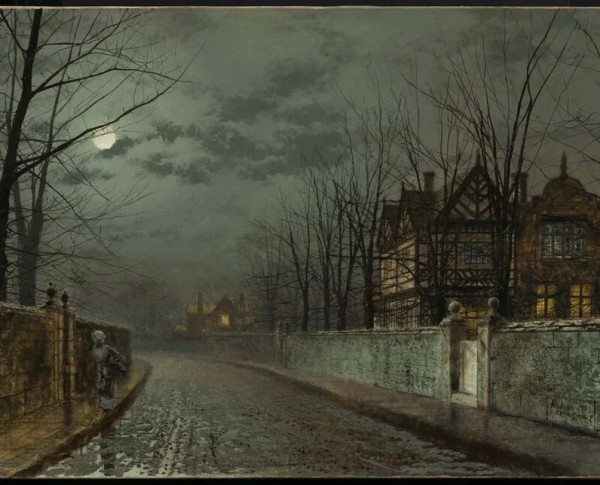
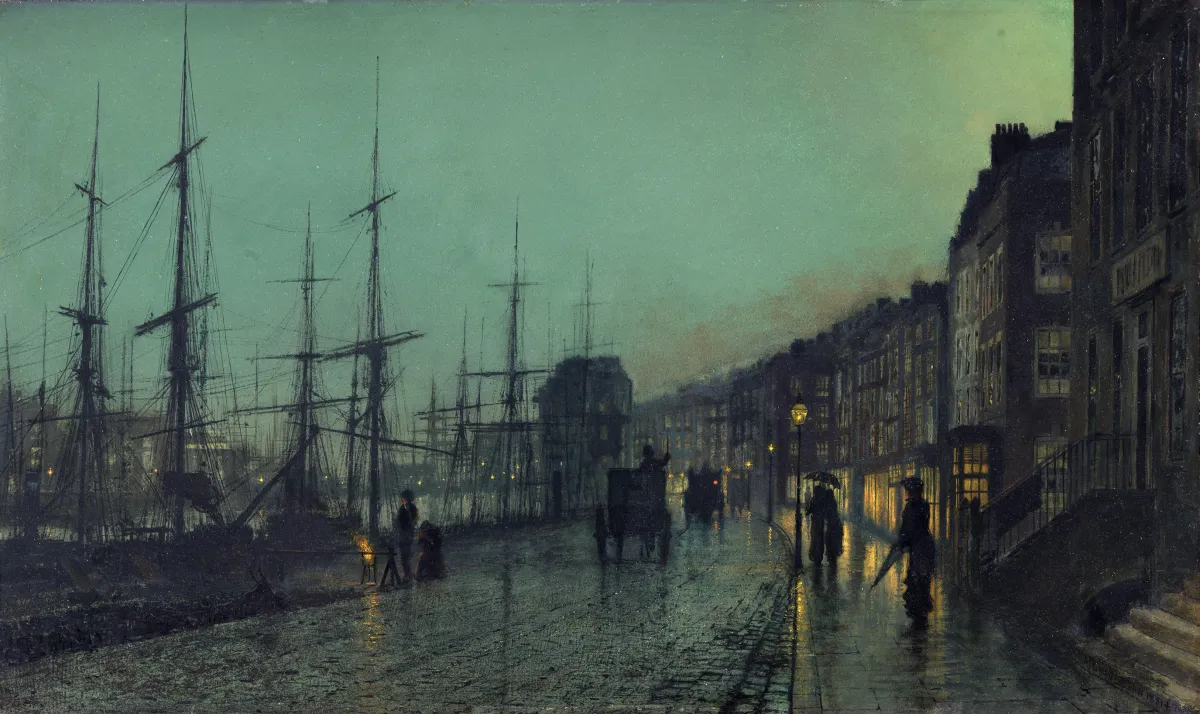
The meticulous detail in “Shipping on the Clyde” highlights Grimshaw’s exceptional skill with oil on canvas. Each brushstroke brings the bustling harbor to life, revealing the artist’s ability to blend realism with ethereal light. This painting embodies the essence of Aestheticism, where technique and emotion merge seamlessly. Collectors seeking other masterpieces should also consider “Quai de Paris, Rouen” and “A Moonlit Evening” for their evocative atmospheres and technical brilliance.
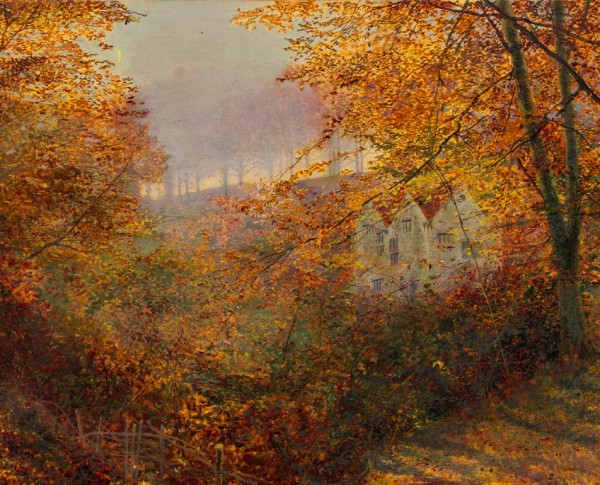
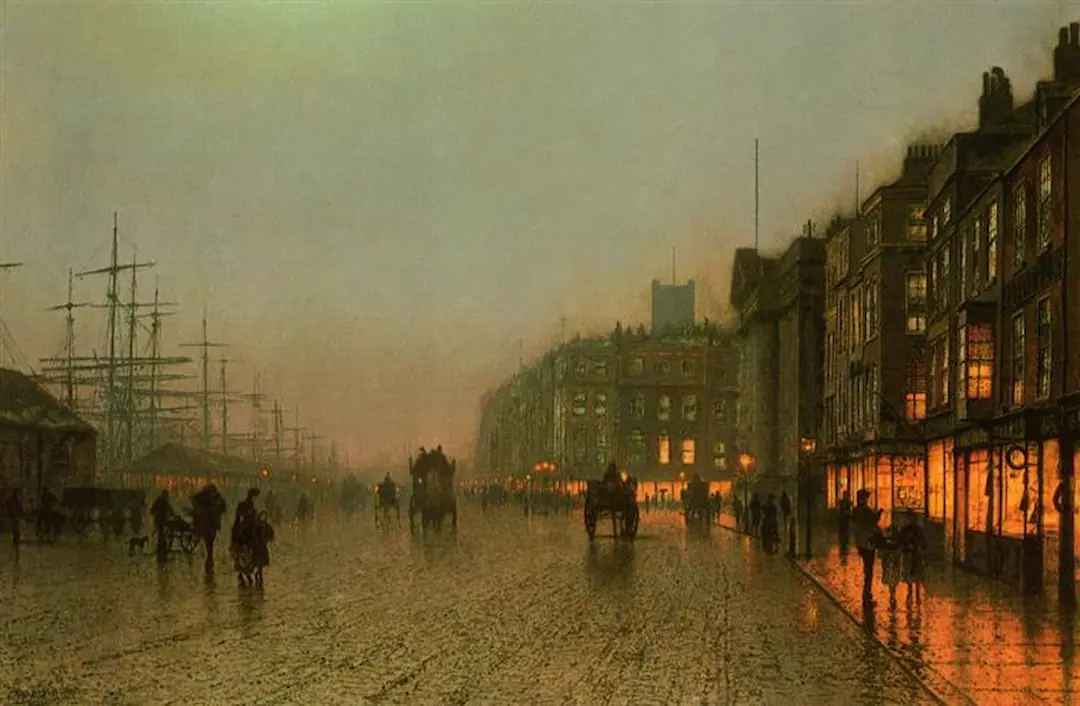
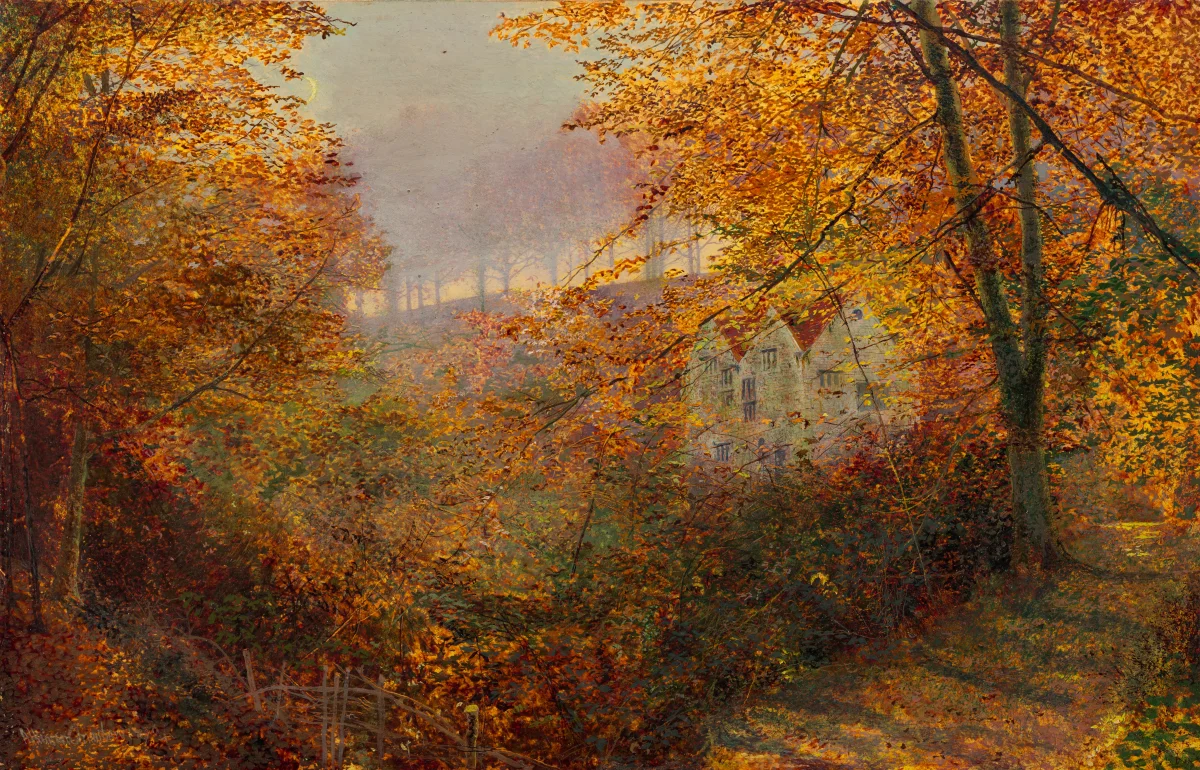
“Shipping on the Clyde” is more than a fine art painting for sale; it’s a narrative of commerce, progress, and the interplay of man and nature. Grimshaw’s depiction of ships and glowing city lights symbolizes the era’s industrial optimism, while the moonlit sky adds a touch of mystery. Fans of symbolic storytelling will find similar themes in “Liverpool from Wapping” and “A House in a Clearing,” each reflecting the rich tapestry of Victorian life.
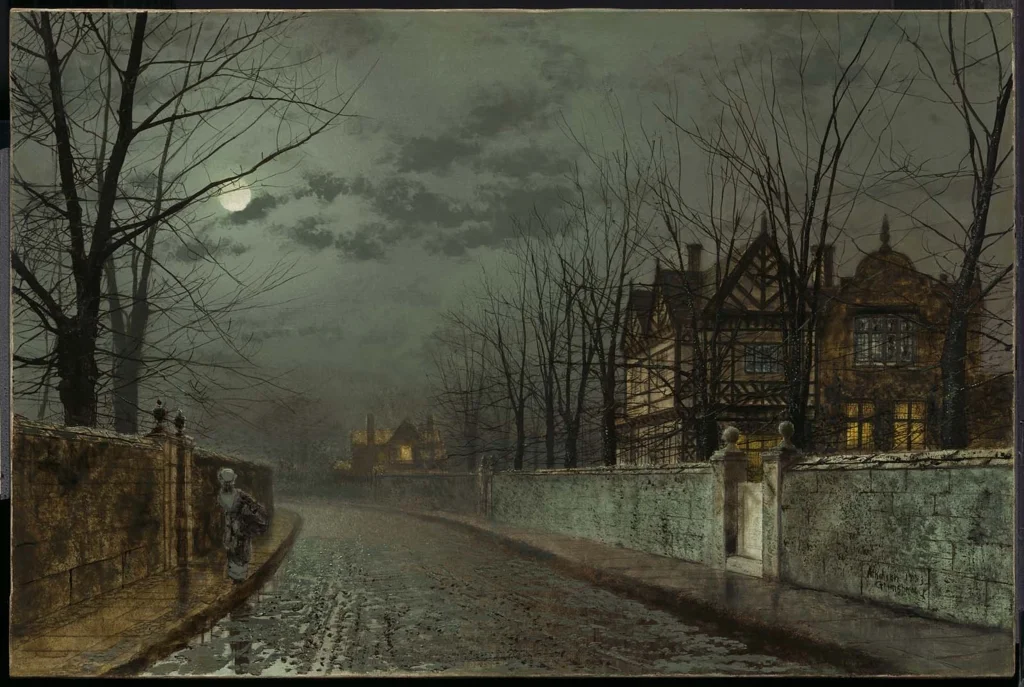
Acquiring “Shipping on the Clyde” offers collectors a rare glimpse into the world of nineteenth-century Aestheticism through a hand-painted oil painting. Grimshaw’s atmospheric scenes are highly sought after, making this piece a valuable addition to any fine art collection. To further enhance your gallery, consider pairing it with related paintings such as “Old English House by Moonlight” or “A House in a Clearing,” both renowned for their captivating moods and historical significance.
When Art Meets History
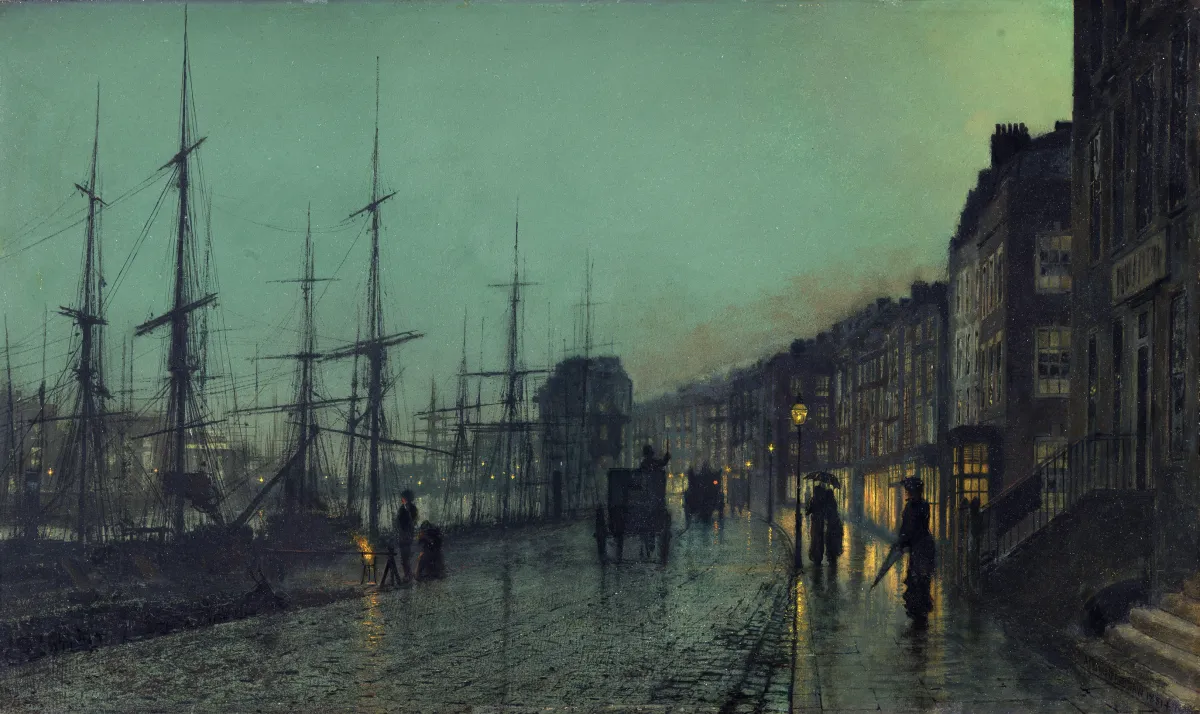
"Shipping on the Clyde" by John Atkinson Grimshaw is a remarkable hand-painted oil painting that captures the bustling energy of 19th-century Glasgow. As a prominent work in the Aestheticism movement, this masterpiece reflects the era's fascination with beauty and atmosphere. Grimshaw's attention to detail and evocative lighting immerse viewers in a historical moment where industry and nature coexist. This painting, like many of his cityscapes, stands as a visual document of a transformative period in British history.
Techniques That Speak
John Atkinson Grimshaw’s use of oil on canvas in "Shipping on the Clyde" demonstrates his mastery of light, shadow, and reflection. His meticulous brushwork and subtle color palette create a luminous effect that defines the Aestheticism movement. Grimshaw often employed glazing techniques to achieve depth and atmosphere, inviting viewers into serene yet dynamic waterfront scenes. This approach is evident in many of his works, showcasing his signature style and commitment to elevating everyday vistas through fine artistry.
Emotions on Display
"Shipping on the Clyde" evokes a sense of nostalgia and quiet wonder, hallmarks of a fine art painting for sale from the Aestheticism era. Grimshaw’s depiction of misty docks and glowing lamps captures both the tranquility and industrious spirit of the time. The painting’s mood resonates with viewers, inviting them to experience the gentle melancholy and hopefulness that characterized late Victorian Britain. Through his evocative scenes, Grimshaw connects emotionally with admirers of his timeless art.
Coveted by Collectors
Collectors and art enthusiasts prize "Shipping on the Clyde" as a quintessential example of hand-painted oil painting from the Aestheticism movement. John Atkinson Grimshaw’s unique vision and technical prowess make his works highly sought after in the art market. The combination of historical significance and artistic beauty ensures that this painting, along with other cityscapes by Grimshaw, remains a coveted piece for those seeking investment and inspiration in fine art collections.
Frequently Asked Questions About Shipping on the Clyde
What is the historical context of "Shipping on the Clyde"?
"Shipping on the Clyde" was painted during the late 19th century, a time when the River Clyde was a vital hub for shipbuilding and maritime trade in Scotland. The painting reflects the industrial growth and economic significance of the region during this period.
Who was John Atkinson Grimshaw?
John Atkinson Grimshaw was a British painter known for his atmospheric landscapes and nocturnal scenes. His work often features urban settings illuminated by moonlight, showcasing his mastery of light and shadow.
What artistic techniques did Grimshaw use in "Shipping on the Clyde"?
Grimshaw employed a technique known as chiaroscuro, which contrasts light and dark to create depth and mood. His meticulous attention to detail and use of vibrant colors enhance the realism of the scene.
What symbols are present in "Shipping on the Clyde"?
The painting symbolizes the relationship between nature and industry, depicting the coexistence of human enterprise and the natural environment. The ships represent progress and innovation, while the river signifies the passage of time.
How does "Shipping on the Clyde" reflect the Impressionist movement?
While Grimshaw is often associated with the Pre-Raphaelite movement, "Shipping on the Clyde" exhibits Impressionist qualities through its focus on light and atmosphere, capturing the transient effects of natural illumination on the water and sky.
What emotions does "Shipping on the Clyde" evoke?
The painting evokes a sense of tranquility and nostalgia, inviting viewers to reflect on the beauty of the Clyde River and the industrious spirit of the era. The serene water and soft lighting create a contemplative mood.
What role does color play in "Shipping on the Clyde"?
Color plays a crucial role in establishing the painting's mood. The cool blues and greens of the water contrast with the warm tones of the ships and the sky, creating a harmonious balance that draws the viewer's eye across the canvas.
In what ways does "Shipping on the Clyde" showcase Grimshaw's signature style?
The painting showcases Grimshaw's signature style through its intricate details, atmospheric effects, and focus on nocturnal scenes. His ability to capture the interplay of light and shadow is evident in the depiction of the river and the ships.
How does "Shipping on the Clyde" fit within Grimshaw's body of work?
"Shipping on the Clyde" is representative of Grimshaw's exploration of urban landscapes and maritime themes. It exemplifies his fascination with the interplay of light and the industrial environment, a recurring motif in his oeuvre.
What impact did "Shipping on the Clyde" have on the art community?
The painting contributed to the growing appreciation of atmospheric landscape painting in the late 19th century. Grimshaw's unique approach influenced contemporaries and helped shape the perception of industrial scenes as worthy subjects for fine art.






















_GFM_Painting_(1).webp)


 100% Hand-Painted: Finished in 3-6 Weeks

.png)
















_(1).webp)