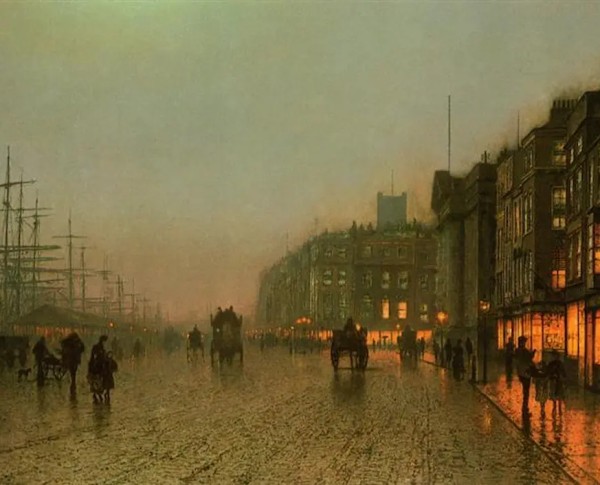
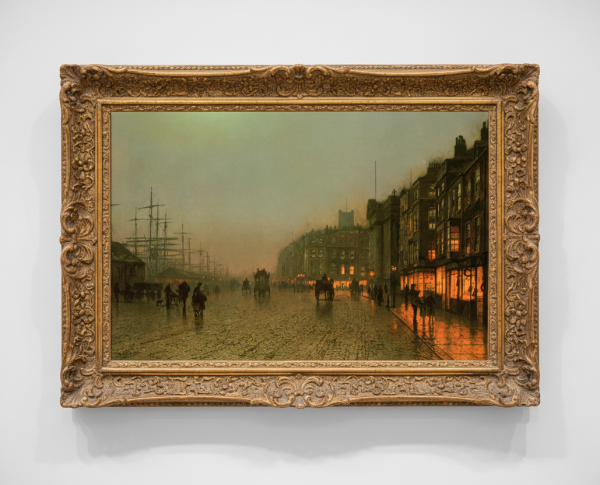
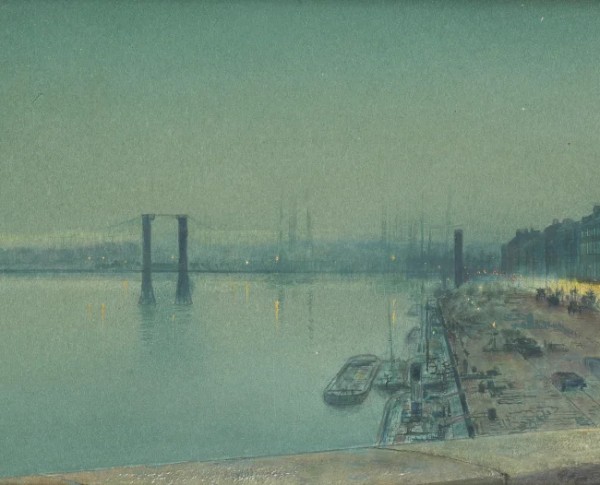
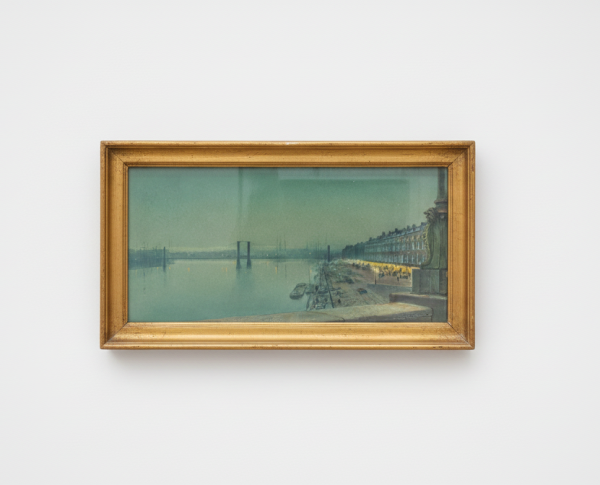
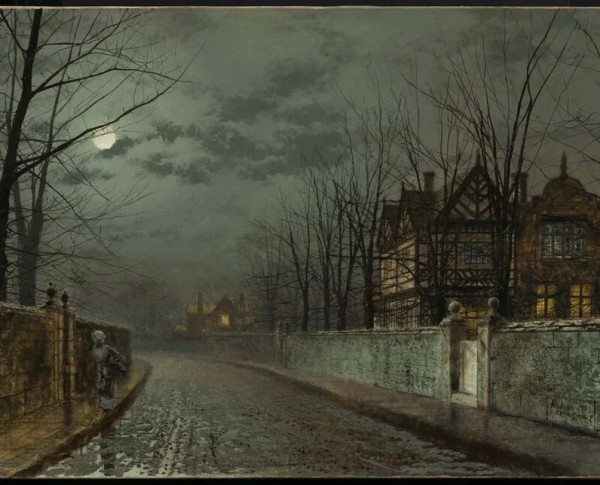
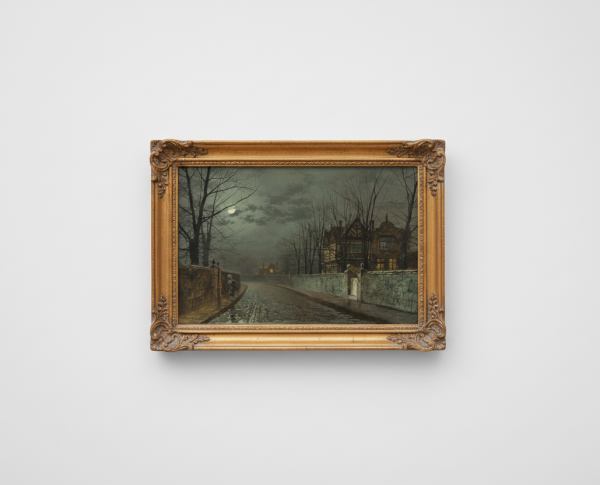
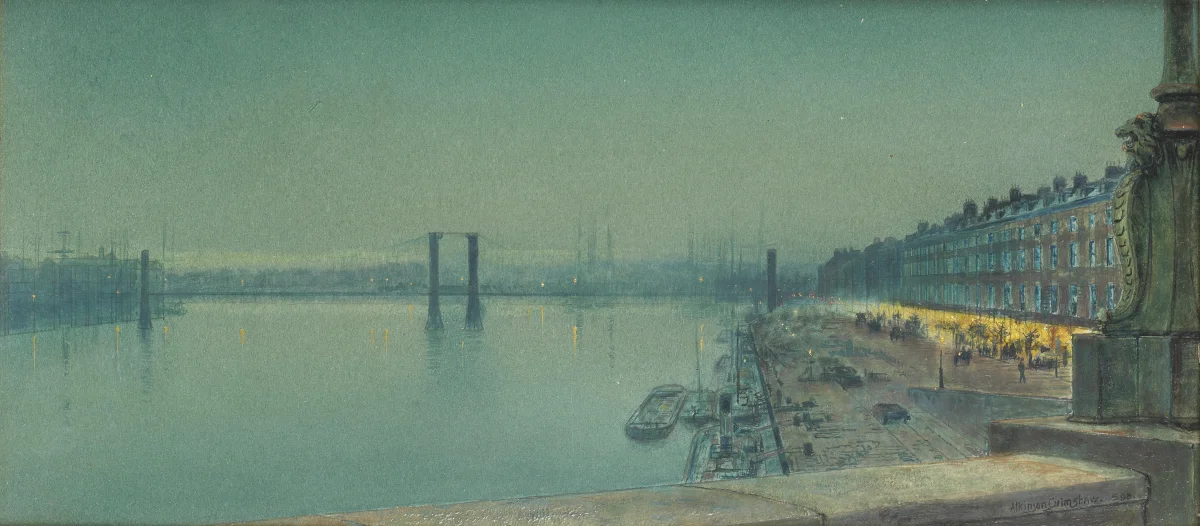
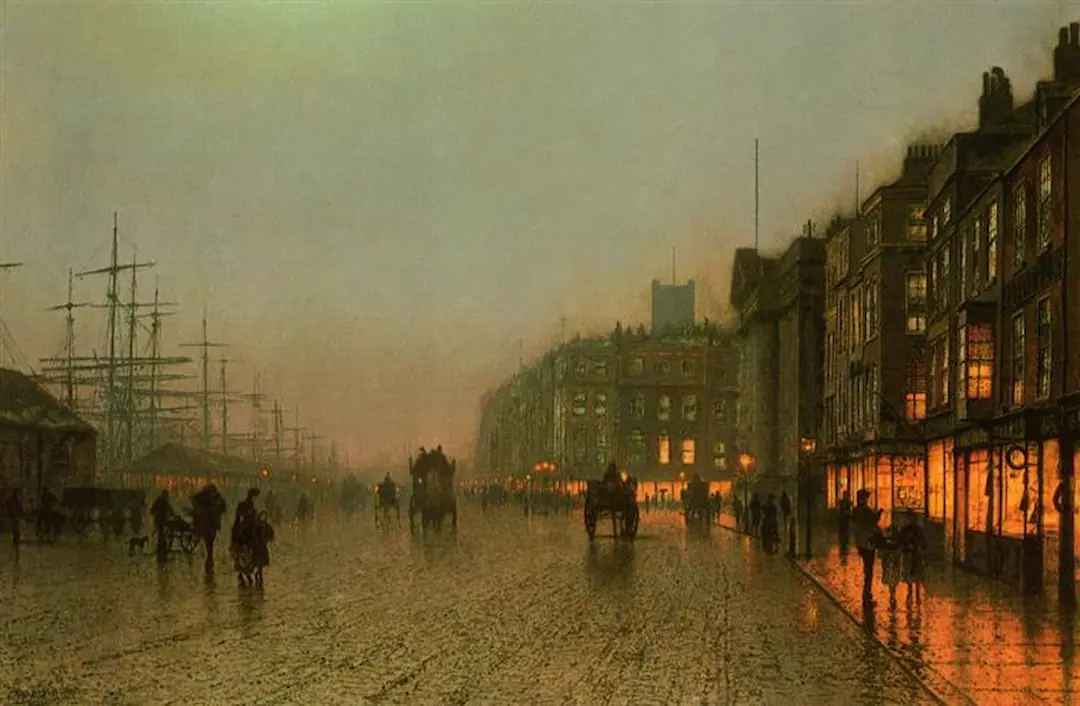
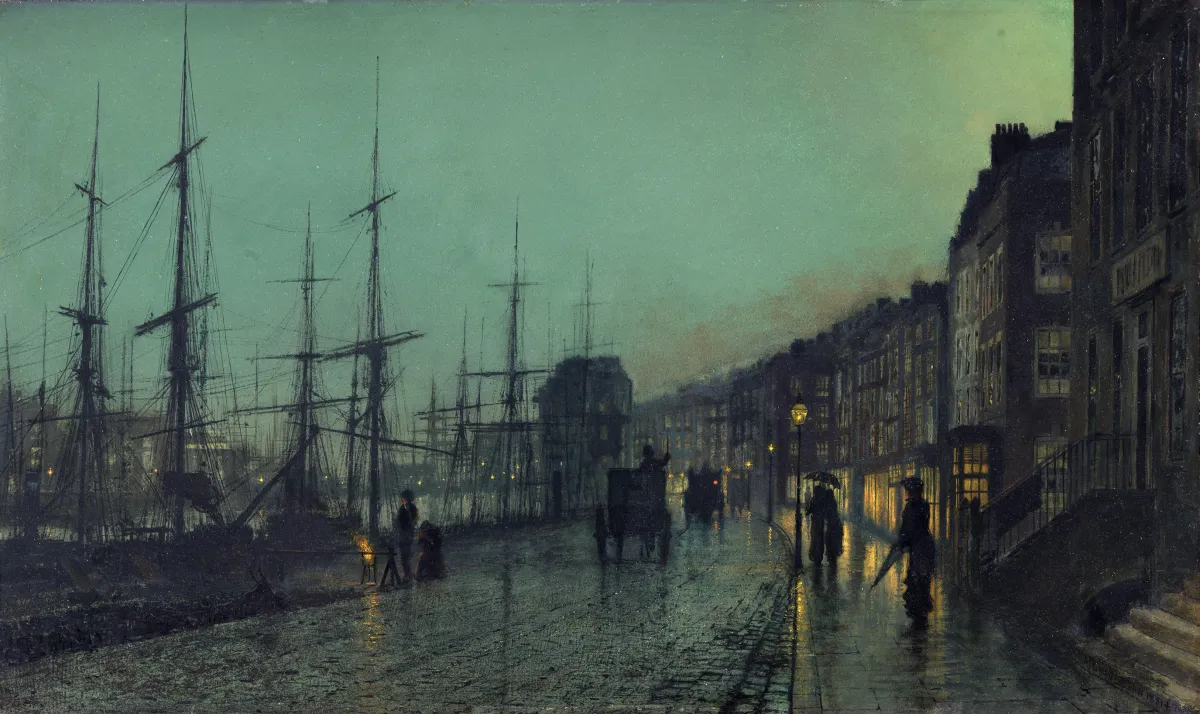
The technique evident in "Quai de Paris, Rouen" highlights Grimshaw’s unparalleled skill with oil on canvas. His delicate brushwork and keen attention to light create a luminous, almost ethereal quality that defines the Aestheticism movement. Every detail, from the glimmering water to the bustling quay, demonstrates Grimshaw’s dedication to realism and mood. This painting, like "Liverpool from Wapping," is a testament to his technical brilliance and the timeless appeal of his cityscape compositions.
In "Quai de Paris, Rouen," Grimshaw weaves a narrative through subtle symbolism and atmospheric effects, hallmarks of the Aestheticism movement. The interplay of light and shadow invites viewers to imagine the stories unfolding along the misty riverside. This hand-painted oil painting not only captures a fleeting moment in time but also echoes the broader themes of change and modernity, much like his other acclaimed work, "Liverpool from Wapping," making it a meaningful addition to any collection.
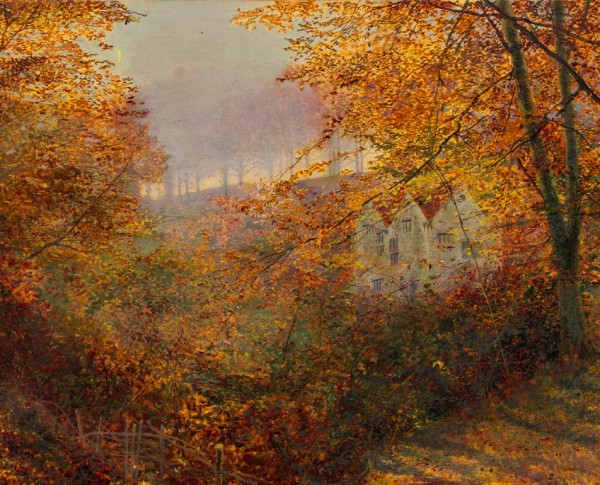
For art collectors, "Quai de Paris, Rouen" by John Atkinson Grimshaw represents a fine art painting for sale that embodies both historical significance and masterful artistry. As part of the Aestheticism movement, this oil on canvas masterpiece, alongside related works like "Liverpool from Wapping," offers enduring value and visual splendor. Investing in such a distinguished piece ensures you own a part of art history, celebrated for its beauty, technique, and evocative storytelling.
When Art Meets History
"Quai de Paris, Rouen" by John Atkinson Grimshaw stands as a striking example of the Aestheticism movement, capturing the bustling energy of 19th-century France. This hand-painted oil painting reflects Grimshaw’s fascination with urban landscapes, blending historical context with artistic vision. As with other celebrated works by Grimshaw, the painting immerses viewers in a specific time and place, making it a sought-after fine art painting for sale among collectors and art enthusiasts alike.
Techniques That Speak
John Atkinson Grimshaw’s mastery is evident in his use of light and shadow throughout "Quai de Paris, Rouen." Utilizing the oil on canvas medium, Grimshaw achieves a luminous, atmospheric effect that defines much of his oeuvre within the Aestheticism movement. This technique allows for intricate details and rich textures, setting this painting apart from other urban scenes and aligning it with related paintings that explore similar nocturnal cityscapes.
Emotions on Display
The evocative mood of "Quai de Paris, Rouen" showcases Grimshaw’s ability to convey emotion through his art. The painting’s misty ambiance and reflective surfaces draw viewers into a contemplative state, typical of the Aestheticism movement. Much like his other works, this hand-painted oil painting invites personal interpretation, making it a powerful piece for those seeking a deeper connection with fine art. Grimshaw’s unique perspective resonates deeply with admirers of his cityscapes.
Coveted by Collectors
"Quai de Paris, Rouen" remains highly desirable among art collectors, thanks to John Atkinson Grimshaw’s reputation and the timeless appeal of the Aestheticism movement. The painting’s masterful oil on canvas execution and atmospheric qualities make it a standout piece. Collectors value this work for its historical relevance and artistic excellence, often seeking out related paintings by Grimshaw to complement their collections of fine art painting for sale.
Frequently Asked Questions About Quai de Paris, Rouen
What is the historical context of "Quai de Paris, Rouen"?
"Quai de Paris, Rouen" was painted during the late 19th century, a time when industrialization was transforming cities across Europe. This painting reflects the urban landscape of Rouen, capturing the interplay between nature and the burgeoning industrial environment.
Who was John Atkinson Grimshaw?
John Atkinson Grimshaw was a British painter known for his atmospheric landscapes and cityscapes. Active during the Victorian era, he is celebrated for his ability to depict light and shadow, particularly in nocturnal scenes.
What artistic techniques did Grimshaw use in this painting?
Grimshaw employed a meticulous approach to detail and a unique use of light. His technique often involved layering glazes to create depth, allowing for a luminous quality that enhances the overall mood of the scene.
What is the significance of the setting in "Quai de Paris, Rouen"?
The setting of "Quai de Paris, Rouen" is significant as it showcases the architectural beauty of Rouen's waterfront. The painting captures the essence of the city’s historical significance as a major port and its rich cultural heritage.
How does Grimshaw convey mood in this painting?
Grimshaw conveys mood through his use of color and light. The soft, diffused light creates a serene atmosphere, while the cool color palette evokes a sense of tranquility and introspection, inviting viewers to immerse themselves in the scene.
What themes are explored in "Quai de Paris, Rouen"?
The painting explores themes of urban life and nature's coexistence. It reflects the tension between the natural environment and the encroaching industrial landscape, highlighting the beauty of both elements.
What role does light play in "Quai de Paris, Rouen"?
Light plays a crucial role in "Quai de Paris, Rouen," as it serves to illuminate the scene and create a sense of depth. Grimshaw’s mastery of light enhances the painting's ethereal quality, drawing attention to the reflections on the water and the atmospheric effects.
How does this painting reflect the artistic movements of its time?
This painting reflects the Aesthetic Movement, which emphasized beauty and sensory experience over narrative content. Grimshaw's focus on atmospheric effects and the beauty of the urban landscape aligns with the ideals of this movement.
What is the symbolism behind the water in the painting?
The water in "Quai de Paris, Rouen" symbolizes fluidity and change, representing the passage of time and the constant evolution of urban life. It also serves as a mirror, reflecting both the physical and emotional landscapes of the scene.
What impact did "Quai de Paris, Rouen" have on later artists?
"Quai de Paris, Rouen" has had a lasting impact on later artists by influencing the portrayal of urban landscapes and the use of light. Grimshaw's techniques and themes have inspired subsequent generations to explore the relationship between nature and industrialization in their work.






















_GFM_Painting_(1).webp)


 100% Hand-Painted: Finished in 3-6 Weeks

.png)















_(1).webp)