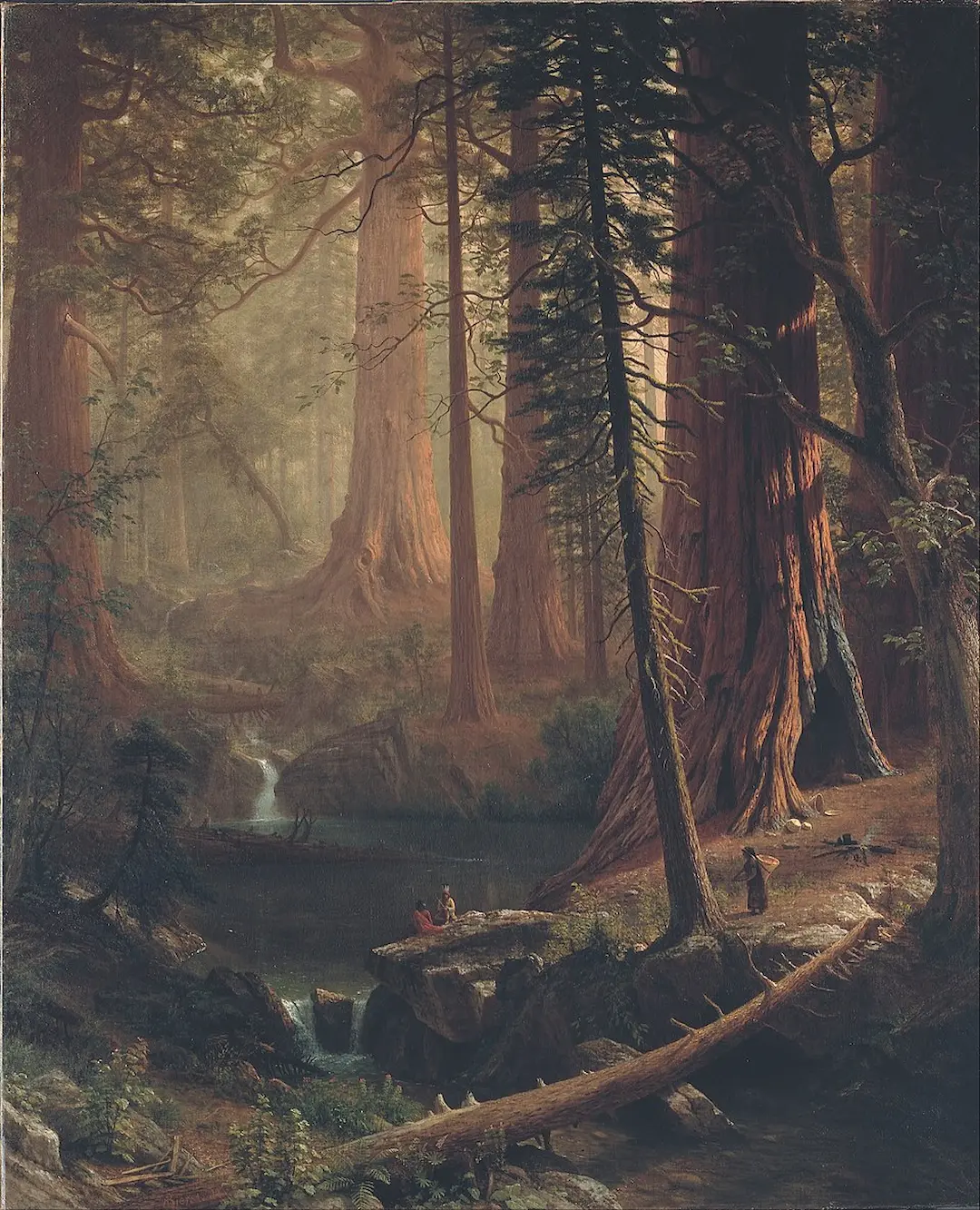
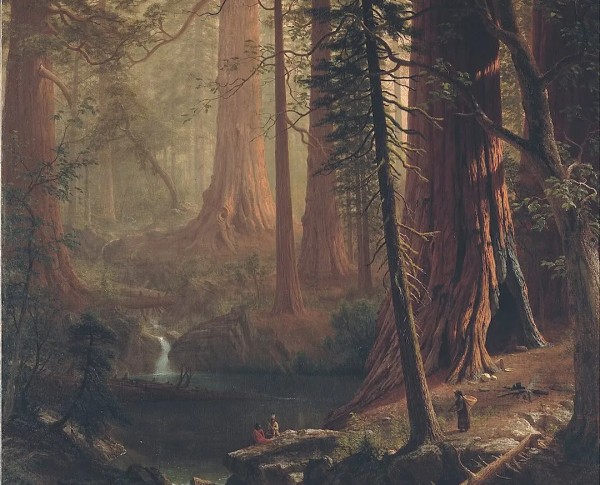
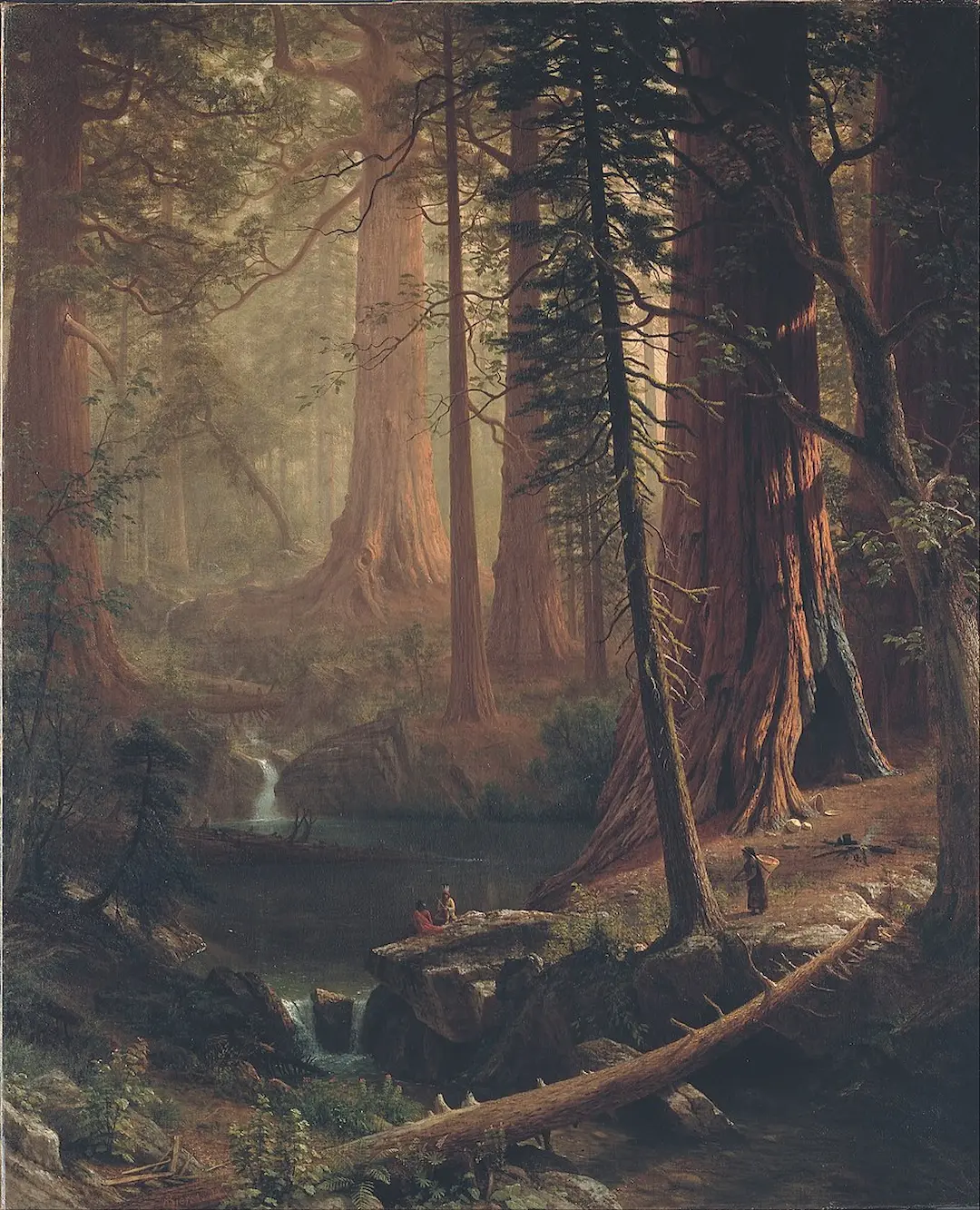
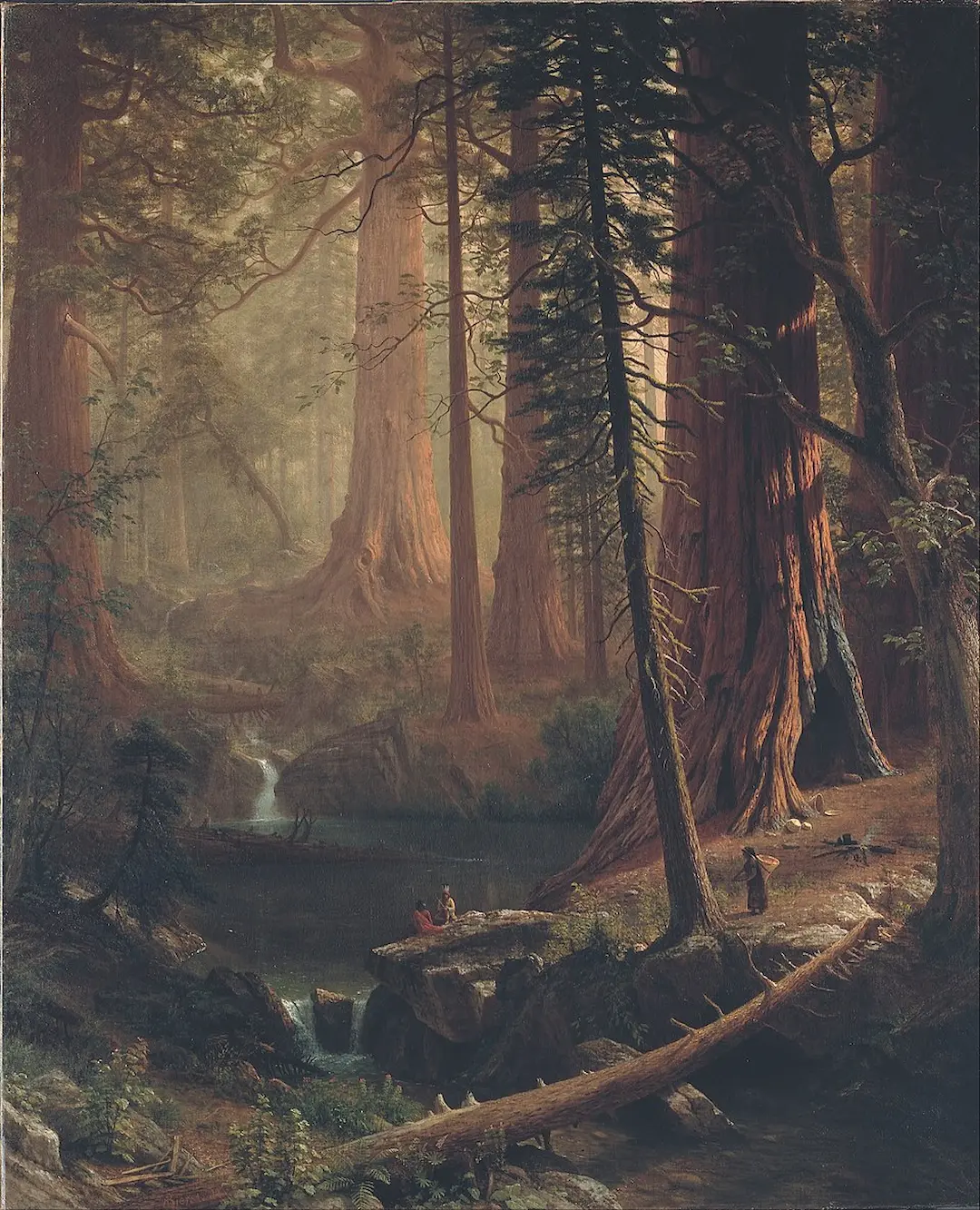
Bierstadt’s technique in "Giant Redwood Trees of California" showcases the remarkable detail and luminosity characteristic of oil on canvas. His precise brushwork and nuanced use of light breathe life into the towering redwoods, making each tree appear almost tangible. As a leading figure in the Hudson River School, Bierstadt’s approach elevates this artwork alongside related pieces like "Puget Sound On The Pacific Coast." Collectors appreciate the craftsmanship and enduring value found in such meticulously rendered landscapes.
Within "Giant Redwood Trees of California," Albert Bierstadt weaves narratives of exploration, reverence, and the sublime power of nature—a hallmark of fine art painting for sale from the Hudson River School. The immense scale of the redwoods symbolizes resilience and longevity, reflecting America’s untamed beauty. Collectors and admirers often pair this painting with works like "Sierra Nevada I" to celebrate Bierstadt’s unique ability to evoke emotion and wonder through symbolic, awe-inspiring landscapes.
"Giant Redwood Trees of California" by Albert Bierstadt remains a coveted hand-painted oil painting for discerning collectors and art enthusiasts. Its significance within the Hudson River School movement, combined with Bierstadt’s masterful execution, ensures lasting appeal and investment value. Collectors seeking to enrich their galleries often consider related works such as "Among The Sierra Nevada Mountains California" and "Puget Sound On The Pacific Coast" for a comprehensive appreciation of Bierstadt’s legacy and the movement’s artistic impact.
When Art Meets History
"Giant Redwood Trees of California" by Albert Bierstadt stands as a monumental example of the Hudson River School movement, capturing the awe-inspiring beauty of America’s wilderness. This hand-painted oil painting reflects a period when artists sought to document the unspoiled landscapes of the West, preserving them for future generations. Bierstadt’s work, alongside other masterpieces of the era, invites viewers to appreciate the grandeur of nature, making it a significant piece in art and environmental history.
Techniques That Speak
Albert Bierstadt’s mastery is evident in his use of oil on canvas, a medium that allows for intricate detail and luminous color. In "Giant Redwood Trees of California," his brushwork and layering techniques create depth and realism, hallmark traits of the Hudson River School. Through these methods, Bierstadt brings the towering redwoods to life, their majesty heightened by the interplay of light and shadow, showcasing the technical prowess that makes this painting a standout among American landscapes.
Emotions on Display
The emotional impact of "Giant Redwood Trees of California" is profound, as Bierstadt’s hand-painted oil painting draws viewers into a world of wonder and serenity. The sheer scale of the trees and the tranquil forest setting evoke feelings of awe, humility, and reverence for nature. This emotional resonance is a hallmark of the Hudson River School, whose artists, including Bierstadt, consistently sought to inspire a deep connection between viewers and the natural world.
Coveted by Collectors
As a fine art painting for sale, "Giant Redwood Trees of California" holds tremendous appeal for collectors and enthusiasts of the Hudson River School. Albert Bierstadt’s reputation as a leading landscape artist ensures that his works, particularly those depicting the American wilderness, remain in high demand. The painting’s historical significance and masterful execution make it a prized addition to any collection, standing alongside other celebrated landscapes of the 19th century.
Frequently Asked Questions About Giant Redwood Trees of California
What is the historical context of "Giant Redwood Trees of California"?
This painting was created during the mid-19th century, a time when the American West was being explored and celebrated. Albert Bierstadt was part of the Hudson River School, which aimed to capture the beauty of the American landscape, particularly the West.
What artistic techniques did Albert Bierstadt use in this painting?
Bierstadt employed a technique known as luminism, characterized by the depiction of light and its effects on the landscape. He used rich colors and dramatic contrasts to enhance the grandeur of the redwoods, creating a sense of awe and reverence for nature.
What symbolism is present in "Giant Redwood Trees of California"?
The giant redwood trees symbolize strength, endurance, and the majesty of nature. They serve as a reminder of the natural world's beauty and the importance of conservation, reflecting the Romantic ideals of the time.
How does this painting reflect the American Romantic movement?
The painting embodies the American Romantic movement by emphasizing the sublime beauty of nature. It evokes emotional responses and encourages viewers to appreciate the vastness and grandeur of the American landscape, aligning with Romantic ideals of individual experience and connection to nature.
What role did Bierstadt play in the promotion of the American West?
Albert Bierstadt played a significant role in promoting the American West through his art. His paintings helped to popularize the idea of westward expansion and the beauty of the frontier, influencing public perception and encouraging tourism and exploration of these regions.
What influences can be seen in Bierstadt's work?
Bierstadt was influenced by European Romantic painters, particularly in his use of light and color. His travels in Europe and exposure to the works of artists like J.M.W. Turner and Caspar David Friedrich can be seen in his dramatic landscapes and emotional depth.
How does "Giant Redwood Trees of California" compare to Bierstadt's other works?
This painting is characteristic of Bierstadt's style, showcasing his fascination with grand landscapes and natural beauty. However, it specifically highlights the unique features of California's redwoods, setting it apart from his other works that often depict mountain ranges and expansive vistas.
What impact did this painting have on the perception of California's natural environment?
The painting significantly impacted the perception of California's natural environment by showcasing its unique beauty. It contributed to the growing appreciation for the region's natural wonders and played a role in the conservation movement that emerged in the late 19th century.
In what ways has "Giant Redwood Trees of California" influenced contemporary art?
This painting has influenced contemporary artists by inspiring a continued exploration of nature and environmental themes. Its emphasis on the beauty and majesty of the natural world resonates with modern movements focused on ecological awareness and the importance of preserving natural landscapes.
What is the significance of the giant redwoods in American culture?
The giant redwoods hold significant cultural importance as symbols of resilience and longevity. They represent the natural heritage of the United States and have become iconic figures in discussions about conservation and the relationship between humanity and the environment.






















_GFM_Painting_(1).webp)


 100% Hand-Painted: Finished in 3-6 Weeks

.png)


















_(1).webp)