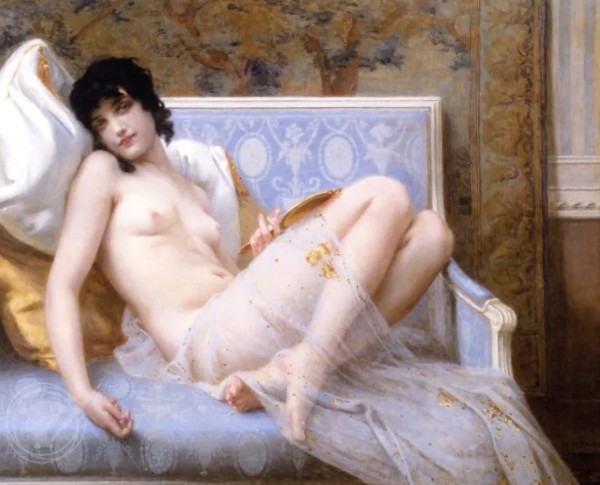
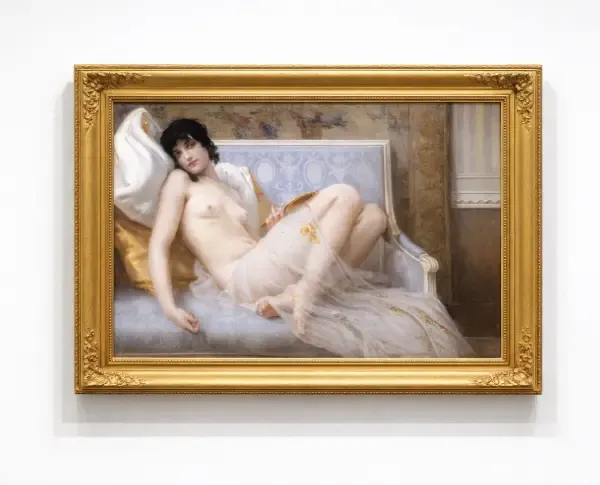
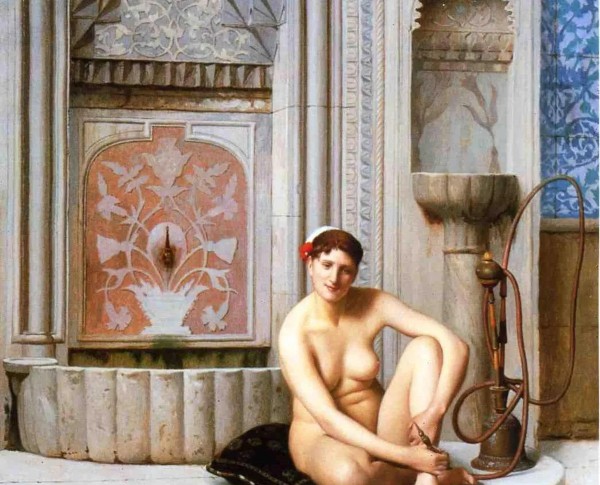
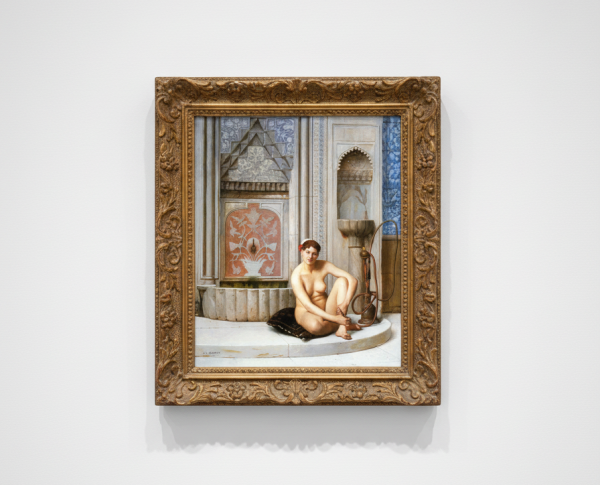
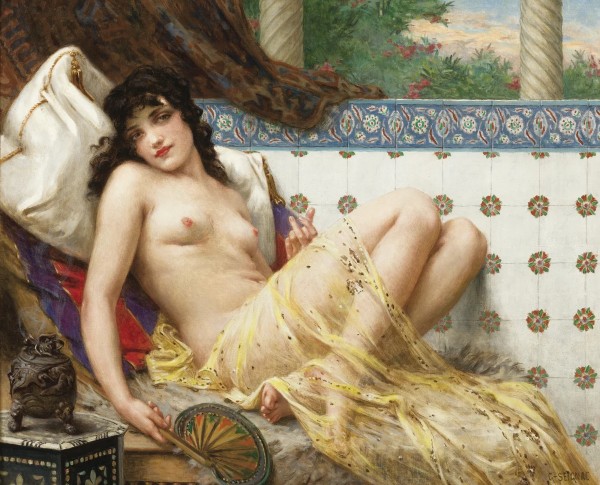
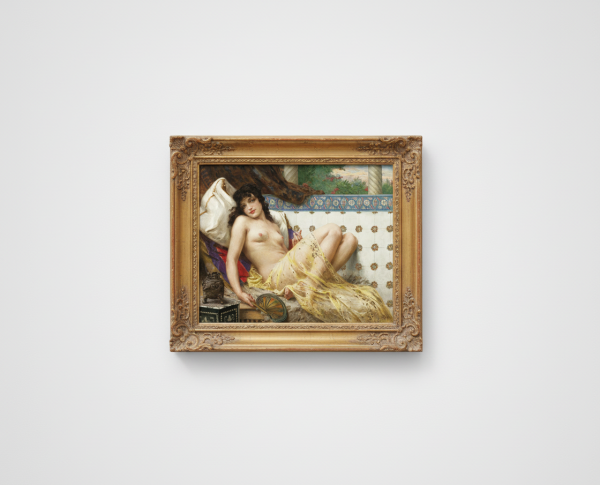
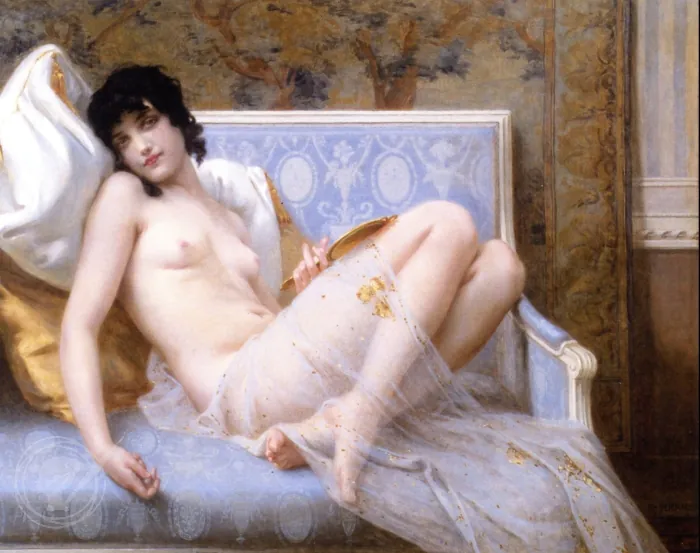
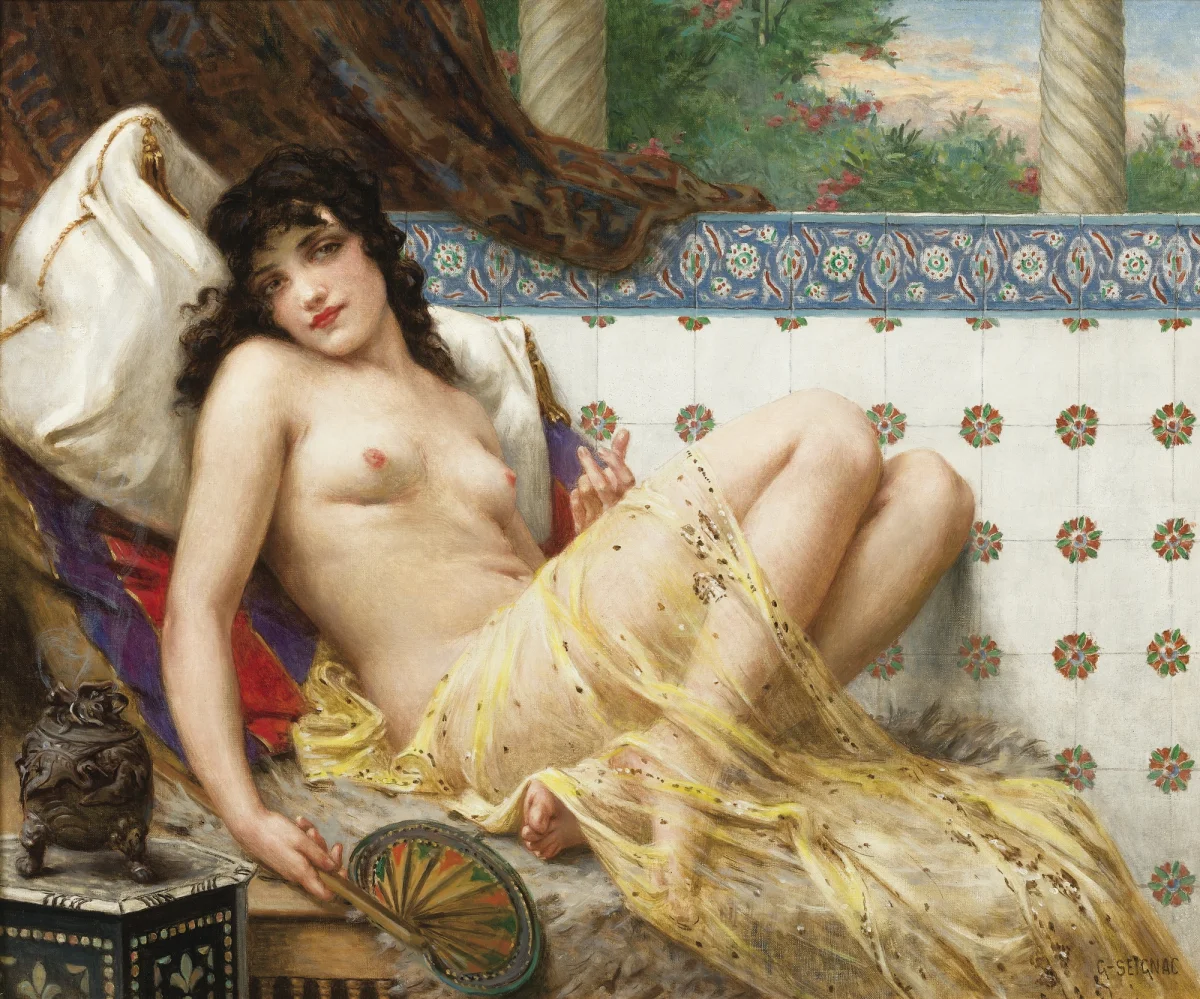
Guillaume Seignac’s "Odalisque" showcases the remarkable skill and attention to detail characteristic of Academic Art. The artist’s mastery is evident in every brushstroke, making this oil on canvas an exquisite example of technical excellence. Seignac’s ability to render lifelike textures and delicate forms elevates "Odalisque" to a true masterpiece. For those seeking to immerse themselves in classic artistry, related works like "Jeune femme denudée sur canape (Young woman naked on a settee)" offer further inspiration.
Within the fine art painting for sale, "Odalisque," Guillaume Seignac weaves a narrative that blends sensuality with grace, typical of Academic Art. The reclining figure and luxurious setting evoke themes of beauty, opulence, and introspection. Collectors appreciate the subtle symbolism present in Seignac’s compositions, which invite viewers to interpret deeper meanings. Enthusiasts may also enjoy exploring similar symbolic elements in "Jeune femme denudée sur canape (Young woman naked on a settee)."
Owning "Odalisque" by Guillaume Seignac means acquiring more than just a hand-painted oil painting—it’s an investment in the rich tradition of Academic Art. This piece appeals to discerning collectors who value both artistic mastery and historical significance. As a fine art painting for sale, "Odalisque" stands alongside exceptional works like "Jeune femme denudée sur canape (Young woman naked on a settee)," making it a prized addition to any serious art collection.
When Art Meets History
"Odalisque" by Guillaume Seignac is a remarkable example of the Academic Art movement, echoing the era's fascination with classical beauty and exotic themes. This hand-painted oil painting draws inspiration from both myth and reality, much like Seignac's contemporaries. Works such as "Vercingetorix throws down his arms at the feet of Julius Caesar, 1899" and "Rest on the Flight into Egypt" share this narrative power, blending history and imagination with exceptional skill.
Techniques That Speak
Seignac's mastery shines in "Odalisque" through his refined use of oil on canvas, a signature of Academic Art. The delicate rendering of skin and textiles showcases his technical prowess, similar to what is seen in "A Forester at Home." Each brushstroke in this painting demonstrates the artist's ability to capture texture and light, setting "Odalisque" apart as a testament to the enduring appeal of this traditional medium.
Emotions on Display
In "Odalisque," Guillaume Seignac conveys a quiet sensuality and introspection that invites viewers to linger. The subject's relaxed pose and serene expression evoke the emotional depth found in many fine art painting for sale from the Academic Art movement. Related works, such as "Rest on the Flight into Egypt," also explore intimate moments, emphasizing the human experience through masterful composition and subtle detail.
Coveted by Collectors
Collectors worldwide seek out "Odalisque" for its exquisite representation of Academic Art and Seignac's distinct style. This hand-painted oil painting, like "Vercingetorix throws down his arms at the feet of Julius Caesar, 1899," is highly prized for its historical context and artistic merit. With its timeless appeal, "Odalisque" remains a sought-after masterpiece, making it a standout choice among those searching for exceptional works in the art market.
Related Academic Art Hand-Painted Oil Paintings by Other Artists
Other Famous Academic Art Artists:
Frequently Asked Questions About Odalisque
What is the historical context of "Odalisque" by Guillaume Seignac?
"Odalisque" was created during the late 19th century, a period marked by a fascination with the exotic and the Orient. This painting reflects the Western artistic trend of depicting Eastern subjects, influenced by colonialism and the Romantic movement.
What artistic style is employed in "Odalisque"?
Guillaume Seignac's "Odalisque" exemplifies the academic style prevalent in the late 19th century. It combines realism with idealized forms, showcasing Seignac's technical skill in rendering the human figure and his ability to evoke sensuality through composition and color.
What themes are explored in "Odalisque"?
The painting explores themes of sensuality, beauty, and the exotic. The portrayal of the female figure as an odalisque, or a harem woman, suggests notions of desire and the allure of the unknown, reflecting Western fantasies about the East.
How does "Odalisque" reflect the role of women in art during its time?
In "Odalisque," women are often depicted as objects of beauty and desire. This reflects the broader societal views of women during the late 19th century, where they were frequently idealized and objectified in art, serving as muses for male artists.
What is the significance of the color palette in "Odalisque"?
The color palette of "Odalisque" is rich and warm, utilizing deep reds, golds, and soft skin tones. This choice enhances the sensuality of the subject and creates an inviting atmosphere, drawing the viewer into the intimate space of the painting.
What techniques did Seignac use to create texture in "Odalisque"?
Seignac employed a combination of smooth brushwork and careful attention to detail to create texture in "Odalisque." The contrasting textures of the fabric, skin, and background elements contribute to the overall richness of the composition.
How does "Odalisque" compare to other works of the same genre?
"Odalisque" can be compared to other Orientalist works, such as those by Jean-Auguste-Dominique Ingres and Eugène Delacroix. While sharing similar themes, Seignac's approach is more subdued and focused on the beauty of the female form rather than overt political or cultural commentary.
What cultural influences are evident in "Odalisque"?
The cultural influences in "Odalisque" stem from the Western fascination with the East, particularly the Ottoman Empire. This is evident in the subject matter, clothing, and setting, which reflect a romanticized view of Eastern life.
What impact did "Odalisque" have on the perception of Orientalism in art?
"Odalisque" contributed to the ongoing dialogue about Orientalism in art, reinforcing stereotypes while simultaneously inviting viewers to question their perceptions of the East. It exemplifies the complexities of cultural representation and the allure of the exotic in Western art.
What legacy does "Odalisque" leave in the art world?
The legacy of "Odalisque" lies in its embodiment of the late 19th-century academic style and its exploration of themes related to beauty and exoticism. It continues to be studied for its artistic merit and its commentary on gender and cultural representation in art history.






















_GFM_Painting_(1).webp)


 100% Hand-Painted: Finished in 3-6 Weeks

.png)















_(1).webp)