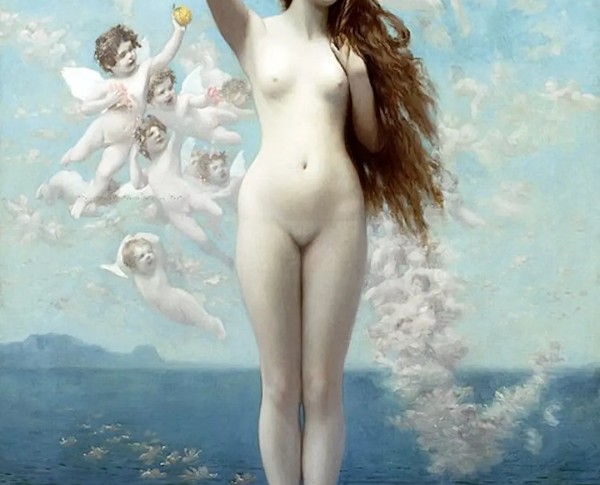
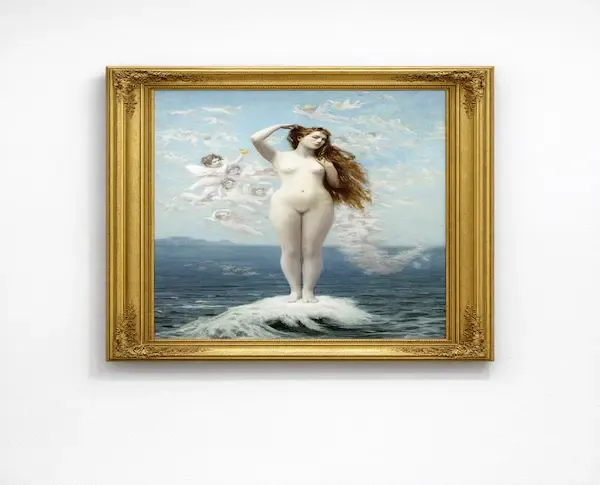
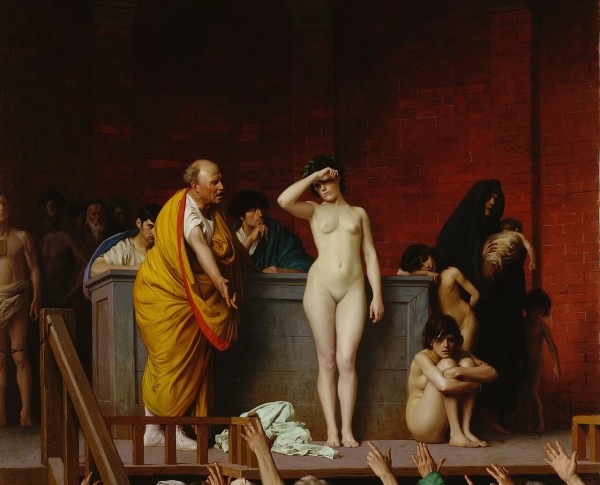
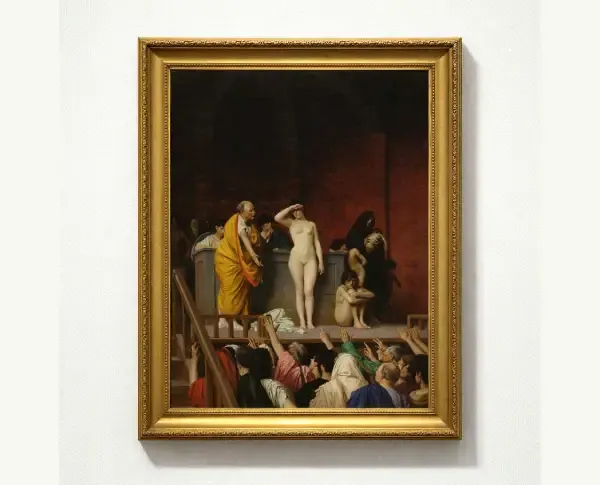
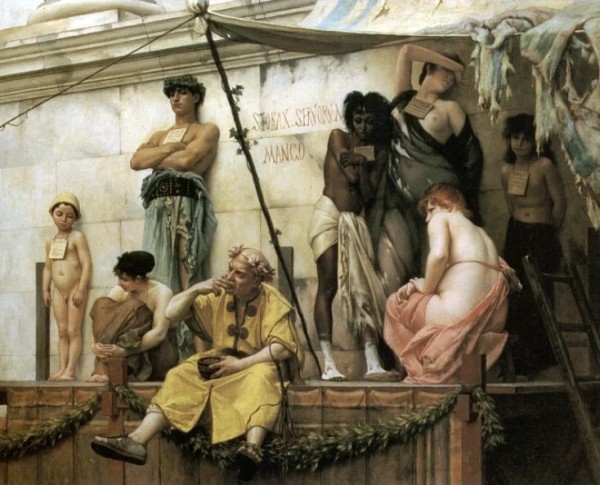
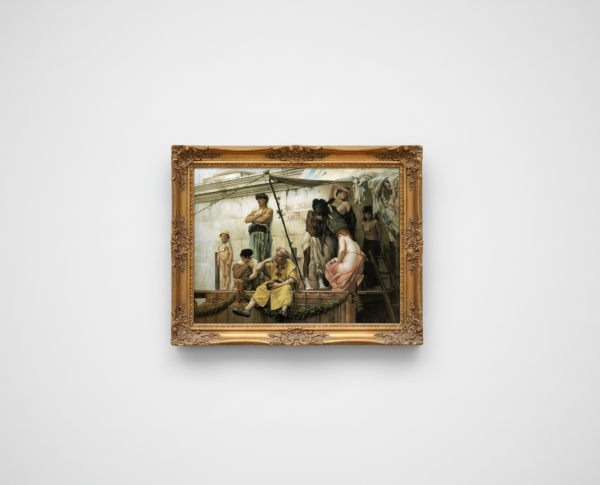
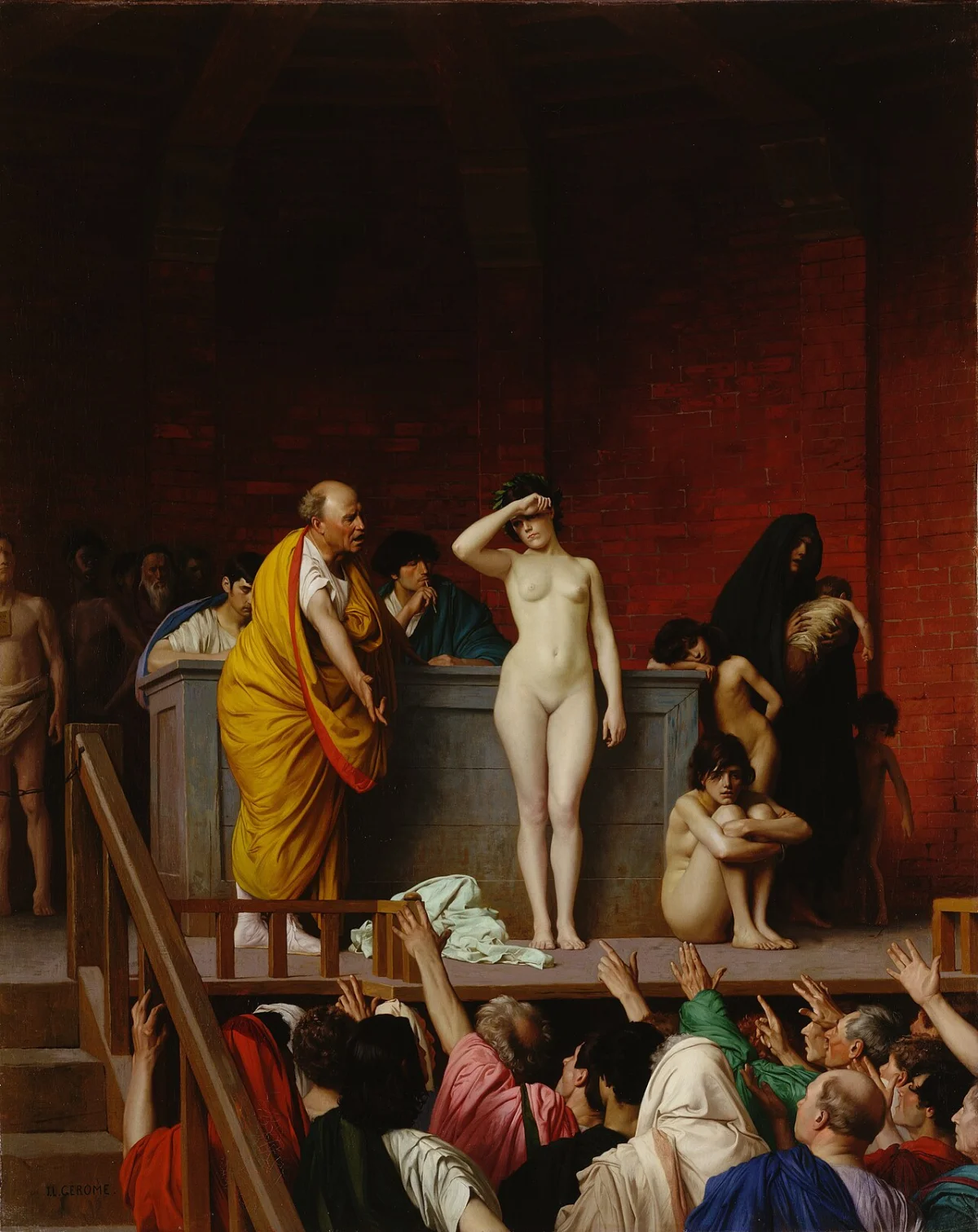
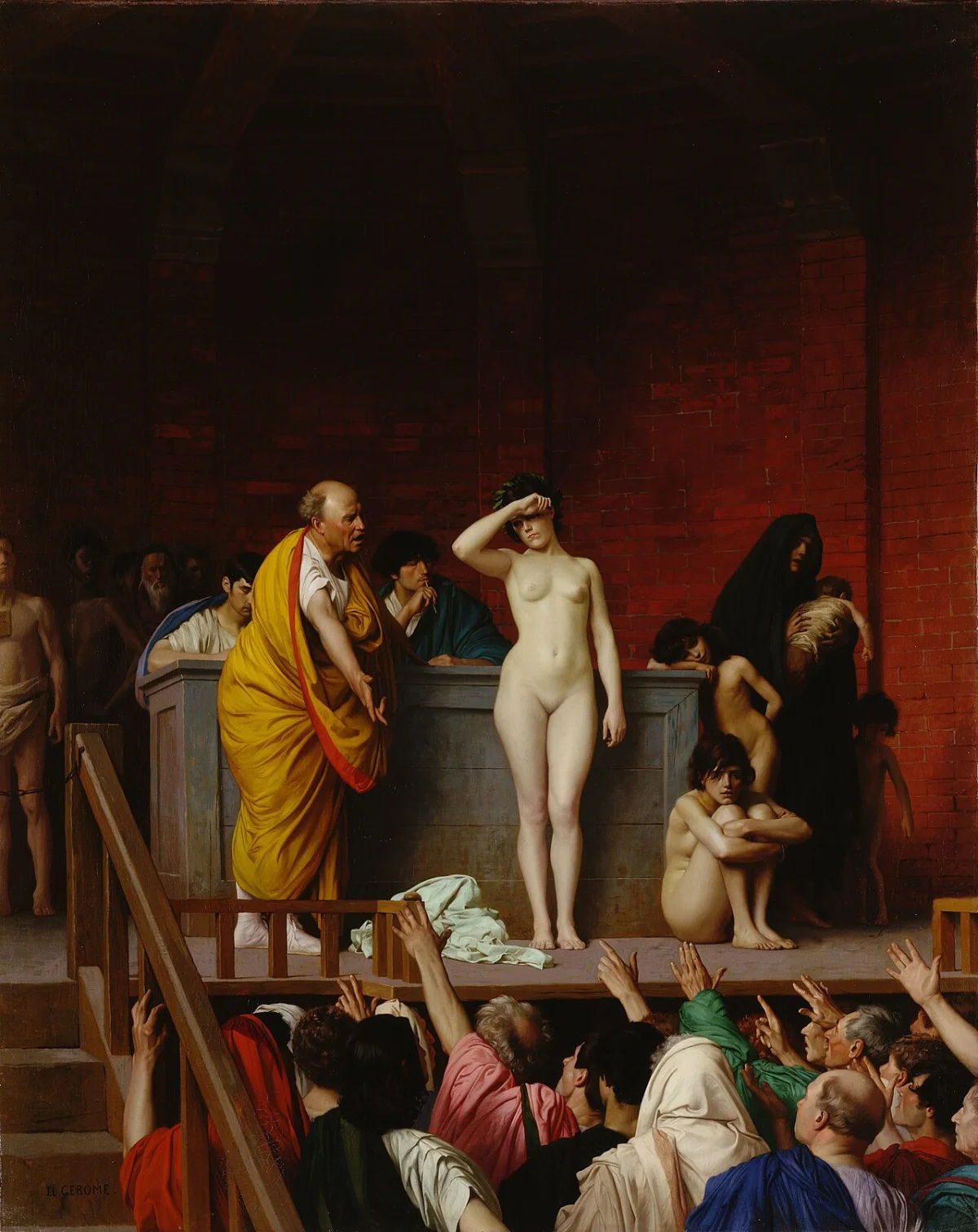
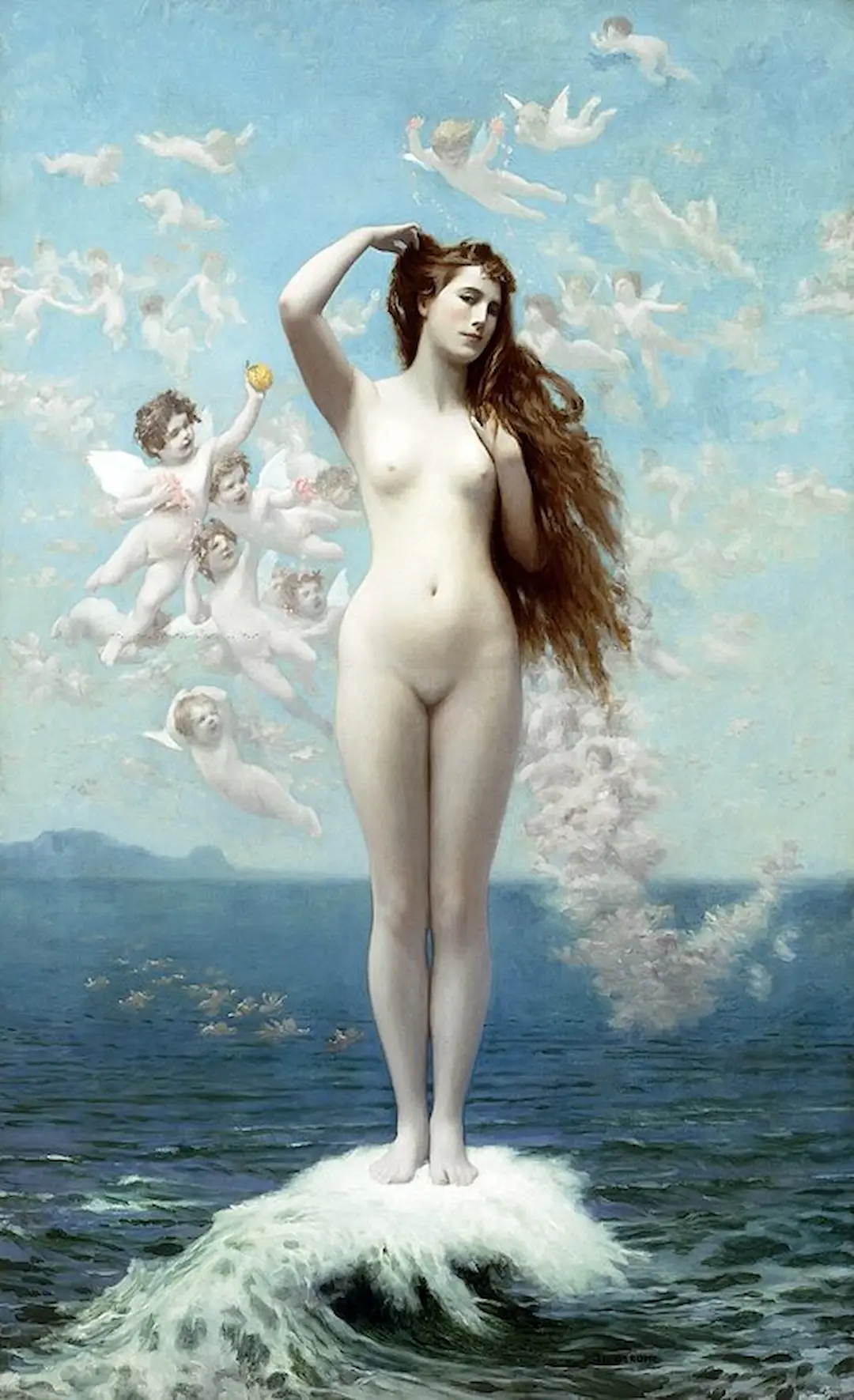
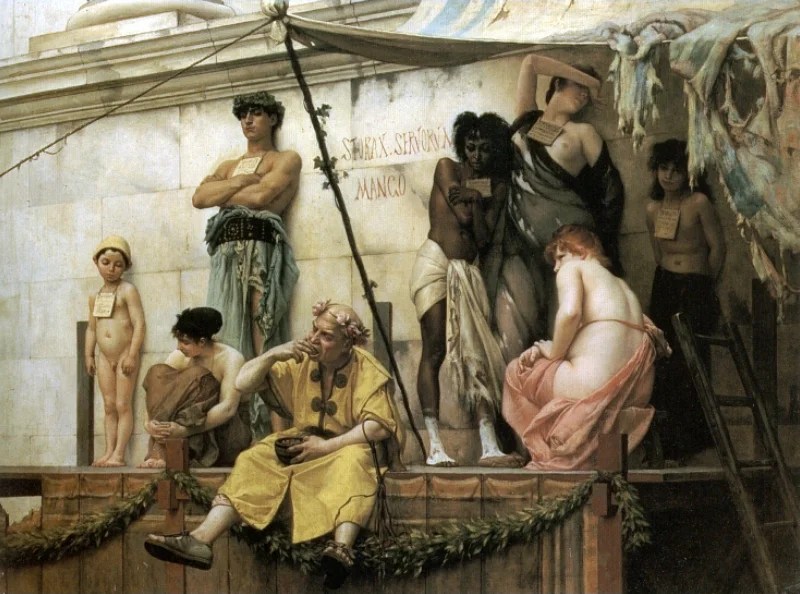
Gérôme’s “Slave Market in Rome” exemplifies the exquisite technique characteristic of oil on canvas masterpieces. Every brushstroke demonstrates his mastery of light, texture, and composition, hallmarks of Academic Classicism. This painting’s lifelike figures and meticulous architectural details reflect Gérôme’s commitment to authenticity. Collectors and enthusiasts who appreciate the technical prowess of oil on canvas works will find this piece, as well as related products such as “Venus Rising,” a testament to the enduring appeal of classical artistry.
“Slave Market in Rome” by Jean-Léon Gérôme tells a powerful story through its compelling imagery and symbolic elements. The painting explores themes of power, vulnerability, and ancient Roman society, inviting viewers to reflect on history’s complexities. As a fine art painting for sale, it offers a window into the narratives and symbolism cherished in Academic Classicism. Those drawn to Gérôme’s storytelling may also appreciate related works like “Venus Rising,” which similarly blend narrative and artistry.
Owning a piece like Jean-Léon Gérôme’s “Slave Market in Rome” is a privilege for any serious art collector. As a hand-painted oil painting, it represents not only the pinnacle of Academic Classicism but also a valuable investment. Collectors seeking a fine art painting for sale will find this work, along with related products like “Venus Rising,” to be exemplary additions to any prestigious collection, celebrated for their historical importance and exceptional artistic quality.
When Art Meets History
"Slave Market in Rome" by Jean-Léon Gérôme is a masterful hand-painted oil painting that transports viewers to ancient times. Created within the Academic Classicism movement, the artwork captures a pivotal moment in Roman history with remarkable detail. Gérôme, renowned for his historical themes, also painted works like "Dante et Virgile au Enfers (Dante and Virgil in Hell)" and "The Abduction of Psyche 1895," each reflecting his fascination with dramatic storytelling and meticulous historical accuracy.
Techniques That Speak
Jean-Léon Gérôme’s "Slave Market in Rome" exemplifies his technical prowess in oil on canvas. The Academic Classicism movement is celebrated for its precise brushwork and lifelike renderings, qualities evident in this painting. Gérôme’s mastery is also seen in "Nymphes et Satyre (Nymphs and Satyr)" and "Young Girl Defending Herself against Eros 1880," where his attention to light, composition, and anatomy brings each scene to vivid life, making his works highly esteemed among art connoisseurs.
Emotions on Display
The emotional intensity in "Slave Market in Rome" sets it apart as a fine art painting for sale that resonates deeply with viewers. Gérôme’s portrayal of anguish and tension among the figures echoes similar sentiments found in his "Pieta" and "Dante et Virgile au Enfers (Dante and Virgil in Hell)." The Academic Classicism style heightens the drama, inviting audiences to empathize with the subjects’ plight while marveling at the artist’s sensitivity and skillful narrative approach.
Coveted by Collectors
As a prime example of Academic Classicism, "Slave Market in Rome" is highly sought after by collectors of hand-painted oil paintings. Gérôme’s iconic status is bolstered by related works such as "The Abduction of Psyche 1895" and "Young Girl Defending Herself against Eros 1880." Each piece, including this one, stands as a testament to the era’s artistic ideals, making them prized additions to fine art collections and museums worldwide.
Related Academic Classicism Hand-Painted Oil Paintings by Other Artists
Other Famous Academic Classicism Artists:
Frequently Asked Questions About Slave Market in Rome
What historical context influenced Jean-Léon Gérôme's painting "Slave Market in Rome"?
The painting reflects the 19th-century fascination with classical antiquity and the romanticized views of ancient Rome, a period marked by colonization and the exploration of non-Western cultures.
What artistic techniques did Gérôme employ in "Slave Market in Rome"?
Gérôme utilized meticulous detail and a realistic approach, employing chiaroscuro to enhance the three-dimensionality of figures and the richness of textures in the setting.
What symbolism is present in "Slave Market in Rome"?
The painting symbolizes the commodification of human life, illustrating the moral complexities of slavery and the objectification of individuals within the context of wealth and power.
How does "Slave Market in Rome" reflect the attitudes towards slavery in the 19th century?
The artwork captures a moment of exploitation, reflecting the era's ambivalence towards slavery, where it was often romanticized while simultaneously critiqued in contemporary discourse.
What role does color play in "Slave Market in Rome"?
Gérôme's use of color enhances the emotional impact of the scene, with warm tones creating a sense of opulence that contrasts sharply with the somber subject matter of slavery.
How does the composition of "Slave Market in Rome" contribute to its narrative?
The composition directs the viewer's gaze through a carefully arranged setting, emphasizing the interactions between the figures and creating a dynamic tension that conveys the power dynamics at play.
What influences can be seen in Gérôme's style in "Slave Market in Rome"?
Gérôme's style is influenced by academic painting and Orientalism, showcasing his interest in exotic subjects and his commitment to historical accuracy in costume and architecture.
What is the significance of the figures depicted in "Slave Market in Rome"?
The figures represent a range of social classes and ethnicities, highlighting the diverse nature of the slave trade and the various roles individuals played within this historical context.
How does "Slave Market in Rome" compare to other works by Gérôme?
Unlike many of Gérôme's other works that depict historical or mythological themes, "Slave Market in Rome" confronts the viewer with a stark reality, making it a poignant commentary on human rights.
What impact did "Slave Market in Rome" have on contemporary audiences?
The painting provoked discussions about morality and ethics surrounding slavery, influencing perceptions of historical injustices and contributing to the broader dialogue on human rights in art.






















_GFM_Painting_(1).webp)


 100% Hand-Painted: Finished in 3-6 Weeks

.png)















_(1).webp)