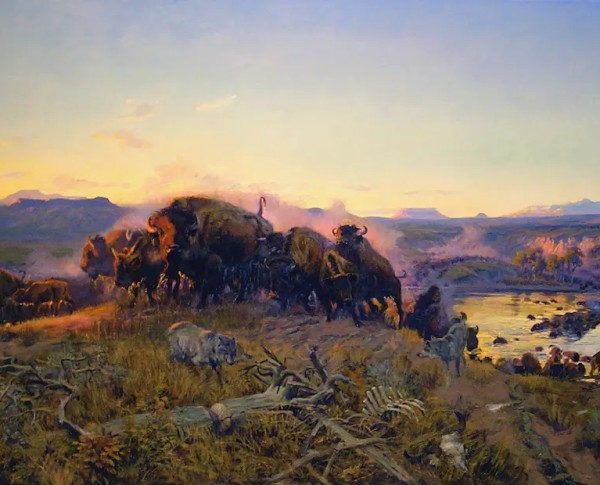
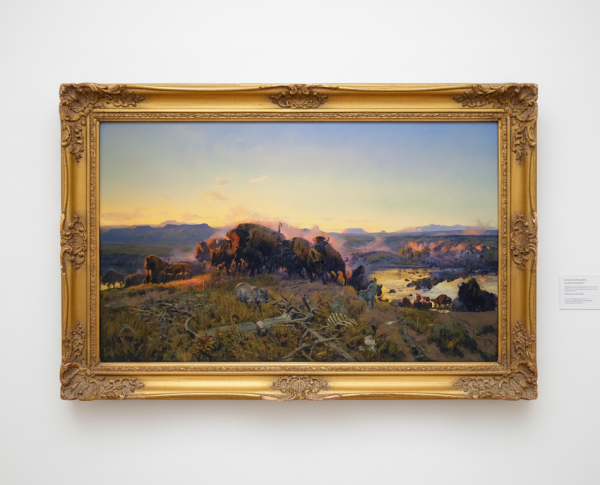
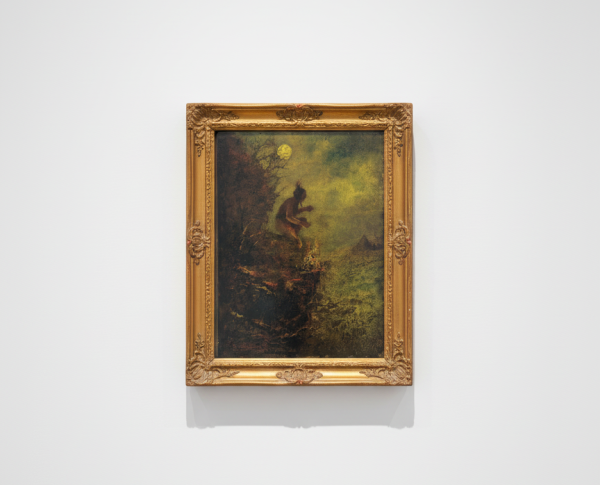
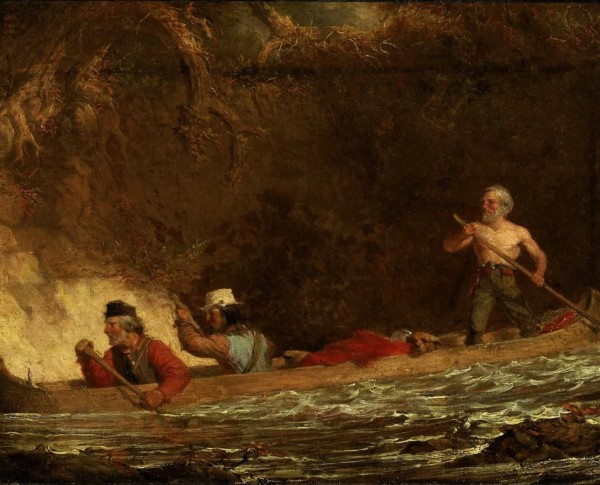
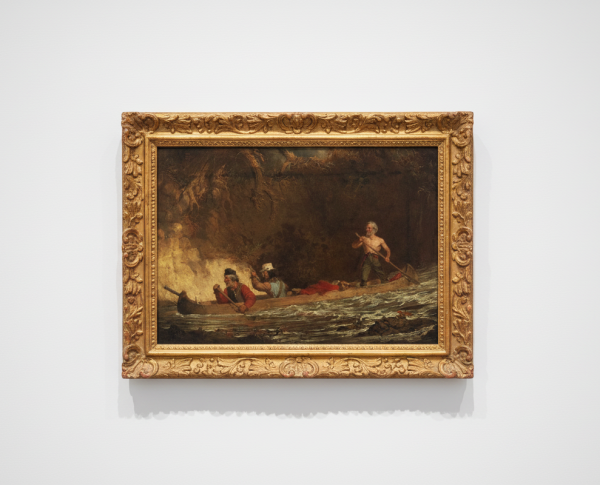
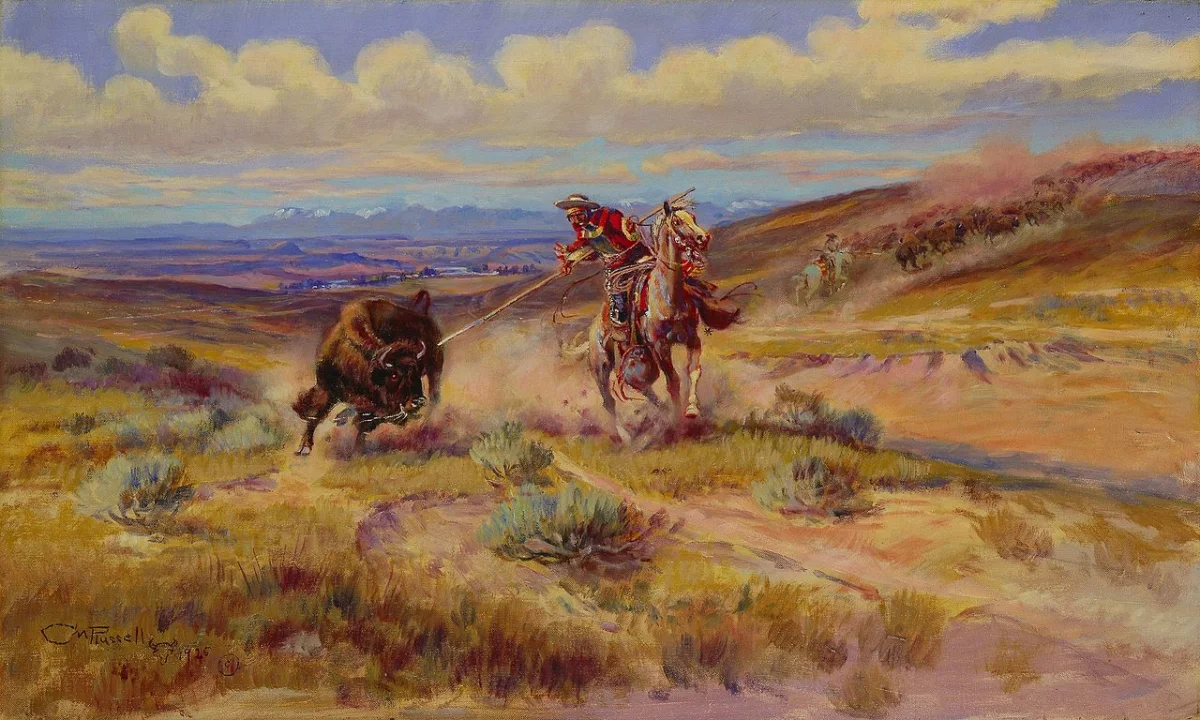
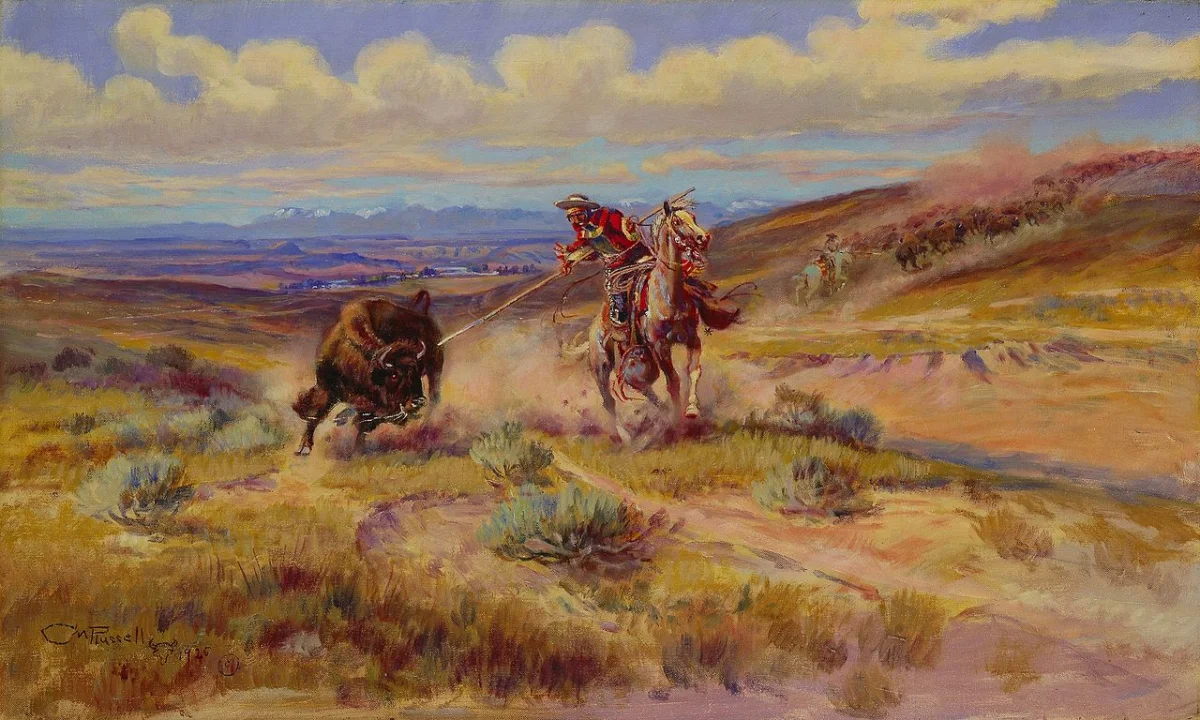
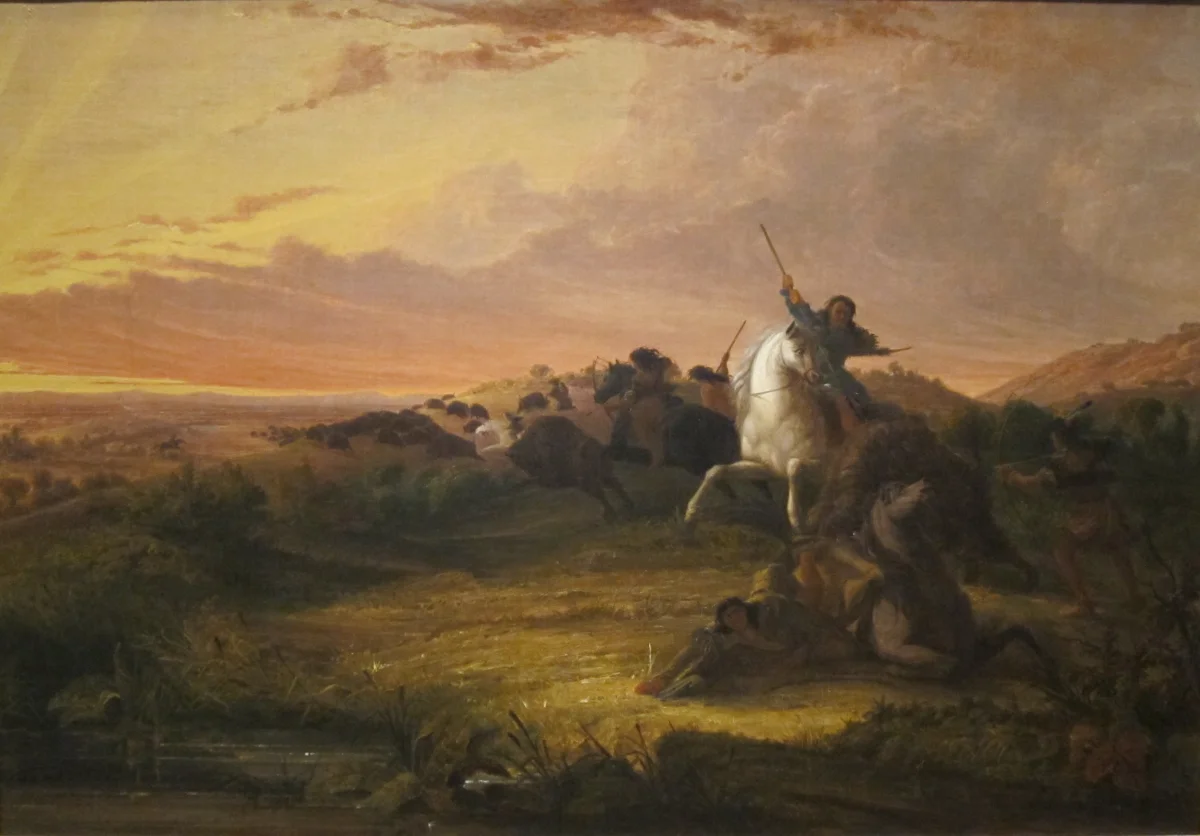
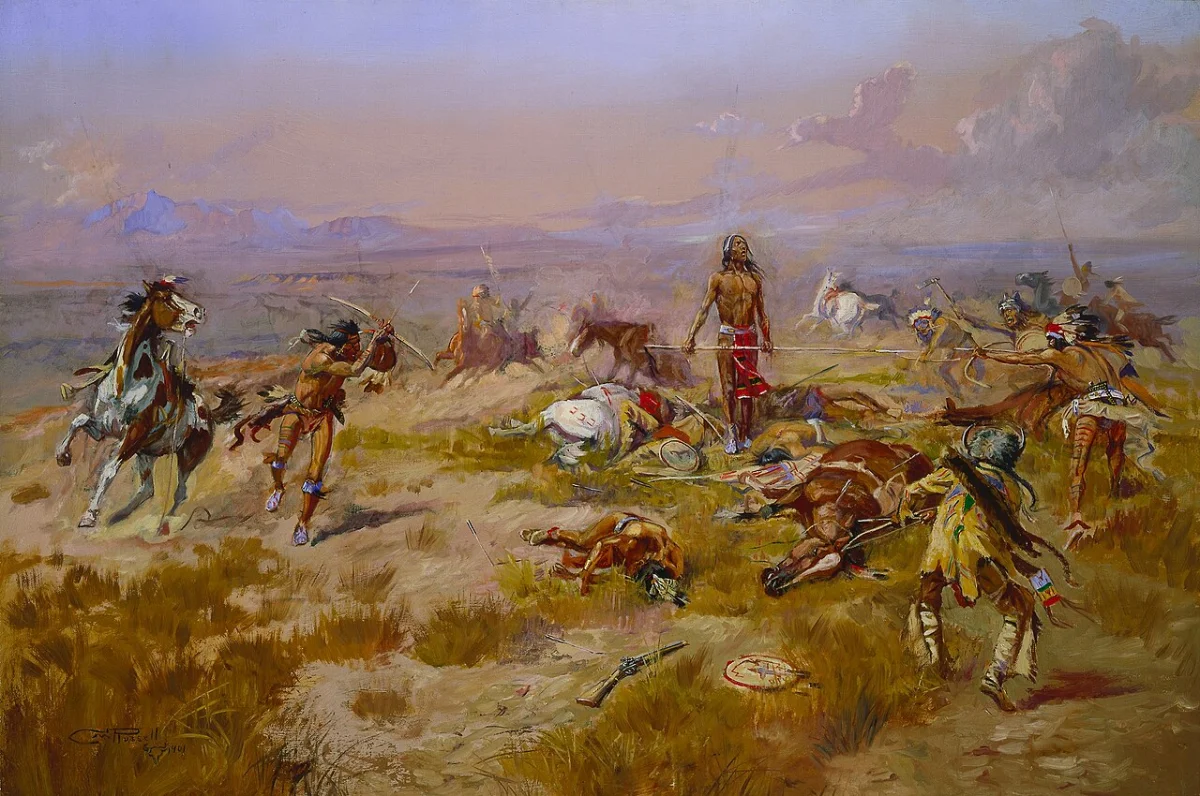
Charles Marion Russell’s "Spearing a Buffalo" demonstrates his exceptional technique with oil on canvas, blending vivid colors and expressive brushwork typical of American Impressionism. The painting’s texture and movement bring the scene to life, making it a standout piece among fine art collections. Admirers of Russell’s work may also find interest in similar paintings such as "The Signal Fire" and "Voyageurs," which highlight his mastery in capturing the essence of frontier life.
Every detail in "Spearing a Buffalo" tells a story, with symbolic references to bravery, survival, and the deep connection between humans and nature. This fine art painting for sale not only celebrates the American Impressionism movement but also offers insight into the narratives that inspired Charles Marion Russell. Collectors can explore related works like "The Death Song of Lone Wolf" and "Whose Meat?" to gain a broader understanding of the themes Russell explored throughout his prolific career.
For those seeking a hand-painted oil painting that embodies the spirit of the American West, "Spearing a Buffalo" by Charles Marion Russell is an exceptional choice. Its historical significance, artistic brilliance, and connection to the American Impressionism movement make it a prized addition to any collection. Enthusiasts might also consider acquiring related products such as "Buffalo Hunt" or "Voyageurs" to complement their appreciation for Russell’s unique vision and legacy.
When Art Meets History
"Spearing a Buffalo" by Charles Marion Russell stands as a testament to American Impressionism, capturing a pivotal moment in frontier history. This hand-painted oil painting brings to life the dynamic interaction between Native Americans and the wild buffalo herds. Russell, known for his vivid storytelling, shares his vision alongside masterpieces like "A Morning Walk" and "The Daughters Of Edward Darley Boit." His work bridges the gap between art and historical narrative, preserving significant scenes for generations.
Techniques That Speak
Russell’s use of oil on canvas in "Spearing a Buffalo" demonstrates his mastery over color, movement, and light—hallmarks of American Impressionism. The brushwork captures the swift action and raw energy of the hunt, echoing techniques seen in "Carnation, Lily, Lily, Rose" and "The Avenue in the Rain." The texture and depth achieved through layered oils create a vivid sense of realism, inviting viewers to experience the moment firsthand.
Emotions on Display
In "Spearing a Buffalo," Charles Marion Russell channels intense emotion through every stroke, making this fine art painting for sale a unique window into the spirit of the American West. The tension between hunter and prey, the adrenaline of the chase, and the reverence for nature evoke feelings reminiscent of works like "Madame X (or Madame Pierre Gautreau)." Russell’s portrayal allows viewers to connect emotionally with both the historical context and the human drama.
Coveted by Collectors
Collectors of American Impressionism highly prize "Spearing a Buffalo" for its historical significance and artistic brilliance. As with celebrated pieces such as "The Avenue in the Rain" and "The Daughters Of Edward Darley Boit," this hand-painted oil painting represents a fusion of narrative depth and technical skill. Russell’s legacy endures, making his works, especially this painting, sought after by enthusiasts eager to own a piece of fine art history.
Related American Impressionism Hand-Painted Oil Paintings by Other Artists
Other Famous American Impressionism Artists:
Frequently Asked Questions About Spearing a Buffalo
What historical context influenced Charles Marion Russell's creation of "Spearing a Buffalo"?
"Spearing a Buffalo" was created during a time when the American West was undergoing significant changes due to westward expansion and the decline of Native American cultures. Russell, known for his depictions of the Old West, aimed to capture the traditional hunting practices of Indigenous peoples, emphasizing their connection to the land and the buffalo as a vital resource.
What artistic techniques did Russell employ in "Spearing a Buffalo"?
Russell utilized a combination of dynamic composition and vibrant colors to convey movement and emotion in "Spearing a Buffalo." His use of light and shadow enhances the dramatic tension of the scene, while his attention to detail in the figures and animals reflects his deep understanding of the subject matter.
What symbolism is present in "Spearing a Buffalo"?
The buffalo in the painting symbolizes not only sustenance and survival for Native American tribes but also represents the broader themes of the American frontier and the struggle between man and nature. The act of spearing the buffalo serves as a metaphor for the clash of cultures during this transformative period in American history.
How does "Spearing a Buffalo" reflect Russell's views on Native American culture?
Russell's portrayal of Native Americans in "Spearing a Buffalo" reflects his admiration for their skills, bravery, and deep connection to nature. He often sought to honor their traditions and way of life, presenting them as noble figures in harmony with the wilderness rather than as mere subjects of conquest.
In what ways does "Spearing a Buffalo" exemplify the genre of Western art?
"Spearing a Buffalo" exemplifies Western art through its focus on themes of exploration, adventure, and the relationship between humans and the natural world. Russell's ability to capture the essence of the American West and its iconic imagery solidifies his place within this genre, showcasing both the beauty and the challenges of frontier life.
What impact did "Spearing a Buffalo" have on the perception of Native American hunting practices?
The painting contributed to a greater awareness and appreciation of Native American hunting practices, portraying them as skilled and respectful of nature. Russell's work helped to counteract some of the negative stereotypes prevalent at the time, presenting a more nuanced view of Indigenous peoples and their traditions.
How does the composition of "Spearing a Buffalo" enhance its narrative?
The composition of "Spearing a Buffalo" is dynamic, with the figures and buffalo arranged in a way that draws the viewer's eye through the action of the hunt. This sense of movement not only enhances the narrative but also immerses the viewer in the intensity of the moment, making them feel part of the scene.
What role does color play in the emotional impact of "Spearing a Buffalo"?
Color plays a crucial role in "Spearing a Buffalo," with rich earth tones and vibrant hues evoking the natural landscape of the American West. The use of contrasting colors highlights the figures and the buffalo, creating a sense of urgency and emotional depth that resonates with the viewer.
How has "Spearing a Buffalo" influenced contemporary views of Western art?
"Spearing a Buffalo" has influenced contemporary views of Western art by encouraging a reevaluation of the narratives surrounding the American West. Russell's focus on authenticity and respect for Indigenous cultures has paved the way for modern artists to explore similar themes, fostering a dialogue about representation and cultural heritage.
What is the significance of the buffalo in American history, as depicted in Russell's painting?
The buffalo holds significant historical importance as a symbol of the American plains and the livelihood of many Indigenous tribes. In "Spearing a Buffalo," Russell captures the essence of this relationship, highlighting the buffalo's role in sustaining cultures and the impact of its near extinction due to overhunting and habitat loss.






















_GFM_Painting_(1).webp)


 100% Hand-Painted: Finished in 3-6 Weeks

.png)
















_(1).webp)