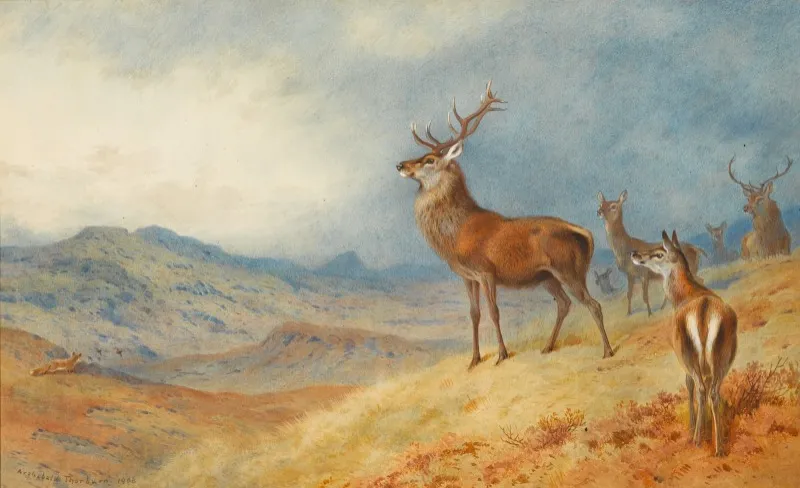
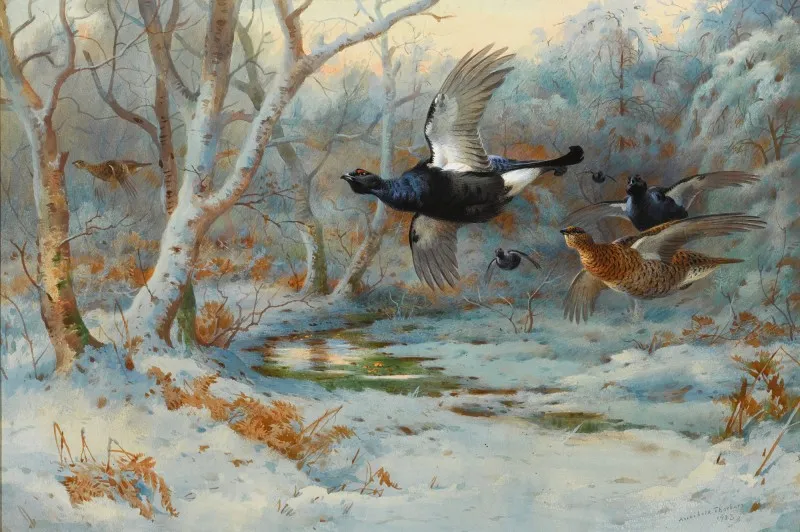
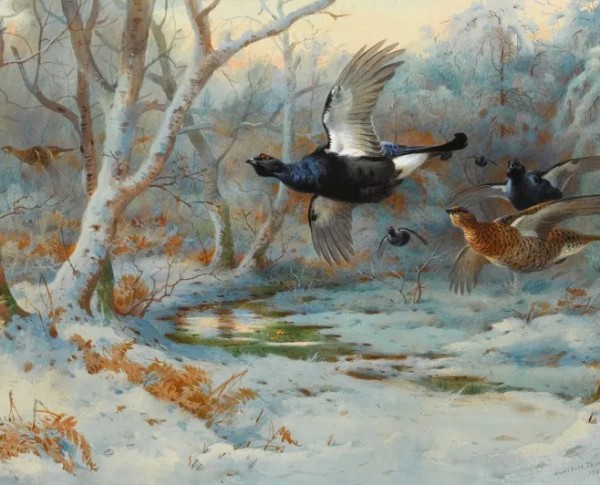
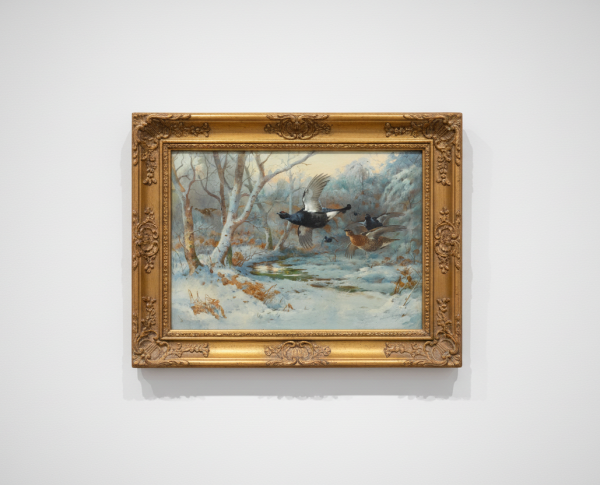
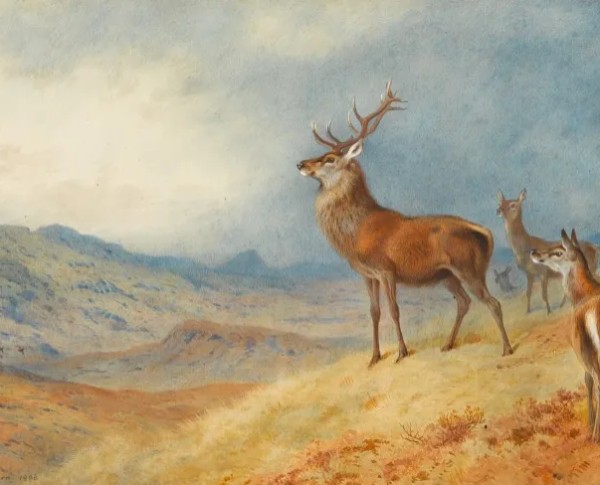
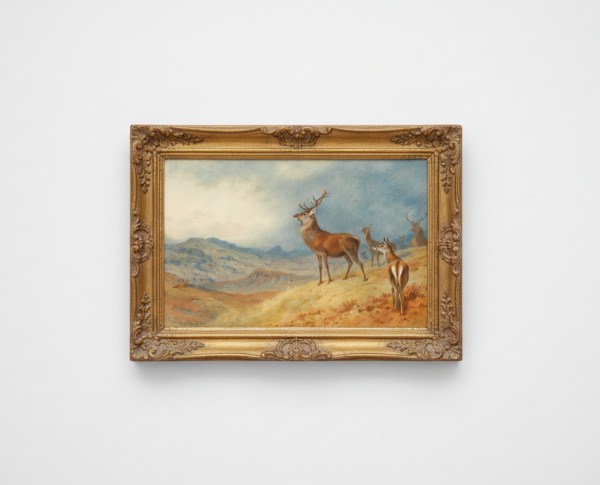
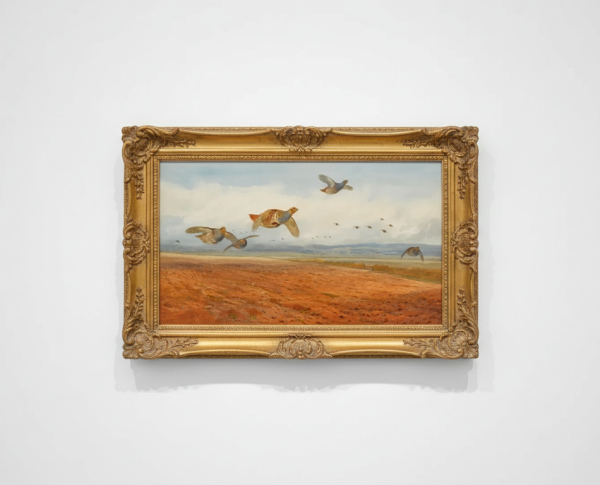
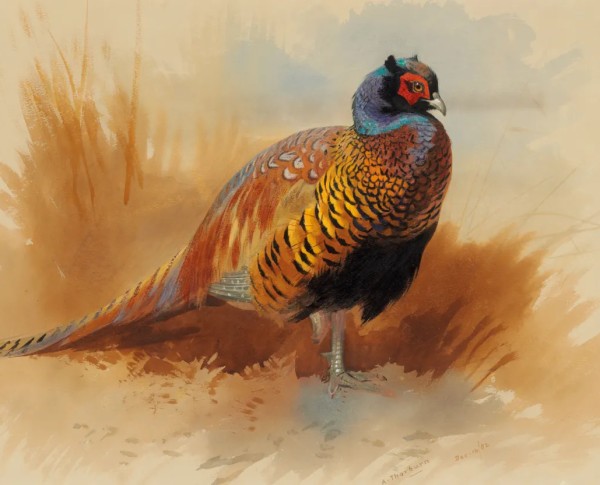
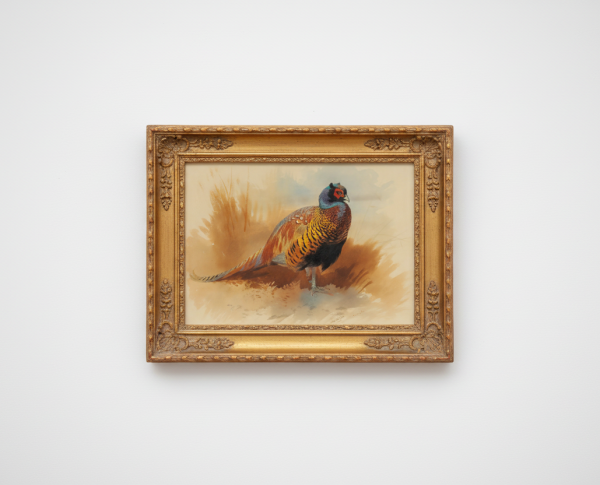
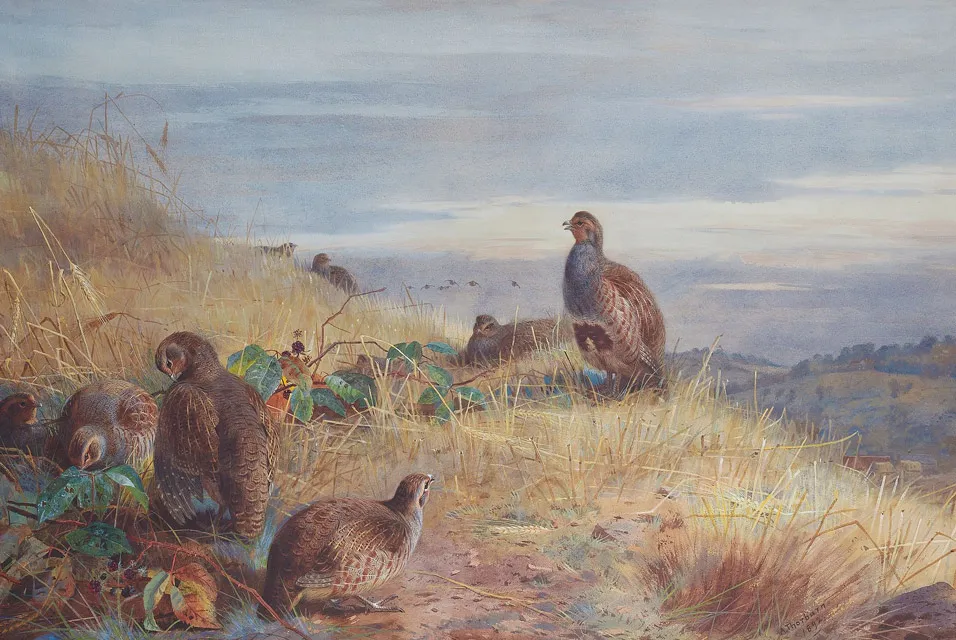
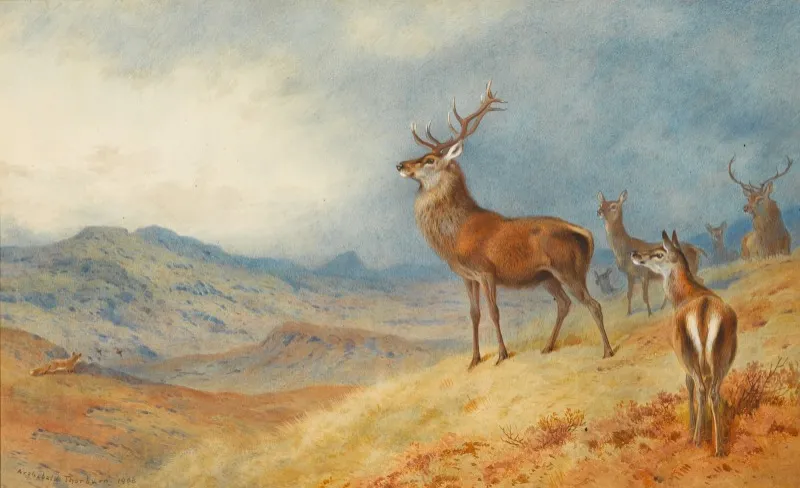
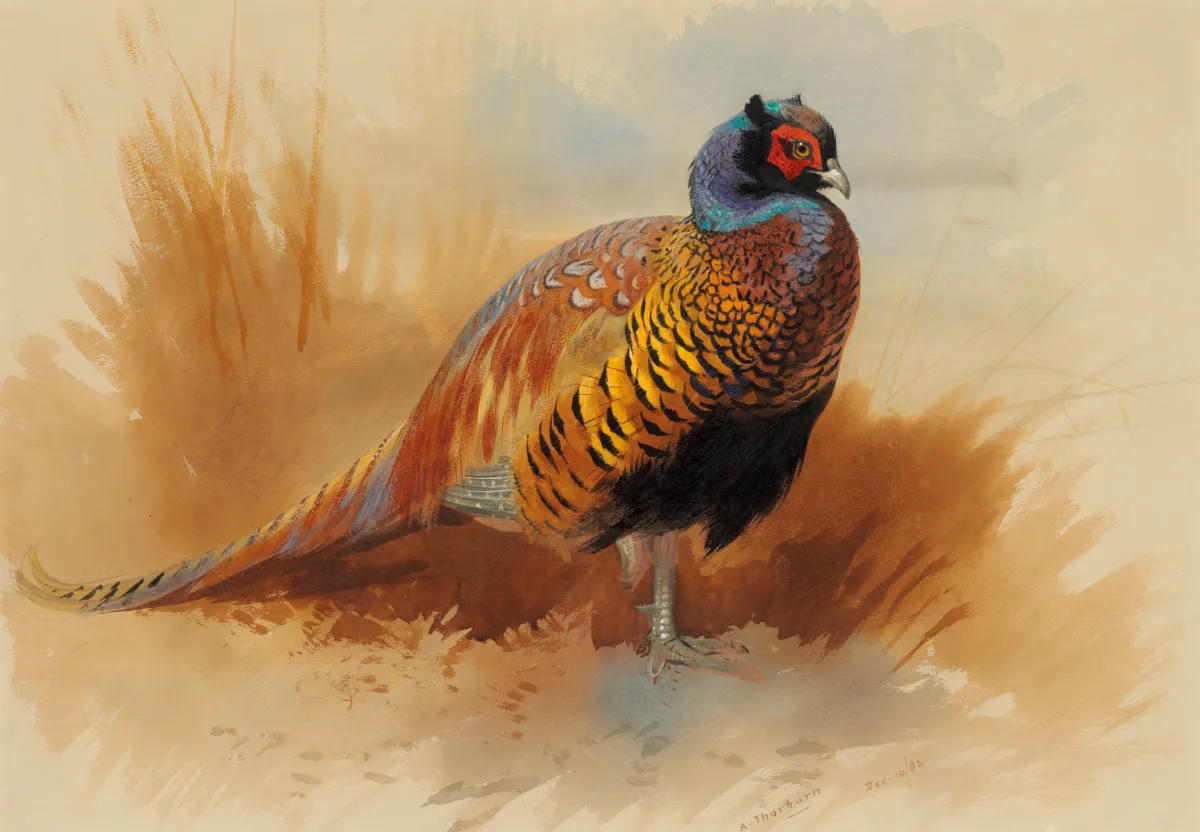
Archibald Thorburn’s "The Covey at Daybreak" demonstrates his exceptional talent with oil on canvas, bringing to life the subtle hues and textures of dawn in the countryside. Thorburn’s meticulous technique and keen observation skills are hallmarks of the Naturalism movement. Fans of wildlife art will appreciate the same attention to detail in his other pieces, like "Red Deer In A Highland Landscape" and "Study of a cock pheasant," making each oil on canvas a testament to his legacy.
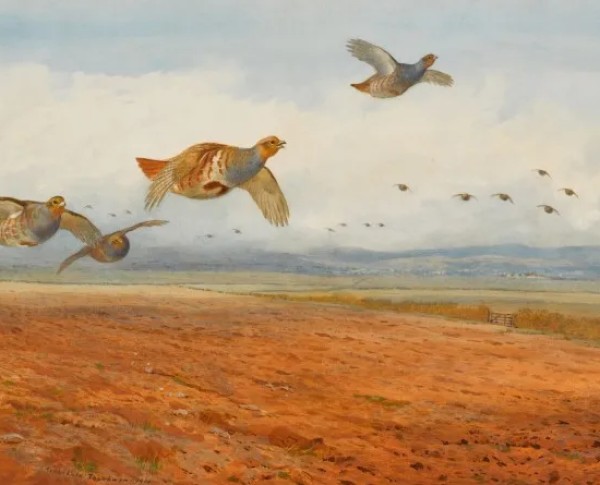
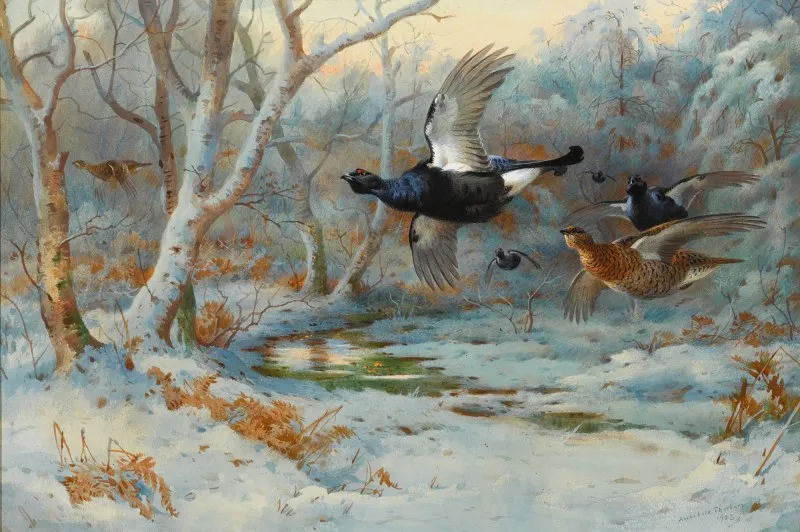
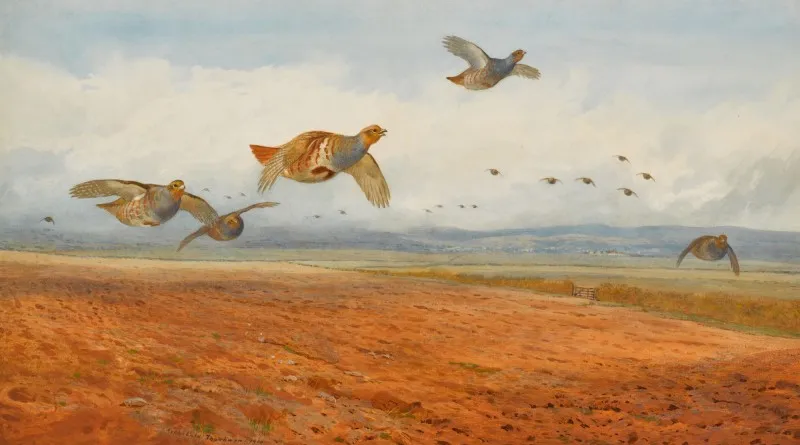
In "The Covey at Daybreak," the early morning light and the gathered covey symbolize renewal and the delicate balance of nature, themes central to the Naturalism movement. Archibald Thorburn’s fine art painting for sale invites viewers to explore the hidden narratives within the landscape and wildlife. Collectors often pair this piece with related works, such as "A Covey of Grey Partridge in Flight," to deepen their understanding of Thorburn’s artistic storytelling.
For those seeking a distinguished addition to their collection, "The Covey at Daybreak" by Archibald Thorburn is a fine art painting for sale that embodies the spirit of Naturalism. Its exquisite detail and emotional resonance make it a prized choice among hand-painted oil paintings. Collectors may also consider related products like "Red Deer In A Highland Landscape" and "Study of a cock pheasant," each offering a unique glimpse into Thorburn’s celebrated oeuvre.
When Art Meets History
Archibald Thorburn’s "The Covey at Daybreak" is a celebrated example of the Naturalism movement, capturing the serene beauty of wildlife at dawn. Painted in the early 20th century, this hand-painted oil painting reflects Thorburn’s fascination with the quiet moments of nature. His work, alongside other Naturalist masterpieces, helped shape the way wildlife was depicted in fine art. Collectors and art historians alike recognize its importance for its historical context and exquisite detail.
Techniques That Speak
Thorburn employed masterful techniques in "The Covey at Daybreak," especially visible in his use of oil on canvas. His brushwork brings lifelike texture to the plumage and landscape, showcasing a deep understanding of both subject and medium. By studying this work, one can appreciate Thorburn’s ability to blend color and light, a hallmark of the Naturalism movement. These techniques set his paintings apart, inspiring both contemporaries and future generations of wildlife artists.
Emotions on Display
"The Covey at Daybreak" invites viewers into a tranquil world, evoking a sense of peace and wonder through its depiction of birds at sunrise. Thorburn’s fine art painting for sale resonates emotionally, capturing the delicate balance between wildlife and their natural surroundings. As with his other works, the artist’s sensitivity and attention to detail allow the audience to connect intimately with the scene, making each viewing a new emotional experience shaped by light and atmosphere.
Coveted by Collectors
This hand-painted oil painting has long been sought after by collectors who value the unique perspective Archibald Thorburn brought to the Naturalism movement. The rarity and exquisite execution of "The Covey at Daybreak" elevate it among fine art painting for sale from this era. Its connection to other significant wildlife pieces ensures its place in prestigious collections, where it continues to inspire admiration for both the artist’s skill and his reverence for the natural world.
Frequently Asked Questions About The Covey at Daybreak
What is the historical context of "The Covey at Daybreak"?
"The Covey at Daybreak," painted by Archibald Thorburn, reflects the late 19th to early 20th century British fascination with nature and wildlife. This period saw an increased appreciation for the natural world, influenced by the Romantic movement and a growing interest in conservation.
What artistic techniques did Archibald Thorburn employ in this painting?
Thorburn is renowned for his meticulous attention to detail and realistic portrayal of wildlife. In "The Covey at Daybreak," he utilizes oil on canvas to create rich textures and vibrant colors, effectively capturing the early morning light and the delicate features of the birds.
What is the significance of the title "The Covey at Daybreak"?
The title refers to a group of birds, specifically a covey of partridges, depicted at dawn. This symbolizes new beginnings and the beauty of nature awakening, which resonates with themes of renewal and the cyclical nature of life.
How does this painting reflect Archibald Thorburn's artistic style?
Thorburn's style is characterized by a blend of realism and impressionism. "The Covey at Daybreak" showcases his ability to convey movement and atmosphere, capturing the fleeting moment of daybreak while maintaining a lifelike representation of the birds.
What themes are explored in "The Covey at Daybreak"?
The painting explores themes of nature, tranquility, and the harmony between wildlife and their environment. It invites viewers to appreciate the beauty of the natural world and reflects the artist's deep connection to his subjects.
What was Archibald Thorburn's influence on wildlife art?
Thorburn is considered a pioneer in wildlife art, elevating the genre through his detailed studies and depictions of birds and animals. His work, including "The Covey at Daybreak," has inspired subsequent generations of wildlife artists to focus on accuracy and the beauty of their subjects.
Where can we find more works by Archibald Thorburn?
Thorburn's works can be found in various prestigious collections, including the Natural History Museum in London and the Royal Academy. Many galleries and museums dedicated to wildlife art also feature his paintings.
What materials did Archibald Thorburn use for "The Covey at Daybreak"?
Thorburn primarily used oil paints on canvas for "The Covey at Daybreak," a medium that allowed him to achieve the depth of color and detail for which he is celebrated. His choice of materials contributed to the painting's lifelike quality.
How does "The Covey at Daybreak" compare to other works by Thorburn?
Compared to other works by Thorburn, "The Covey at Daybreak" exemplifies his mastery of light and shadow, particularly in the depiction of dawn. It stands out for its serene composition and the dynamic portrayal of the birds in their natural habitat.
What impact did "The Covey at Daybreak" have on the perception of wildlife in art?
"The Covey at Daybreak" played a significant role in elevating the status of wildlife in art, encouraging a greater appreciation for the beauty and complexity of nature. Thorburn's work helped to foster a sense of environmental awareness and conservation among art enthusiasts.






















_GFM_Painting_(1).webp)


 100% Hand-Painted: Finished in 3-6 Weeks

.png)















_(1).webp)