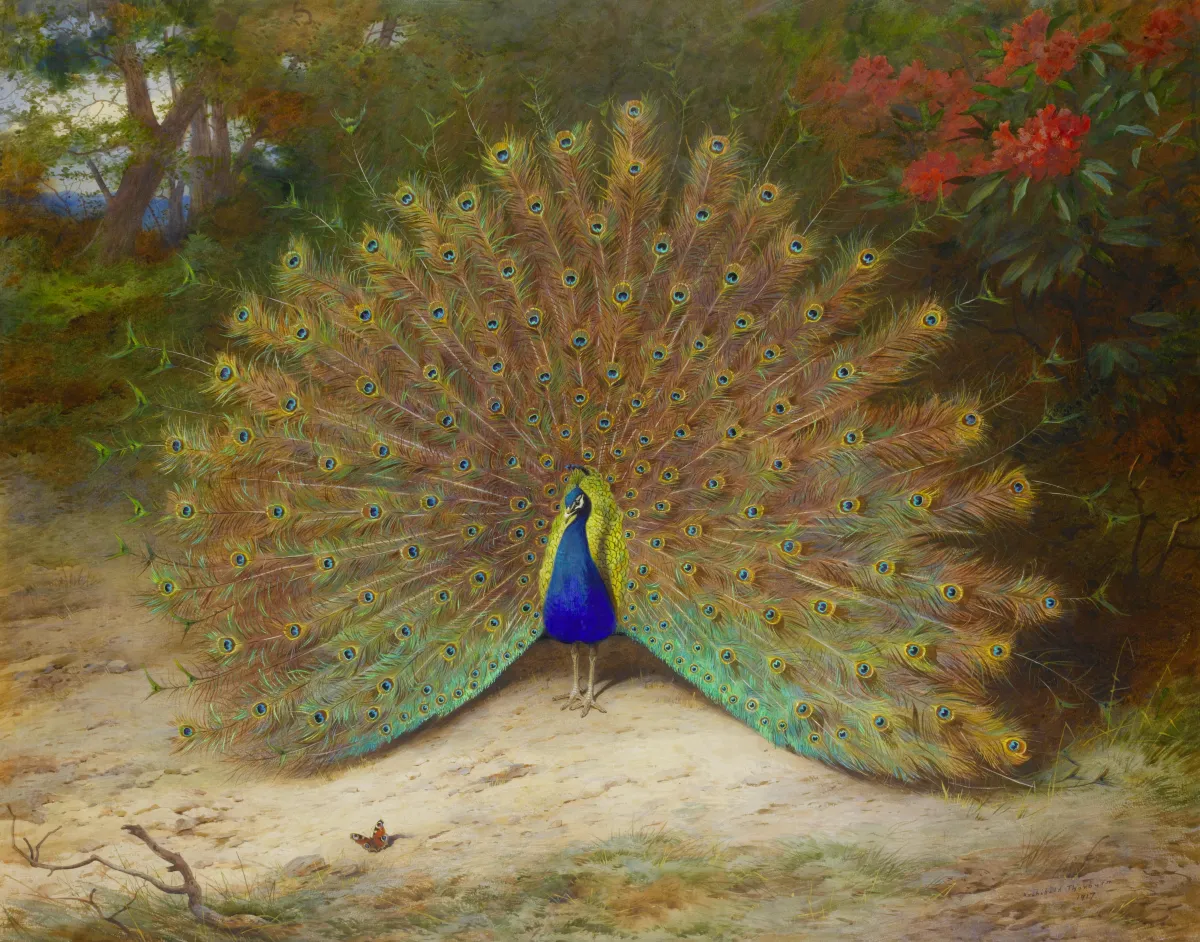
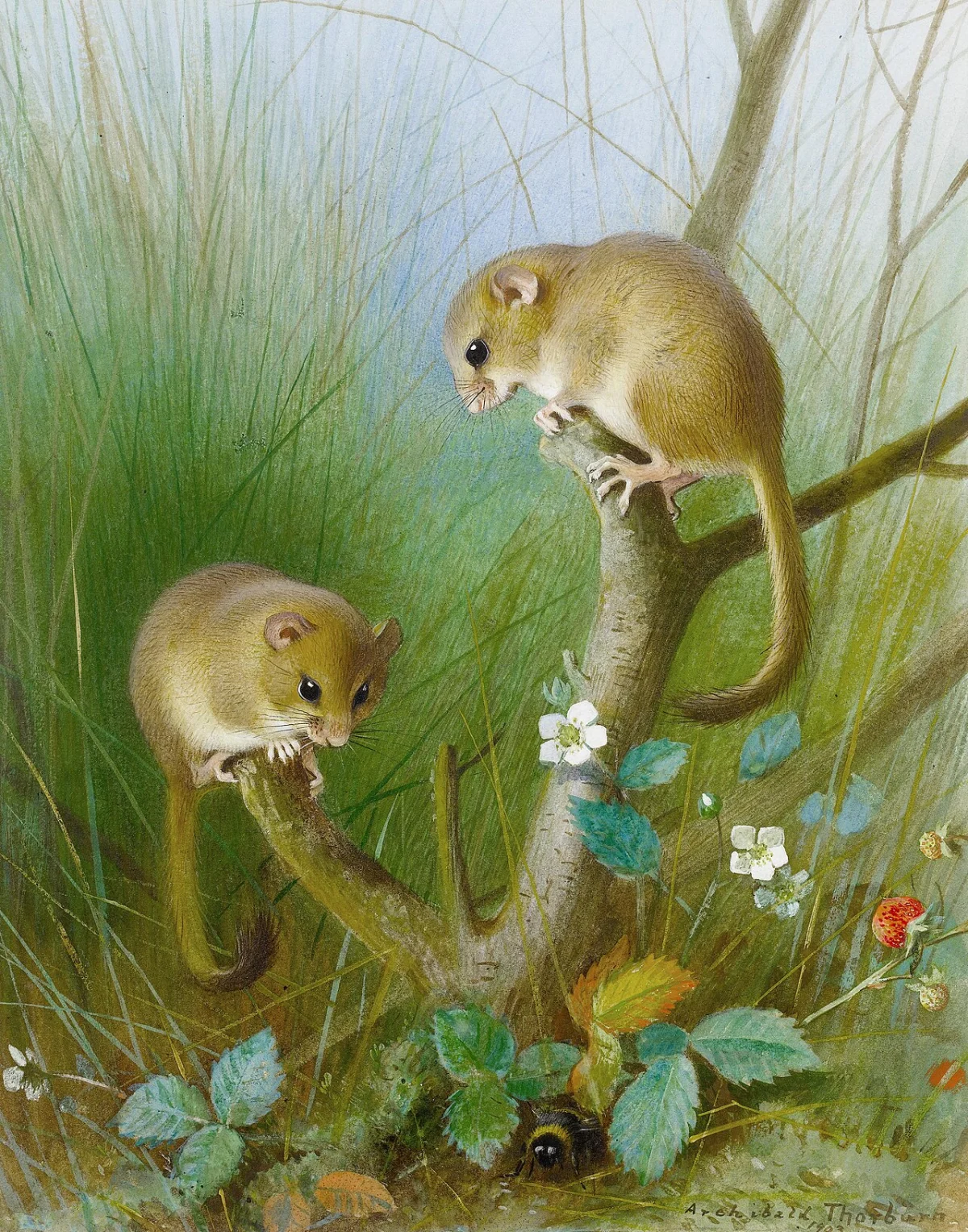
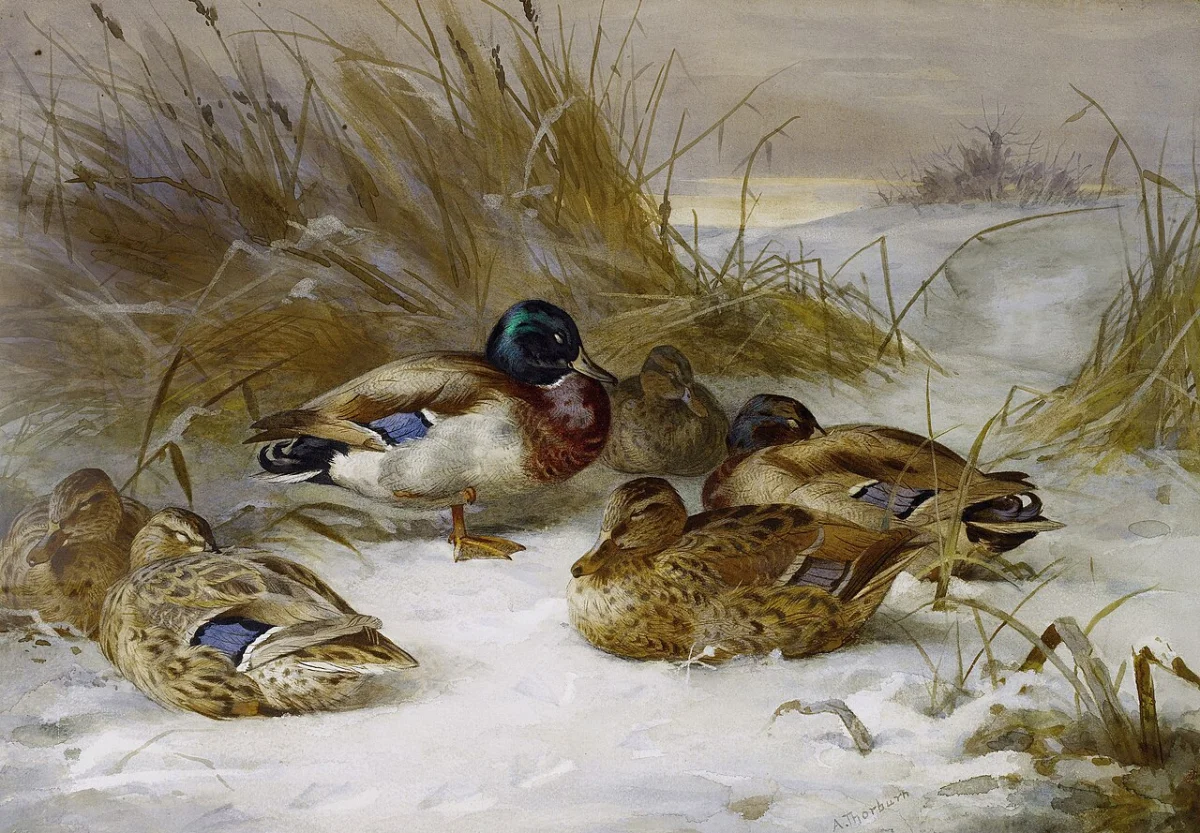
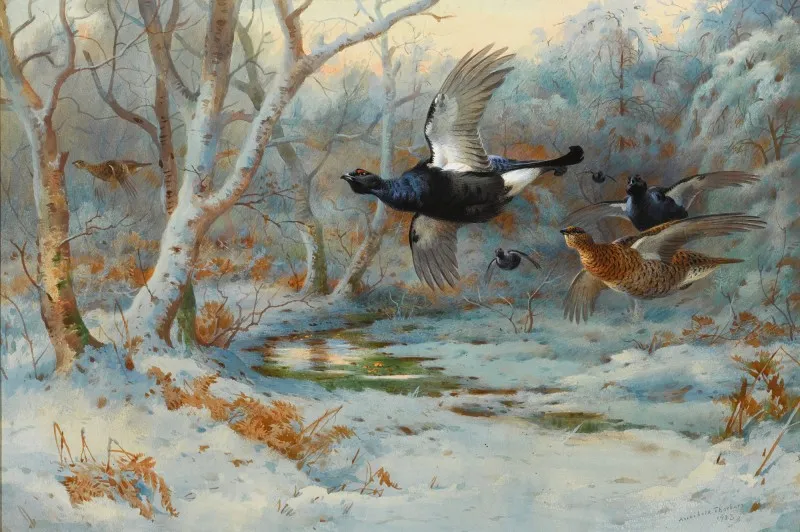
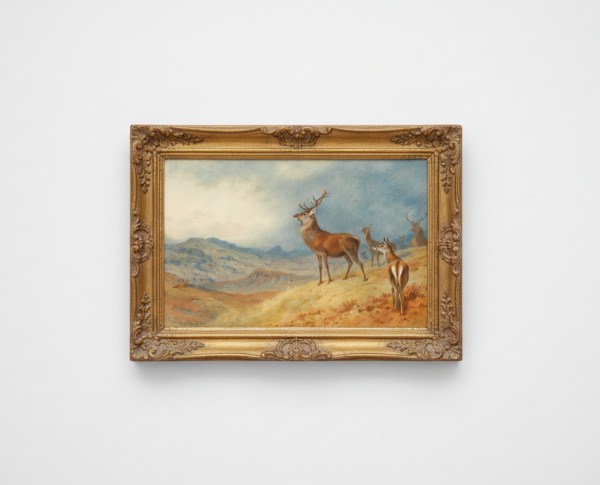
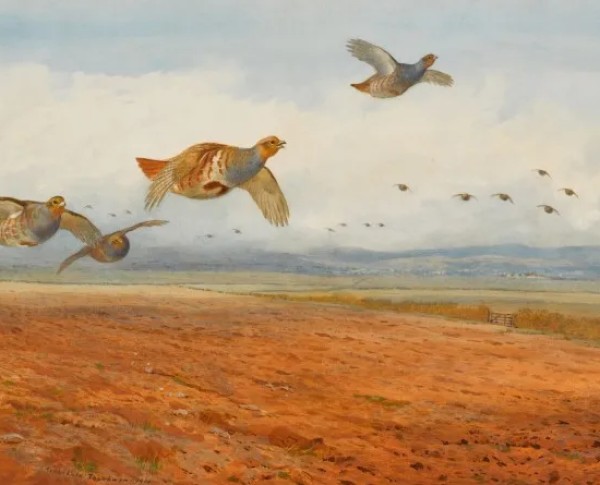
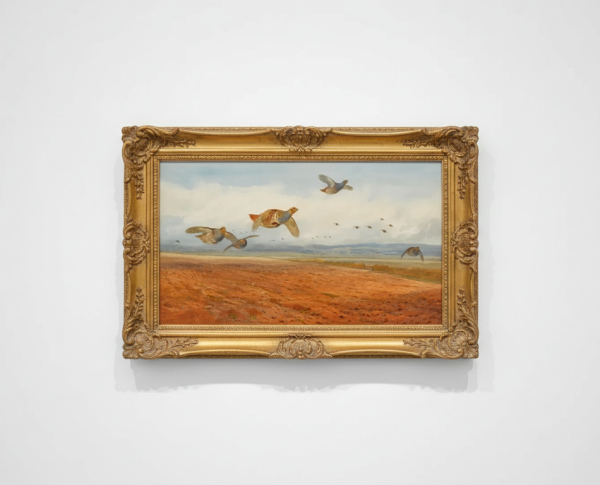
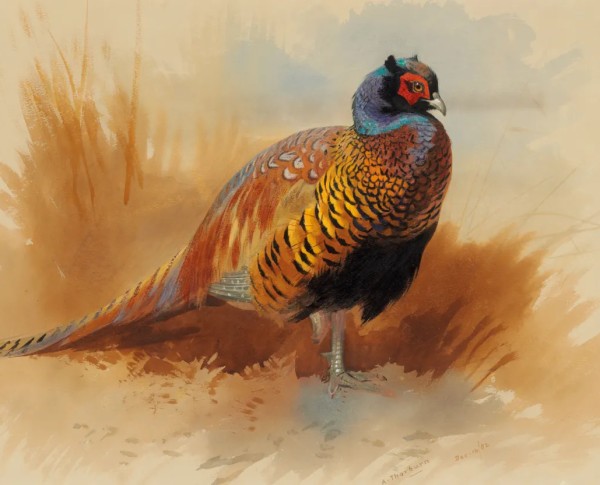
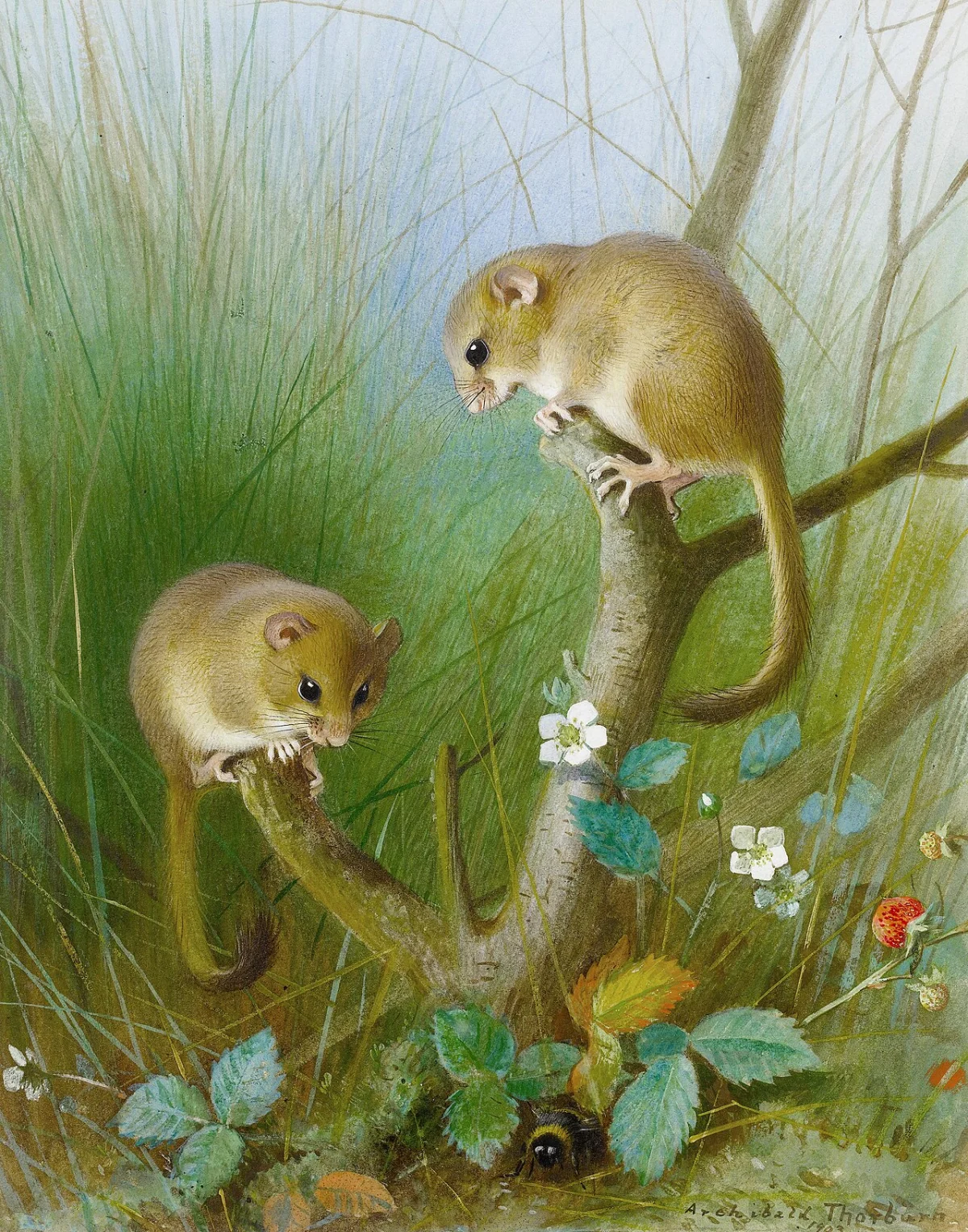
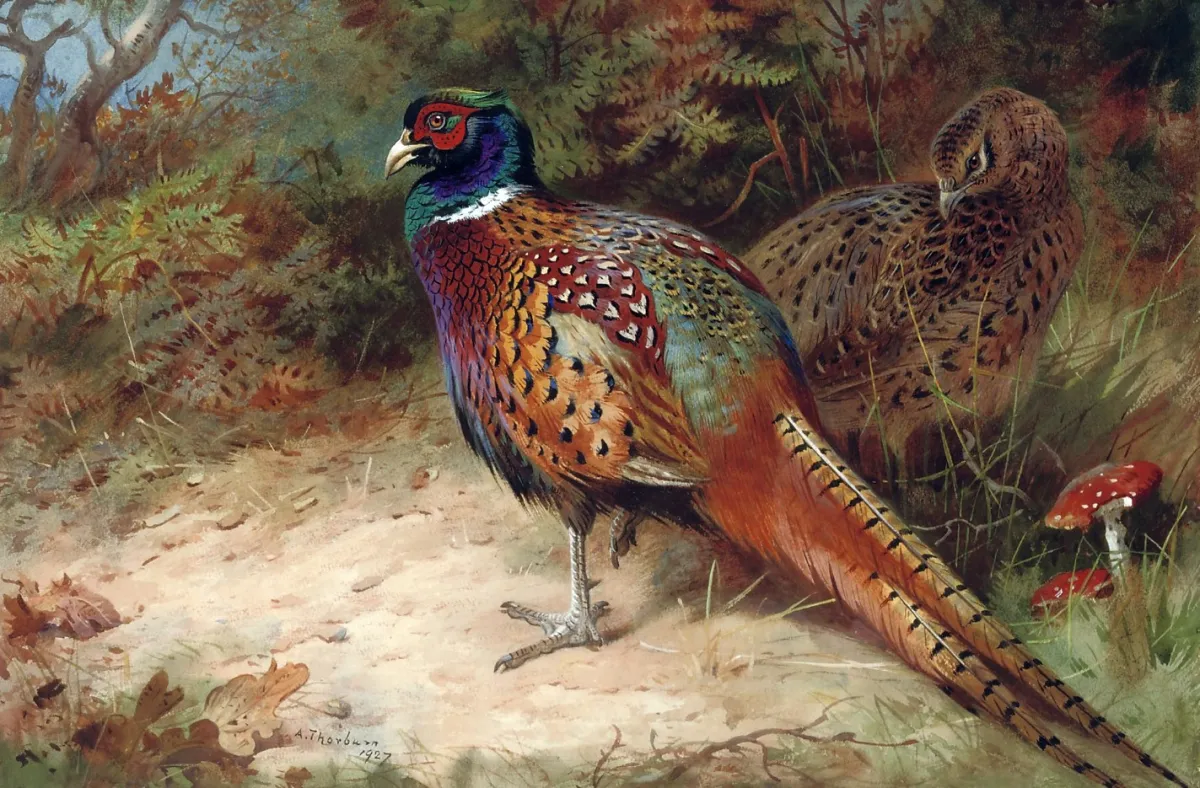
Archibald Thorburn’s "Dormice." demonstrates his exceptional technique with oil on canvas, bringing the gentle creatures to life through meticulous brushwork and keen attention to texture. The Naturalism movement values authenticity and detail, both of which are evident in this piece. Thorburn’s ability to render lifelike fur and subtle forest backgrounds sets his work apart. For admirers, paintings like "Peacock and Peacock Butterfly" and "Wigeon and Teal by the water's edge." offer similarly exquisite oil on canvas artistry.
In "Dormice.", Thorburn weaves subtle narratives through his fine art painting for sale, inviting viewers to ponder the stories of these elusive creatures. The dormice symbolize tranquility and the hidden wonders of the natural world, themes commonly explored in the Naturalism movement. Collectors drawn to symbolic wildlife representations may also consider "Woodcock in a sandy hollow." or "Peacock and Peacock Butterfly," both echoing Thorburn’s affinity for storytelling through nature-inspired art.
For art collectors, "Dormice." by Archibald Thorburn is more than just a fine art painting for sale; it is a cherished piece from a master of the Naturalism movement. The painting’s hand-painted oil technique ensures each detail is faithfully rendered, making it a standout addition to any collection. Those interested in expanding their collection may look to related works like "Danger aloft – Ptarmigan" and "Wigeon and Teal by the water's edge." for further inspiration.
When Art Meets History
Archibald Thorburn’s "Dormice" exemplifies the Naturalism movement, capturing the delicate creatures in their habitat with remarkable detail. This hand-painted oil painting reflects the historical fascination with the natural world at the turn of the 20th century. Thorburn, renowned for his wildlife artistry, contributed significantly to the appreciation of nature through art. His meticulous approach in "Dormice" aligns with the Naturalism ethos, immortalizing the subtle beauty of wildlife for future generations to admire.
Techniques That Speak
Thorburn’s mastery of oil on canvas is evident in "Dormice," where every brushstroke brings the small mammals and their surroundings to life. His skillful layering and nuanced use of color create a lifelike texture, embodying the essence of the Naturalism movement. The painting’s technique mirrors those seen in related works, emphasizing realism and attention to detail. Collectors and enthusiasts alike appreciate the technical prowess that makes this oil on canvas a standout piece in naturalistic art.
Emotions on Display
"Dormice" by Archibald Thorburn evokes a sense of tranquility and wonder, hallmark emotions of the Naturalism movement. The gentle depiction of the animals nestled in their environment invites viewers to pause and appreciate the quiet moments of nature. This fine art painting for sale allows art lovers to connect emotionally with the serenity of the natural world, a testament to Thorburn’s ability to convey mood and atmosphere through his sensitive portrayal of wildlife.
Coveted by Collectors
Collectors highly seek out "Dormice" by Archibald Thorburn, recognizing its value as a fine art painting for sale from the Naturalism movement. The artist’s dedication to realism and his celebrated reputation in wildlife art make this piece a desirable addition to any collection. Its rarity and the enduring appeal of Thorburn’s hand-painted oil paintings ensure that "Dormice" remains an attractive investment for those passionate about naturalistic and historical artworks.
Frequently Asked Questions About Dormice
Who is the artist of "Dormice" and what is his significance in the art world?
Archibald Thorburn was a prominent British painter known for his detailed and naturalistic depictions of wildlife. His work is significant for its contribution to the genre of animal painting, particularly in the context of the British natural history movement.
What artistic techniques did Archibald Thorburn employ in "Dormice"?
Thorburn utilized meticulous observation and a keen understanding of anatomy to render the dormice with exceptional realism. His use of light and shadow enhances the three-dimensional quality of the subjects, while his choice of color reflects the natural environment of the animals.
What is the historical context of "Dormice" within Thorburn's body of work?
"Dormice" is part of Thorburn's broader oeuvre that focuses on British fauna. Created during a time when natural history was gaining popularity, this painting exemplifies the Victorian fascination with nature and the importance of conservation.
What symbolism can be found in "Dormice"?
The dormice in the painting symbolize tranquility and the beauty of the natural world. Their portrayal invites viewers to appreciate the delicate balance of ecosystems and the importance of wildlife preservation.
How does "Dormice" reflect the artistic trends of its time?
The painting reflects the Realism movement of the late 19th century, which emphasized accurate representation of subjects. Thorburn's attention to detail and lifelike portrayal of animals aligns with the era's shift towards observing and depicting nature authentically.
In what ways did Archibald Thorburn's background influence "Dormice"?
Thorburn's upbringing in the Scottish Highlands, surrounded by nature, profoundly influenced his artistic vision. His intimate knowledge of wildlife and habitats is evident in "Dormice," showcasing his passion for the natural world.
What role did "Dormice" play in the conservation movement?
By highlighting the beauty of dormice, Thorburn's painting serves as a reminder of the need for conservation. It raises awareness about the fragility of wildlife and the importance of protecting natural habitats.
How has "Dormice" been received by art critics and historians?
Art critics and historians have praised "Dormice" for its technical skill and emotional resonance. It is often cited as a quintessential example of Thorburn's ability to blend artistry with a message of ecological awareness.
What can viewers learn about British wildlife from "Dormice"?
Viewers can gain insight into the behavior and habitat of dormice, as well as the broader ecosystem in which they exist. The painting serves as an educational tool that fosters appreciation for British wildlife.
How does "Dormice" compare to other works by Archibald Thorburn?
"Dormice" is comparable to other works by Thorburn in its attention to detail and naturalistic style. However, each piece uniquely captures different aspects of wildlife, showcasing his versatility and deep understanding of various species.






















_GFM_Painting_(1).webp)


 100% Hand-Painted: Finished in 3-6 Weeks

.png)















_(1).webp)