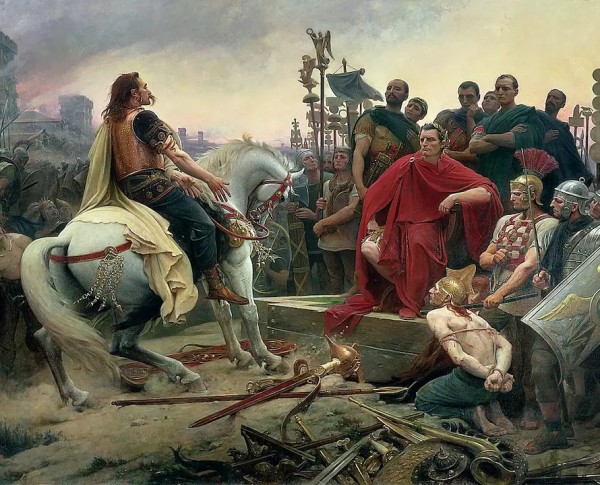
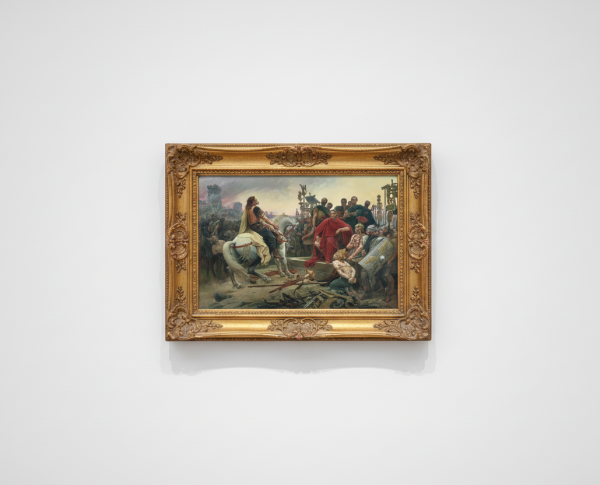
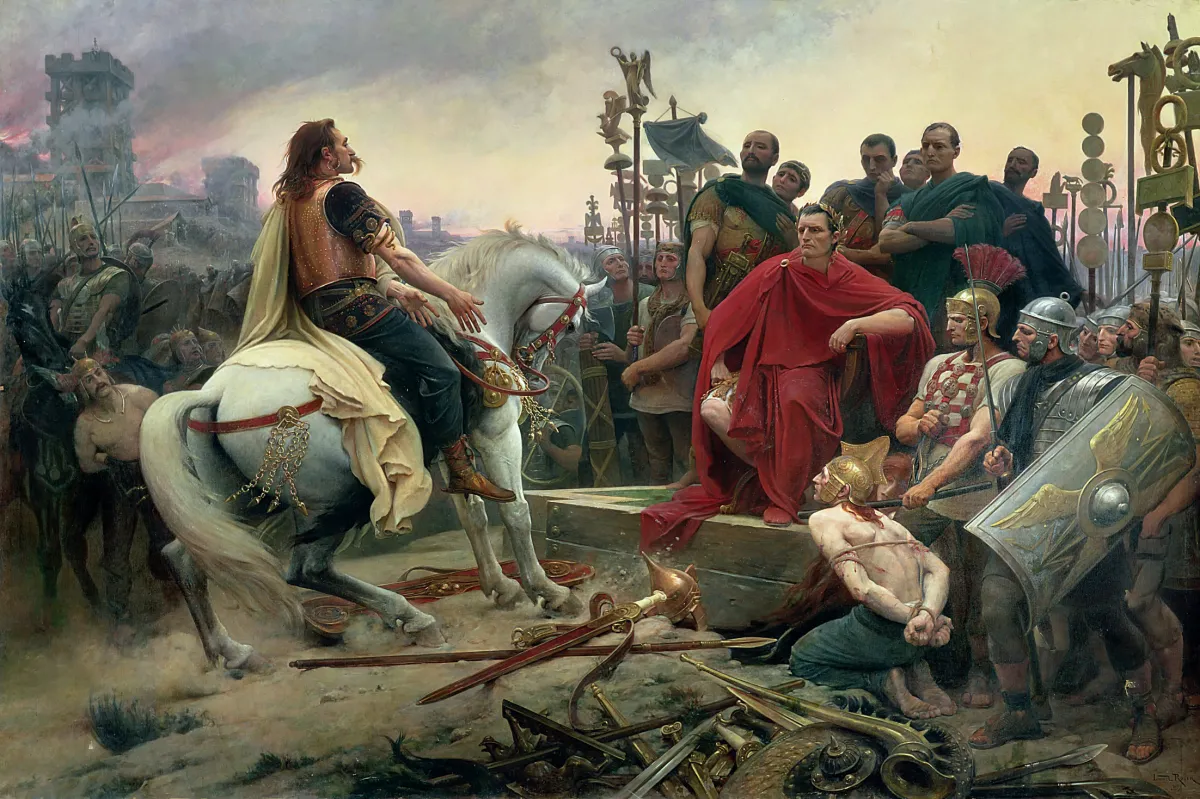
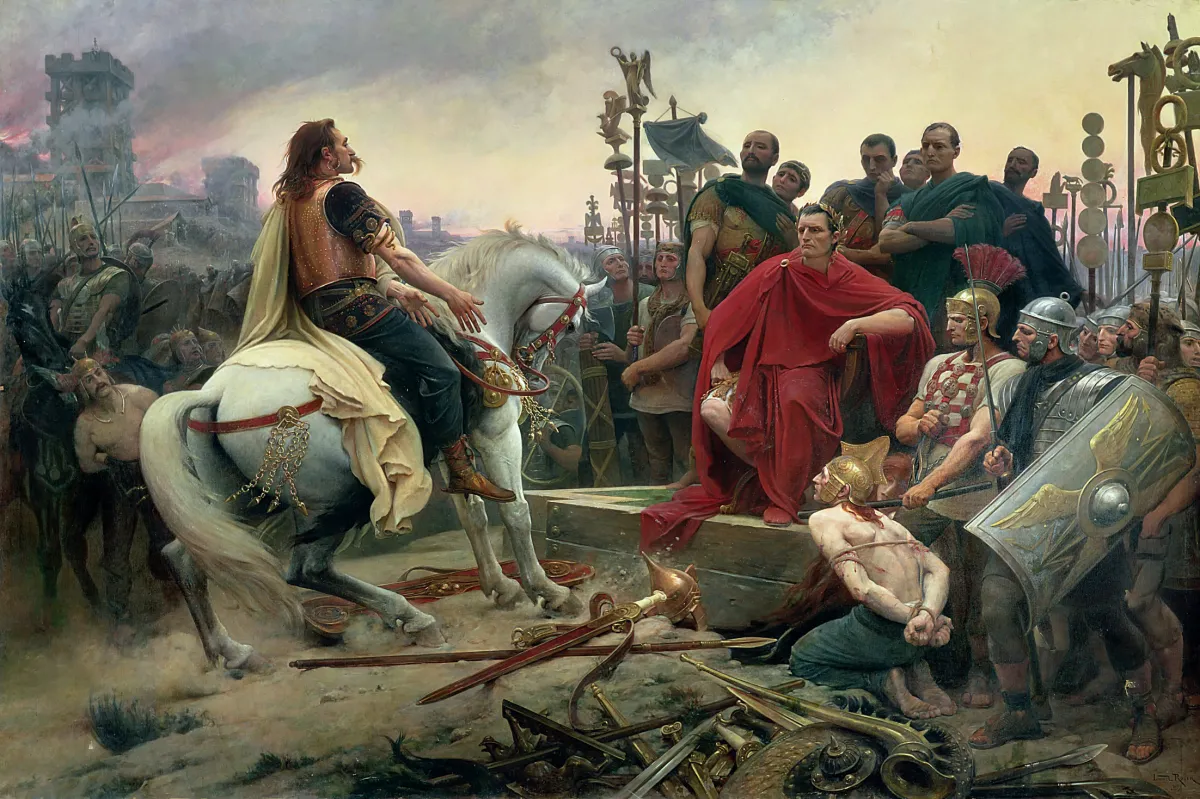
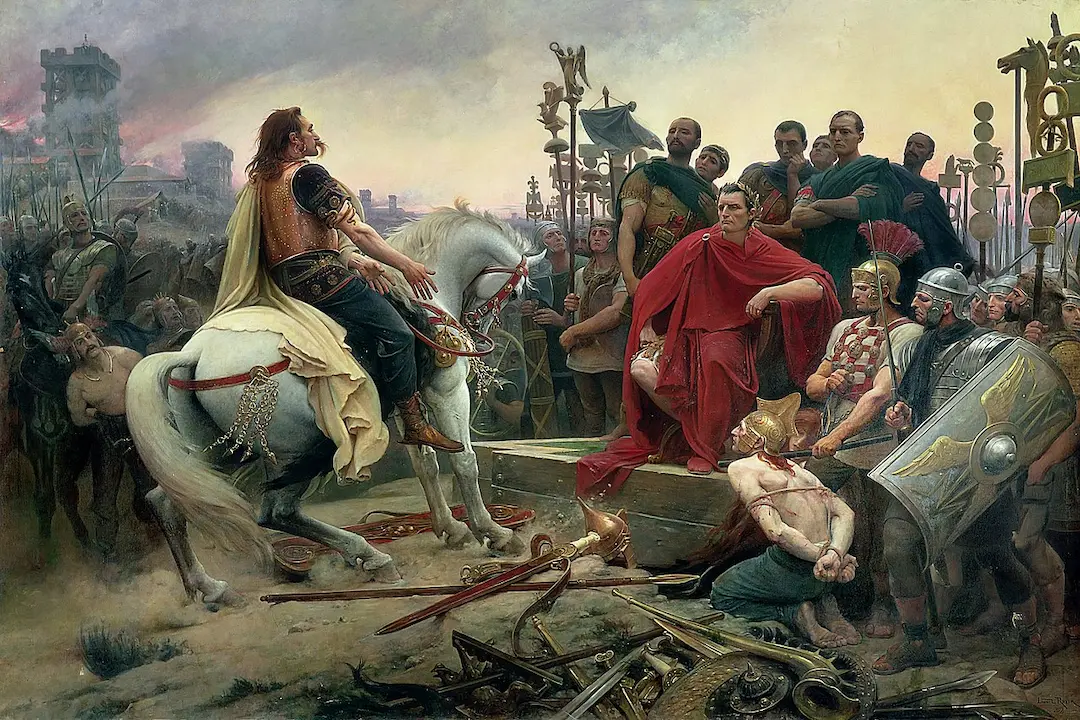
Lionel Noel Royer’s "Vercingetorix Throwing down His Weapons at the feet of Julius Caesar" showcases the artist’s exceptional technique with oil on canvas, a hallmark of Academic Art. The meticulous attention to detail and dramatic use of color bring the scene to life, demonstrating Royer’s commitment to realism. Collectors and enthusiasts alike admire this painting for its technical brilliance, often seeking related products like "Vercingetorix throws down his arms at the feet of Julius Caesar, 1899."
This hand-painted oil painting tells a story of defeat and dignity, as Vercingetorix lays down his arms before Julius Caesar. Lionel Noel Royer masterfully weaves historical narrative into each brushstroke, embodying the Academic Art movement’s focus on grand themes. The painting’s composition and symbolism attract those interested in fine art painting for sale, as well as admirers of historical moments immortalized in art, including related works from 1899.
As an iconic example of oil on canvas from the Academic Art movement, Royer’s "Vercingetorix Throwing down His Weapons at the feet of Julius Caesar" holds immense appeal for art collectors. This fine art painting for sale is not only a historical depiction but also a showcase of Royer’s artistic prowess. Collectors often seek related products, such as "Vercingetorix throws down his arms at the feet of Julius Caesar, 1899," to complement their collections.
When Art Meets History
"Vercingetorix Throwing down His Weapons at the feet of Julius Caesar" by Lionel Noel Royer is a stunning example of Academic Art that immerses viewers in a pivotal historical moment. This hand-painted oil painting captures the dramatic surrender of the Gallic chieftain, Vercingetorix, to the Roman leader, Julius Caesar. Royer, renowned for his historical scenes, also created works like "A Forester at Home" and "Promenade," each reflecting his dedication to authenticity and detail.
Techniques That Speak
Lionel Noel Royer’s masterful technique is evident in this oil on canvas, where every fold of fabric and nuance of expression is meticulously rendered. The Academic Art movement’s emphasis on realism and technical excellence shines through in Royer’s brushwork. Comparable to his other pieces such as "Jeune femme denudée sur canape (Young woman naked on a settee)" and "Rest on the Flight into Egypt," this painting demonstrates the artist’s command of light, composition, and anatomical accuracy.
Emotions on Display
The emotional intensity within "Vercingetorix Throwing down His Weapons at the feet of Julius Caesar" is palpable, as Royer’s fine art painting for sale reveals both defeat and dignity. The figures’ postures and expressions convey a complex interplay of pride, sorrow, and respect. This evocative scene resonates with viewers much like Royer’s "Mud Pies" and "A Forester at Home," where human emotions are rendered with remarkable sensitivity and depth.
Coveted by Collectors
As a signature work from the Academic Art movement, this painting by Lionel Noel Royer is highly sought after by collectors of historical masterpieces. Its historical significance and meticulous artistry make it a prized addition to any collection, especially for those interested in hand-painted oil painting. Alongside Royer’s other acclaimed works, such as "Promenade" and "Rest on the Flight into Egypt," this painting remains a timeless treasure in the world of fine art.
Related Academic Art Hand-Painted Oil Paintings by Other Artists
Other Famous Academic Art Artists:
Frequently Asked Questions About Vercingetorix Throwing down His Weapons at the feet of Julius Caesar
What historical event does this painting depict?
This painting illustrates the moment when Vercingetorix, the Gallic chieftain, surrenders to Julius Caesar after the Battle of Alesia in 52 BC, marking a significant event in the Gallic Wars.
Who is the artist of this painting and what is his significance?
The painting was created by Lionel Noel Royer, a French artist known for his historical and military subjects, particularly those related to French history and the Roman Empire.
What artistic techniques are prominently used in this artwork?
Royer employs dramatic lighting, detailed realism, and dynamic composition to convey the emotional intensity of the surrender, highlighting both the tension and the gravity of the moment.
What symbols are present in the painting and what do they represent?
The weapons thrown down by Vercingetorix symbolize defeat and submission, while the presence of Julius Caesar represents Roman power and authority, encapsulating the themes of conquest and cultural clash.
How does the painting reflect the cultural attitudes of its time?
The artwork reflects late 19th-century European attitudes towards nationalism and imperialism, portraying the Gallic leader's surrender as both a tragedy and a pivotal moment in history, resonating with contemporary themes of identity and power.
What is the significance of the figures' expressions in the painting?
The expressions of Vercingetorix and Caesar convey a complex mix of emotions—defeat, resignation, and authority—highlighting the psychological impact of war and the personal stakes involved in this historical encounter.
In what ways does this painting serve as a commentary on leadership?
The painting juxtaposes the leadership styles of Vercingetorix and Caesar, illustrating the burdens of command and the consequences of military decisions, thus prompting reflections on the nature of power and responsibility.
How does the composition of the painting enhance its narrative?
The composition draws the viewer's eye towards the central act of surrender, with the figures arranged to create a sense of movement and drama, effectively immersing the audience in the pivotal moment of the narrative.
What role does color play in the painting?
Royer utilizes a rich color palette to evoke emotion and drama, with contrasting tones that emphasize the gravity of the surrender and the historical significance of the moment, enhancing the overall impact of the scene.
How has this painting influenced perceptions of Gallic history?
This artwork has contributed to the romanticized view of Gallic resistance against Roman conquest, shaping cultural narratives around bravery and the struggle for autonomy, thus influencing how history is remembered and interpreted.






















_GFM_Painting_(1).webp)


 100% Hand-Painted: Finished in 3-6 Weeks

.png)















_(1).webp)