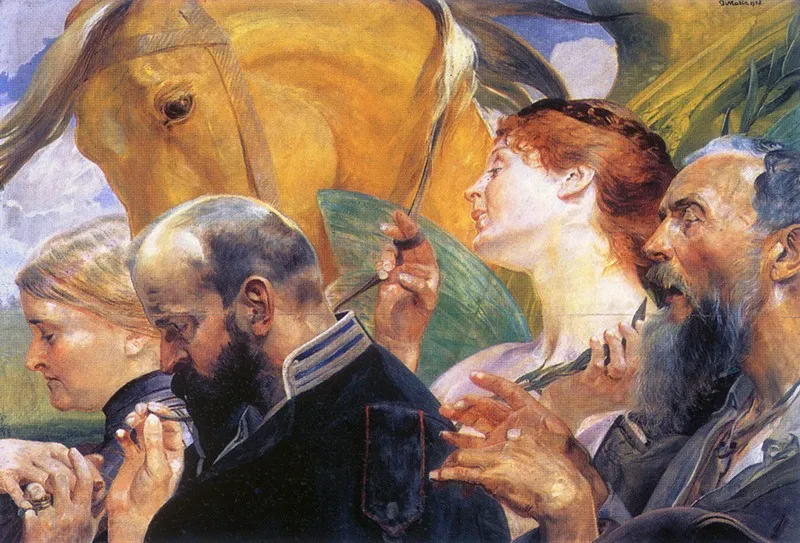
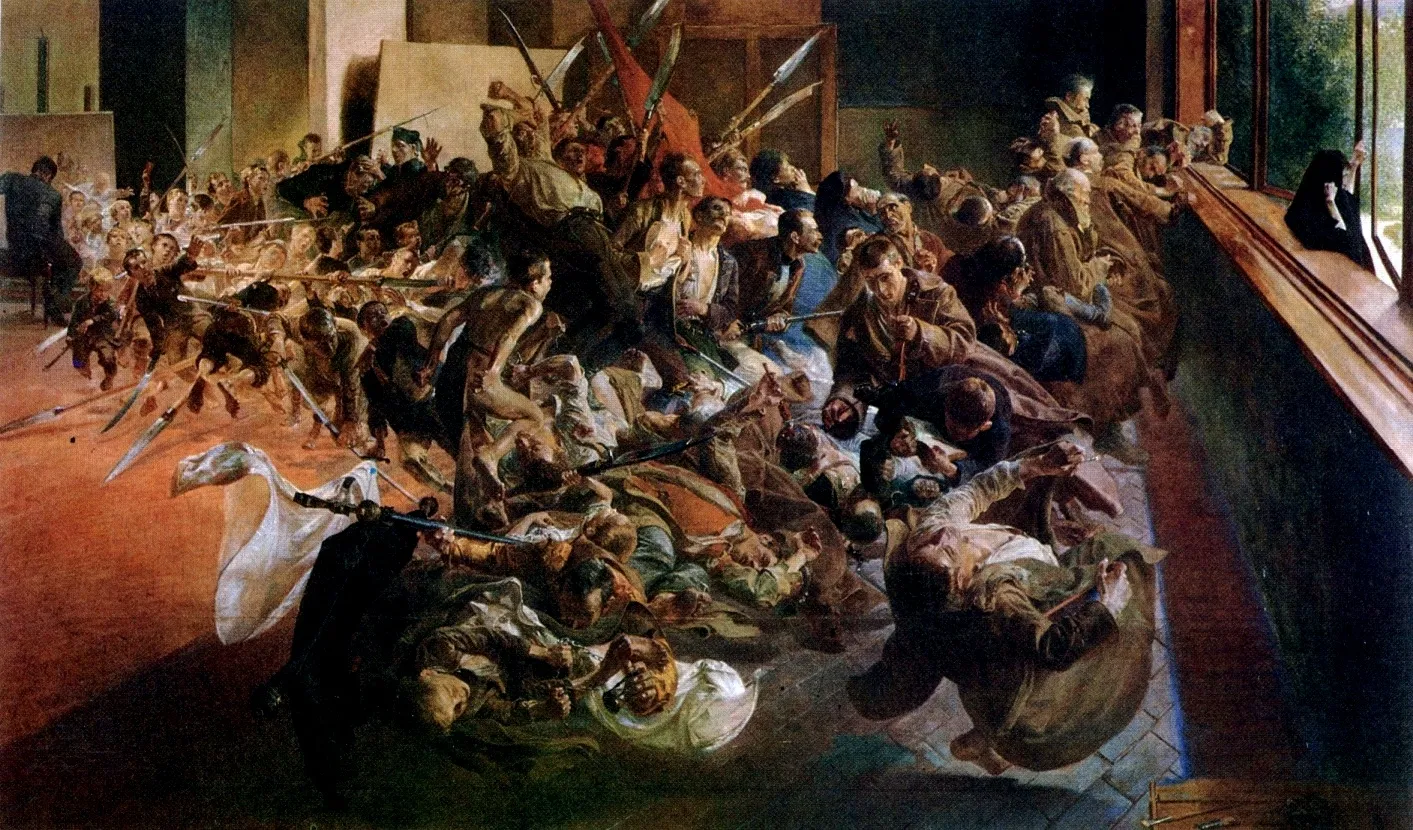
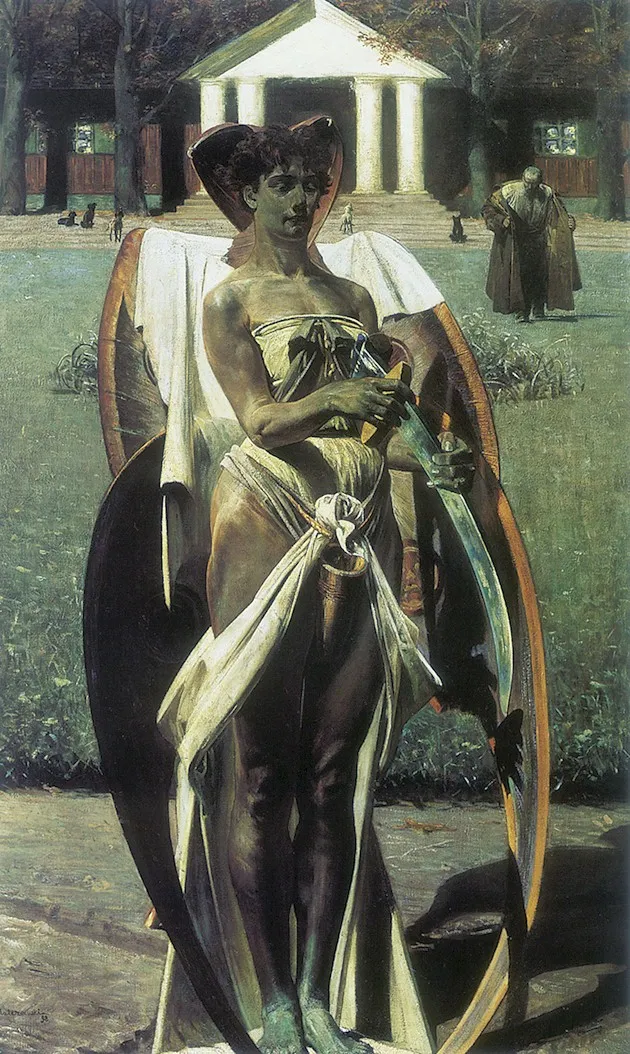
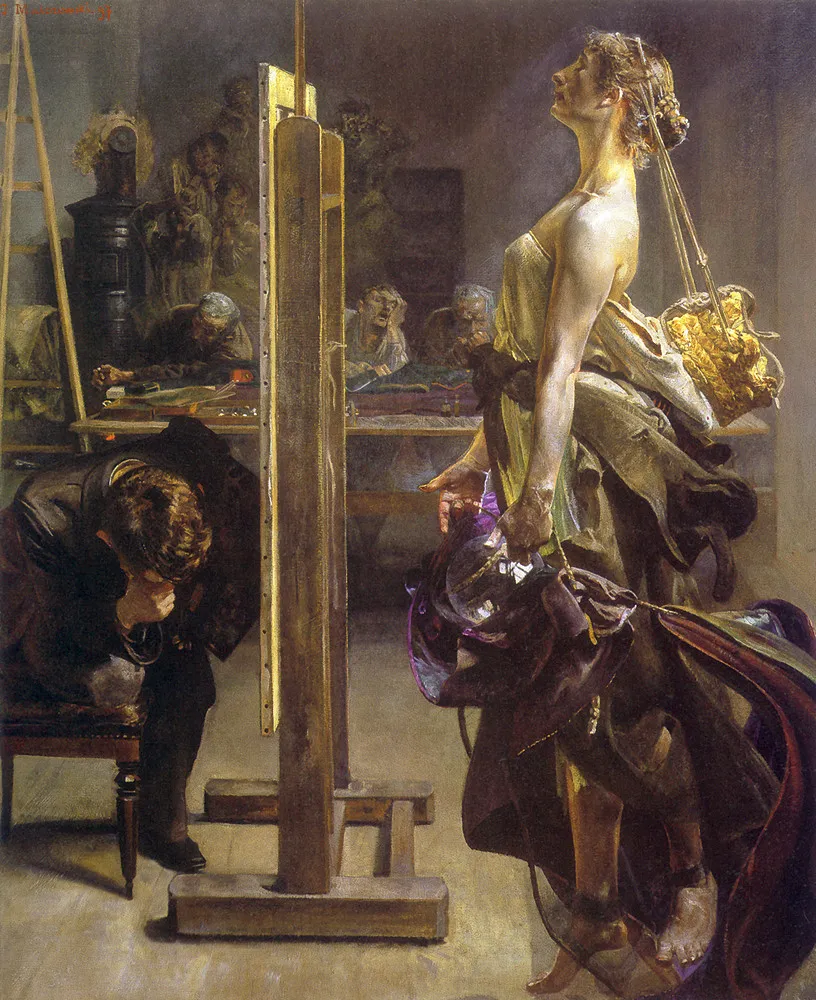
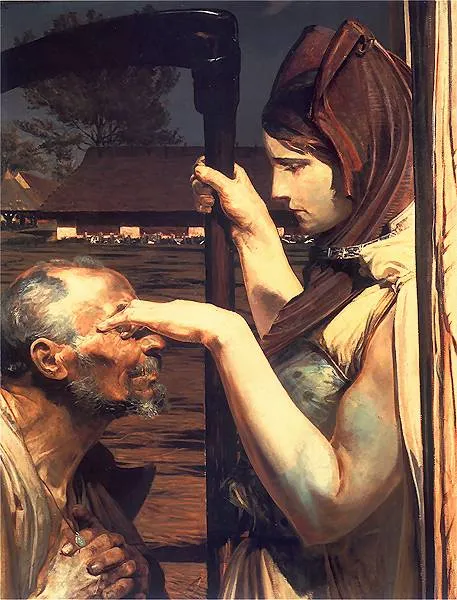
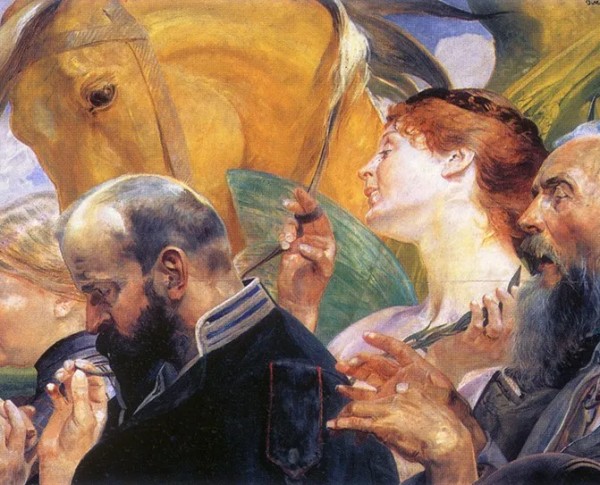
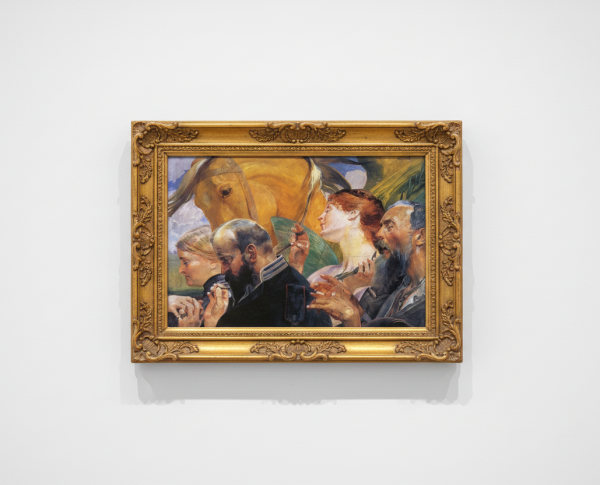
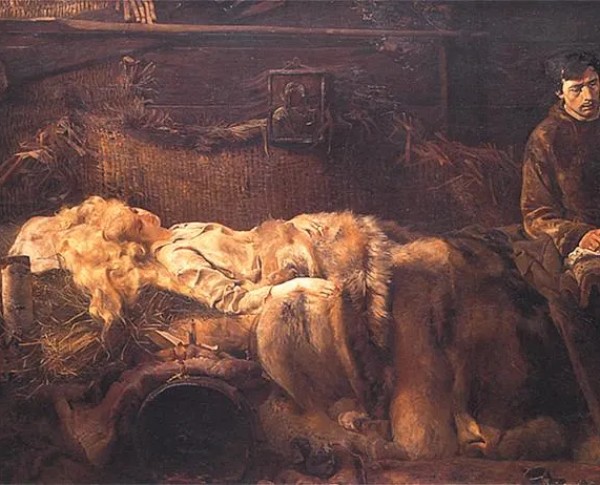
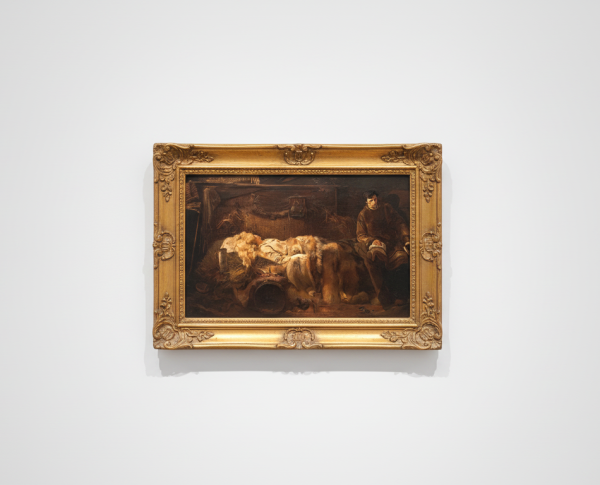
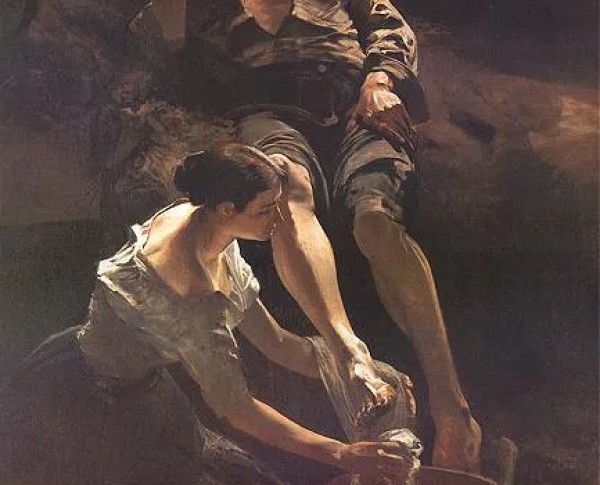
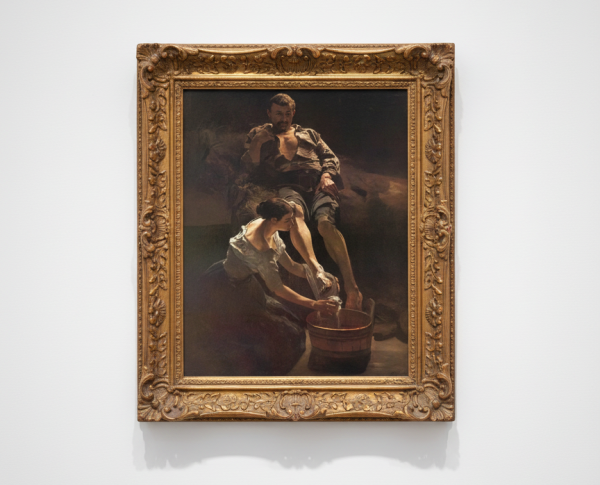
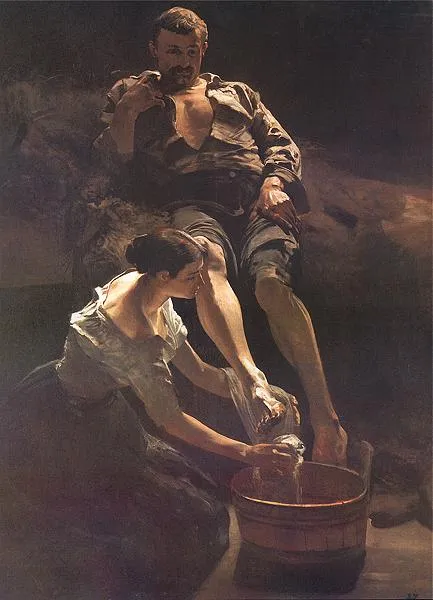
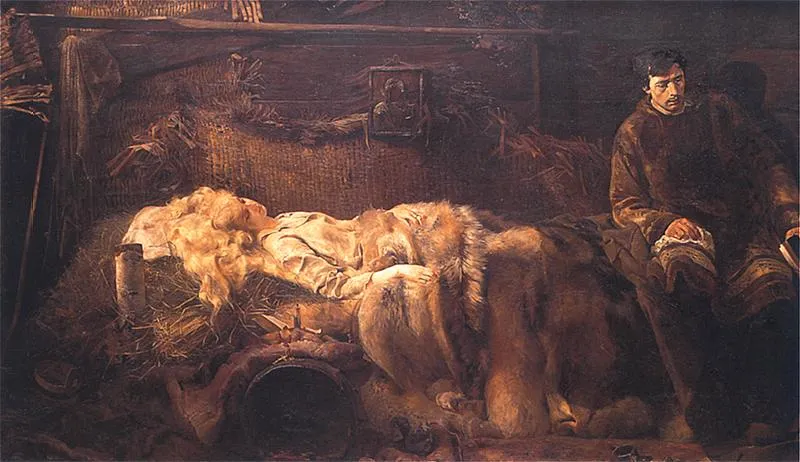
Jacek Malczewski’s technical prowess shines in "Washing of feet," where every brushstroke contributes to an evocative narrative. The hand-painted oil painting technique allows for rich textures and a vibrant palette, hallmarks of Symbolism. Malczewski’s meticulous attention to detail and his ability to convey emotion make this work a standout piece for any fine art collection, especially alongside related products like "Art, Death of Ellenai."
The Symbolism movement is renowned for its use of allegory, and "Washing of feet" by Jacek Malczewski is no exception. This fine art painting for sale is imbued with layers of meaning, reflecting themes of service and transformation. Malczewski’s composition invites viewers to delve deeper, drawing connections to other works in his oeuvre, such as "Art, Death of Ellenai," which also explores profound symbolic narratives.
Owning "Washing of feet" by Jacek Malczewski means possessing a significant piece from the Symbolism movement, rendered in exquisite oil on canvas. This painting is not only a testament to Malczewski’s artistic vision but also a bridge to the era’s philosophical underpinnings. Collectors seeking unique fine art painting for sale will find this work, and related pieces like "Art, Death of Ellenai," to be invaluable additions.
When Art Meets History
"Washing of feet" by Jacek Malczewski stands as a profound example of the Symbolism movement, merging religious themes with historical reflection. This hand-painted oil painting draws inspiration from both biblical narratives and the artist's Polish heritage, making it a unique historical statement. Malczewski’s approach resonates with other works like "Casament D'irene Narezo I Federico Beltrán" and "Catalan Camacho, Alcalde De Cabezón", which also intertwine personal and cultural histories in their compositions.
Techniques That Speak
Executed with meticulous care, "Washing of feet" showcases Malczewski’s mastery of oil on canvas, a medium favored by many Symbolist painters. The artist’s use of luminous color, layered brushwork, and intricate detail brings the scene to life, inviting viewers to contemplate its deeper meanings. Similar technical brilliance can be seen in works like "Pola Negri and Rudolph Valentino" and "Lady Antony Rothschild as an Egyptian Princess", where oil on canvas enhances narrative depth.
Emotions on Display
Jacek Malczewski’s "Washing of feet" evokes a profound sense of humility and compassion, hallmarks of the Symbolism movement. The figures’ expressions and gestures communicate empathy and introspection, drawing the viewer into their emotional world. This fine art painting for sale invites comparisons to "Catalan Estudi Per A Un Retrat", another piece that masterfully captures emotion through symbolic imagery and painterly technique, resonating deeply with collectors and art lovers alike.
Coveted by Collectors
"Washing of feet" holds a special place in the world of fine art painting for sale, coveted by collectors for its symbolic richness and historical significance. Jacek Malczewski’s unique vision, combined with the prestige of the Symbolism movement, ensures lasting appeal. The painting’s desirability is echoed in the collector interest for related works such as "Casament D'irene Narezo I Federico Beltrán" and "Lady Antony Rothschild as an Egyptian Princess", making it a prized addition to any collection.
Related Symbolism Hand-Painted Oil Paintings by Other Artists
Other Famous Symbolism Artists:
Frequently Asked Questions About Washing of feet
What is the historical context of "Washing of feet"?
"Washing of feet" by Jacek Malczewski was created during a time when Poland was experiencing significant political and social changes. The painting reflects the artist's engagement with themes of sacrifice and humility, resonating with the struggles of the Polish nation in the late 19th century.
What artistic movements influenced Malczewski's work?
Jacek Malczewski was influenced by Symbolism and Art Nouveau. His painting "Washing of feet" incorporates symbolic elements and a decorative style that reflects the emotional depth and spiritual themes characteristic of these movements.
What are the main themes depicted in "Washing of feet"?
The main themes of "Washing of feet" include humility, service, and the act of purification. The painting symbolizes the importance of selflessness and the spiritual significance of serving others, drawing parallels to biblical narratives.
How does Malczewski use color in "Washing of feet"?
Malczewski employs a palette of muted tones contrasted with vibrant accents to evoke emotional responses. The use of color enhances the spiritual and contemplative nature of the scene, inviting viewers to reflect on its deeper meanings.
What is the significance of the figures in the painting?
The figures in "Washing of feet" represent both the act of servitude and the divine nature of humility. Their positioning and expressions convey a sense of reverence and introspection, emphasizing the painting's moral and ethical undertones.
What role does symbolism play in "Washing of feet"?
Symbolism is central to "Washing of feet," as it conveys complex ideas through visual metaphors. The act of foot washing serves as a powerful symbol of love, sacrifice, and the interconnectedness of humanity, reflecting Malczewski's philosophical beliefs.
How does "Washing of feet" compare to other works by Malczewski?
What techniques did Malczewski use in "Washing of feet"?
Malczewski utilized oil on canvas to create "Washing of feet," employing techniques such as layering and glazing to achieve depth and luminosity. His meticulous brushwork enhances the emotional resonance of the scene, drawing viewers into its contemplative atmosphere.
What is the legacy of "Washing of feet" in Polish art?
"Washing of feet" is considered a significant work in Polish art history, as it encapsulates the national spirit and the philosophical inquiries of the time. It continues to inspire contemporary artists and serves as a reference point for discussions on morality and identity in art.
How has "Washing of feet" been received by critics and audiences?
The painting has been well-received by critics and audiences alike, praised for its emotional depth and symbolic richness. Its exploration of universal themes resonates with viewers, making it a lasting piece in the discourse of art history.






















_GFM_Painting_(1).webp)


 100% Hand-Painted: Finished in 3-6 Weeks

.png)















_(1).webp)