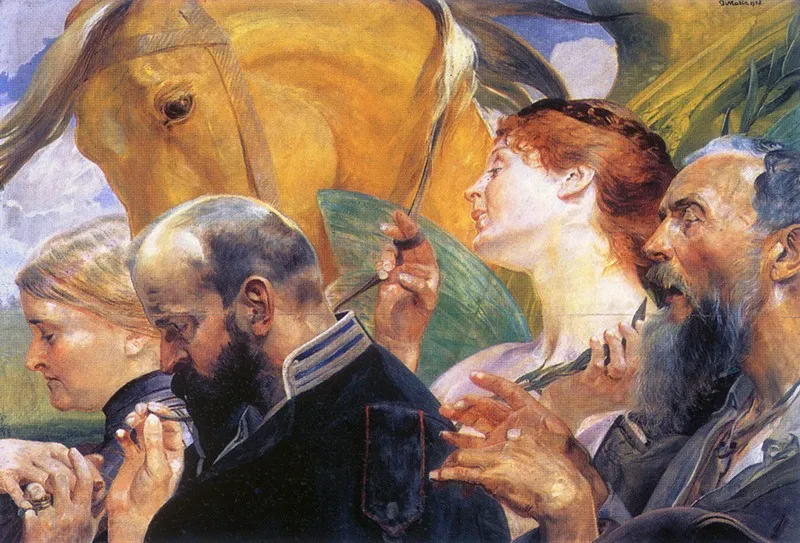
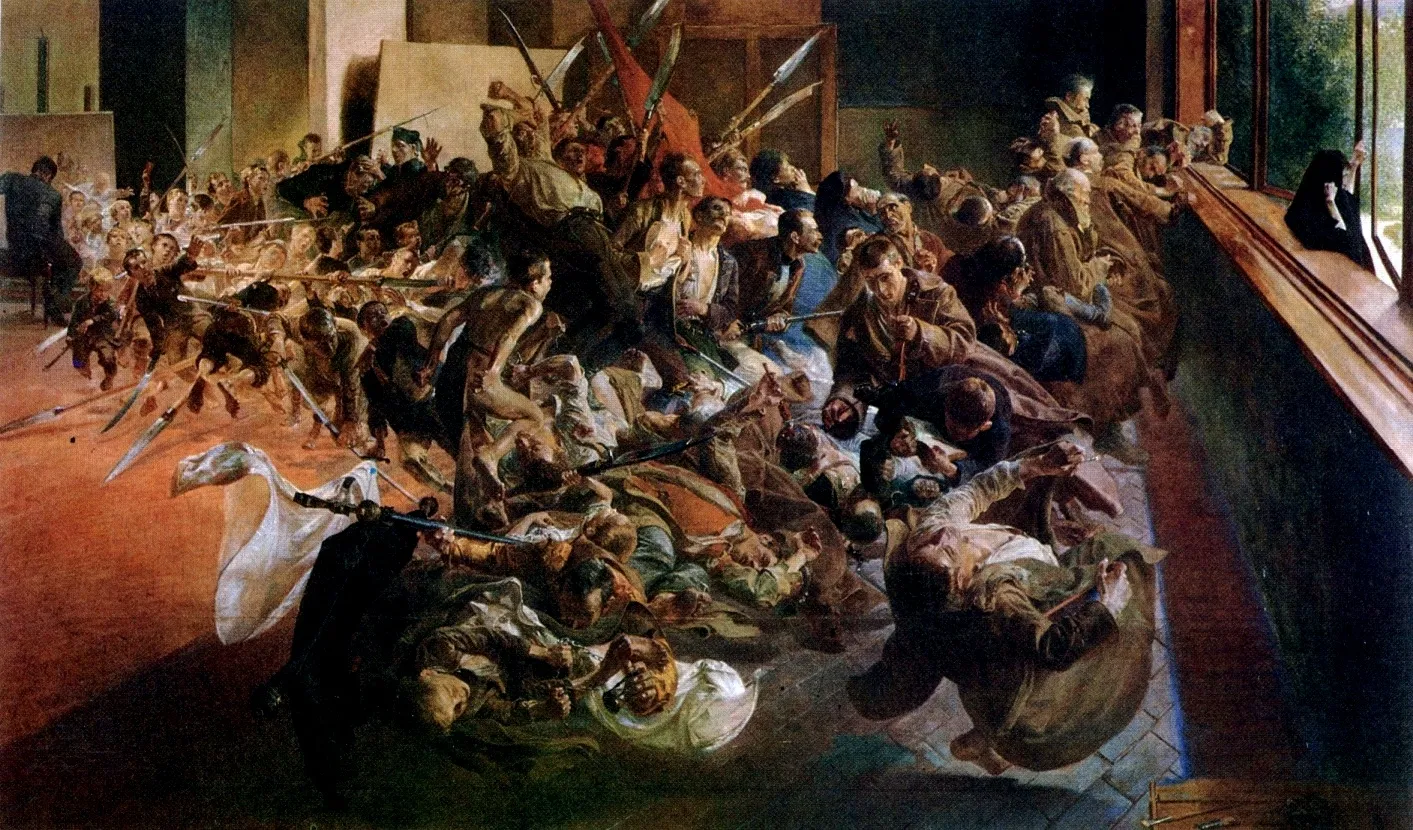
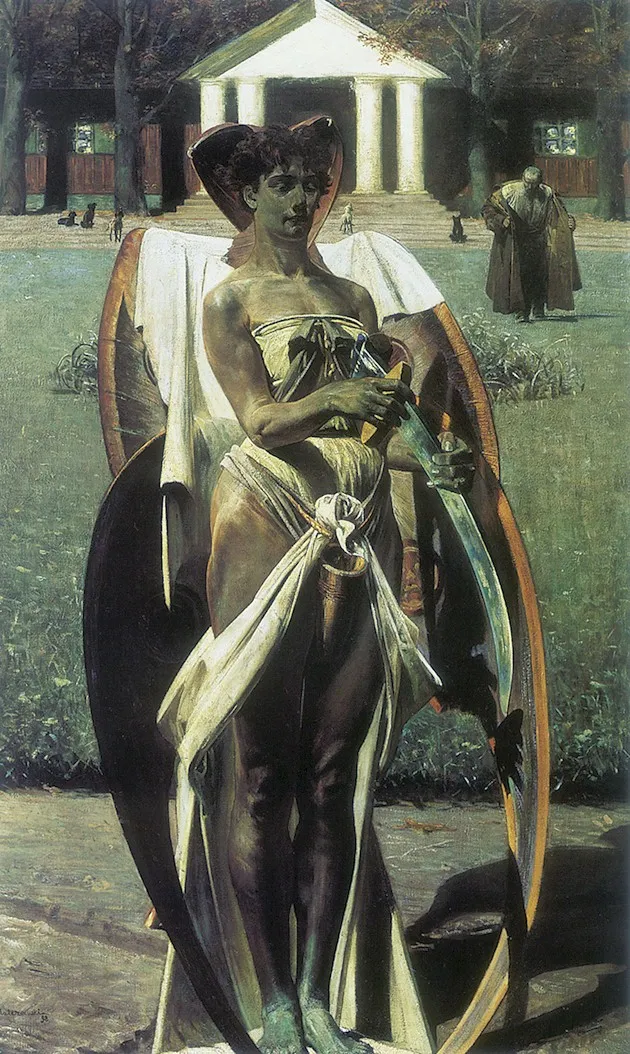
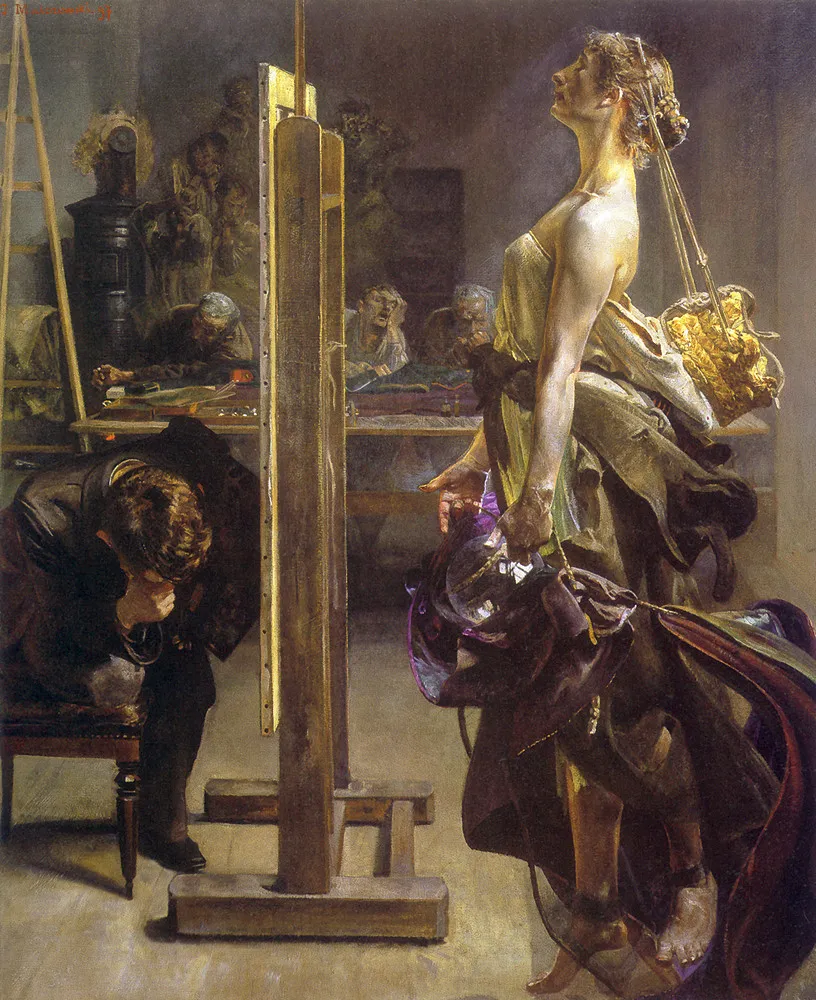
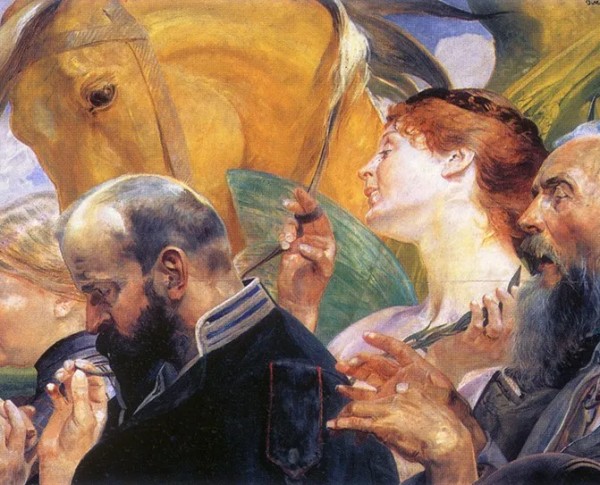
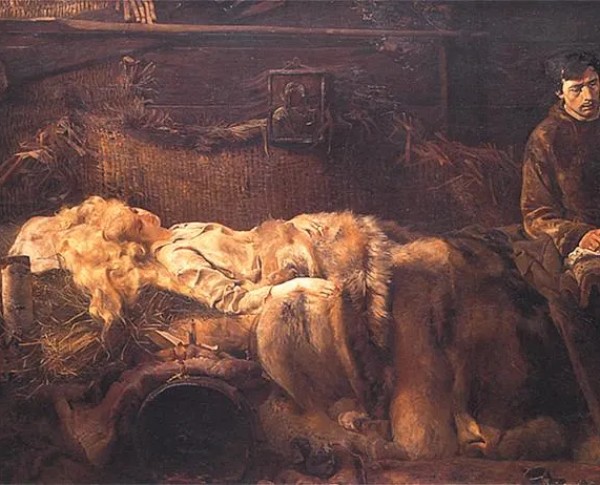
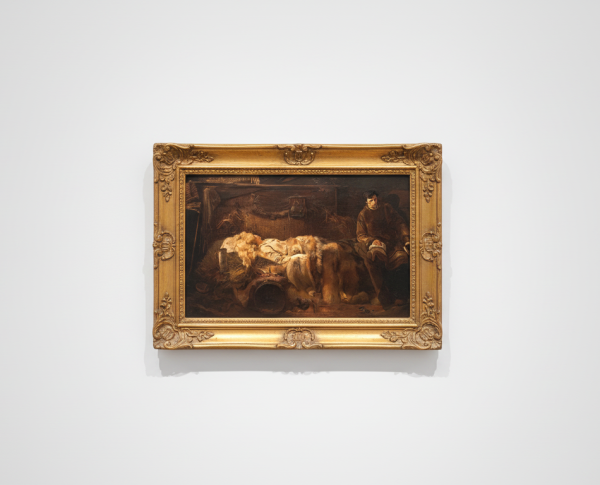
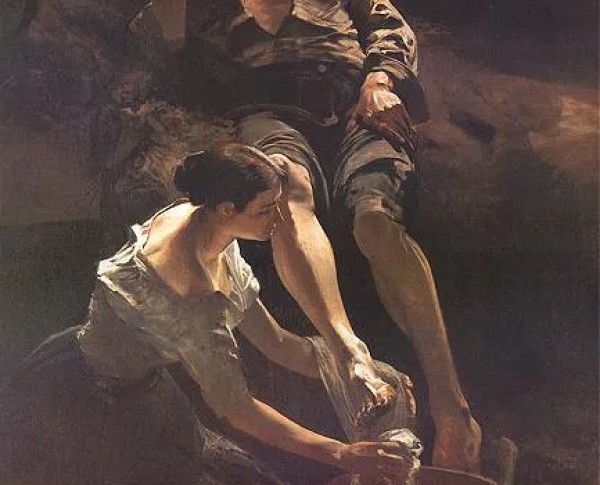
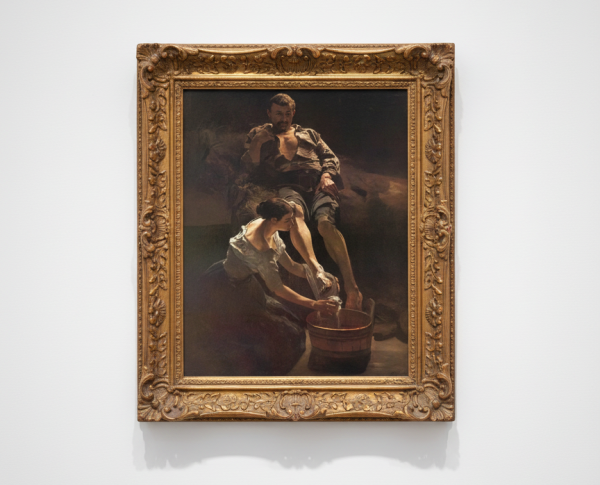
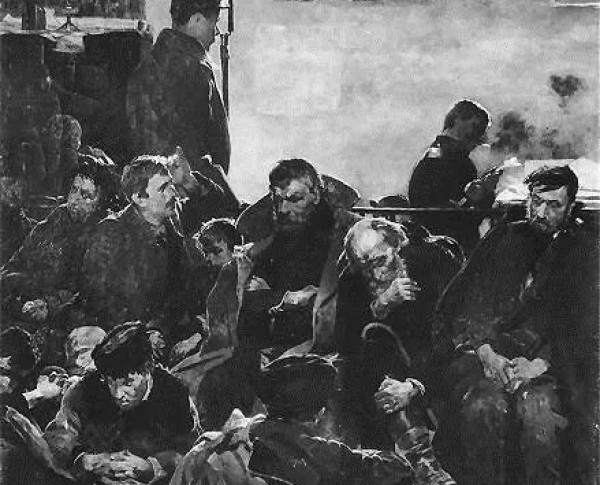
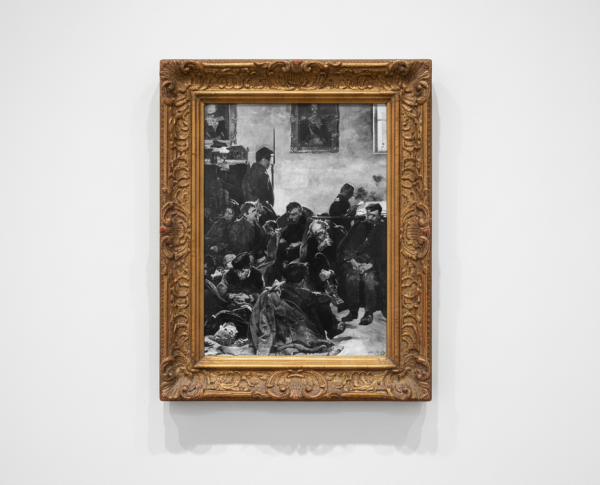
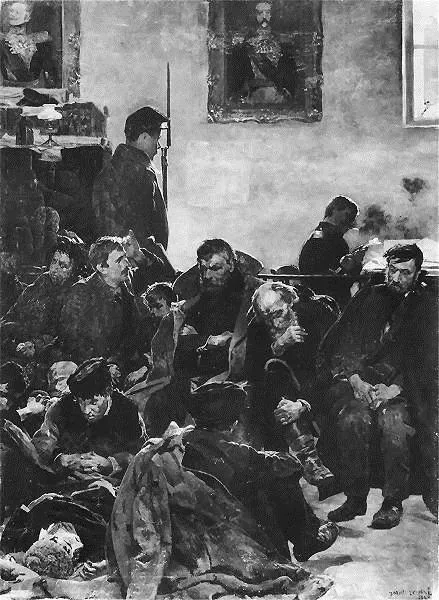
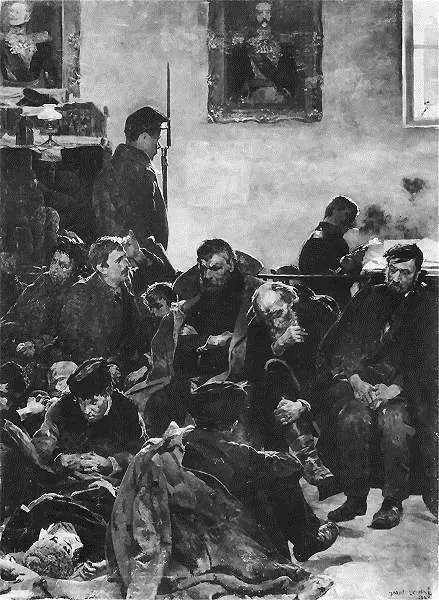
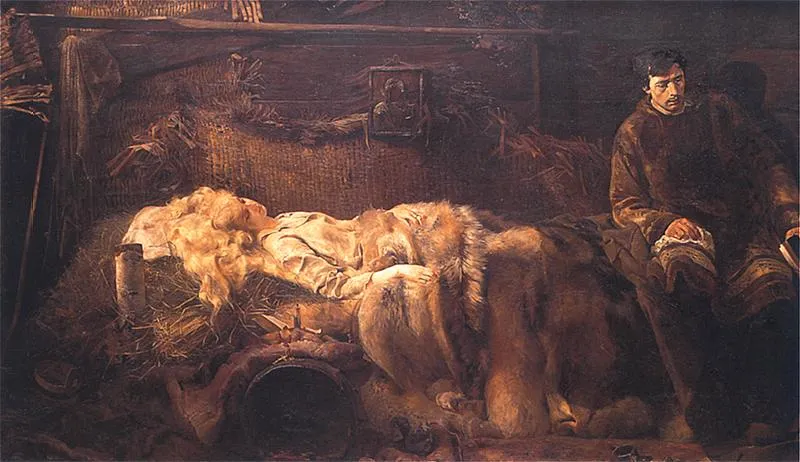
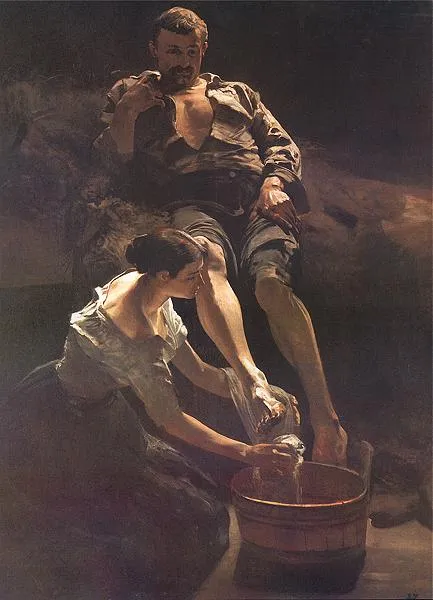
Jacek Malczewski’s "At the stage" demonstrates his technical prowess through exquisite oil on canvas techniques. The painting’s rich textures and vibrant palette reflect the artist’s mastery, inviting viewers to explore the depths of Symbolism. Each brushstroke adds to the emotional complexity, echoing the excellence found in related works such as "Death of Ellenai" and "Washing of feet." This oil on canvas masterpiece stands as a testament to Malczewski’s enduring influence in the art world.
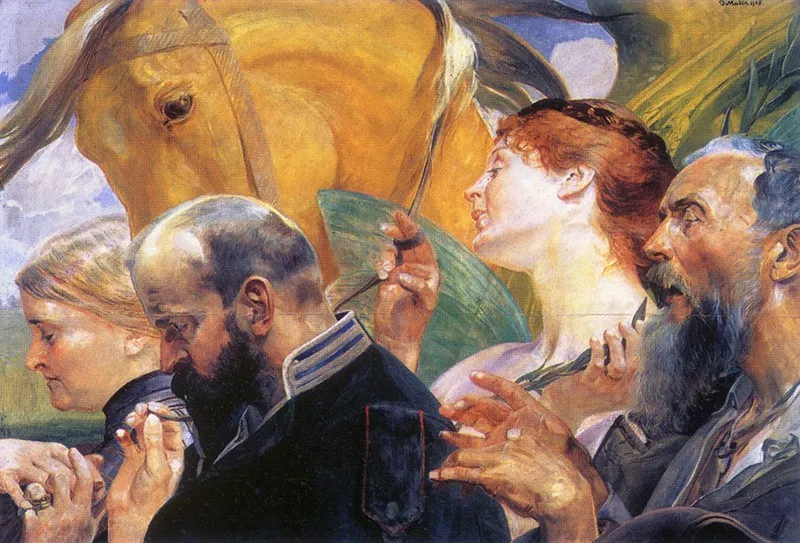
"At the stage" is more than a visual experience—it is a narrative woven with intricate symbols, characteristic of the Symbolism movement. Jacek Malczewski infuses each element with meaning, encouraging viewers to uncover deeper layers within the hand-painted oil painting. The enigmatic atmosphere connects it to related products like "Art" and "Death of Ellenai," making it a captivating subject for those seeking a fine art painting for sale that tells a profound story.
For collectors and enthusiasts, "At the stage" by Jacek Malczewski offers an exceptional opportunity to own a piece of Symbolist history. This fine art painting for sale is celebrated for its evocative imagery and meticulous craftsmanship, much like "Washing of feet" and "Death of Ellenai." Its presence enhances any collection, reflecting the artist’s legacy and the timeless allure of oil on canvas works within the Symbolism movement.
When Art Meets History
"At the Stage" by Jacek Malczewski is a remarkable example of the Symbolism movement, capturing the spirit of its era through a unique blend of history and imagination. This hand-painted oil painting reflects Malczewski’s fascination with the stage of life, often explored in works like "Manola with Mantilla and Fan" and "Lady Antony Rothschild as an Egyptian Princess." As a fine art painting for sale, it continues to intrigue collectors and historians alike.
Techniques That Speak
Jacek Malczewski’s mastery of oil on canvas is evident in "At the Stage," where rich textures and luminous colors evoke a sense of mystery. The brushwork, reminiscent of "Catalan Estudi Per A Un Retrat" and "Maja Maldita," showcases Symbolism’s signature dreamlike qualities. Every detail in this oil on canvas demonstrates Malczewski’s technical prowess, making the painting a prime example of the movement’s dedication to expressive craftsmanship.
Emotions on Display
"At the Stage" draws viewers into a world of introspection and emotional depth, hallmarks of Symbolist art. Malczewski skillfully conveys themes of identity and performance, much like in his related painting "Casament D'irene Narezo I Federico Beltrán." The hand-painted oil painting captures subtle expressions and dramatic gestures, inviting audiences to ponder the boundaries between reality and illusion within this fine art painting for sale.
Coveted by Collectors
This masterpiece by Jacek Malczewski remains highly sought after in the art world, especially among enthusiasts of Symbolism. "At the Stage" stands alongside related works such as "Manola with Mantilla and Fan" and "Maja Maldita" as a coveted oil on canvas. Collectors prize the painting for its historical significance, technical excellence, and evocative imagery, making it a distinguished fine art painting for sale in prestigious collections worldwide.
Related Symbolism Hand-Painted Oil Paintings by Other Artists
Other Famous Symbolism Artists:
Frequently Asked Questions About "At the stage"
What is the historical context of "At the stage"?
"At the stage" was created during a period of significant cultural and political change in Poland, reflecting the artist's response to the social issues of his time, particularly the struggles for national identity and independence.
What artistic movements influenced Jacek Malczewski in this painting?
Jacek Malczewski was influenced by Symbolism and the Polish National Revival, which is evident in his use of allegorical themes and a focus on the emotional and spiritual aspects of the human experience.
What symbols are present in "At the stage" and what do they represent?
The painting features various symbols, such as theatrical elements that represent the duality of life and art, and figures that embody the struggle between reality and illusion, reflecting the complexities of human existence.
How does "At the stage" reflect the themes of identity and nationalism?
The painting captures the essence of Polish identity through its allegorical representation of the nation's cultural heritage, emphasizing the importance of art as a means of expressing and preserving national consciousness.
What techniques did Jacek Malczewski use in "At the stage"?
Malczewski employed a combination of rich color palettes, intricate detail, and dynamic composition to evoke emotional responses and convey deeper meanings within the narrative of the painting.
In what ways does "At the stage" challenge traditional artistic conventions?
The painting challenges traditional conventions by merging realistic representation with symbolic elements, allowing for a more profound exploration of psychological and philosophical themes rather than mere aesthetic beauty.
What role does the stage play in the narrative of the painting?
The stage serves as a metaphor for life itself, suggesting that existence is a performance where individuals play various roles, highlighting the transient nature of reality and the performative aspects of human behavior.
How does the composition of "At the stage" contribute to its meaning?
The composition creates a sense of movement and interaction among the figures, drawing the viewer's eye across the canvas and emphasizing the interconnectedness of the characters and their shared experiences.
What emotions does "At the stage" evoke in viewers?
The painting evokes a range of emotions, from nostalgia and melancholy to contemplation and introspection, inviting viewers to reflect on their own experiences and the nature of existence.
How has "At the stage" been received by critics and art historians?
"At the stage" has been praised for its innovative approach to symbolism and narrative, with critics noting its significant contribution to Polish art and its lasting impact on the understanding of national identity in the visual arts.






















_GFM_Painting_(1).webp)


 100% Hand-Painted: Finished in 3-6 Weeks

.png)















_(1).webp)