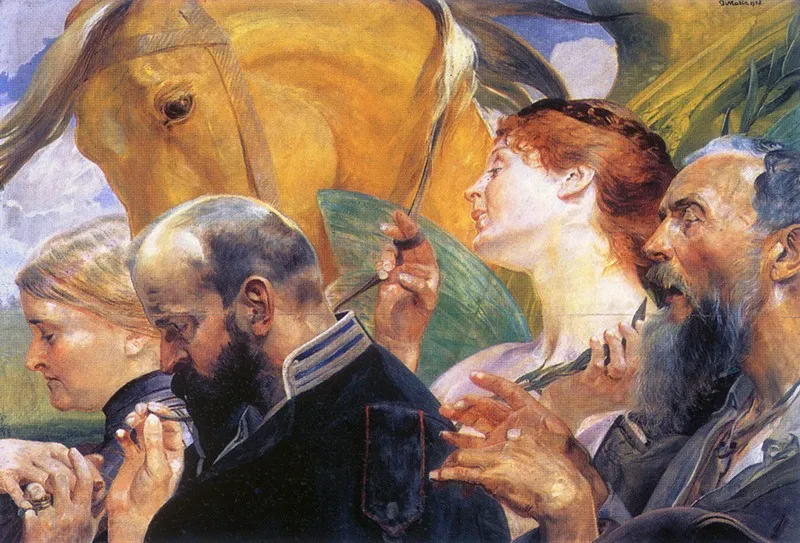
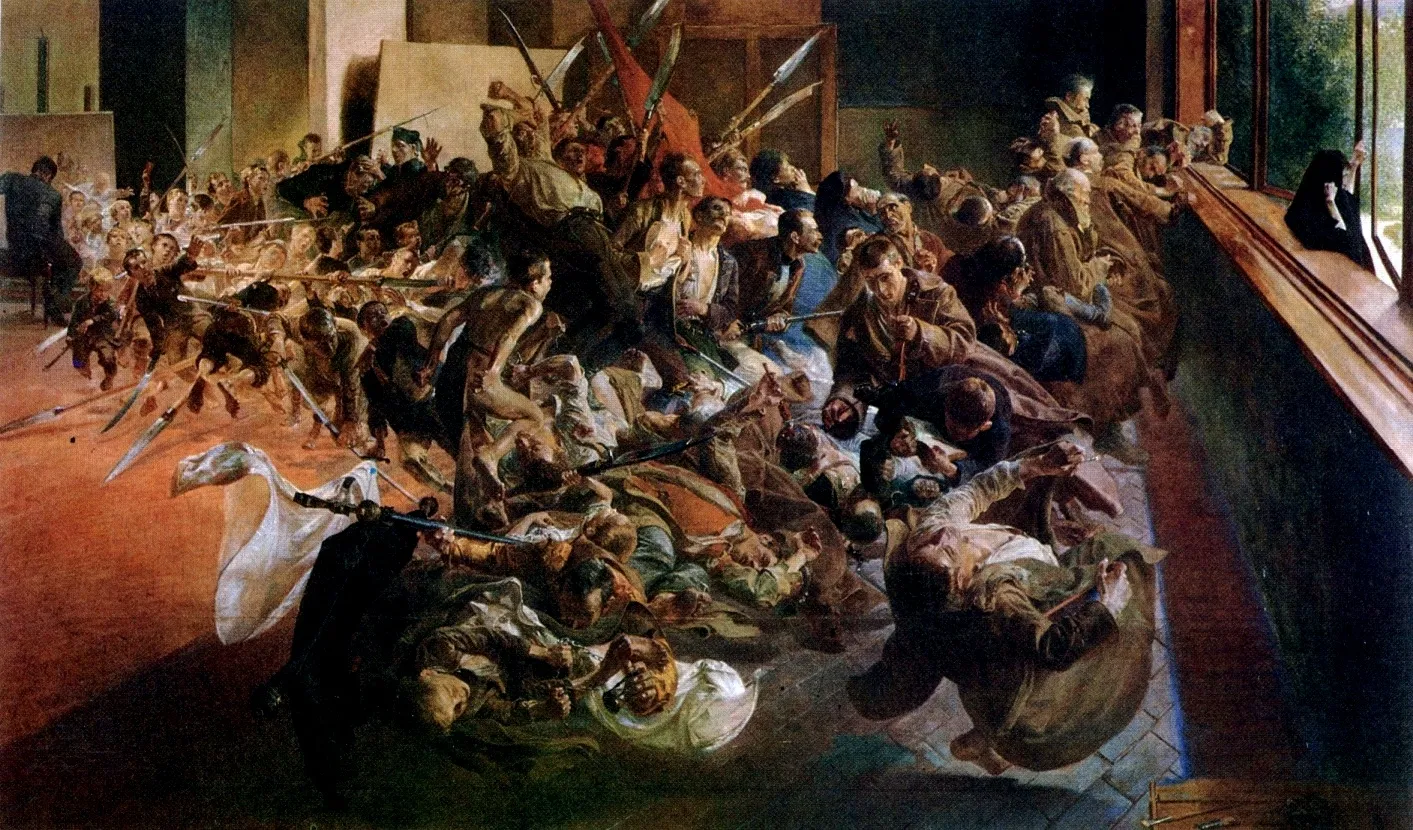
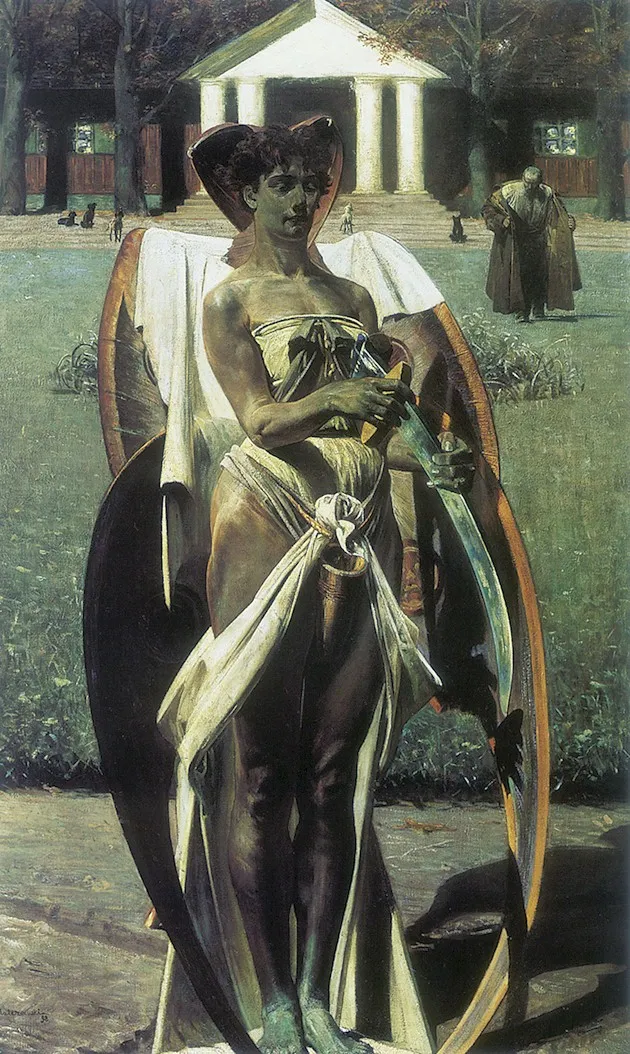
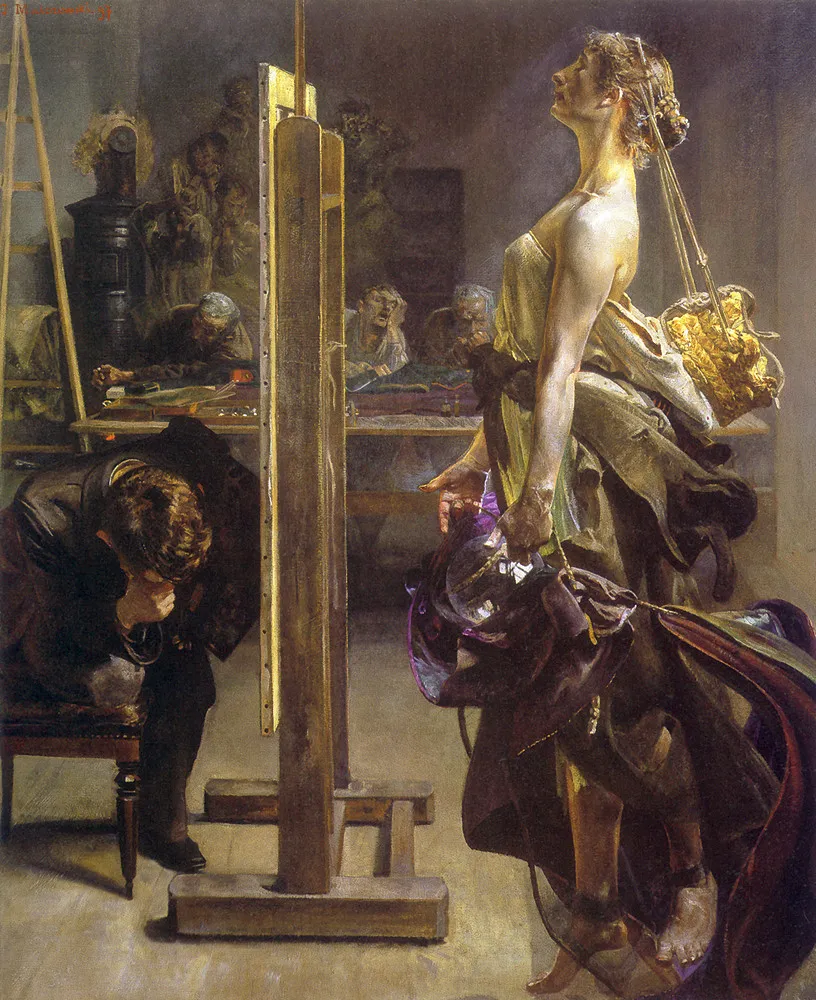
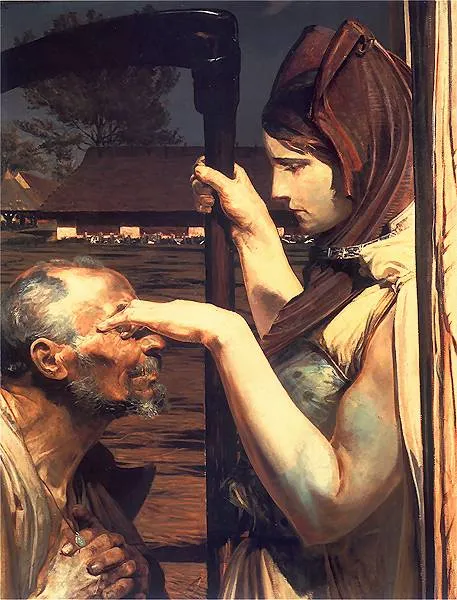
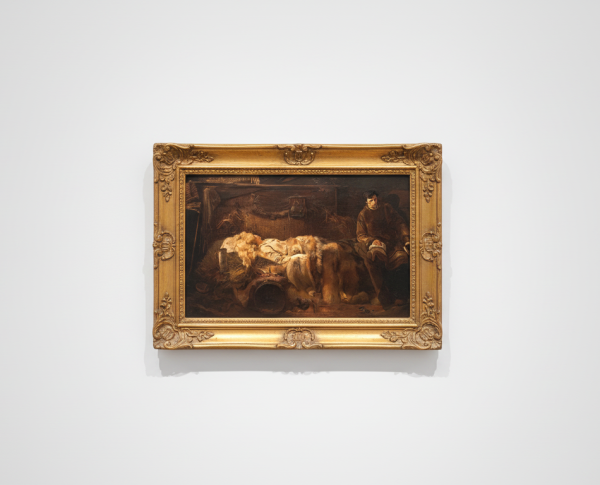
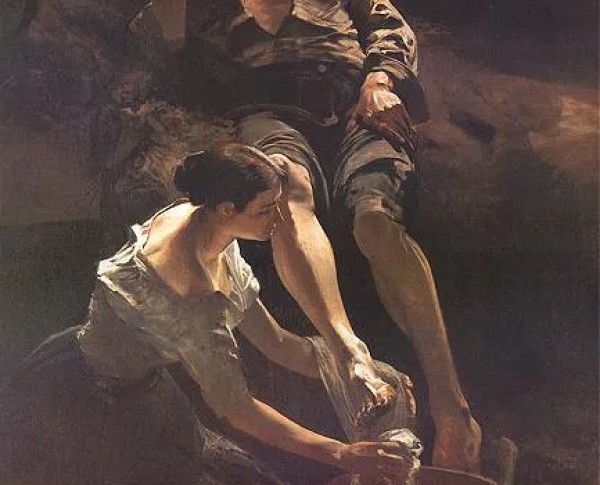
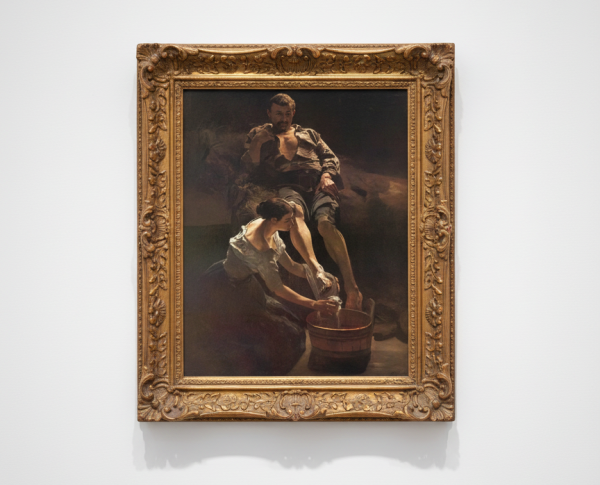
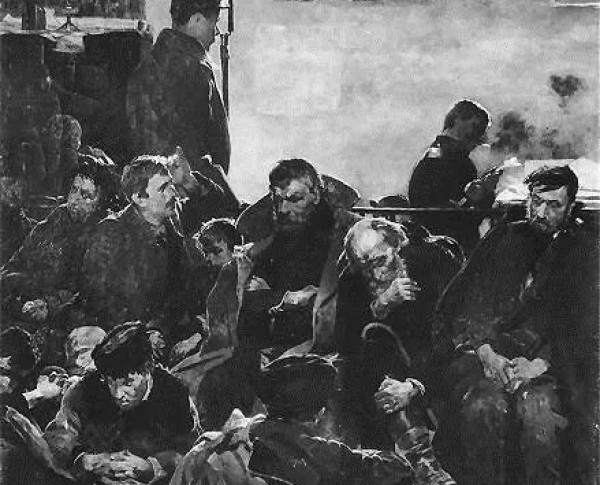
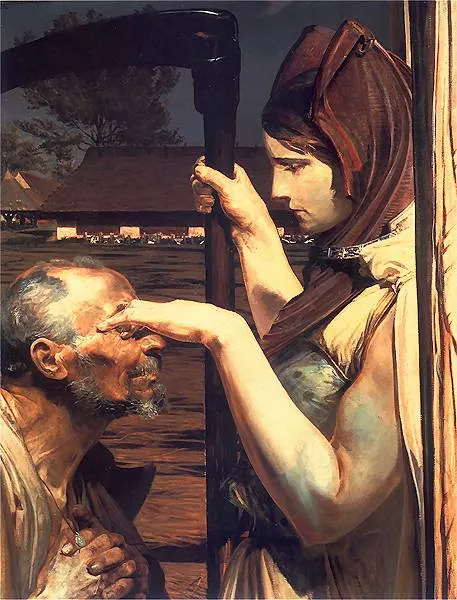
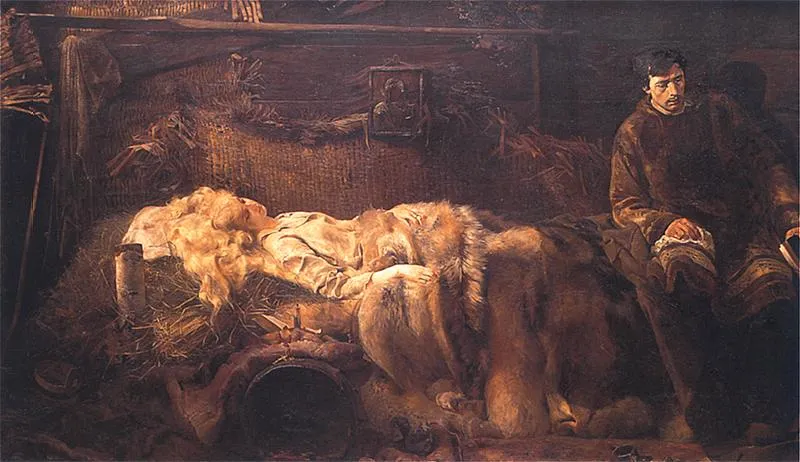
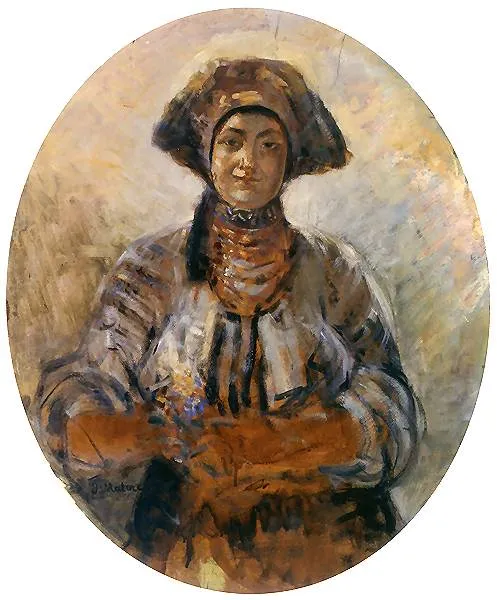
Jacek Malczewski’s "Death" showcases his exceptional technique in oil on canvas, a medium that allowed him to layer deep, emotive colors and intricate details. Every brushstroke in this fine art painting reveals the artist’s dedication to expressive realism, drawing viewers into a symbolic narrative. Collectors of Symbolism, and admirers of related works like "Melancholia" and "Portrait of Stanislaw Witkiewicz," will appreciate the technical brilliance Malczewski brings to each composition.
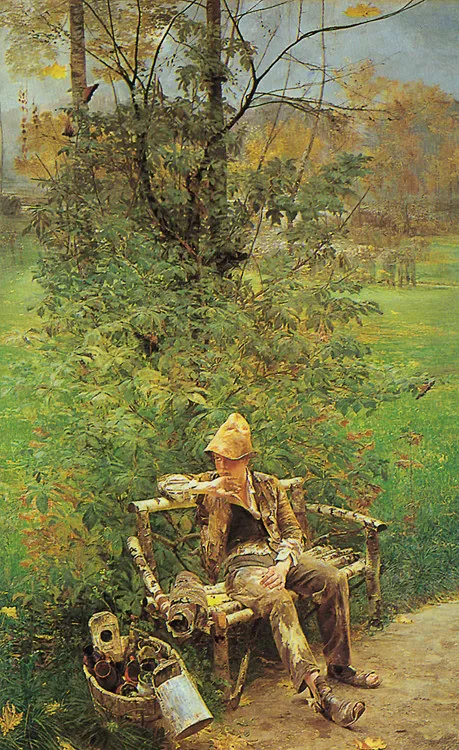
Within "Death," Malczewski weaves allegory and metaphor, hallmarks of the Symbolism movement. The imagery provokes reflection on mortality and the passage of time, inviting viewers to interpret its deeper meanings. This fine art painting for sale stands alongside related products such as "Ukrainian" and "The Painter Boy," all of which employ symbolism to explore the human condition. Malczewski’s work continues to inspire those seeking profound narratives in visual art.
Owning "Death" by Jacek Malczewski means acquiring more than a hand-painted oil painting; it is an investment in cultural history and artistic mastery. As a leading figure in Symbolism, Malczewski’s works, including "Vicious circle" and "Melancholia," are highly sought after by collectors worldwide. This oil on canvas artwork is a testament to his enduring legacy, making it a remarkable addition to any fine art painting for sale collection.
When Art Meets History
"Death" by Jacek Malczewski stands as a remarkable work within the Symbolism movement, capturing the era's deep fascination with existential themes. This hand-painted oil painting reflects both the turmoil and introspective spirit of late 19th-century Europe, when artists like Malczewski sought to explore the human psyche. Symbolist masterpieces such as "Casament D'irene Narezo I Federico Beltrán" and "Woman in Blue" similarly engage with history, making "Death" a pivotal piece in the evolution of symbolic art.
Techniques That Speak
Jacek Malczewski’s mastery is evident in his use of oil on canvas, a medium that allows for rich textures and subtle gradations of color. In "Death," he employs delicate brushwork and layered glazes to evoke an ethereal atmosphere, characteristic of the Symbolism movement. Techniques seen in related paintings like "Manola With Mantilla And Fan" and "Catalan Camacho" further highlight how oil on canvas can communicate mood and meaning, making each stroke significant in the storytelling process.
Emotions on Display
The emotional impact of "Death" is profound, as Malczewski channels both fear and fascination surrounding mortality. Through symbolic imagery and dramatic contrasts, the artist invites viewers to contemplate the mysteries of life and death. This fine art painting for sale resonates with the introspective qualities found in "Alcalde De Cabezón" and "Catalan Estudi Per A Un Retrat," cementing its reputation as a powerful exploration of human emotion in the Symbolism movement.
Coveted by Collectors
Collectors of Symbolist art are drawn to "Death" by Jacek Malczewski for its historical significance and masterful technique. As a hand-painted oil painting, it holds a unique place among works like "Woman in Blue" and "Casament D'irene Narezo I Federico Beltrán." Its rarity and emotional depth make it a highly sought-after fine art painting for sale, appealing to those who appreciate the profound narratives and technical skill of the Symbolism movement.
Related Symbolism Hand-Painted Oil Paintings by Other Artists
Other Famous Symbolism Artists:
Frequently Asked Questions About Death
What is the historical context of Jacek Malczewski's painting "Death"?
"Death" was created during a time of significant political and social upheaval in Poland, reflecting the artist's engagement with themes of mortality and national identity in the late 19th and early 20th centuries.
What artistic movements influenced Jacek Malczewski in creating "Death"?
Malczewski was influenced by Symbolism and the Polish Romantic movement, which emphasized emotional depth and the exploration of metaphysical themes, evident in the allegorical nature of "Death."
What symbols are present in "Death" and what do they represent?
The painting features various symbols such as the skull, representing mortality, and the figure of Death itself, which embodies the inevitability of fate and the transient nature of life.
How does "Death" reflect Jacek Malczewski's personal beliefs about life and death?
Malczewski's work often reflects a deep contemplation of existence, suggesting a philosophical inquiry into the nature of life, death, and the human condition, which is poignantly captured in "Death."
In what ways does the composition of "Death" enhance its thematic message?
The composition utilizes a dramatic interplay of light and shadow, guiding the viewer's eye towards the central figure of Death, thereby intensifying the emotional impact and thematic resonance of the painting.
What techniques did Jacek Malczewski employ in "Death" to convey emotion?
Malczewski employed a blend of rich color palettes and expressive brushwork, which evoke a sense of melancholy and introspection, effectively conveying the emotional weight of the subject matter.
How does "Death" fit into the broader narrative of Polish art history?
"Death" is a significant work within Polish art history, as it encapsulates the struggles and aspirations of the Polish nation during a period of partition and loss, positioning Malczewski as a key figure in national artistic identity.
What role does allegory play in "Death"?
The painting serves as a powerful allegory for the human experience, utilizing the figure of Death to explore themes of sacrifice, the passage of time, and the search for meaning in the face of mortality.
How has "Death" been received by critics and art historians over time?
Critics and art historians have praised "Death" for its emotional depth and technical mastery, recognizing it as a pivotal work that encapsulates Malczewski's unique vision and the broader Symbolist movement.
What impact did "Death" have on subsequent generations of artists?
The thematic exploration of mortality and the use of symbolism in "Death" have influenced numerous artists, encouraging a continued dialogue on existential themes within contemporary art practices.






















_GFM_Painting_(1).webp)


 100% Hand-Painted: Finished in 3-6 Weeks

.png)















_(1).webp)