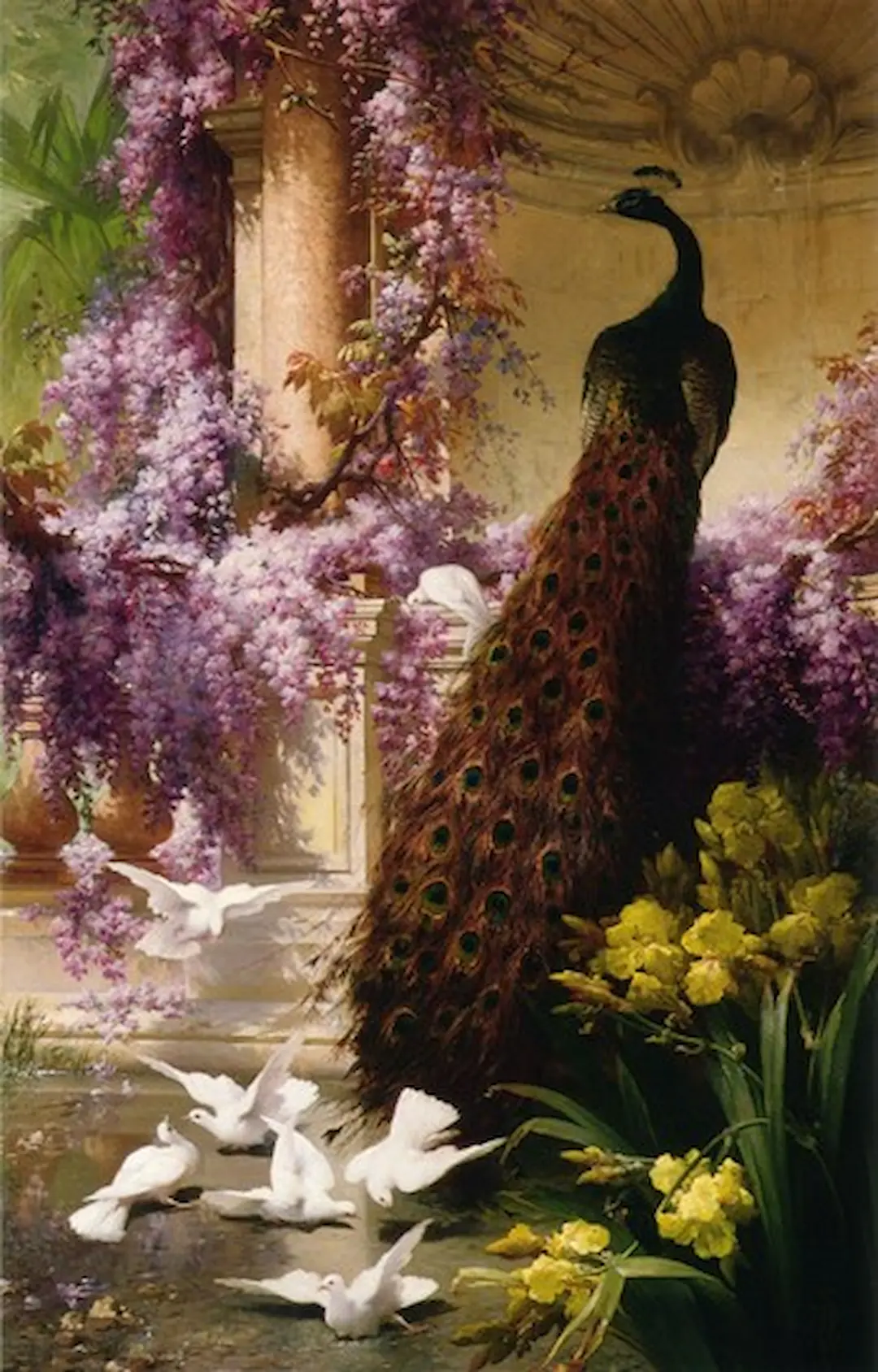
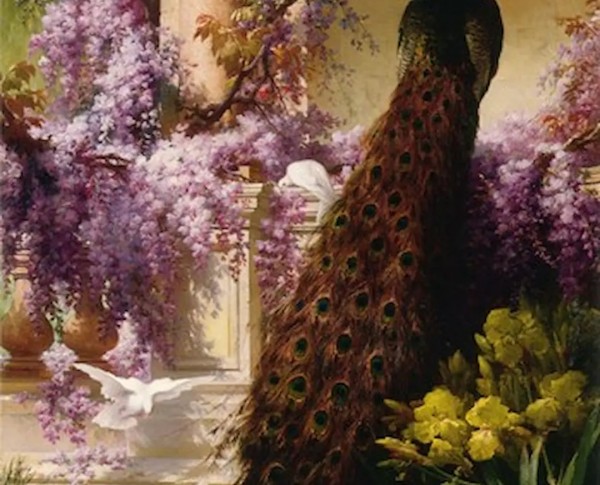
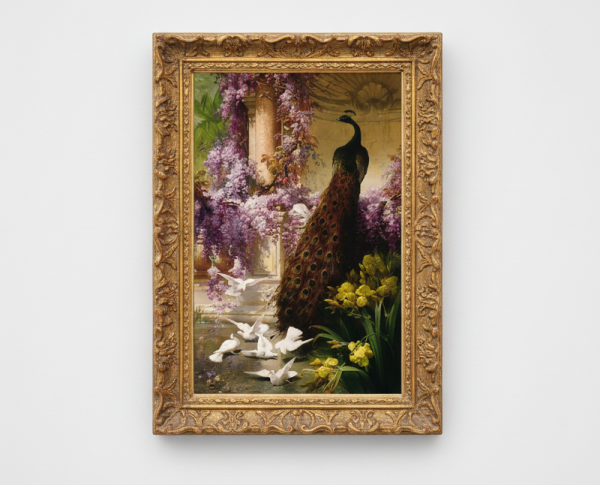
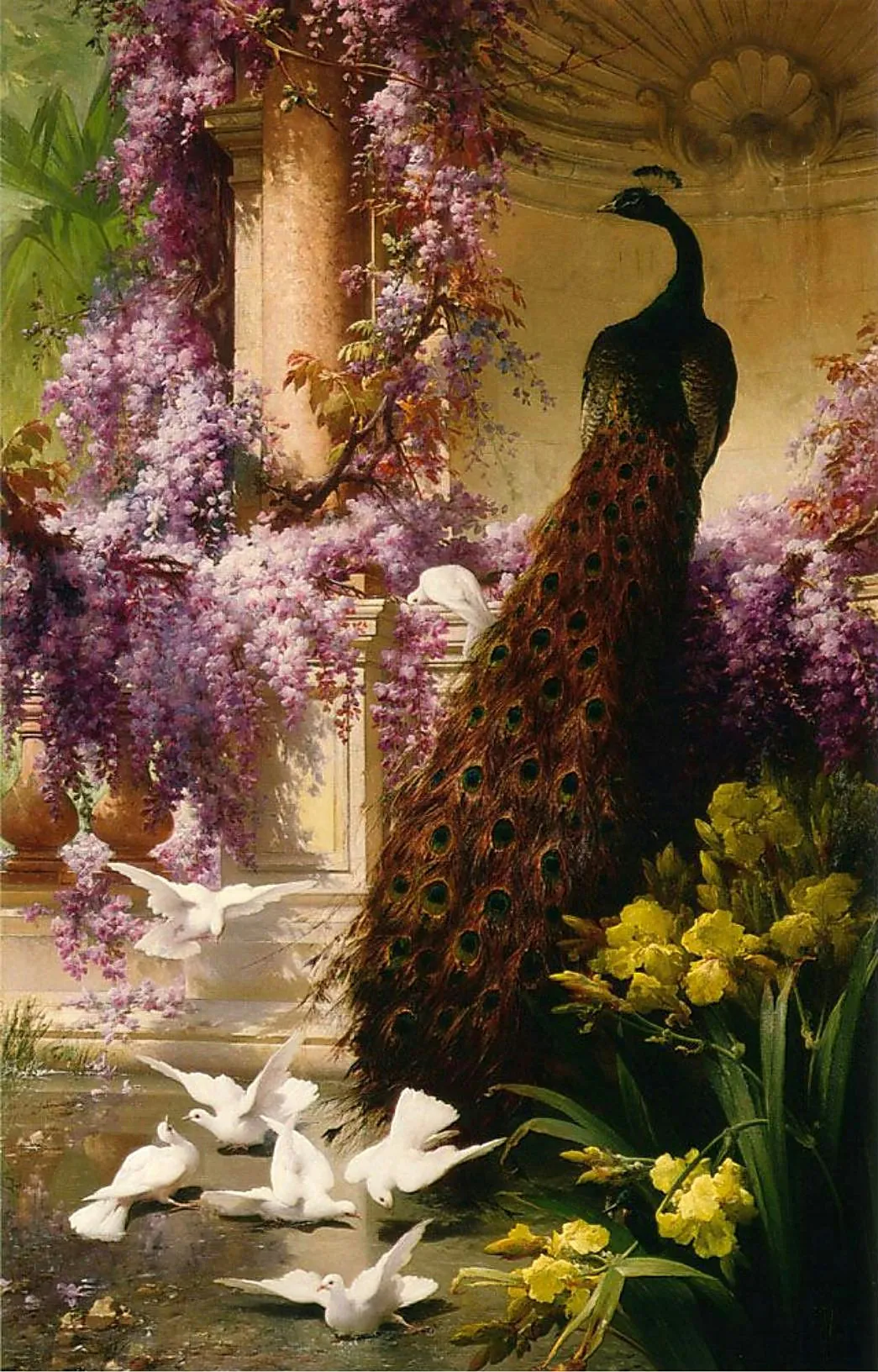
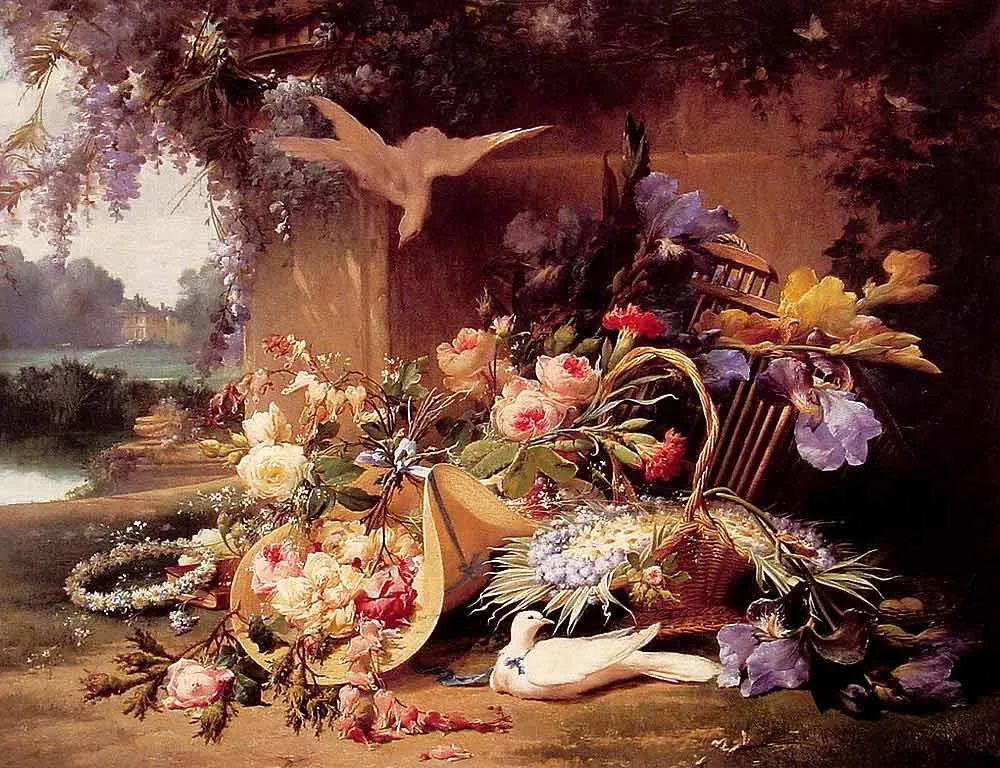
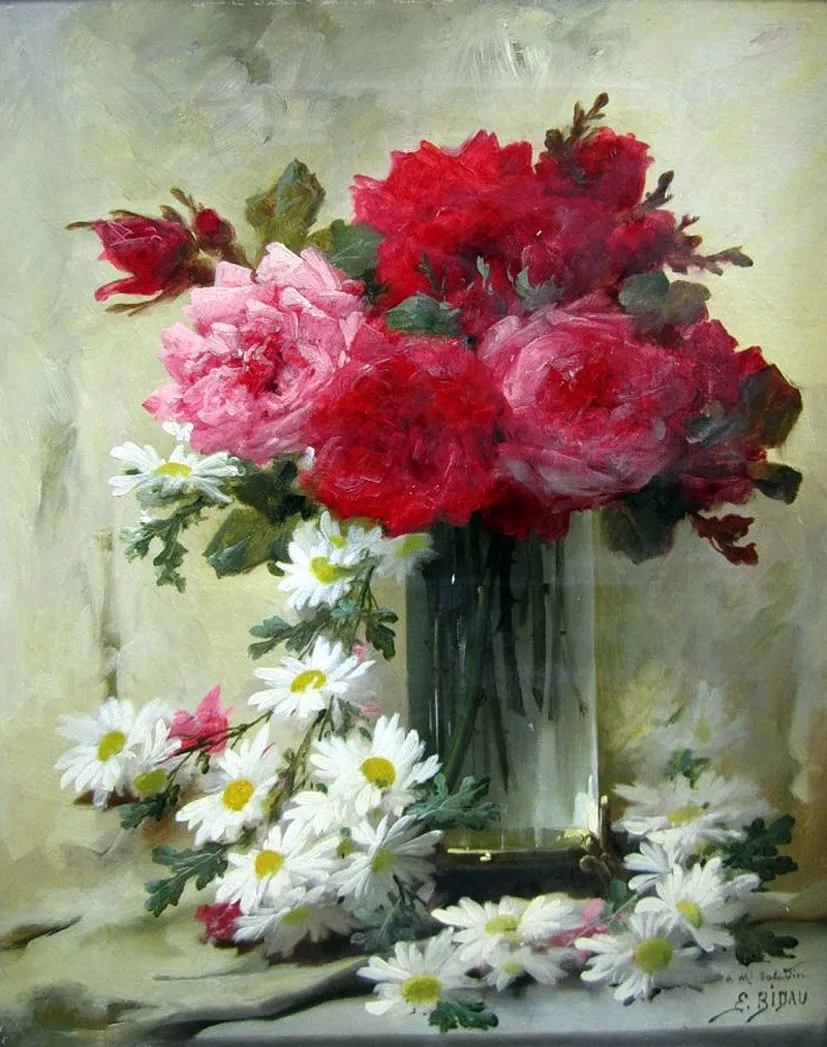
With meticulous skill, Eugene Bidau captures intricate details in “A Peacock and Doves in a Garden,” showcasing his expertise in oil on canvas. The Academic Realism style is evident in the lifelike textures and harmonious composition, making this piece a true testament to Bidau’s artistic mastery. Collectors who admire this level of craftsmanship may also enjoy related products such as “Untitled,” “Flowers in a Gilt Vase,” and “Elegant Still Life with Flowers.”
“A Peacock and Doves in a Garden” is more than a fine art painting for sale—it’s a tapestry of meaning. Eugene Bidau infuses the scene with symbolism, where peacocks represent beauty and immortality, while doves signify peace and purity. Rooted in Academic Realism, the painting invites viewers to explore its narrative, much like other works in Bidau’s repertoire, including “Still Life” and “Elegant Still Life with Flowers.”
For collectors seeking a hand-painted oil painting that embodies both beauty and historical significance, Eugene Bidau’s “A Peacock and Doves in a Garden” is a prized acquisition. This masterwork of Academic Realism stands alongside sought-after pieces like “Untitled,” “Flowers in a Gilt Vase,” and “Still Life.” Its exquisite detail and timeless elegance make it a standout fine art painting for sale in any distinguished collection.
When Art Meets History
"A Peacock and Doves in a Garden" by Eugene Bidau stands as a testament to the Academic Realism movement, capturing the elegance of nature in exquisite detail. This hand-painted oil painting reflects the 19th-century fascination with realism and precision, aligning Bidau’s work with masterpieces like "Homo (Behold the Man!)" and "Christ Carried to the Tomb." Through his art, Bidau invites viewers to journey into a lush, tranquil world shaped by both history and artistic mastery.
Techniques That Speak
Eugene Bidau’s "A Peacock and Doves in a Garden" exemplifies the meticulous technique characteristic of Academic Realism. The artist’s refined brushwork and mastery of oil on canvas bring each feather and petal to life, creating a vibrant, lifelike scene. Bidau’s approach mirrors the technical sophistication seen in related paintings such as "Ecce Homo," showcasing his dedication to realistic representation and the enduring appeal of traditional oil painting methods within the fine art world.
Emotions on Display
In "A Peacock and Doves in a Garden," Eugene Bidau uses the Academic Realism style to evoke a sense of peace and harmony. The tranquil interaction between the peacock and doves resonates with viewers, much like the emotional depth conveyed in "Christ Carried to the Tomb." This fine art painting for sale invites contemplation and admiration, capturing the serene beauty of nature and the subtle emotions that connect us to the world depicted on canvas.
Coveted by Collectors
Collectors prize "A Peacock and Doves in a Garden" not only for its exquisite detail but also for its place within the Academic Realism movement. Eugene Bidau’s hand-painted oil painting appeals to those seeking timeless elegance and historical significance in their collections. Alongside works like "Ecce Homo," this painting is a sought-after addition for anyone looking for a fine art painting for sale that combines technical mastery with enduring beauty and cultural resonance.
Related Academic Realism Hand-Painted Oil Paintings by Other Artists
Other Famous Academic Realism Artists:
Frequently Asked Questions About A Peacock and Doves in a Garden
What is the historical context of "A Peacock and Doves in a Garden"?
This painting by Eugene Bidau was created during the late 19th century, a period marked by a fascination with nature and exotic themes in art. The era saw a rise in the popularity of still life and floral compositions, reflecting the Romantic movement's emphasis on beauty and emotion.
What artistic techniques did Eugene Bidau employ in this painting?
Bidau utilized a combination of vibrant colors and detailed brushwork to capture the intricate textures of the peacock's feathers and the softness of the doves. His use of light and shadow enhances the three-dimensionality of the subjects, creating a sense of depth within the garden setting.
What symbolism is present in "A Peacock and Doves in a Garden"?
The peacock is often associated with beauty, pride, and renewal, while doves symbolize peace and love. Together, these elements suggest a harmonious coexistence of beauty and tranquility in nature.
How does the composition of the painting contribute to its overall meaning?
The arrangement of the peacock and doves within the lush garden setting creates a balanced composition that draws the viewer's eye. The juxtaposition of the vibrant peacock against the gentle doves emphasizes the theme of diversity in nature.
What influences can be seen in Bidau's style in this painting?
Bidau's work reflects influences from both the Romantic and Impressionist movements, evident in his focus on natural beauty and the emotional resonance of the scene. His attention to detail and use of color also show the impact of the academic traditions of his time.
In what ways does this painting reflect the artistic trends of the late 19th century?
The late 19th century was characterized by an exploration of color and light, as well as a growing interest in capturing the beauty of the natural world. Bidau's painting embodies these trends through its vibrant palette and meticulous depiction of flora and fauna.
What role does nature play in "A Peacock and Doves in a Garden"?
Nature serves as both the backdrop and the central theme of the painting. The garden setting not only enhances the beauty of the peacock and doves but also symbolizes the interconnectedness of all living things, highlighting the importance of preserving natural beauty.
How has "A Peacock and Doves in a Garden" been received by art critics?
Art critics have praised Bidau's ability to blend realism with a touch of romanticism, noting the painting's exquisite detail and emotional depth. It is often regarded as a significant example of his work that captures the essence of 19th-century decorative art.
What can viewers learn about Bidau's artistic philosophy through this painting?
Through "A Peacock and Doves in a Garden," viewers can glean that Bidau valued the beauty of nature and sought to evoke emotional responses through his art. His focus on harmony and balance reflects a belief in the importance of aesthetic pleasure in everyday life.
Are there any notable exhibitions where this painting has been displayed?
"A Peacock and Doves in a Garden" has been featured in various exhibitions focusing on 19th-century European art, where it has garnered attention for its vibrant representation of nature and its technical mastery, contributing to the appreciation of Bidau's legacy.






















_GFM_Painting_(1).webp)

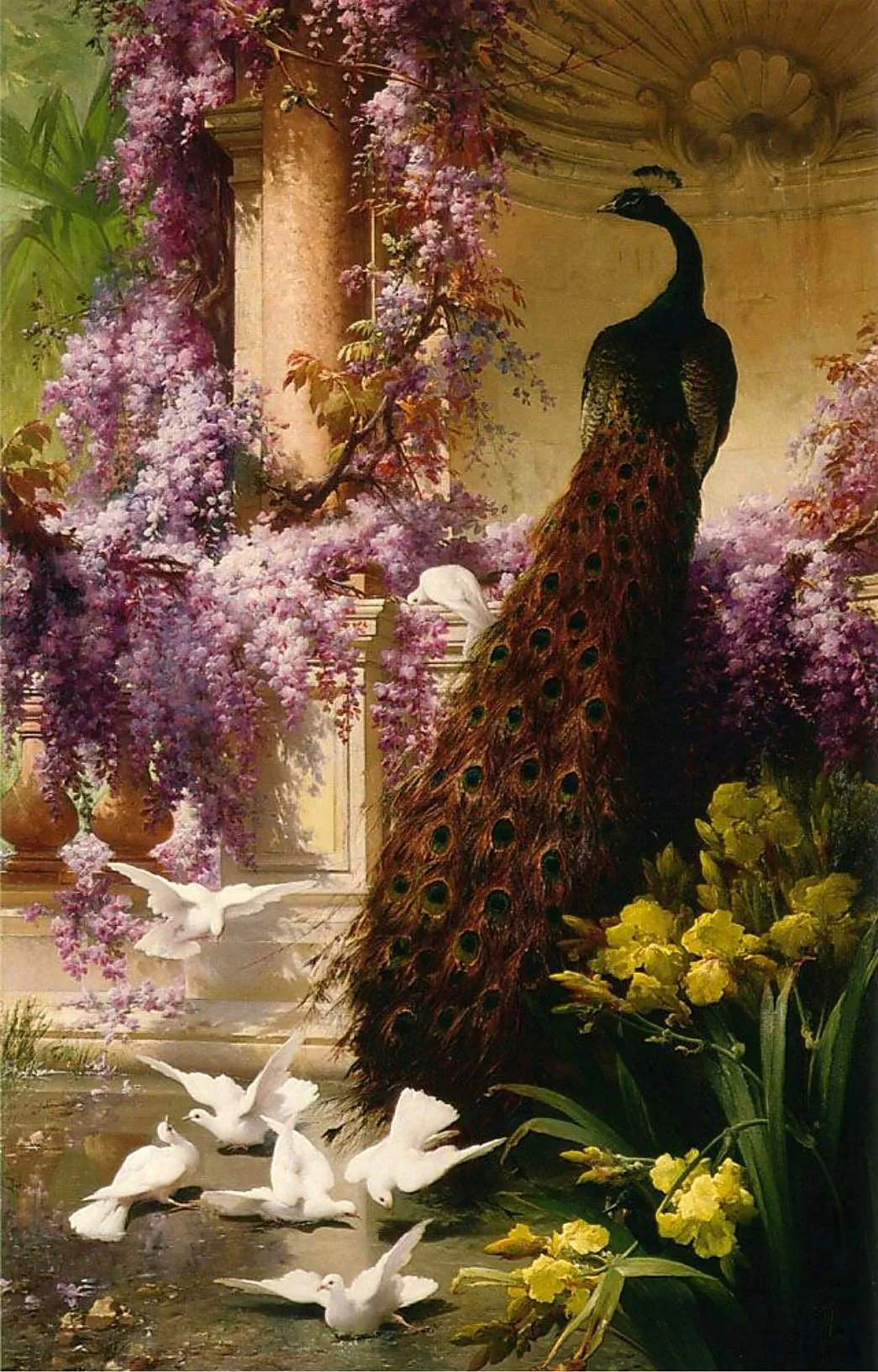

 100% Hand-Painted: Finished in 3-6 Weeks

.png)












.webp)



_(1).webp)